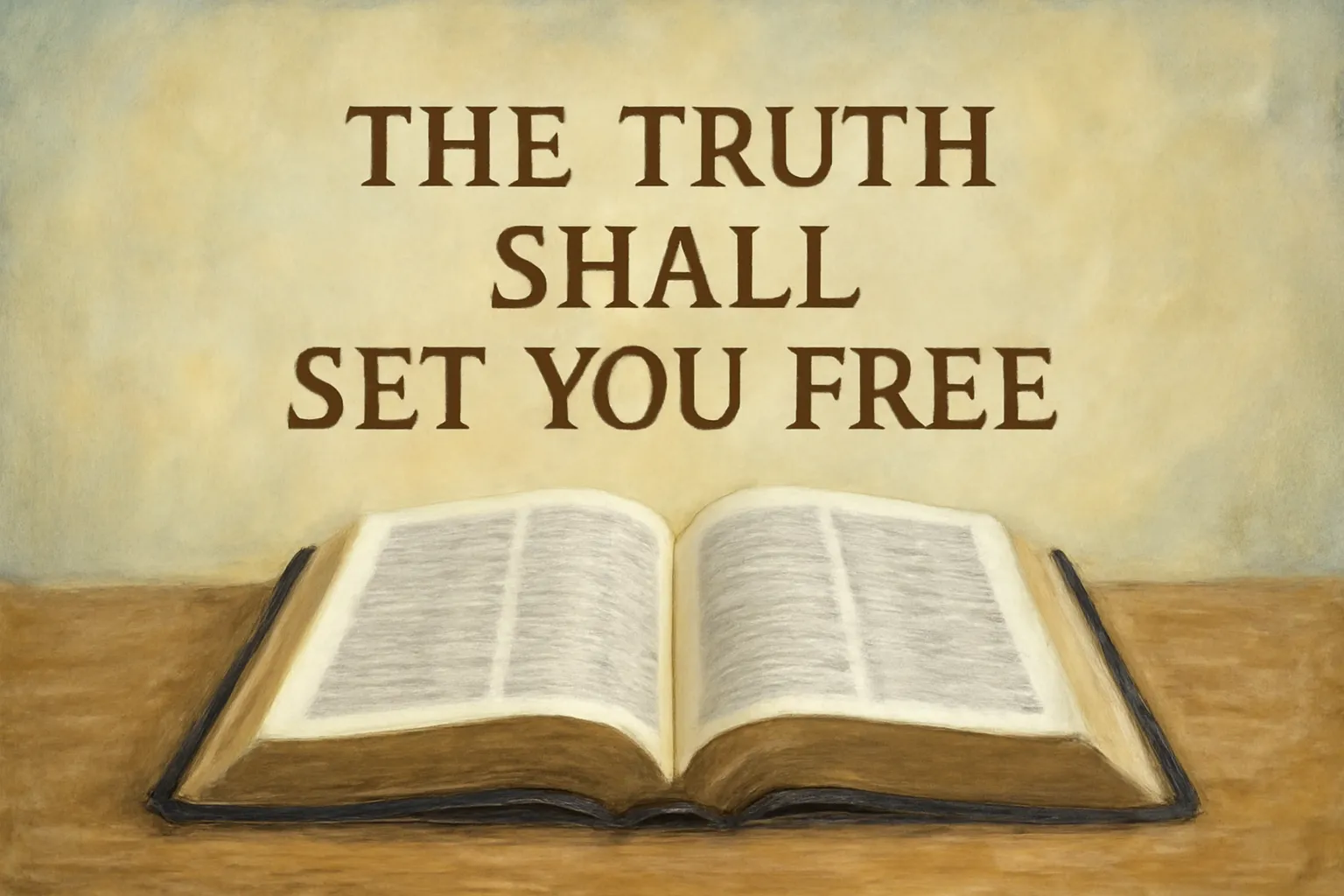
Exploring the Bible verse John 8:32 and its enduring claim that the truth shall set you free opens a window into how Scripture speaks of knowledge, liberty, and transformation. This article surveys the verse itself, its immediate context, how it has been rendered across translations, and how it functions in Christian teaching and daily living. We will also look at related verses that speak about truth, freedom, and the liberating power of God’s word.
The verse often cited in sermons and study groups is a succinct sentence about a transformative knowledge. In the King James Version, it reads:
And ye shall know the truth, and the truth shall make you free.
This compact line is deliberately bold: it asserts that a genuine recognition of the truth brings about liberty.
Two key ideas emerge here. First, the claim that knowing the truth is the agent of change, not merely an intellectual acquaintance. Second, that this truth has a liberating effect — it frees people from chains of ignorance, fear, sin, or bondage that may bind them. In the surrounding verses, Jesus addresses listeners who had believed him, inviting them to press beyond belief into a tested, living realization of what it means to walk in truth and freedom.
Context: The Setting and the Audience
To interpret John 8:32 well, it helps to glimpse the immediate context (John 8:31–36). Jesus speaks to a crowd that had begun to follow him after his signs and teachings. He cautions them that merely agreeing with him in the moment is not enough; true discipleship requires enduring faith that remains when challenges arise. The central promise then becomes a invitation to know the truth in a way that reshapes life.
Historically, this passage sits within the Gospel of John’s broader emphasis on Jesus as the logos — the divine Word that reveals truth and dispels darkness. In this Gospel, truth is not a neutral proposition alone; it is a personable revelation that invites relationship with God through Jesus Christ.
What Does “The Truth” Mean?
Throughout biblical literature, truth often carries both cognitive and ethical dimensions. In John’s Gospel, truth is tightly linked to Jesus himself. When readers encounter phrases like the truth in John, they are invited to see truth as
a reliable revelation about God’s character and will,
a truthful interpretation of reality as it relates to God’s plans, and
a transforming power that reshapes how people live.
Different Christian traditions highlight various facets of truth. Some emphasize doctrinal accuracy; others stress relational fidelity to God and neighbor. Across these perspectives, the core claim remains: encountering the truth as it truly is leads to a liberated life.
Historical and Theological Implications of Liberation
The phrase freedom in John 8:32 points to more than political or social liberty. In biblical terms, freedom often denotes liberation from bondage to sin, fear, ignorance, and the power of darkness. In the Johannine writings, liberty is inseparable from belonging to Christ and walking in his truth. The surrounding verses emphasize that freeing power is not a human achievement alone; it comes through the work of Christ and the awakening of faith in the Spirit.
To ground this in a broader biblical arc, consider that liberty is described as a gift that enables authentic relationship with God and others. It’s the liberty to live according to divine truth, to love selflessly, and to pursue righteousness with courage. The verse thus invites believers to examine what “freedom” looks like in practice: freedom from bondage to sin, freedom to grow in grace, and freedom to live with integrity before God.
Variations of the Verse Across Translations
Translations differ in how they phrase John 8:32, though the core idea remains intact. Here are representative renderings that show semantic breadth while preserving the central claim:
KJV: “And ye shall know the truth, and the truth shall make you free.”
NIV: “Then you will know the truth, and the truth will set you free.”
ESV: “And you will know the truth, and the truth will set you free.”
NLT: “And you will know the truth, and the truth will set you free.”
NASB: “And you will know the truth, and the truth will make you free.”
CSB: “And you will know the truth, and the truth will set you free.”
Even when the exact wording shifts slightly, the essential insight remains: genuine knowledge of truth brings about freedom. For readers of Scripture, these variations offer semantic breadth—emphasizing knowledge, recognition, and the liberating effect of truth in various tonalities across translations.
Related Verses: Expanding the Notion of Truth and Freedom
Scripture repeatedly links truth with freedom, often by presenting complementary or parallel ideas. The following verses can deepen understanding by showing how truth, light, and liberty relate in different contexts:
John 14:6: “I am the way and the truth and the life.” Here, Jesus identifies himself as truth, suggesting that true knowledge and freedom come through relationship with him.
John 8:36: “So if the Son sets you free, you will be free indeed.” A direct assertion that Christ’s freedom is real and complete.
2 Corinthians 3:17: “Where the Spirit of the Lord is, there is freedom.” The liberating work of the Spirit accompanies truth’s proclamation.
Psalm 119:45: “And I will walk at liberty, for I seek thy precepts.” The Psalmist links liberty with seeking God’s word.
Proverbs 23:23 (on truth): “Buy the truth and do not sell it.” A call to value and cling to truth at all costs.
Romans 1:25: “they exchanged the truth of God for a lie.” The contrast shows the danger of rejecting truth.
1 Timothy 2:4: “who would have all people to be saved and to come to the knowledge of the truth.” Truth as a universal invitation toward salvation.
1 John 3:18–19: “Let us not love in word or talk but in deed and in truth.” The ethical dimension of truth lived out in love.
John 8:32 in its immediate context, and its near neighbors in John’s Gospel, reinforce the link between truth, belief, and living in the light.
These verses collectively enrich the theme: truth is not only a proposition to be intellectually accepted but a transformative reality that shapes belief, behavior, and destiny. As readers move through these passages, they encounter a coherent biblical pattern: truth leads to freedom, and freedom is lived out in a life aligned with God’s purposes.
Practical Applications: Living in Light of John 8:32
For believers and students, the verse invites concrete practices that cultivate a life shaped by truth and marked by freedom. Here are practical steps that people often find helpful:
Study with humility. Approach Scripture as a living encounter with truth, not merely an intellectual exercise. Ask, “What is the truth about God, myself, and the world in this passage?”
Know the context. Understand the literary and historical context so that you don’t misinterpret isolated phrases. Consider how the chapter’s flow supports the claim about truth and freedom.
Anchor belief in Christ. Since Jesus is identified as the truth in John 14:6, cultivate a relationship with him as the primary means of coming to truth.
Test beliefs against the life of love. Truth should harmonize with love, honesty, and justice. Read 1 John 3:18–19 as a practical guide for truth-in-deed.
Seek freedom in practice, not merely in thought. Apply the truth by choosing what aligns with God’s character, choosing righteousness, and pursuing integrity in daily life.
Pray for illumination. Invite the Spirit to reveal areas where you may be bound by fear, ignorance, or sin, and ask for the freedom that comes through truth.
In personal devotion, you might use a simple framework: observe, interpret, apply, and respond. Observe the verse and its context, interpret what it says about truth and freedom, apply it to a current life situation, and respond with action—whether repentance, confession, or a deliberate step toward greater honesty and liberation.
Common Questions About John 8:32
Does “the truth” refer to factual accuracy, or a moral/spiritual reality?
In biblical usage, truth often encompasses both factual accuracy and the reality of God’s truthfulness, righteousness, and character. In John, the emphasis is on truth as a divine revelation that aligns a person with God and leads to authentic freedom. It is not mere data; it is a transformative reality personified in Christ and experienced through faith.
Is freedom from sin the primary sense of freedom here?
Most theologians would affirm that freedom in this verse includes liberation from the bondage of sin and ignorance that prevents people from knowing and following God. But it can also involve freedom in conscience, fear, and the moral consequences of living apart from God’s truth. The fullness of freedom includes relational, ethical, and spiritual dimensions.
What does this verse imply about belief and discipleship?
The passage invites a genuine, ongoing form of discipleship: belief that matures into living truth. It’s not about a one-time decision alone but about a continuing movement toward truth that reshapes behavior, community, and purpose.
How to Read John 8:32 in Personal Devotion
If you want to incorporate this verse into daily life, you can use a simple devotional approach that centers on reception, reflection, and response:
Reception: Read the verse and consider how its core promise speaks to your life today.
Reflection: Ask questions like, “What areas of my life are still in bondage to fear or falsity?”
Response: Choose a tangible step—confession, service, or a commitment to pursue truth in a specific area (media choices, relationships, work, speech).
Community: Share with a trusted friend or group to encourage accountability and mutual growth in truth and freedom.
Many readers find it helpful to pair John 8:32 with related passages that emphasize Christ as truth and freedom, such as John 14:6 and 2 Corinthians 3:17, to keep the focus on a Christ-centered liberating reality rather than a merely ethical code.
Historical Reception and Impact
Throughout church history, John 8:32 has served as a touchstone for teaching on conscience, freedom, and the transformative power of truth. It has inspired reformers who sought freedom from spiritual captivity and social injustices, as well as believers who desired a deeper personal walk with God. The verse’s enduring appeal lies in its promise: encountering truth in Christ leads to genuine freedom that can be lived out day by day, in community, and in mission.
A Brief Synthesis: The Promise and the Path
What makes John 8:32 so resonant is not only its assertion about truth and freedom but also its invitation to a path of ongoing growth. Knowing the truth is presented not as an endpoint but as a doorway to freedom—a doorway that invites ongoing spiritual exploration, ethical living, and relational honesty. When read in concert with related verses about truth in Scripture, it becomes part of a larger map: truth reveals God’s character, frees us from what blinds us, and empowers us to live with integrity, compassion, and purpose.
The verse John 8:32 remains a foundational text for Christians seeking a robust understanding of how truth and freedom relate. By recognizing the truth as a liberating, transformative presence—whether we understand it as the person of Christ, the revelation of God’s will, or the ethical demands of living in honesty—we open ourselves to a life marked by freedom from what binds us and freedom to become increasingly who we were created to be. In a world saturated with information and competing narratives, the invitation to know truth that will set us free continues to be a compelling call to deeper faith, wiser discernment, and more courageous living.
What does it mean for wives to respect their husbands? The phrase commonly associated with discussions about marriage in the Bible is “Wives, respect your husbands”. In many traditional readings, this idea is connected to a broader biblical instruction about roles within marriage. This article aims to unpack that topic in an informative and balanced…
Bible Verse: I Will Be With You – A Powerful Promise of Hope and Comfort Across generations, believers have clung to the simple yet profound assurance that I will be with you. This promise — whispered through Scripture in various forms and contexts — serves as a compass in times of fear, a beacon in…
Why a Bible Verse Foundation Matters In a world saturated with voices, opinions, and shifting cultural norms, the question often asked by seekers, students, and families is this: How can I build a life that lasts on something steady and true? The answer many find in scripture is a clear invitation to establish a bible…
Why Bible Verses for God’s Plan Matter In life’s busy and uncertain moments, many people long for a clear sense of God’s plan—a guiding map that helps align decisions, priorities, and relationships with divine purpose. The Bible speaks repeatedly about a plan that God has for His people, a plan rooted in love, wisdom, and…
Bible Verses for the Poor: Comfort, Hope, and Help in Times of Need In times of challenge and scarcity, the scriptures offer a steady reservoir of comfort, hope, and practical help for those who are poor, hungry, or facing financial or social hardship. This article gathers a broad collection of verses—expressed in variations that speak…
Bible Verses About Looking Up: Hope and Guidance in Scripture Across the pages of Scripture, the image of lifting the eyes, turning the gaze upward, and directing attention heavenward recurs as a powerful metaphor for hope, trust, and guidance. When people face trials, confusion, or darkness, looking up to God is presented not as a…