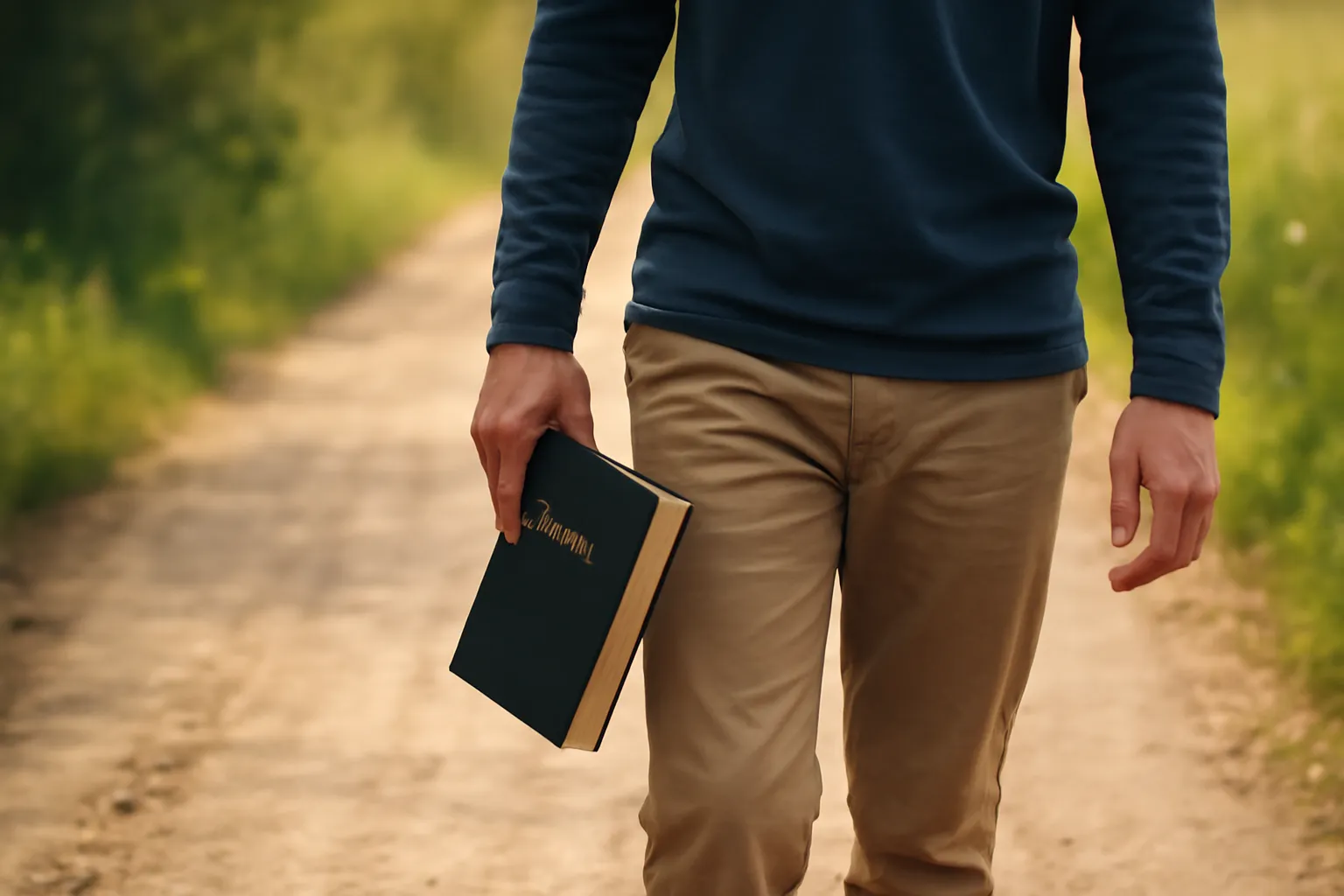
Bible Walking is a practical, exploratory approach to reading and engaging with Scripture that blends focused study with the rhythm of movement. Rather than a passive, seated reading session, this practice invites you to explore a passage by observing details, asking questions, drawing connections, and reflecting on how the text speaks to your everyday life — often while walking through a quiet space, a park, or alongside a familiar route. This method can also be practiced indoors, on a treadmill, or even while pacing a quiet room. The core idea is simple: read, observe, reflect, and apply, all while moving with intention.
Over time, practitioners of scripture walking have found that motion helps anchor memory, sharpen awareness of context, and encourage practical application. This guide uses the phrase Bible Walking as a broad umbrella term, but you will see variations such as scripture walking, text walking, or walking with Scripture. The core goal remains the same: to encounter Scripture in a way that is concrete, personal, and transformative.
Why practice Bible Walking?
There are several reasons people turn to biblical walking as a regular habit. Here are a few benefits that commonly surface for both beginners and seasoned students:
Enhanced focus through a structured, repeatable loop that reduces the overwhelm of a long text.
Better retention of key verses or ideas because movement creates additional sensory anchors for memory.
Deeper context as you consider geography, culture, historical setting, and literary form as you walk through the text.
Practical application through a direct path from observation to personal action.
Mindful pacing that invites slower, more deliberate engagement with Scripture rather than a rushed read.
The core principles of Bible Walking
Though there are many styles, Bible Walking rests on a few foundational principles that help keep the practice focused and productive. You can think of these as the stages of a walk through Scripture:
Observe—Notice what the text says, who is involved, what events unfold, and what key terms mean in their original or immediate context.
Context—Ask how the passage fits within its chapter, book, and the broader biblical narrative. Consider historical, cultural, and literary context.
Cross-reference—Look for parallel passages, allusions, or fulfillments in related Scriptures to broaden understanding.
Question—Form open-ended questions that probe meaning, intent, and potential tensions within the text.
Interpretation—Seek a plausible meaning anchored in evidence, considering original language nuances and genre.
Application—Translate insight into concrete steps or changes in daily life, worship, or relationships.
Prayer—Invite guidance, gratitude, and humility as you respond to what you have learned.
In practice, these principles become a cycle of learning rather than a rigid formula. You may emphasize certain steps more than others depending on the passage, your goals, and the setting of your walk.
Getting ready: tools, space, and mindset
Preparation helps Bible Walking become a sustainable habit. The following elements support a smooth and fruitful session:
A reliable Bible in a readable translation for you, with room to compare notes. You might choose a single translation for consistency or parallel versions for cross-checking.
Note-taking tools—a small notebook, journal, or a digital device with a notes app. Keep your entries concise yet meaningful.
A pace-friendly route—a quiet park, a campus path, a neighborhood loop, or a sanctuary corridor. Choose spaces that are safe and conducive to reflection.
Optional references—a compact Bible dictionary, a concordance, or a pocket guide to geography and culture if you want deeper context.
Comfort items—water, sunscreen, a light jacket, or a small blanket for moments of pause.n
A reflective mindset—commit to listening, curiosity, and honesty about what the text is asking you to observe or change.
Before you begin, set a clear intention for the session. It could be a specific question you want to answer, a theme you want to explore, or simply a goal to observe more carefully than you normally would.
A practical step-by-step guide to a Bible Walking session
Below is a practical sequence you can adapt to your schedule and space. It is designed to be repeatable so you can build consistency without losing depth.
Step 1: Define the passage and purpose
Choose a passage or a short set of verses to walk with. For beginners, 6–12 verses are a comfortable starting point.
Write a short purpose statement: “Today I want to observe the setting and understand what this passage teaches about faith in action.”
Note any immediate questions you want to explore during the walk.
Step 2: Observe with all the senses
Read the passage aloud once or twice, then read a verse or two slowly, noting words that stand out.
Highlight or underline key terms (locations, people, actions) and phrases that draw your attention.
Pay attention to literary devices (metaphor, paradox, comparison) and the passage’s tone (narrative, prophetic,poetic, or epistolary).
Step 3: Contextualize in the moment
Consider historical context (when and where the events took place) and literary context (the surrounding chapters and book’s purpose).
Ask: How would the original audience have understood this text? What problems or hopes might they have faced?
Step 4: Cross-reference and compare
Look for parallel passages, echoes, or fulfillments in related scriptures.
Note any differences in emphasis across translations and consider their implications for interpretation.
Step 5: Reflect and interpret
Summarize the core message of the passage in your own words.
Identify any tensions or ambiguities and propose a plausible interpretation backed by evidence.
Step 6: Apply and act
Translate insight into concrete action. What is one tangible step you can take this week in light of what you learned?
Consider how this passage shapes your thoughts, words, or relationships in daily life.
Step 7: Close with prayer or contemplation
Invite guidance, grace, and strength to live out what you have learned.
End with a brief moment of stillness to let the message settle.
Tip: If you’re walking outdoors, you can pace lightly as you proceed through steps, pausing for a breath or a brief reflection at natural milestones (a bench, a tree, a view). If you are indoors, you can simulate the same rhythm by pausing at set intervals or after each step.
Variations of Bible Walking
There is no single template for Bible Walking. Here are several practical variations you can try, depending on your goals, time, and setting. Each variation can be done solo or with a small group.
Devotional walking through Scripture
Focus on a short verse or a single theme (grace, courage, peace) and allow your pace to be steady and unhurried.
Incorporate a short prayer or blessing tied to the theme before and after the walk.
Inductive walking through a passage
Emphasizes careful observation, interpretation, and application in a structured sequence.
Ideal for learners who want to develop a more rigorous study routine while moving.
Thematic walking
Center the walk on a particular theme (hope, providence, mercy) and collect verses across books that address it.
Build a walking “theme map” by noting how different authors approach the same idea.
Group Bible Walking
In a small group, members take turns reading, observing, and proposing questions. The group discusses interpretations and practical applications together.
Group walking can provide accountability, shared learning, and new insights from diverse perspectives.
Nature-inspired walking
Combine the contemplative ambiance of nature with Scripture meditation. Reflect on how creation echoes themes in the text.
Use natural features as prompts for observation and prayer (streams for renewal, trees for steadfastness, horizons for hope).
Tools, techniques, and practical aids
To support your Bible Walking practice, you can adopt a set of tools and techniques that enhance clarity and retention while keeping the activity warm and approachable.
Written templates—keep a compact walking journal with sections for passage, observations, questions, cross-references, and applications.
Color-coding—use color pens to mark different aspects: blue for observations, green for cross-references, orange for application ideas.
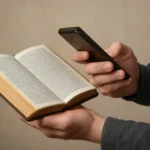
Cross-reference aids—a compact concordance or a digital reference app makes it easier to find related passages on the go.
Verse mapping—draw a simple map or diagram that connects a key verse to related ideas, people, places, or events.
Memory anchors—select one verse or idea to memorize for the week, reinforcing retention through repetition and movement.
Reflection prompts—use prompts such as “What does this teach me about God?”, “What does this say about humanity?”, and “What is my next step?” to guide contemplation.
Safety, accessibility, and inclusivity in Bible Walking
Safety and accessibility should shape how you implement walking with Scripture, especially in outdoor environments or public spaces. Consider these practical points:
Choose safe routes with good lighting, even surfaces, and low traffic when walking alone. If possible, carry a friend or join a group for safety and companionship.
Adapt pace and distance to your fitness level and comfort. Bible Walking is not about covering distance but about thoughtful engagement with the text.
Make space for accessibility needs—if standing or moving is challenging, you can practice seated or stand-still walking, or use a treadmill with a short passage on screen.
Respect diversity—people of many backgrounds approach Scripture differently. Your practice should be welcoming and inclusive, inviting curiosity rather than judgment.
Bible Walking in community: sharing the journey
While Bible Walking is often a personal discipline, there are strong benefits to sharing the journey with others. Group sessions can foster accountability, broaden interpretation, and bring new life to familiar texts. Here are ideas for building community around walking through Scripture:
Set regular meetups—a weekly or biweekly walk can establish a stable rhythm.
Rotate leadership—give different members opportunities to lead a walk, choosing a passage and guiding the process.
Share reflections—after the walk, gather for a short time to share insights and practical applications, while maintaining respect for diverse interpretations.
Encourage accountability—participants can commit to one tangible action per week based on their reflections and report back in the next session.
Common challenges and how to overcome them
As with any personal growth practice, Bible Walking presents some challenges. Here are common obstacles and practical strategies to overcome them:
Distraction—simplify your environment: silence notifications, choose a quiet route, and keep your focus on the text rather than surroundings.
Time constraints—start with shorter sessions (10–15 minutes) and gradually extend as the habit strengthens. Even brief walks yield meaningful insights.
Overwhelm from context—use concise contextual notes and focus on one or two contextual questions per session rather than attempting to master an entire book at once.
Misinterpretation—embrace humility and seek multiple perspectives, compare translations, and let Cross-references serve as checks and balances.
Plateaus in memory—pair walking with a simple memory practice, such as reciting a verse at the end of the journey or tying a key phrase to a daily activity.
Who can benefit from Bible Walking?
People at different stages of faith and life can gain from this approach. The practice is adaptable for:
New believers seeking a gentle, experiential introduction to Scripture and its relevance to daily life.
Long-time students desiring a fresh approach to familiar passages or a way to integrate movement into their study rhythm.
Families and children—simplified versions of the steps can engage younger learners, turning Scripture study into an active, shared outdoor activity.
Busy professionals looking for a concise, repeatable routine that fits into a hectic schedule.
Sample templates and prompts for your Bible Walking journal
To help you get started, you can adapt these prompts into your walking journal or use them as a quick handout for a group session. They are designed to be brief yet instructive.
Passage reference — What text are we walking through today?
Immediate observations — What stands out in the passage on first glance?
Context note — What is the setting, audience, and purpose?
Cross-references — Which other verses illuminate this passage?
Key question — What is the most important question this passage raises for you?
Interpretation — What is the central meaning, given the context and cross-references?
Application — What is one practical step you can take this week?
Prayer or reflection — How can you invite God to help you live out this text?
If you prefer a guided approach, you can print or reproduce a compact worksheet with these sections and keep it in your walking journal for consistency across sessions.
Measuring progress and sustaining the practice
Like any disciplined habit, Bible Walking grows through regular, intentional practice. Here are ways to measure progress and maintain momentum without becoming rigid:
Consistency over length—short, frequent walks sustain engagement better than long, sporadic ventures.
Variety within the routine—alternate passage types (narrative, poetry, prophecy, epistle) to keep the experience fresh.
Reflection as a habit—even on days when you cannot walk, spend a few minutes in quiet reflection on a passage you studied earlier in the week.
Community reinforcement—share a takeaway with a friend or group to deepen understanding and accountability.
the path of movement and meaning
Bible Walking offers a dynamic avenue for engaging with Scripture that honors both the intellect and the senses. By integrating observation, context, interpretation, and application with the physical rhythm of walking, you invite a holistic encounter with the text. This approach does not replace traditional study; rather, it complements it by providing a practical method to live out what you discover in Scripture. Whether you are a seasoned student of the Bible or a curious newcomer, Bible Walking—through its many variations such as devotional walking, inductive walking, or Thematic walking—can become a meaningful pattern in your spiritual life, offering clarity, energy, and direction for everyday faith.