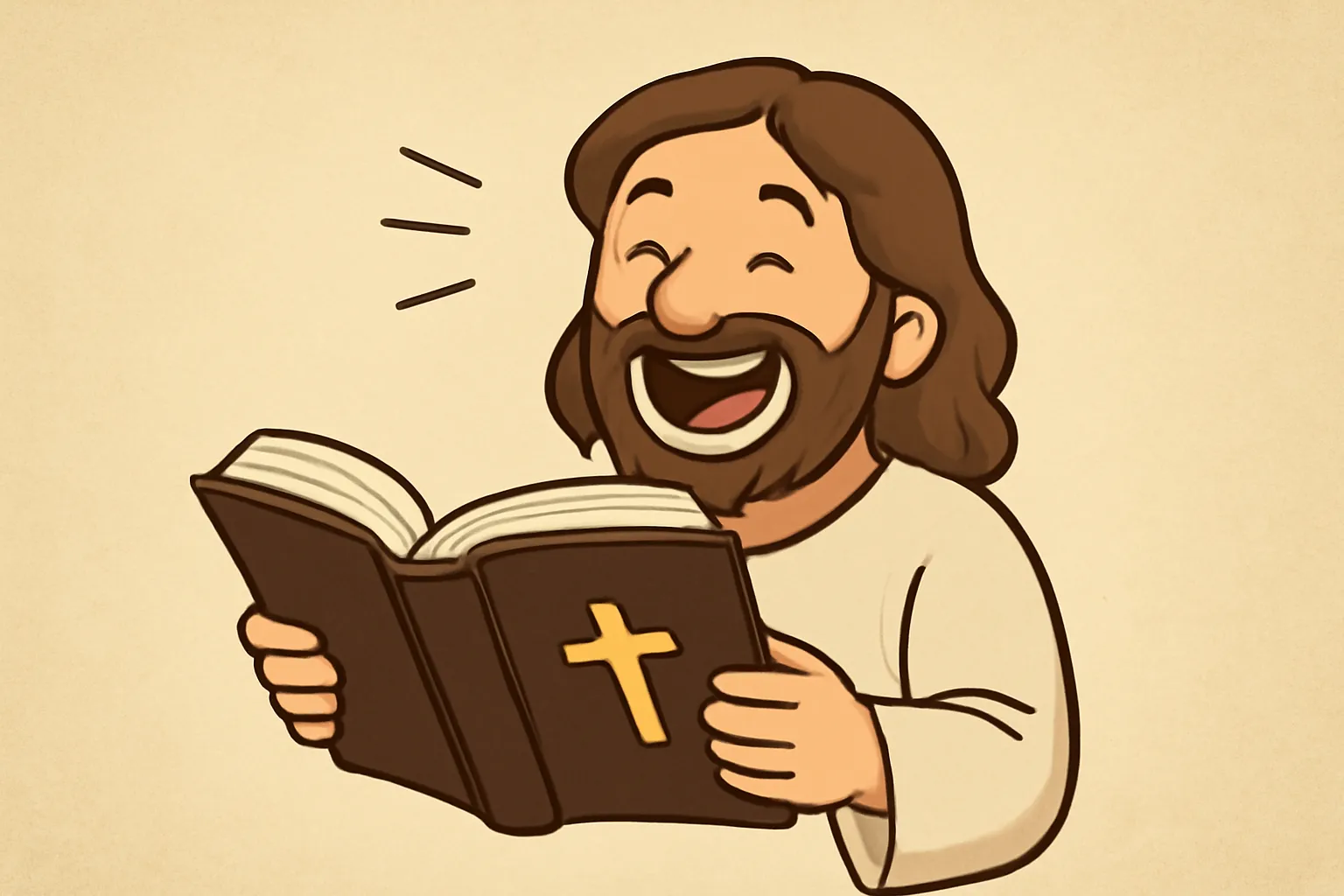
Funny Bible Passages: Hilarious Verses to Brighten Your Day
Humor in sacred texts can feel surprising at first glance, but it often serves a purpose: it helps reveal character, underscore moral points, or simply invite readers into a more human, relatable encounter with the divine narrative. This article gathers a range of passages that readers have found funny, odd, or delightfully witty. The goal isn’t to mock the Bible but to explore how humor appears in ancient storytelling, how translators shape funny moments for modern readers, and how these verses can brighten a day while still inviting thoughtful reflection. Throughout, you’ll see bolded phrases to highlight the humor devices and memorable lines that stick with readers.
What makes moments funny in a sacred text?
Humor in the Bible often arises from unexpected dialogue, wordplay, irony, or humble human moments set against grand narratives. Here are some recurring ways humor shows up that can help you recognize and appreciate it when you encounter it:
Absurd situations in serious settings: When the ordinary world collides with the extraordinary, readers are invited to smile at the collision of two realities.
Satirical edge against pretension: Some scenes gently mock pretentious rivals or hypocritical rhetoric, often with a wink that invites readers to see the irony.
Playful dialogue and riddles: Puns, double meanings, and clever exchanges show wit in ancient speech patterns just as in modern conversation.
Cultural distance as humor: Some moments rely on social norms that feel foreign today, which can produce a chuckle through shared recognition of human quirks.
Classic funny passages you’ve probably heard of
Below are a few passages that are frequently discussed for their humor, human texture, or memorable punchlines. Each entry includes a quick look at why readers find it funny and what to notice when you reread it with a careful eye.
The Talking Donkey (Numbers 22:28-30)
In this famous scene, a donkey unexpectedly speaks to Balaam, turning a tense moment into a comic standoff. The donkey asks Balaam why he has beaten her three times, and Balaam’s surprise—so human, so earnest—leads to a widening of the conversation beyond the realm of the ordinary. The donkey’s line of questioning and the sudden reversal of power create a moment that modern readers often describe as surreal or absurd in the best sense.
What makes this moment resonate is not only the unusual event but also the way the text treats it with a straight face. The narration doesn’t laugh at Balaam; it simply presents the encounter as if this were completely normal in the moment’s context. For readers, that blend of incredulity and matter-of-fact reporting can provoke a smile that grows into a reflection on perception, intention, and divine guidance. When you read this passage, notice:
The humble creature challenging the traveler in a calm, almost bureaucratic voice.
Balaam’s attempts to reconcile his perception of reality with the donkey’s startling new reality.
The theophany angle: the donkey’s talk is framed as a communication that comes from the divine opening a conversation, not a prank.
Note: The humor here often rests on translation choices and how one renders the donkey’s speech. Different Bible translations present varying levels of rhetorical flourish, but all keep the core joke: an animal speaks up in a moment when the human expects control. This passage is a favorite because it shows that sacred texts can hold space for the ridiculous without losing their weight.
Samson’s Riddle (Judges 14:14)
Judges contains a string of dynamic, sometimes brutal stories, and Samson’s wedding-day riddle stands out as a clever bit of wordplay wrapped in a high-stakes wager. The riddle goes: “Out of the eater came something to eat, and out of the strong came something sweet.” The source of the riddle is the lion Samson killed earlier, whose carcass later yielded honey. The Philistines are left scrambling to interpret the clue, and the entire scene plays out with a playful tone that sits oddly beside the surrounding violence of the narrative.
What makes this moment funny is not slapstick comedy but clever verbal interplay set inside a moment of serious consequence—marriage, trust, and tribal pride all under pressure. It’s a testament to how humor can be a coping mechanism in difficult social situations, as well as a showcase for Samson’s wit and boldness. When reading this, consider:
How a riddle functions as a test of intellect and a social gambit among rival groups.
The way wordplay and a shared cultural reference (honey from a lion’s carcass) anchor the humor.
The narrative’s balance between bold humor and the serious consequences facing Samson and his family.
Elijah’s Taunts Against the Prophets of Baal (1 Kings 18:27)
In a dramatic showdown on Mount Carmel, the prophet Elijah taunts the prophets of Baal as they cry loudly, cut themselves, and fail to summon their god. The climactic line—varying by translation—invites readers to imagine a scene where a fierce contest is framed with sharp irony: perhaps your god is meditating, or he is on a journey, or he is attending to something else. The humor is biting and cunning, a rhetorical tool that exposes the emptiness of a manufactured religious show while keeping the event powerful and solemn at the same time.
From a reader’s perspective, this moment offers several layers to ponder:
The irony of a public display failing to summon power while a single figure remains confident in a divine response.
The dramatic pace of the scene, which uses humor as a counterpoint to heighten the tension of the confrontation.
The way humor can be used to undercut pretension and reveal deeper truth about efficacy and devotion.
The Youths and the Bears (2 Kings 2:23-24)
One of the more controversial and frequently discussed moments involves Elisha (the prophet) and a group of youths who mock him with a jab about his baldness. The narrative reports that two bears came out of the woods and mauled 42 of the youths. This is a text that readers often approach with a mix of incredulity and caution, recognizing the hyperbolic and severe consequences that follow from mockery of a prophet in that cultural and theological context.
As a humor-bearing passage, it invites careful reflection rather than simple laughter. It can prompt questions about:
How humor can be self-deprecating or arise from social missteps within sacred settings.
How the surrounding narrative uses a shocking turn to address respect for religious authority and communal norms.
How translation choices affect tone: some readers interpret the passage as stern, others see a use of hyperbole that underscores the power of prophetic presence.
Tax and the Talking Fish: The Coin in the Mouth (Matthew 17:27)
In a moment that blends practical instruction with a wink, Jesus tells Peter to go to the sea, cast a hook, and find a coin in the mouth of the first fish that appears. This coin would cover the temple tax for both Jesus and Peter. It’s a scene that feels almost whimsical in its mise-en-scène: a fisherman’s tool becoming a key to a larger religious obligation, complete with a surprising twist when the fish’s mouth yields the precise amount needed.
What makes this passage funny, in a sense, is the ironclad practicality of divine provision wrapped in an almost comic coincidence. It demonstrates how humor can coexist with solemn teaching—an illustration that God can meet needs in unexpected, almost playful, ways. Consider these aspects when you read:
The humor of setup and payoff: cast a hook, open a mouth, find a coin.
The way a mundane activity (fishing) becomes a theological lesson about taxes and faith.
How this moment models trust and obedience with a light touch.
The Net-Worthy Moment: Peter’s Catch-22 (Luke 5:5-6)
When Jesus first calls Simon Peter, he responds, “Master, we have toiled all night and took nothing.» Yet the narrative tracks a reversal: at Jesus’ word, the fishermen let down their nets again and catch a great number of fish. The humor here isn’t slapstick but in the relatable human moment—the professional fisherman protests the expert, and yet the advisor’s command yields abundance. It’s a lighthearted moment that centers on trust, humility, and the readiness to try one more time when everything seems exhausted.
Readers often notice:
The humble practicality of fishermen’s caution vs. Jesus’ bold invitation.
The way the text balances doubt and faith in a way many readers find comforting and uplifting.
The passage as a model for teaching moments, where humor gently opens the door to deeper spiritual truth.
Lighthearted Moments in Jesus’ Teaching
Humor also surfaces in the Gospels through parabolic turns, memorable line deliveries, and playful language that disarms resistance to a moral point. While not every line is a joke, several moments showcase Jesus’ knack for linguistic play, hyperbole, and sharp conversational timing. A few representative ideas readers often notice include:
The use of hyperbole to wake listeners up, such as when metaphorically describing radical situations or surprising outcomes.
Parables that invite a smile before delivering a weighty truth, creating a rhythm that helps retention and understanding.
Conversational comedy used to test or refine faith, patience, and humility in those who listen closely.
Humor across genres: how the Bible uses wit in different forms
Humor in the Bible isn’t confined to one literary mode. It appears across different genres and serves different purposes. Here are a few ways humor is distributed, with examples that illustrate each category:
Narrative humor: Absurd scenarios or straight-faced narration that makes the improbable feel almost normal, as in the talking donkey scene or the bear incident.
Riddles and wordplay: Samson’s riddle is a classic example of clever language and social stakes wrapped in a contest of wit.
Satire and irony: Elijah’s taunts against the Baal prophets reveal the hollowness of “divine” performance that relies on spectacle rather than power.
Dialogue-driven humor: Dialogues, such as Jesus’ exchanges with learners and interlocutors, often deploy humor to soften gravity while pressing important spiritual questions.
Hyperbolic teaching: Passages that push audiences to imagine extreme scenarios to make a point, a technique that can provoke a smile while clarifying truth.
How to read funny Bible passages today: a guide for thoughtful laughter
Reading humorous passages in a sacred text can be a delightful and educational experience if approached with care. Here are practical tips to savor humor while honoring the text’s integrity:
Context matters: Understand the historical, cultural, and theological setting of the passage. Humor often relies on norms that feel distant today.
Translation matters: Different translations handle humor differently. If a line feels flat, compare a few versions to see how word choice shapes tone and meaning.
Humor can be a doorway to truth: The moment of laughter can open space for deeper reflection on faith, wisdom, and humility.
Be mindful of sensitive topics: Some humorous moments involve depictions of violence, mockery, or social hierarchy. Engage with them responsibly and consider their ethical and interpretive implications.
Discuss with others: Humor can be a communal experience. Talking with scholars, pastors, or study groups can enrich understanding and keep humor in a thoughtful frame.
Variations of funny passages: a closer look at different flavors of humor
Humor in the Bible shows up in many flavors. Here are some categories of funny passages you can explore, with examples and notes on how they function:
Literal absurdity with serious stakes — the talking donkey (Numbers 22) invites readers to suspend disbelief long enough to see a bigger point about obedience and divine direction.
Riddles and clever wordplay — Samson’s riddle (Judges 14) demonstrates how wit can be used strategically in social contexts that have real consequences.
Mock-heroic satire — Elijah’s taunts against the Baal prophets use humor to puncture empty religious performances and to spotlight true power.
Dark or cautionary humor — the bears and the youths (2 Kings 2) present a more troubling comedic moment that prompts careful ethical and interpretive reflection.
Everyday whimsy in instruction — miraculous or surprising provisions, such as the coin in the fish or the nets filling at Jesus’ word, mingle practical life with divine provision in a way that can feel warmly humorous and reassuring.
Frequently asked questions about funny Bible passages
Is it appropriate to laugh at Bible verses?
Yes, when approached with reverence and curiosity. Reading humor alongside reverence can deepen understanding, illuminate character, and remind readers that sacred men and women were real people living in real times who experienced joy, confusion, and wonder just like us.
Does humor in the Bible undermine its seriousness?
Not necessarily. Humor can be a bridge that makes serious topics more approachable, inviting readers into a deeper conversation about ethics, faith, and humanity. The Bible uses humor not to demean but to reveal truth through memorable and relatable moments.
How can I discuss funny passages with others who might interpret them differently?
Honor variety of views, ask clarifying questions, and distinguish between textual interpretation and personal response. Humor is shaped by tradition and perspective, and respectful dialogue helps everyone explore the layers of meaning.
A note on sensitivity and respect in humor
Humor in sacred texts can be a sensitive topic because these passages touch on faith, identity, and community. When sharing or discussing funny verses, keep in mind:
Humor should never demean people’s faith or sacred objects. Aim for lighthearted curiosity rather than irreverent mockery.
Different communities may interpret a given passage differently. Be open to diverse readings and avoid absolutist claims about intent.
Context matters: what reads as funny in one historical moment may require careful explanation for a modern audience.
Funny passages remind readers that the Bible is not only a book of stern warnings or solemn creeds, but also a narrative home to human beings whose lives include humor, absurd moments, and resilience. Laughter can soften fear, illuminate character, and invite readers into a more intimate, human relationship with the stories. The humor device in the Gospels, the prophetic books, and the historical narratives shows a wide range of voice, from the gently playful to the sharply satirical, all while preserving the gravity of the message being conveyed.
As you explore Funny Bible Passages, consider collecting a small keepsake list of passages you turn to for a quick mood-lift, and pair them with a short reflection on what the humor reveals about the characters involved, the divine intention behind the moment, and your own responses to the text. Whether you’re teaching a class, leading a study group, or simply looking for a moment of light in a busy day, the Bible’s humor-filled corners can offer both joy and insight—proof that sacred storytelling can carry weight and wit in equal measure.