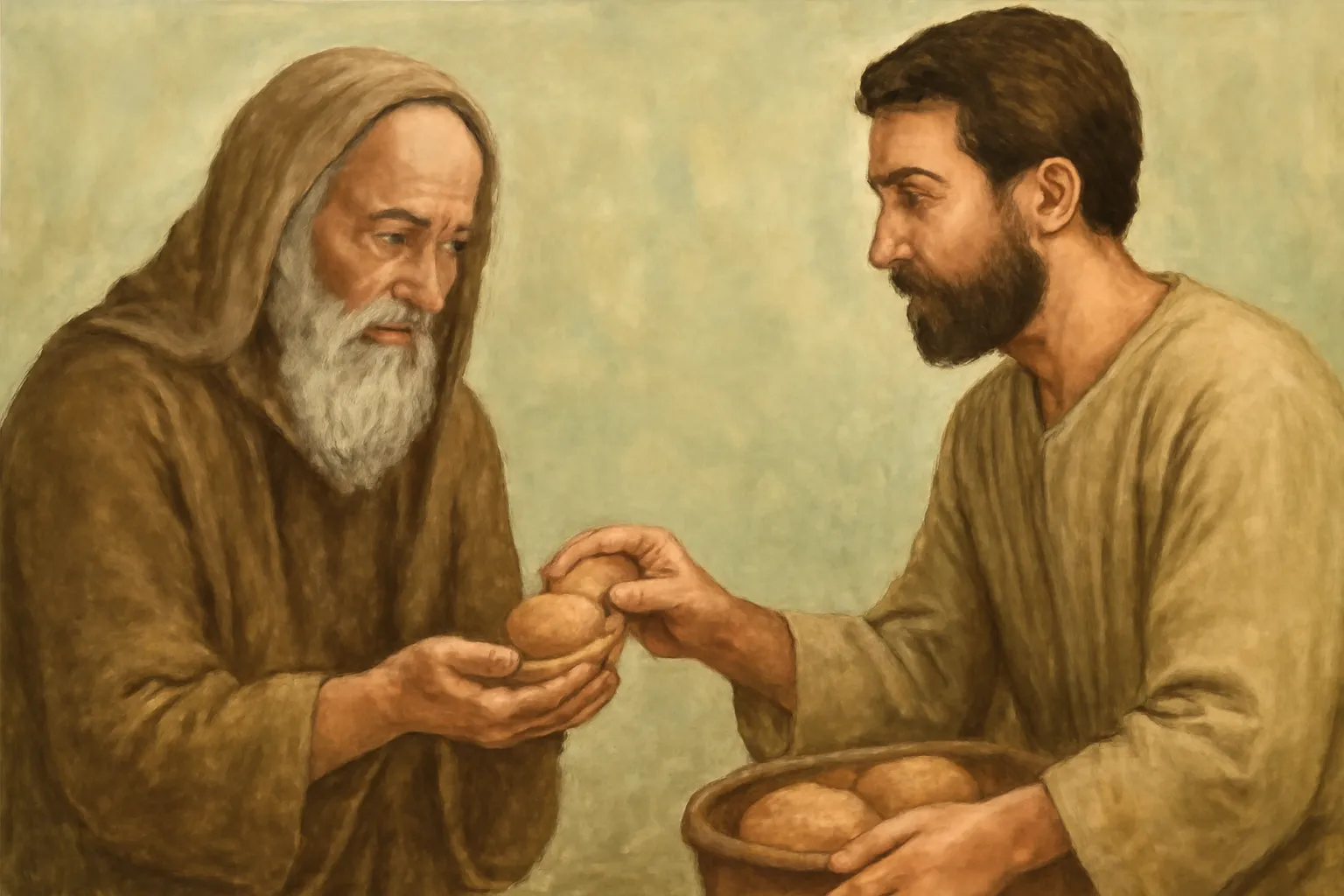
Bible Verse About Feeding the Hungry: Key Scripture Verses
The call to feed the hungry is one of the most persistent and practical themes in the Bible. Across the pages of Scripture, this imperative is not presented as a vague ideal but as a concrete expression of love, justice, and faith in action. From the oldest laws of Israel to the apostolic teaching of the early church, the hungry are a test case for what it means to live in covenant with God and in solidarity with our neighbor. In this article, we explore key verses, variations in wording, and the broader theological and practical implications of feeding the hungry. We will look at Old Testament foundations, prophetic calls, and New Testament exhortations, and we’ll offer practical ways readers today can embody these teachings in everyday life.
Overview: Why Scripture Places Emphasis on Feeding the Hungry
The biblical ethic surrounding feeding the hungry rests on several interwoven strands. First, it is a matter of compassion and mercy, recognizing the basic dignity of every person. Second, it reflects a deep conviction that God’s people are responsible for creating fair and generous systems within their communities—systems where the vulnerable are protected, not exploited. Third, feeding the hungry is a concrete expression of justice in action; it is about addressing tangible need while pointing toward the ultimate consummation of God’s justice in the world to come. Finally, Jesus’ teaching in the gospel accounts adds a personal dimension: when we feed the hungry, we encounter Christ Himself in the faces of the needy.
In this article you will find variations of Bible verses about feeding the hungry—paraphrased restatements, direct quotes in traditional translations, and clear thematic summaries. The aim is not to replace Scripture but to broaden semantic breadth, helping readers recognize how different passages speak in harmony about nourishment, shelter, and solidarity.
Old Testament Foundations: Law and Prophecy on Provision for the Needy
Legal provisions that enable sharing food and resources
Leviticus 19:9-10 (KJV): «And when ye reap the harvest of your land, ye shall not wholly reap the corners of thy field, neither shall thou glean thy vineyard, etc.; thou shalt leave them for the poor, and for the stranger.» This law fosters the practice of generosity as a regular feature of the community, not a sporadic act.
Deuteronomy 15:11 (KJV): «For the poor shall never cease out of the land: therefore I command thee, saying, Thou shalt open thine hand wide unto thy brother to thy poor, and to thy needy, in thy land.» The statement acknowledges persistent need while mandating open-handed generosity.
Proverbs 22:9 (KJV): «He that hath a bountiful eye shall be blessed; for he giveth of his bread to the poor.» A focus on благословение that accompanies cheerful giving.
Psalm 41:1-2 (KJV): «Blessed is he that considereth the poor: the Lord will deliver him in time of trouble.» The psalter links social compassion with divine care and protection.
These verses establish a rhythm: harvest and resources are communal goods; sharing is both a moral obligation and a practice that sustains the social fabric.
Prophetic calls: justice, mercy, and hospitality as true worship
Isaiah 58:7-10 (KJV): «Is it not to deal thy bread to the hungry, and that thou bring the poor that are cast out to thy house… when thou seest the naked, that thou cover him?» This passage reframes fasting as ethical action—participating in feeding, shelter, and compassionate restraint from hoarding wealth.
Micah 6:8 (KJV): «He hath showed thee, O man, what is good; and what doth the Lord require of thee, but to do justly, and to love mercy, and to walk humbly with thy God?» While not a feed-only verse, it captures the holistic posture of justice, mercy, and humble living that includes feeding the hungry as a key component.
In the prophetic voice, feeding the hungry is inseparable from righteousness. The prophets insist that without justice and compassionate action, religious rituals lose their meaning.
New Testament Teachings: Jesus and the Apostles on Nourishment and Neighbor
Direct commands and identification with the hungry
Matthew 25:35-40 (KJV): «For I was an hungered, and ye gave me meat… Then shall the righteous answer him, Lord, when saw we thee an hungered, and fed thee? And the King shall answer… Inasmuch as ye have done it unto one of the least of these my brethren, ye have done it unto me.» This is the quintessential New Testament statement linking acts of feeding to service to Christ Himself.
Luke 3:11 (KJV): «He that hath two coats, let him impart to him that hath none; and he that hath meat, let him do likewise.» A practical call to share what you have with those in need.
Luke 14:13-14 (KJV): «When thou makest a feast, call the poor, the maimed, the lame, the blind: And thou shalt be blessed; for they cannot repay thee.» Jesus blesses hospitality to marginalized guests and connects it to divine reward.
Luke 6:38 (KJV): «Give, and it shall be given unto you; good measure, pressed down, and shaken together, and running over.» Generosity returns in blessing and abundance, not in scarcity mindset.
Faith in action: mercy, practical care, and the call to generosity
James 2:14-17 (KJV): «What doth it profit, my brethren, though a man say he hath faith, and have not works? Can faith save him? If a brother or sister be naked, and destitute of daily food… Faith, if it hath not works, is dead.» The text emphasizes that genuine faith manifests in concrete acts of provision and care.
1 John 3:17 (KJV): «But whoso hath this world’s good, and seeth his brother have need, and shutteth up his compassions from him, how dwelleth the love of God in him?» A stern reminder that compassion must translate into tangible aid.
Acts 4:34-35 (KJV): «Neither was there any among them that lacked: for as many as were possessors of lands or houses sold them, and brought the prices of the things that were sold, And laid them down at the apostles’ feet.» The early church practiced communal sharing to ensure none among them lacked essentials.
In the New Testament, feeding the hungry is not just a private virtue; it is woven into the mission and identity of the church. It reflects Jesus’ own priorities and the Spirit-empowered life of believers who carry forward his work in a world marked by need and inequality.
Theological Implications: What Feeding the Hungry Says About God, Gospel, and Community
Feeding the hungry is more than a charitable act; it is a declaration about who God is and how the gospel reshapes human relationships. Several theological motifs recur across Scripture, inviting believers to view nourishment, hospitality, and shelter as integral to being a faithful disciple:
Neighbor love as the shaping principle of life in community. When we feed the hungry, we actively love our neighbor in tangible, non-discriminatory ways.
Stewardship of God’s abundance. Riches, harvests, and possessions are resources entrusted by God to be used for the wellbeing of all, especially the vulnerable.
Hospitality as worship. Inviting the hungry to share a meal or a table is a form of worship that honors God as the Source of all provision.
Justice and mercy intertwined. Biblical justice requires mercy in action—provision for needs is inseparable from right relationships and solidarity with the oppressed.
Hope for redemption. The Bible envisions a future where no one lacks daily bread, reflecting the coming reign of God where true provision is perfected.
When you read these verses together, you can see a spectrum—from individual acts of kindness to communal systems of care—that all point toward the same goal: a world where the hungry are fed and the dignity of every person is affirmed. The moral imagination of Scripture invites believers to translate divine compassion into daily practice.
Practical Applications for Today: How to Live These Verses in Modern Life
Applying these ancient texts to contemporary contexts means balancing personal generosity with communal responsibility and systemic engagement. Here are practical pathways for individuals, families, churches, and communities.
Personal generosity and everyday acts
Keep food in your vehicle or bag to share with someone who is hungry you encounter on the street or in transit.
twofold generosity: give food and also offer hospitality or resources that empower long-term wellbeing (e.g., information about local shelters, job resources).
spirit of discernment: assess needs with dignity, offering help that respects the person’s agency and preferences.
Churches and faith-based organizations
Operate or support a food pantry or meal ministry that serves consistent and diverse community members.
Partner with local farms, supermarkets, and community gardens to ensure a reliable supply chain for those in need.
Center programs on restoration and empowerment (e.g., nutrition education, cooking classes, and access to healthy foods) so assistance fosters long-term wellbeing.
Community-wide models
Develop interfaith or cross-sector collaborations to address hunger as a shared social issue, transcending boundaries of tradition and background.
Advocate for policies that reduce loss and waste (e.g., food recovery programs) while expanding access to nutritious foods for underserved neighborhoods.
Create long-term resilience initiatives, such as community kitchens, micro-enterprise support, and job training, to help families move toward stability.
In every space—from a personal meal you share to a large-scale social initiative—these verses invite action that is practical, compassionate, and anchored in a hopeful vision of God’s justice.
Key Verses by Theme: Quick Reference and Variations
To help readers recognize how the Bible speaks across different contexts about feeding the hungry, here is thematic grouping with verse references and brief notes. Each item emphasizes a core idea and offers a form of variation in wording to capture semantic breadth.
God’s blessing on generosity — Proverbs 22:9: «He that hath a bountiful eye shall be blessed; for he giveth of his bread to the poor.» Variation: Open hands bring blessings to the giver and recipient alike.
Hospitality to the vulnerable — Leviticus 19:9-10 / Luke 14:13-14 (parallels): Share the harvest and invite the marginalized to your table; blessing follows.
Compassion as integral worship — Isaiah 58:7-10: A fast that feeds the hungry and clothes the naked is true worship. Paraphrase: True worship feeds the needy.
Christ’s identification with the hungry — Matthew 25:35-40: The hungry, thirsty, stranger, and prisoner are Christ in disguise; serving them is serving Jesus. Paraphrase: In every act of feeding, you meet Him.
Practical fairness and mercy — Luke 3:11: Share meat with those who lack it; a tangible measure of neighbor-love. Paraphrase: Give what you have; do not hoard.
Faith expressed in deeds — James 2:14-17: Faith without works (including feeding the hungry) is dead. Paraphrase: Active compassion is faith in motion.
Generosity with spiritual and material goods — Romans 15:27: Gentiles participating in spiritual blessings should also share in material goods. Paraphrase: Pastoral care becomes practical care.
Community sustenance — Acts 4:34-35: No one lacked among the believers because resources were shared. Paraphrase: Communal provision sustains the church.
Compassion that sees, acts, and blesses — Psalm 41:1-2: Those who consider the poor are blessed by God; the divine blessing accompanies mercy. Paraphrase: Mercy earns divine protection and blessing.
These themed entries show how a single overarching command—feed the hungry—functions across different biblical genres: law, prophetic poetry, gospel narrative, and apostolic letter. The variations in wording underscore a consistent message: provision for the hungry is essential to faithful living.
When engaging with verses about feeding the hungry, consider the following guidelines to interpret and apply the text responsibly and effectively:
Context matters: Read verses in their immediate literary context and within the broader biblical narrative to avoid isolated interpretations.
Balance mercy with justice: Charity must be paired with strategies that promote long-term wellbeing and systemic fairness (e.g., addressing causes of poverty, not only symptoms).
Be mindful of translations: Different Bible translations phrase verses differently. Public-domain translations (like the King James Version) offer direct wording, while modern translations can illuminate nuance. When possible, compare multiple translations to gain fuller understanding.
Prioritize dignity: Treat those you serve as equals, with autonomy and dignity, rather than as mere recipients of aid.
Partner with local communities: Listen to the needs and assets of the community you serve; sustainable feeding programs often emerge from local leadership and ownership.
Move from individual acts to systemic action: Personal generosity matters, but many verses point toward building systems that reduce hunger and insecurity in the long term.
From the earliest law codes to the fervent exhortations of the apostles, the biblical call to feed the hungry remains a foundational expression of love in action. It is not merely about providing calories; it is about honoring human dignity, pursuing justice, and bearing witness to the character of God who meets the needs of the vulnerable. By embracing the breadth of Scripture on this theme, readers can cultivate a faith that is lived out in tangible, transformative care for others. Whether through personal generosity, church-led ministries, or community-wide initiatives, the invitation remains the same: let no one be hungry where you have the power to provide nourishment, shelter, and hope. In doing so, you participate in a work that Scripture presents as central to following Christ and to embodying God’s kingdom on earth.
Note: If you are looking for a ready-to-use plan, consider starting with a small, regular meal program in your church or community, couple it with nutrition education, and seek partnerships with local food suppliers and farmers. Begin with listening and learning from the needs you encounter, and scale up your efforts as relationships and trust grow. The biblical call to feed the hungry is not a program but a way of living—a daily practice of mercy that ultimately shines the light of God’s generosity into the world.
The Bible contains a pervasive and urgent message about poverty, compassion, and justice. Across both Testaments, Scripture speaks to the vulnerability of people who are poor or marginalized, and it calls God’s people to respond with mercy, generosity, and active concern for the weak, the hungry, the widow, and the orphan. This article surveys a…
Overview: Why the Bible Calls Us to Care for the Poor Across the biblical narrative, compassion for the poor is presented not as a peripheral virtue but as a core expression of faithfulness to God. When Scripture speaks about justice, mercy, and generosity, it often ties those themes to how we treat the most vulnerable…
Bible Verse for the Poor and Why It Matters The Bible speaks with a consistent and enduring emphasis on compassion, charity, and the dignity of every human being, especially those who are poor or vulnerable. For readers seeking guidance on how to respond to poverty, there exists a rich collection of verses that address not…