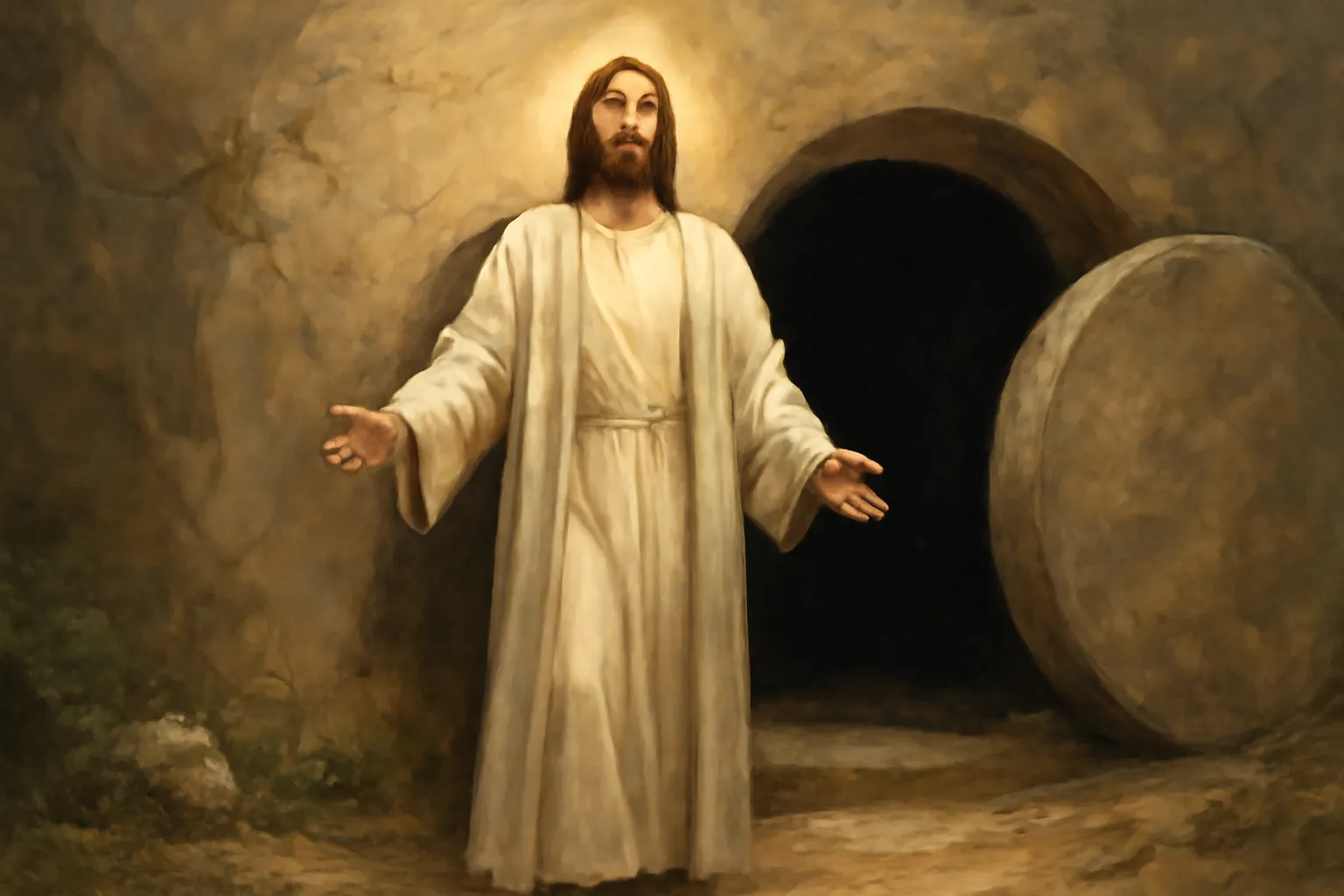
Evidence That Jesus Resurrected: Historical Proof and Key Arguments
The claim that Jesus rose from the dead has been a central pillar of Christian faith for two millennia, and it also remains a topic of intense historical inquiry. This article surveys the major lines of evidence that proponents have cited to argue for the historicity of the resurrection, while also acknowledging the methodological limits and the posture of skeptical inquiry. The aim is not to close the conversation but to map the best-supported arguments, the sources they depend on, and the major objections that scholars raise. Throughout, key terms will be highlighted to help readers grasp the distinct categories of evidence and how historians evaluate them.
Foundational claims and the scope of the discussion
When historians speak of evidence for the resurrection, they typically distinguish between several intertwined strands. These strands are not always equally persuasive to every reader, and they often gain strength when they function together rather than in isolation. The most common lines of evidence discussed are the empty tomb narratives, the post-resurrection appearances, the transformation of the disciples and early church, the creedal formulas and liturgical evidence, and the non-Christian sources that reference Jesus and early Christians. Each strand has its own kinds of data, methods of interpretation, and degrees of historical confidence.
Primary lines of evidence
1) Empty tomb narratives and early tradition
One of the earliest and most ubiquitous claims in the New Testament writings is that Jesus was buried after his crucifixion and that the tomb was found to be empty on the following day. Proponents argue that the earliest traditions about the resurrection were anchored in the discovery of the empty tomb and then developed into reports of post-resurrection appearances. The reasons this line of evidence is considered significant include:
Consistency across multiple independent sources within the early Christian corpus, with variations that scholars interpret as reflecting different memories and emphases rather than a single, uniform fabrication.
Significant role of women as witnesses to the tomb in some Gospel accounts, which many scholars view as a marker of historical credibility given the social context of witness testimony.
The rapid emergence of belief in the resurrection among early followers who initially proclaimed Jesus’s death and resurrection together as a single event with salvific meaning.
The sequence of burial and tomb discovery appears to fit within a Jewish burial practice and historical place-naming that scholars can correlate with external geography.
From a historical viewpoint, the empty tomb is not an isolated claim but a hinge on which early Christian belief turns. Critics point out that an empty tomb could be explained by alternative hypotheses (e.g., tomb destruction, misidentification of the burial place, or post-burial transport of remains). Proponents respond by noting that the empty-tomb claim becomes more plausible when considered alongside appearances and transformed lives, rather than as a standalone proof.
2) Post-resurrection appearances and experiences
A second broad category concerns reports that Jesus appeared to individuals or groups after his death. These appearances are described in multiple strands of early Christian literature, including Paul’s letters and the Gospel narratives. The strength of this line of evidence rests on several points:
Multiple, diverse sightings across different communities and timeframes. Paul mentions appearances to Peter, the Twelve, and more than 500 witnesses at one time (1 Corinthians 15:3-8), which some scholars treat as a substantial corroboration that went beyond a single community’s belief.
Consistency in core claims about the nature of the appearances (e.g., Jesus’s risen, living presence; breaking of bread; confers mission) even when peripheral details differ among accounts.
Impact on belief formation: the appearances are often cited as the turning point for the disciples from fear to bold proclamation, suggesting that they genuinely perceived something transformative and unprecedented.
Scholars debate the nature of these experiences—whether they were truly visionary, physical appearances, or a combination of subjective experiences and narrative interpretation. Proponents argue that while the exact sensory nature of the appearances is not easily fixed by modern standards, the historical claim rests on the social and psychological reality of the early church’s conviction that Jesus lived again in a transformed, empowered way.
3) Transformation of the disciples and the birth of the church
Another line of evidence concerns the dramatic change in the disciples and the subsequent spread of the Christian movement. Historians who view the evidence as supportive of resurrection tend to emphasize the following points:
From fear to bold proclamation of the gospel in the face of persecution and potential martyrdom suggests a powerful underlying conviction that could plausibly be linked to a real experiential event.
Overcoming social and cultural barriers: the early Christian movement included women, former skeptics, and people from various ethnic backgrounds, which some argue is unlikely to be the product of a mere rumor or hoax among a tight-knit group.
Martyrdom narratives surrounding key figures are often invoked as evidence that these beliefs were deeply held and shared, not easily abandoned under duress or persecution.
Critics often offer alternative explanations for the disciple’s zeal, such as apocalyptic expectations, social dynamics, or later legend-building. Proponents, however, contend that the coherence and intensity of the early proclamation, including willingness to die for belief in the resurrection, is best explained by a genuine conviction that something real and transformative happened.
4) Early creeds, liturgy, and doctrinal formulations
Embedded in the early Christian tradition are creeds and confessional formulas that affirm the core resurrection claim. These doctrinal elements function as evidence for the historical core of belief because they appear to predate later theological elaborations. Notable features include:
Earliest creedal statements that summarize Jesus’s death and resurrection in a compact formula, often cited as evidence of an early, shared memory of events surrounding Jesus’s death and rising.
Pauline confessions (e.g., 1 Corinthians 15), which many scholars date to within a few decades of Jesus’s death and argue to reflect a traditional, early rhetorical summary adopted by multiple communities.
The pattern of reports in which the resurrection appears as a central claim that shapes subsequent Christian life, worship, and ethical instruction, indicating it was foundational to early communities rather than a later accretion.
Detractors argue that creedal materials could reflect nostalgic memory or theological evolution rather than direct historical observation. Proponents counter that the pervasiveness and early dating of these creeds reduce the likelihood that they were retrofitted or invented after the fact, and instead reflect a shared, early conviction about the significance of Jesus’s resurrection.
5) Non-Christian sources and external attestation
Historical inquiry often looks to sources outside the Christian tradition to triangulate the historical plausibility of events. In the case of Jesus’s resurrection, several non-Christian sources are commonly discussed:
Tacitus and Roman references: the historian Tacitus mentions Christians and their worship of Christ in Rome, noting that Christ suffered under Pontius Pilate and that believers persisted despite persecution. While not detailing the resurrection itself, such references establish the existence of Jesus and the early movement.
Josephus: certain passages in Jewish antiquities are cited as mentions of Jesus and James (the «brother of Jesus») that may preserve memory of Jesus’s life and the early church’s claims. Some scholars acknowledge potential later Christian interpolation but argue that the surrounding context preserves authentic material.
Early rabbinic and Greek sources that reference Jesus or Christian worship help situate the resurrection claim within a broader historical landscape, even if they do not validate the event directly.
Critics point out that these sources are indirect and sometimes late, which makes their use as evidence for the historical occurrence of the resurrection more complex. Proponents contend that when combined with internal Christian sources, non-Christian attestations still contribute to a convergent line of evidence suggesting that Jesus was a real figure who inspired a belief in his resurrection fairly early in the first century.
Methodological considerations in evaluating the evidence
Historians approach the resurrection with careful attention to methodology, because absolute proofs of ancient events are rare. Several methodological principles guide this discussion:
Evaluating sources by genre and context: ancient texts—whether biographical, epistolary, or liturgical—have distinct purposes and levels of reliability, which historians must account for.
Cross-source corroboration: the convergence of information from multiple independent sources increases plausibility, even if each source carries its own limitations.
Describing probabilities rather than certainties: the historical case is typically about likelihoods and how well the data support competing explanations.
Consideration of alternative hypotheses: naturalistic and non-supernatural explanations should be weighed against supernatural interpretations, with careful attention to the strengths and weaknesses of each.
In this regard, proponents emphasize the cumulative weight of the traditional sequence—empty tomb expectations, appearances, transformed communities, creedal anchors, and external attestation—while recognizing that no single piece on its own provides an unassailable proof for every reader or scholar. The debate often centers on how well the combined data withstand the most plausible skeptical challenges.
Common objections and scholarly responses
Objection: The tomb could have been empty for natural reasons
Critics suggest that the burial site could have been neglected or the body moved, leaving the appearance of an empty tomb in the wake of political or social pressures. Responses from proponents include:
Consistency across accounts that the empty tomb is reported in several independent sources, making a single misplacement less probable.
Discrepancies in narrative details are interpreted as signs of varying memory rather than deliberate fabrication, which, historically, can be more credible than a perfectly synchronized fabrication.
Association with women as witnesses is argued to be unlikely if the accounts were manufactured, suggesting some degree of historical memory rather than invention.
Objection: Post-resurrection appearances were visionary or metaphorical
Some skeptics propose that the appearances were visionary experiences—subjective phenomena rather than literal physical resurrections. Supporters respond by noting:
Varied appearances to different groups, including the disciples, a larger audience (the 500 or more in Paul’s account), and non-Jewish individuals, which complicates a purely symbolic reading.
Continuity with kerygma and worship that treats the resurrection as a central, ongoing reality rather than a one-time symbol.
The immediacy of the belief formation in early Christian communities, which often interpreted what they experienced as a real, ongoing presence rather than a purely symbolic memory.
Objection: Early creeds can be retrospective or confessional edits
Critics argue that creedal formulas may have crystallized later as doctrinal boundaries were established. Proponents counter with:
Dating of Pauline creeds close to the events, often within a few years or decades after Jesus’s death, suggesting an early origin rather than late invention.
Multiple attestations across diverse communities that make retroactive harmonization less likely as the sole explanation.
Liturgical and confessional usage that would be odd if the formulas were purely retrospective inventions used to enforce doctrinal conformity.
Objection: Non-Christian sources do not confirm the resurrection itself
External sources can corroborate that Jesus existed and that early Christians believed in him, but they do not provide a direct account of the resurrection. Proponents answer with:
Convergence of external and internal data—the combination of non-Christian attestation with early Christian testimony strengthens the overall historical narrative, even if each source has limits.
The burden of proof in ancient history is often about demonstrating that the event occurred in a way that would produce the observed chain of beliefs and traditions, not only about the existence of the figure.
Complementary lines of inquiry
Beyond the core evidentiary strands, historians often look at ancillary lines of inquiry to understand why belief in the resurrection took hold and persisted:
Historical plausibility of first-century Jewish messianic expectations and how Jesus’s death would have interacted with those expectations.
Social dynamics of early Christian communities, including mutual aid, shared meals, and missionary zeal, which could contribute to the resilience and spread of the belief.
Impact of the resurrection claim on early Christian ethics and missionary activity, which helped shape a rapidly growing movement that redefined social and religious boundaries.
These complementary investigations do not in themselves certify a supernatural event, but they illuminate why the resurrection claim emerged, persisted, and influenced a broad network of communities in the Roman world.
Historical synthesis: how the evidence fits together
When scholars assemble the available data, several patterns emerge that inform the overall assessment. A synthesis often highlighted by proponents is the following:
Minimal facts approach: even among skeptics, certain core facts are widely recognized as historically plausible—Jesus’s crucifixion under Pontius Pilate, the emergence of a belief that Jesus was alive after death, and the commitment of Jesus’s followers to proclaiming this claim despite opposition.
Convergence of witness testimony from early Christian communities, Paul’s letters, and the gospel narratives—despite differences in detail, the core claim remains consistent across sources.
Critics may argue that the weight of these strands still falls short of providing definitive proof in the scientific sense. However, within the context of ancient history, many scholars consider the aggregated weight of these lines of evidence to be substantial enough to support a historically credible claim about the resurrection as an event that had real consequences for faith communities in antiquity.
Key terms and concepts to understand the discussion
To navigate discussions about the resurrection with greater clarity, here are several terms and concepts often used in scholarly debates:
Historical credibility: the degree to which a claim is supported by the best available evidence and methodology within the field of history.
Epistemic humility: recognizing the limits of certainty when dealing with ancient events, while still assessing relative probabilities.
Explanatory scope: how well a hypothesis explains a wide range of observed data, including early beliefs, texts, and social dynamics.
Convergence: the phenomenon whereby independent sources point toward a common conclusion, increasing the likelihood that the conclusion has historical merit.
Implications for faith, history, and faith-formation
Regardless of where one sits on the spectrum of belief or skepticism, the historical discussion about the resurrection has several notable implications:
Interdisciplinary relevance: the topic intersects theology, biblical studies, ancient history, archaeology, and anthropology.
Impact on late antiquity: belief in the resurrection contributed to dramatic social and cultural changes, influencing worldviews, ethics, and institutions in the Roman world and beyond.
Dialogue with secular history: for secular readers, the resurrection debate offers a case study in how historians weigh extraordinary claims with limited evidence.
Conclusion: assessing the weight of the case
In sum, the question of whether there is compelling historical evidence for the resurrection of Jesus is answered differently depending on the criteria one uses and the weight one assigns to various kinds of data. The strongest case often presented by proponents rests on a synthesis of several interlocking strands: the empty tomb narrative, the post-resurrection appearances, the dramatic transformation of the disciples, the early creeds and liturgical formulas, and the interface with non-Christian sources. When these strands are considered together, they create a pattern that many scholars judge to be historically meaningful, even if no single piece alone proves the event beyond doubt.
For readers who come to this topic with different presuppositions, the most constructive approach is to examine the evidence on its own terms, weigh competing explanations, and assess how well the data collectively support various hypotheses about what happened and why it mattered. While the question of supernatural occurrence is ultimately a matter of ongoing inquiry and personal interpretation for many people, the historical discourse remains a robust field in which methodological rigor, careful source evaluation, and open dialogue continue to refine our understanding of one of history’s most influential claims.
In the end, the discussion about evidence for the resurrection invites a broader reflection on how ancient communities remembered meaningful events, how belief is formed and sustained, and how historians use the past to illuminate human experience—whether in matters of faith, doubt, or the enduring search for historical truth.