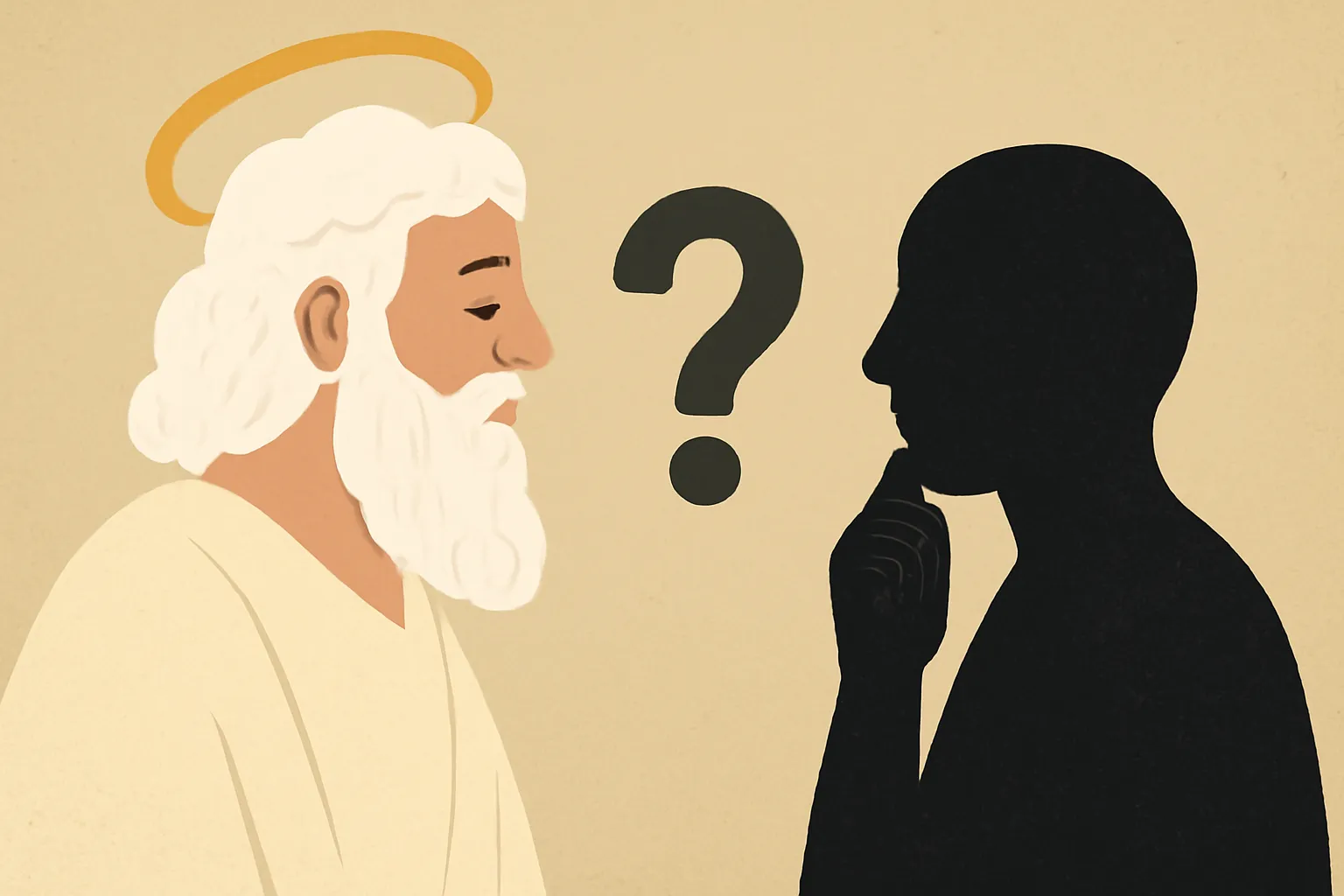
Is God True or Not? An Honest, Balanced Look at the Debate
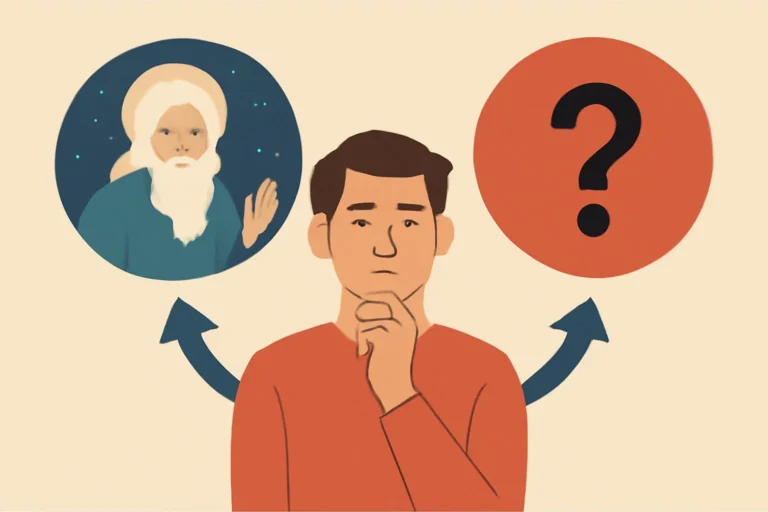
The question “Is God true or not?” sits at the intersection of philosophy, theology, science, history, and personal experience. It is not a single-point test with a single, universally agreed-upon method of answering. Rather, it is a family of related questions about truth claims, evidence, interpretation, and meaning. In this article, we pursue an honest, balanced exploration of the debate. We will examine what people mean by truth in divine claims, survey the strongest ways proponents argue that God is true and that God is not true, consider how different traditions frame the issue, and offer a practical framework for weighing competing claims without coercion or zealotry. The aim is not to force a verdict, but to illuminate the options, the arguments, and the uncertainties that surround this enduring inquiry.
Throughout the discussion, you will encounter variations of the central phrase, including Is God true?, God is true, God is not true, God being true, and the truth of God. These variations reflect different angles—whether we are talking about a specific doctrinal truth, a personal conviction, an epistemic assessment, or a metaphysical claim about reality. The goal here is to map the landscape of the debate rather than to prescribe a particular belief system.
What does it mean for a claim about God to be true?
Before weighing arguments, it helps to clarify what we mean by truth in the context of divine claims. The question “Is God true?” depends on several layers of interpretation, including what one means by “God,” what counts as evidence, and what standards of truth one accepts. Philosophers and theologians typically distinguish among different kinds of truth claims and their corresponding criteria:
Empirical truth versus metaphysical truth. Some people ask for empirical, testable support for God’s existence; others are comfortable with metaphysical or experiential claims that lie outside scientific testability.
Coherence truth. A claim about God is true to the extent that it coheres with a wider system of beliefs (mythic, ethical, cosmological, and experiential) in a minimal set of contradictions.
Pragmatic truth. A proposition about God might be considered true if it leads to coherent practices, meaningful life, and positive consequences for individuals or communities, even if it cannot be proven in a laboratory.
Correspondence truth. Some approaches seek a direct correspondence between divine claims and an objective reality that could be described, in principle, by successful inquiry—whether scientific, philosophical, or historical.
Epistemic humility. Acknowledging limits: some people grant that human cognition may be fallible when dealing with transcendent realities, so confidence is proportional to the strength and scope of the evidence available.
In practice, debates about the truth of God often mix these criteria. Theists frequently appeal to a combination of cosmological, moral, historical, and experiential considerations; atheists and agnostics may emphasize empirical limits, problem solving, and alternative explanations. In any robust discussion, it is valuable to state clearly which notion of truth you are applying and to examine how well it fits with the specific claims under consideration.
The Case for God is true
Proponents who argue for the truth of God typically organize their case around several standard lines of reasoning. While each argument has its critics, together they form a network of considerations that many find compelling. We summarize the main strands and also indicate common objections so that the discussion remains balanced.
1. The Cosmological Argument
The cosmological argument posits that the existence of the universe requires a cause or a ground that lies outside the universe itself. In many formulations, this ultimate cause is identified with a personal, necessary, intelligent being—often understood as God.
Contingency and explanation. Everything we observe may depend on something else for its existence. If everything that exists has an explanation outside itself, there must be an ultimate explanation that itself does not rely on anything else.
A cause beyond the universe. Since space, time, and matter began at or near the Big Bang (in many scientific models), the cause of the cosmos must lie beyond space-time—possibly a timeless, spaceless ground of being.
Fine-tuning considerations integrated. Some versions of the cosmological argument are paired with teleological considerations (see below), which appeal to the extraordinary order and regularity observed in the laws of nature as evidence of an intentional designer.
Common objections include the possibility of a naturalistic origin of the universe, the idea that the cause could be non-divine, and the critique that a chain of explanation might be infinite or unknown. Proponents respond that the *explanatory power* of a non-theistic account often faces steeper questions about why complexity and order arise without an intelligent ground. In debates about God is true, the cosmological view remains a central anchor for theistic belief but is one part of a larger mosaic of arguments.
2. The Teleological Argument (Fine-Tuning)
The teleological argument points to the remarkable order, constants, and laws that allow life and complexity to emerge in the universe. Some argue that the degree of precision in physical constants is improbable under naturalistic models, suggesting the presence of a designer who set the conditions to permit life—the idea some identify with God.
Fine-tuning for life. The observed values of fundamental constants (such as the strength of gravity) appear delicately balanced to permit chemistry and biology.
Information and complexity. The emergence of complex biological information is argued by some to require an intelligent source beyond random processes alone.
Inference to a designer. While not proving the designer’s exact nature, supporters claim it makes sense to posit an intelligent cause for the order we observe.
Critics cite alternate explanations such as the possibility of a multiverse, selection effects, or the limits of current understanding of physical law. Still, many find the teleological line persuasive as part of a broader case for God’s truth claims, especially when combined with other kinds of evidence.
3. The Moral Argument
The moral argument contends that objective moral values exist and are best explained by the existence of a transcendent source of morality. In this view, moral law is not merely a social construct but points to a foundation in a personal, purposeful God who grounds right and wrong.
Objective duties. If moral duties are merely subjective or culturally relative, some argue, we would lack robust justification for universal praise or blame.
Transcendent grounding. A moral lawgiver provides a universal standard against which human conduct can be measured.
Explanation of moral progress. The sense that humanity can grow morally across generations may be better explained by a shared moral standard grounded in a divine source.
Critics argue that morality can be explained through evolution, social contracts, and enlightened reasoning without invoking a supernatural lawgiver. They also challenge the notion of objective morality being anchored in a single divine source, given the diversity of moral beliefs across cultures. Supporters of the moral argument typically acknowledge these challenges but maintain that the strongest overall package of ethical reasoning supports a theistic framework.
4. Historical and Experiential Evidence
Some writers point to historical claims about religious events and experiences that, in their view, support belief in God’s reality. This includes the emergence of religious communities, claims about revelations, miracles, and transformative personal experiences.
Historical continuity. The persistence and influence of sincere religious movements across cultures and centuries are presented as evidence of something real behind the claims.
Religious experience. Many individuals report encounters with a transcendent reality that they interpret as encounters with God.
Prophetic and scriptural claims. Some argue that scriptures provide reliable revelation or credible memory of divine activity.
These sources, however, are open to questions about interpretation, bias, and alternative explanations. Proponents of theistic truth claims often treat such evidence as part of a cumulative case, not as a final, standalone proof.
The Case Against God is true
On the opposing side, many philosophers, scientists, and thoughtful individuals articulate why God is not true or why the question remains open, unsettled, or ultimately insoluble on the terms typically proposed. The strongest arguments here are aimed at highlighting gaps in evidence, exposing philosophical weaknesses, and offering naturalistic explanations for phenomena often attributed to deity.
1. The Problem of Evil and Suffering
One of the most persistent objections to theism is the presence of evil and suffering in the world. If an all-powerful, all-knowing, all-good God exists, why would there be gratuitous or seemingly unnecessary suffering?
Inconsistent triad. The standard formulation notes that if God is omnipotent, benevolent, and all-knowing, evil should be avoidable; yet evil exists.
Theodicies. Theists offer responses (free will, soul-making, greater goods, epistemic limits) to reconcile the existence of evil with divine goodness. Critics challenge the sufficiency or coherence of these replies.
Empirical and moral concerns. The scale and distribution of suffering, particularly among innocent beings, raise serious questions about the compatibility of a beneficent deity with observed reality.
While the problem of evil does not automatically disprove the existence of God, it does complicate confident assertions that “God is true” in the sense of a simple, unproblematic alignment between belief and reality. It pushes the dialogue toward nuanced accounts of the nature of God, freedom, and the purpose of existence.
2. The Question of Evidence and Falsifiability
From a methodological standpoint, a robust scientific or empirical standard demands evidence that is testable, repeatable, and subject to falsification in principle. Critics of theism often argue that theistic claims are not readily testable by the same standards, making them less likely to achieve the status of objective truth within a scientific framework.
Non-testability. Many divine attributes (omniscience, omnipotence, omnipresence) may lie beyond the reach of empirical verification.
Non-overlapping magisteria (a view attributed to Stephen Jay Gould by some). Religion and science may address different kinds of questions; if so, the claim that God is true cannot be settled by scientific methods alone.
The burden of proof. Critics argue that theists must carry the burden to show why their claims deserve belief beyond reasonable doubt; conversely, theists may argue that some truths transcend empirical testing and require means other than scientific demonstration.
These considerations do not automatically dispose of theological claims, but they complicate the assertion that God is true can be established with the standard criteria of empirical science alone.
3. Pluralism, Relativism, and Scriptural Inconsistencies
Across the world, multiple religious traditions claim access to truth about God. If many different, mutually exclusive religious systems assert that they possess the correct understanding of God, several challenges emerge:
Religious diversity. The fact that diverse communities disagree about God’s nature and will invites the question of epistemic access and interpretive frameworks.
Scriptural contradictions. Within a single tradition, doctrinal disagreements and apparent contradictions can undermine certainty about the truth of specific statements about God.
Epistemic humility. Some respond by arguing that truth about God is available to some but may require disciplined interpretation, metaphorical language, or limited epistemic access until certain conditions are met.
From this vantage point, critics argue that embracing a single, absolute claim about God’s truth becomes precarious when there are competing, incompatible claims across traditions. Supporters often reply by appealing to reasons for preferring one tradition over others, or by suggesting that all religious systems ultimately point to a shared, underlying reality that is partially apprehended rather than fully comprehended.
Philosophical Perspectives on Truth Claims About God
Beyond particular arguments for or against God’s truth, there is a long-standing discussion about how humans ought to know what they claim to know about divinity. Several philosophical orientations shape this debate, each with its own method, strengths, and limitations.
Epistemology of Religious Belief
Evidentialism. This position emphasizes evidence and justification. Proponents require strong justification for religious belief, often focusing on empirical data, historical reliability, or the internal coherence of a worldview.
fideism. Some hold that matters of ultimate truth about God transcend reason and that faith, revelation, or mystic experience provides the primary source of knowledge.
Reliabilism. This approach treats cognitive processes that reliably produce true beliefs as a basis for justification, even if the process is not consciously scrutinized by the agent.
Coherence theory. Truth for some thinkers is the coherence of beliefs within a system, rather than isolated empirical proof.
These positions are not mere abstract labels; they affect how individuals assess the question “Is God true?” and how they weigh the claims of others who hold different epistemic commitments.
Definitions of God: Personal, Impersonal, Divine Ground
It is important to note that God is not a single, universally agreed-upon concept. For some, God is a personal, providential being who interacts with humans and answers prayers. For others, God is a necessary metaphysical ground, an impersonal force, or a set of ultimate realities. Still others view God as a symbol or category that expresses human longing or moral ideals. Because the semantic scope of “God” varies, the question “Is God true?” becomes a question about which conception of God one has in mind and which criteria apply to that conception.
Foundationalism, Coherentism, and Theism
Different theories of rational justification offer different standards for accepting divine claims. Foundationalists might seek self-evident or indubitable considerations that ground belief. Coherentists focus on how well a belief fits with a larger network of beliefs. Theists often blend approaches, asserting that a core of experience or revelation is then integrated with a broader system of moral and existential reasoning. Understanding these frameworks helps clarify why people arrive at different conclusions about the truth of God.
Historical Context and Traditions
The question “Is God true?” has a long history that has shaped civilizations, cultures, and scientific inquiry. The way different eras and communities approach this question reveals both continuities and shifts in emphasis. A historical perspective can illuminate why even well-intentioned thinkers can disagree about God’s truth claims.
From Antiquity to the Enlightenment
In ancient times, many civilizations framed the divine in anthropomorphic terms, with gods who intervened in human affairs. Philosophers such as Aristotle and, later, the medieval theologians of Europe and the Islamic world sought to show how a transcendent cause could be consistent with observed order in nature. The Enlightenment brought new pressures: empirical reasoning, skepticism toward miracles, and a shift toward naturalistic explanations. These changes did not erase religiosity, but they transformed the landscape of debate about God’s truth.
Modern Science, Religion, and Dialogue
Today, science and religion interact in a variety of ways, from conflict to constructive dialogue. Some scientists articulate a non-overlapping approach to reality, suggesting that science explains the natural world while religion addresses meaning, purpose, and value. Others pursue integrative frameworks that see science and faith as compatible, each illuminating different aspects of reality. In debates about God’s truth, such conversations often hinge on how one accounts for the scope and limits of scientific explanation and whether supernatural claims can be reconciled with an evidence-based worldview.
Personal Experience, Faith, and the Limits of Subjectivity
A great deal of discourse about God is true involves personal experience. People across traditions report encounters, insights, or transformations that they interpret as signals of the divine. These subjective reports are powerful because they affect lives, communities, and moral commitments. Yet they also pose challenges for objectivity and cross-cultural comparison.
Subjective Experience as Evidence
Religious experiences. Individuals may describe moments of perceived encounter with the divine, a sense of awe, consolation, or guidance.
Transformation and meaning. A belief about God can catalyze moral growth, resilience, and community cohesion, which some view as supportive evidence for the truth of those beliefs.
Limits of interior testimony. Personal experiences are susceptible to cognitive biases, psychosocial factors, and neurological explanations, which invites careful scrutiny and corroboration when possible.
Different people respond to subjective experience in different ways. Some treat it as decisive private evidence; others insist that it must be corroborated by other lines of reasoning and by external data. A balanced discussion about God’s truth recognizes the power and limits of experience without relinquishing the possibility that experience can be meaningful in forming warranted belief.
A Practical Framework for Evaluating the Debate
For readers seeking to engage this topic constructively, a practical framework can help organize the evaluation. The following steps are designed to foster fair-minded inquiry without surrendering intellectual honesty.
Clarify the notion of God. Define which conception of God you are evaluating (personal God, impersonal principle, supreme intelligence, etc.). The truth-claims depend on this definition.
Distinguish among kinds of evidence. Separate empirical data, historical claims, philosophical arguments, experiential reports, and ethical implications. Each category warrants different standards of proof and scrutiny.
Evaluate coherence and simplicity. Do the claims fit together with what you already believe about the world? Are there contradictions or unwarranted leaps in reasoning?
Consider alternative explanations. Naturalistic frameworks, explanatory models, and non-theistic interpretations should be weighed against theistic accounts.
Account for the problem of evil. If you defend belief in God, show how your account handles suffering in a way that is philosophically plausible and emotionally credible.
Acknowledge epistemic humility. Recognize the boundaries of what can be known with confidence and be willing to revise beliefs in light of new evidence or better arguments.
Engage respectfully with others. The debate about God’s truth is deeply personal for many people. Strive for clarity, listening, and intellectual charity even when disagreements persist.
Readers may wonder whether the debate over God is true has a final, definitive conclusion. The short answer is: it depends on what kind of truth you seek and what standards you require. For some, the strongest, most persuasive case rests on a composite of philosophical arguments, experiential reports, and historical considerations that together make a coherent and meaningful worldview; for others, the lack of universally compelling empirical proof, the diversity of religious claims, and persistent challenges like the problem of evil keep the issue unsettled. There is no universally accepted tribunal for divine truth, and most people occupy a spectrum—from leaning toward belief to leaning toward skepticism—rather than occupying a fixed, absolute position on God’s truth.
As you read and reflect, you may encounter repeated refrains: God is true is sometimes presented as a straightforward conclusion, while God is not true is offered as a provisional stance pending future evidence or better arguments. In practice, most honest readers will find themselves navigating a nuanced middle ground: acknowledging compelling arguments on both sides, recognizing the limits of human knowledge, and cultivating a thoughtful, careful stance that can be revised in light of new information. The goal is not triumphal certainty but robust understanding and responsible inquiry.
Key Takeaways for Readers
Define the claim clearly. Before judging whether God is true, specify which concept of God you are addressing and what counts as evidence.
Appreciate the plural sources of evidence. Philosophical arguments, historical investigation, ethical considerations, and experiential reports all contribute to the debate, but each has its own standards and limitations.
Recognize the role of epistemic frameworks. People’s conclusions are strongly influenced by their underlying beliefs about knowledge, reason, and the nature of reality.
Be open to revision. A rigorous inquiry accepts the possibility of updating positions when confronted with strong counterarguments or new data.
Engage with others with humility. The subject touches deeply held identities and communities; a thoughtful conversation emphasizes respect, clarity, and shared search for truth.
In the end, whether God is true remains a question that invites ongoing exploration rather than a one-time verdict. The debate remains alive because it speaks to fundamental concerns about existence, purpose, morality, and the possibility of a reality beyond immediate human experience. The honest, balanced approach is to walk the middle path that welcomes rigorous argument, careful evidence, and compassionate dialogue—even when the answers are not finally settled.
Further reflections: How different traditions address truth claims about God
Across religious traditions, the notion of truth about God is illuminated in distinct ways. Some traditions emphasize revelation and sacred texts as authoritative sources of knowledge about the divine, while others prioritize philosophical reflection, moral living, or mystical experience as routes to truth. A few guiding contrasts:
Revelation-focused traditions. In several monotheistic faiths, sacred writings are viewed as divinely inspired and authoritative. The truth claims about God are interpreted through these texts and communities’ long-standing interpretive practices.
Natural theology and philosophy. Some traditions encourage investigating God through reason, observation, and argument, with an emphasis on how natural features of the world may point toward a divine cause or purpose.
Mystical and experiential paths. Other lines of inquiry stress direct encounter with the divine through contemplation, meditation, or ecstatic experience as pathways to truth about God.
Ethical and social dimensions. For many, the truth of God is ultimately validated by the transformation of character, justice, and social harmony—how belief translates into action and community life.
Each approach offers insights while also facing critiques. A balanced inquiry recognizes that the method by which truth about God is pursued can shape the kinds of evidence deemed persuasive and the kinds of questions that are considered legitimate.
Navigating the question with openness and rigor
The question Is God true or not? invites, challenges, and enriches everyone who asks it. A fair and thorough examination requires clarity about what is being claimed, a careful appraisal of diverse kinds of evidence, and a willingness to revise beliefs in light of reason and experience. It also benefits from humility: recognizing the limits of human knowledge when dealing with questions that lie beyond direct empirical verification. Whether one ultimately affirms God is true, rejects God is true, or remains agnostic about the central claims, the discussion itself can be a meaningful exercise in critical thinking, ethical reflection, and dialog with others who seek truth in an increasingly complex world.
As you move forward, consider returning to the core questions behind the debate: What would count as adequate evidence for you? How do you weigh competing arguments in light of your broader worldview? Do you find more persuasive the coherence of a theistic framework, or the explanatory power of naturalistic theories? And most importantly, how does your conclusion affect how you live, relate to others, and engage with the mysteries that remain beyond complete human understanding?
Arguments for and Against God’s Existence: A Balanced Analysis The question of whether there is a God has occupied philosophers, theologians, scientists, and laypeople for centuries. It is not a single issue but a family of related arguments, each with its own strengths, assumptions, and counterarguments. This article offers a comprehensive yet even-handed survey of…
The phrase “God’s Name Is I Am” has resonated through centuries as a summary of the divine self-disclosure that appears in the Bible. This article explores the meaning, significance, and biblical context of the I Am name, including its Hebrew roots, its appearances in both the Old and New Testaments, and its ongoing impact on…
The question of whether God exists has echoed through philosophy, theology, and public discourse for centuries. Among the many lines of inquiry, the Moral Argument for God’s Existence stands out for grounding the belief in a divine source of moral order. This article offers a comprehensive analysis of the moral argument in its various forms,…
God and Rest: Finding Divine Peace and Renewal In a world that moves at a relentless pace, the idea of rest as more than mere cessation of activity becomes a doorway to deeper meaning. When paired with the concept of the divine, rest transforms from a practical need into a spiritual practice—an invitation to encounter…