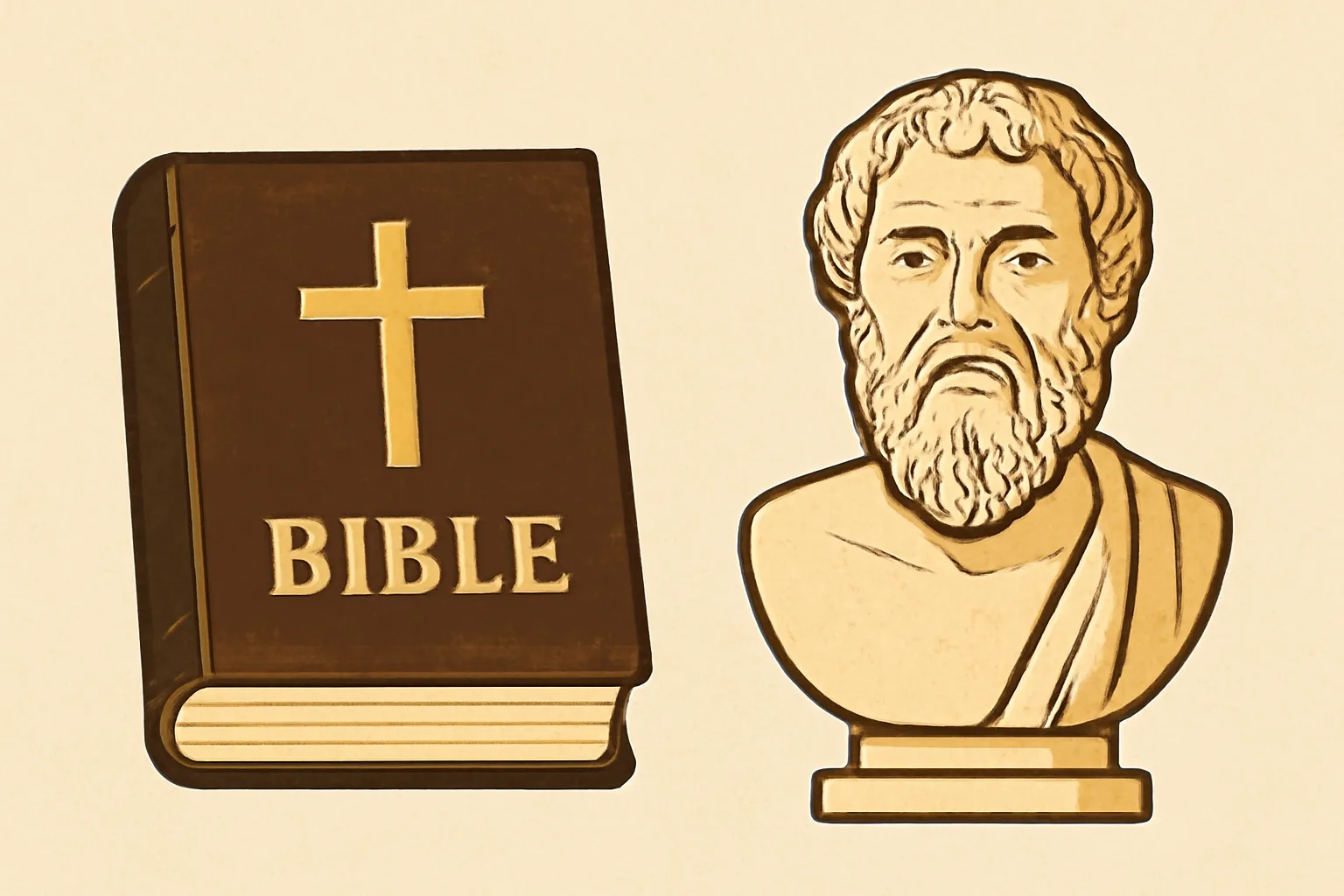
Bible Philosophy: A Practical Guide to Faith, Reason, and Theology
Biblical philosophy sits at the intersection of belief and inquiry. It asks not only
what we ought to believe, but why we believe it, how we know it, and what difference those beliefs
make in daily living. This guide is designed to be practical: a road map for students, pastors,
educators, and curious readers who want to cultivate a coherent, humble, and fruitful
relationship between faith, reason, and theology.
In the broad sense, philosophy of the Bible encompasses a range of questions—from the
nature of God to the meaning of human responsibility—while remaining rooted in the claims of
Scripture and the lived realities of a faith community.
Throughout this article you will see variations of the phrase biblical philosophy, Scripture-based philosophy, and philosophy of Scripture used interchangeably to capture the same core aim:
to think rigorously about God, the world, and our place within it as the biblical story
unfolds. While there are many emphases within bible philosophy, this guide
highlights practical methods, key concepts, and ethical implications that can help readers
develop a coherent worldview without sacrificing humility or devotion.
Foundations of Bible Philosophy
At its core, foundation in the philosophy of the Bible rests on three
commitments: revelation, reason, and community. These commitments are not enemies but
companions in the pursuit of truth, goodness, and beauty as the biblical narrative presents
them.
Revelation as source and authority:
Scripture is a primary source of knowledge about God, creation, and human nature.
Divine revelation is understood through interpretive humility and careful
exegesis (the process of drawing meaning from texts in their original context).
Tradition and the witness of the church can illuminate difficult passages, but scriptural authority remains central.
Reason as gift and discipline:
Reason is not the enemy of faith; it is a tool for clarifying beliefs and testing
them against experience, history, and logic.
Philosophical theology uses concepts, categories, and critical methods
to articulate doctrines in ways that are coherent, testable, and persuasive.
Critical thinking, when oriented toward love and truth, protects against
idolatrous certainty and invites ongoing reform of belief in light of new evidence or
compassionate insight.
Community as a living laboratory:
The church, family, and broader communities are testing grounds where beliefs are
confessed, practiced, and refined.
Theologies mature through dialogue with other traditions, cultures, and
disciplines, yielding a more robust biblical philosophy that can
engage real-world questions.
This tripartite framework—revelation, reason, and community—helps avoid an overemphasis on
either fideism (faith without reason) or rationalism (reason without faith). The result is a
balanced approach to philosophy of the Bible that privileges truth, love,
and responsibility as central aims.
Two complementary paths: interpretation and application
A practical understanding of Bible philosophy often follows two complementary paths:
Exegesis and hermeneutics—proper interpretation of biblical texts.
Philosophical reflection and ethical application—how interpretations translate into life, doctrine, and public
discourse.
When these paths are integrated, readers gain a robust sense of how God is disclosed in
Scripture and how that disclosure shapes beliefs about knowledge, reality, and moral life.
Faith, Reason, and the Christian Intellectual Tradition
The relationship between faith and reason has been debated since the
early centuries of the church. The term Christian apologetics emerged as a discipline devoted to defending the
coherence of Christian belief in the face of skepticism. Over time, the field expanded
to include not only defense but also constructive engagement with science, history, and
philosophy.
Historical trajectories
Throughout history, several streams of biblical philosophy have emerged:
Classical theism and metaphysical reasoning about God’s existence and nature, as
seen in philosophical theology and natural theology.
Transcendental and evidential approaches that examine how belief in God
makes sense of experience, morality, and the intelligibility of the universe.
Neo-Calvinist, Arminian, and Reformational perspectives that explore human
freedom, responsibility, and divine sovereignty within biblical categories.
Contemporary integration of science, hermeneutics, and ethics to address
issues such as bioethics, economics, and social justice from a Scripture-informed frame.
Principles for a thoughtful dialogue
When approaching questions of faith and reason, consider these guiding principles:
Clarity in definitions prevents confusion about terms like truth, knowledge, and
evidence.
Coherence among beliefs reduces internal contradictions between doctrine,
experience, and practice.
Charity in argumentation—interpret opponents’ views fairly and respond to
their strongest points.
Contextualization—interpret biblical claims in their historical, cultural, and
literary contexts while remaining faithful to the text’s aims.
A responsible philosophy of the Bible does not force Scripture into a system but
seeks to illuminate the system already implicit in biblical witness: God is a personal, holy,
and triune being; humanity bears responsibility before God; salvation comes through God’s gracious
action in history; and ethical life is a response to revelation.
Hermeneutics and the Philosophy of Interpretation
Hermeneutics is the art and science of interpretation. In biblical hermeneutics,
interpretation is not a solitary exercise but a disciplined practice that honors the text, its
genre, and its original audience.
Core hermeneutical commitments
Authorial intent matters, but so does the text’s larger canonical witness.
Literary context—consider genre (narrative, poetry, prophecy, wisdom, epistle) to
avoid misreading metaphors or laws.
Historical context—recognize what the original audience would have understood
and how that informs contemporary application.
Communal discernment—interpretation is often enriched by the voices of the
faith community across time and cultures.
In practice, this means pairing careful exegesis with robust philosophical reflection:
Identify the main ideas and arguments in a passage, then map how they relate to
broader biblical themes such as creation, covenant, and eschatology.
Distinguish between descriptive statements about the world and normative directives for
living—knowing that biblical authors often use genre-specific language to communicate
truth.
Assess implications for doctrine and ethics without severing the text from its theological
center: the character of God and the purpose of human life in relation to God.
A well-grounded biblical philosophy of interpretation recognizes that the
authority of Scripture coexists with the intelligibility of the world, and both are oriented
toward the same God who reveals himself in history and in the pages of the Bible.
Epistemology in Biblical Thought
Epistemology asks: What counts as knowledge? How do we know what we know? In biblical
perspectives, knowledge is often linked to relationship—knowing God as a person rather than
a collection of abstract propositions. This section surveys how faith-based inquiry can navigate
questions about truth, justification, and skepticism.
Key questions and answers
What is the source of knowledge? Divine revelation, human reason,
and communal experience all contribute to a broader epistemic framework.
Can faith be rational? Yes, when faith is grounded in evidence, coherent arguments, and
consistent living that aligns with scriptural claims.
How do we handle doubt? Doubt can be a catalyst for deeper understanding, prompting careful
examination of beliefs and openness to revision in light of new insights.
In biblical epistemology, justification often rests on the interplay of
experience, testimony, and inference. Believers seek to articulate a reasoned, persuasive
case for the truth of Christian claims while remaining teachable about their own fallibility.
Justification, belief, and evidence
Justification in a Bible-informed framework does not require perfect certainty but a
responsibly evidenced conviction. The following principles help structure a robust
epistemology:
Evidence-based belief—construct arguments that are coherent with Scripture
and with experiences that can be openly discussed and tested.
Transparency—acknowledge assumptions, limitations, and areas of ongoing inquiry.
Humility—recognize that mature belief often involves a balance of trust and
critique, with openness to revising views in light of compelling reasons.
The knowledge claims within the theology of Scripture are
ultimately anchored in God’s character and actions—creation, providence, redemption, and
restoration—so epistemology becomes a way to align our understanding with the divine self-revelation.
Theology and the Nature of God
Theology in the bible philosophy tradition is not only about
abstract propositions; it is the disciplined articulation of who God is and how God acts in
the world. The nature of God shapes every other area of inquiry, from ethics to
anthropology to eschatology.
Attributes and their philosophical importance
The Bible presents God with attributes that philosophers often classify into
categories such as omnipotence, omniscience, omnipresence, immutability, holiness, and love. Interpreting these attributes involves careful
distinctions:
Transcendence and immanence—God is above and beyond creation while
intimately present within it.
Kinetic love—God’s will and character are oriented toward the good of
creatures, culminating in redemptive action.
Personhood—biblical language often speaks of God in personal terms, a
reality with ethical and relational significance for human beings.
The philosophy of the Bible also wrestles with the mystery of the Trinity,
divine providence, and human responsibility. While some questions have no final impossibility to
resolve, the aim is to articulate the best possible understanding that remains faithful to
Scripture and meaningful for daily life.
Creation, providence, and the problem of evil
A biblical account of God’s nature naturally leads to questions about creation, history, and
evil. Bible-informed philosophy addresses these through careful reflection:
Creation as God’s intentional act—unfolding ordered goodness that reflects the
Creator’s intention.
Providence as God’s ongoing governance—trustworthy guidance that invites
human cooperation and response.
Theodicy as the attempt to reconcile belief in a good, powerful God with the
reality of suffering—often by appealing to divine purpose, redemptive history, and the hope
of renewal.
A mature biblical philosophy embraces mystery while seeking intelligible
explanations that exhibit compassion, justice, and authenticity.
Ethics, Morality, and Human Flourishing
Biblical philosophy does not stop with theory; it aims to shape ethics and
practical conduct. The Bible presents a robust framework for personal virtue, social justice,
and the common good. Theological ethics connects what one believes with how one acts.
Foundations of a biblical ethic
Love of God and neighbor as the central command that orders all other duties.
Image of God as the basis for human dignity and moral responsibility.
Covenantal faithfulness as a framework for social relationships, law, and
justice.
In practice, a philosophy of the Bible ethics emphasizes:
Justice and mercy, particularly for the vulnerable and marginalized.
Truth-telling and integrity in speech and action, reflecting God’s own character.
Stewardship of creation, resources, and interpersonal relationships.
Peace and reconciliation as aims for personal conduct and public life.
The goal of biblical ethical reflection is human flourishing under God—a
flourishing that respects divine boundaries while promoting dignity, freedom, and responsible
stewardship in communities.
Ethical decision-making in a biblical framework
Here is a practical approach to applying biblical ethics in daily decisions:
Identify the moral principle at stake in the situation (e.g., honesty,
justice, mercy).
Consult Scripture and tradition for guidance relevant to the context.
Consult the community and consider potential consequences for the common good.
Weigh competing goods with humility, seeking a course of action that best honors God and
respects neighbor.
Practical Tools for Bible-Based Reasoning
To translate bible philosophy into action, readers can adopt concrete tools that
bridge theory and practice. The following methods help cultivate disciplined thinking without
sacrificing devotion.
Study frameworks
Textual methodology—observe, interpret, and apply; ask
what the text meant then and what it means now.
Concept mapping—visualize how biblical ideas relate to each other
(e.g., creation, fall, redemption, restoration).
Comparative analysis—compare biblical passages with other sources (historical,
philosophical, or cultural) to identify consistent patterns and meaningful divergences.
A practical study cycle
Observation—read carefully and note key terms, characters, and events.
Interpretation—deduce central claims, genre-specific features, and intended
audiences.
Application—translate insights into beliefs, practices, and commitments.
Reflection—review outcomes, examine consequences, and revise as needed.
For those who teach or lead, these tools can be organized into a teaching plan or a personal
study routine. The aim is clarity, charity, and conformity
to Scripture, rather than cleverness for its own sake.
Common Questions and Debates in Bible Philosophy
Any sustained engagement with biblical philosophy encounters a variety of
questions and sometimes competing viewpoints. This section surveys some of the most frequent
topics with concise clarifications.
Can science coexist with biblical faith?
Many thinkers affirm that science and faith address different questions and thus can
complement each other. A mature Scripture-informed philosophy often sees
science as exploring the natural order God’s providence created, while theology answers
ultimate purposes, meanings, and moral values that science alone cannot supply.
Is faith irrational or unreasonable?
Faith in a biblical sense is not opposed to reason; rather, it often requires a different kind
of warrant—one rooted in revelation, personal trust in a righteous and loving God, and the
transformative power of experience within a faith community.
What about moral disagreements within the church?
Disagreements can be opportunities for moral growth and deeper understanding when approached
with humility, strong hermeneutical integrity, and a shared orientation toward love and justice.
What is the role of revelation today?
Revelation is understood as God’s speech to humanity, culminating in the person and work of
Jesus Christ and the witness of Scripture. The role of revelation today is to guide belief
and action while inviting ongoing discernment within a faith community.
Conclusion: Integrating Faith, Reason, and Practice
A lifelong engagement with Bible philosophy invites readers to cultivate a
coherent and compassionate worldview. The practical guide offered here emphasizes that faith is not merely sentiment or private assurance but a dynamic trust that is
tested by reason, examined by interpretation, and proved in everyday life.
To summarize the core aims of a biblical philosophy of life:
Honor the revelation given in Scripture while engaging it with a willing,
critical mind.
Use reason as a faithful servant—an instrument for clarity, coherence, and
condescension toward truth rather than dogmatic certainty.
Participate in a faithful community that testifies to the gospel while
practicing love and justice in concrete ways.
Live with a view toward human flourishing under God, pursuing virtue,
truth, and mercy in personal conduct, civic life, and global responsibility.
The field of Bible philosophy is not a finished system but a living
conversation. Readers are invited to continue exploring, questioning, and growing—always
with an eye toward God, neighbor, and the good news that Scripture proclaims.
Whether one approaches this material from a position of doubt or conviction, the practical aims
remain the same: to think clearly about what the Bible teaches, to test those beliefs with
reason, and to translate understanding into actions that reflect love, justice, and hope. In
that sense, philosophy of the Bible is not an abstract exercise but a
form of service—to God, to others, and to the pursuit of truth within the life of the
community.