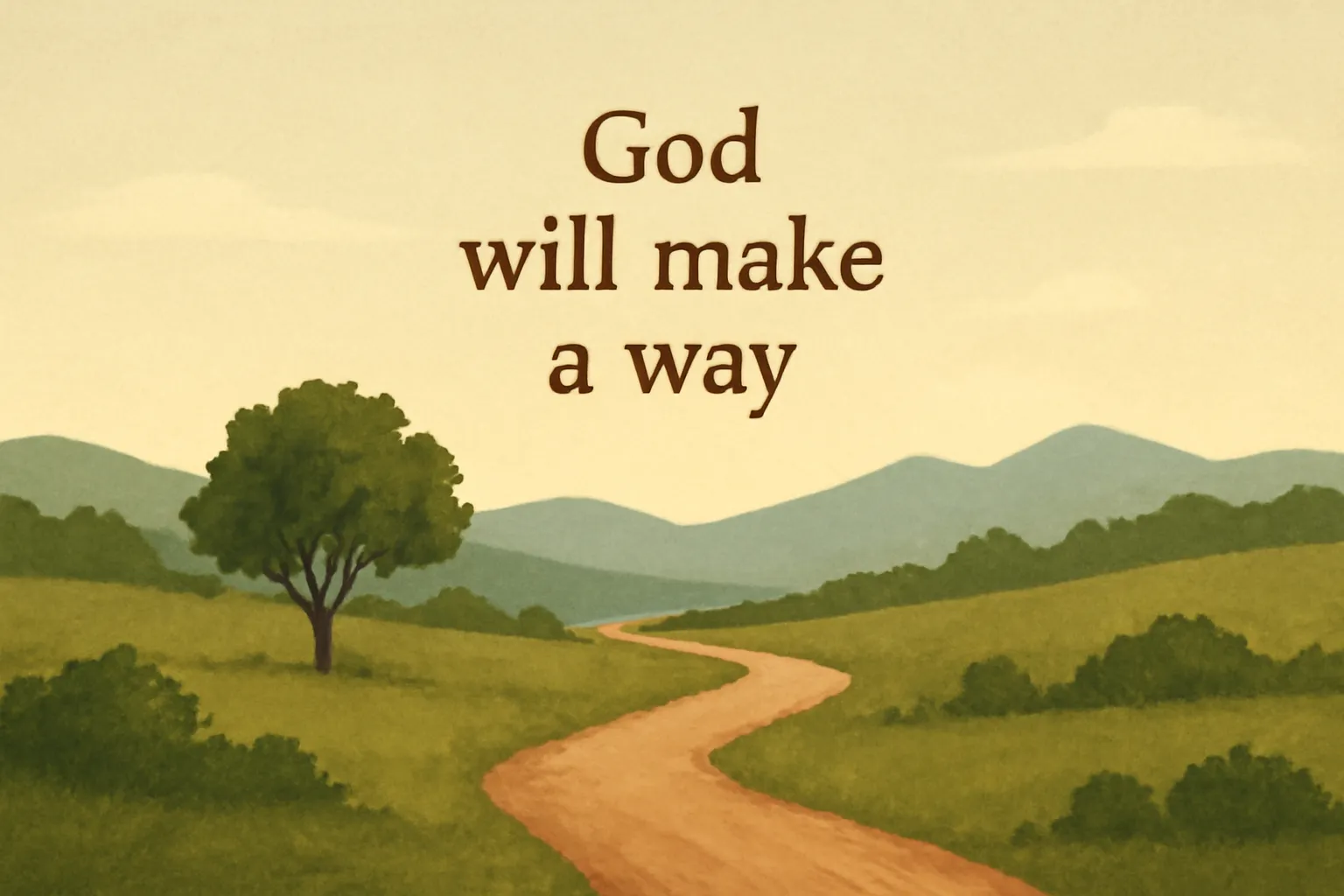
Across ages and continents, people turn to biblical promises of provision and direction when life feels heavy. The idea that God will make a way through even the most daunting circumstances has comforted pilgrims, encouraged communities, and inspired leaders. This article explores the phrase in its biblical roots, explains how it functions in Scripture, and offers practical guidance for living with faith when a clear path seems elusive. By examining key verses, historical contexts, and contemporary applications, readers will gain a deeper understanding of how the conviction that God can open a path forward can shape prayer, resilience, and hopeful action in any season of difficulty.
The declaration that God will make a way is not merely a sentiment; it is a reflection on the character of God as one who engages with human struggle. It recognizes that obstacles—whether fear, grief, financial strain, relational conflict, or illness—do not have the final say. Instead, these chapters of hardship can become occasions for divine intervention, learning, and growth. The core idea is not that life will become free of challenge, but that divine guidance and gracious provision can create a path when the way forward is unclear.
Biblical Foundations: Where the Idea Comes From
The wilderness path: Isaiah’s vision of new openings
One of the most enduring images connected with the phrase is found in the prophetic message of Isaiah. In a context saturated with exile, oppression, and fear, the prophet speaks of a time when God will do something new—“Behold, I will do a new thing; now it shall spring forth; shall ye not know it?” The emphasis is not merely on a future event but on the emergence of a path through the wilderness where none seems possible. For readers and worshippers, this suggests that even when the landscape of life appears barren, God can craft a way forward where there was none.
Important parallels emerge when we read the verse’s fuller claim: “I will even make a way in the wilderness, and rivers in the desert” (a paraphrase of the surrounding promises). The symbolism of water in a desert conveys both life and direction: God’s intervention can provide sustenance and guidance in places where human planning is exhausted. This is why the language is framed as a practical outcome—God is not unnamed or distant, but actively constructing routes and resources for his people.
The Red Sea moment: Deliverance through miraculous opening
Another foundational image occurs in the Exodus narrative. When the Israelites stand before the Red Sea with an army behind them, God does the extraordinary: the sea parts, and a path appears where there was a wall of water (Exodus 14:21-22). This is more than a miracle; it is a story about trustful obedience and the conviction that God can remove obstacles and provide movement forward for his people. For readers today, it is a reminder that God can intervene to redirect trajectories that human plans cannot bend.
Through danger and suffering: Psalms, prophets, and the experience of risk
The Bible continually acknowledges danger and distress while insisting that God remains near. Psalmists speak of God as refuge and strength, a presence that offers help at the moment of crisis (Psalm 46:1). Prophetic literature repeatedly invites readers to trust that God’s purposes include a way forward, even when current circumstances suggest there is none. The thread across these texts is not a denial of hardship but a confident expectation that God’s fidelity will create movement, even when human capacities fail to provide a solution.
Verses and Variations: Different Ways People Speak of a Way Forward
Direct echoes: “God will make a way” in Scripture and tradition
People often paraphrase the sentiment as “God will make a way,” or “God can clear a path.” While not every phrasing appears verbatim in the Bible, the sentiment is grounded in Scripture. Variants emphasize different facets of the same reality: divine initiative, human trust, the possibility of a new course, and the persistence needed to walk the path once it appears. In sermons, devotional readings, and everyday conversation, some common variations include:
“God will provide a path forward.” – Emphasizes provision and guidance in time of need.
“There is a way through the wilderness.” – Highlights the paradox of life’s desolation being pierced by grace.
“God will open doors and close others.” – Focuses on discernment and timing.
“With God, all things are possible.” – A reminder of divine omnipotence in the face of limitation.
Each variation has its own emphasis, and all point to a single conviction: God’s leadership can alter a dead end into a doorway and transform impasse into movement.
Key verses often cited for a path forward
Isaiah 43:19 — “Behold, I will do a new thing; now it shall spring forth; shall ye not know it? I will even make a way in the wilderness, and rivers in the desert.”
Exodus 14:21-22 — The sea goes back by a strong east wind, creating a path for the people of Israel.
Psalm 46:1 — “God is our refuge and strength, a very present help in trouble.”
Matthew 19:26 — “With God all things are possible.”
Romans 8:28 — “All things work together for good to them that love God.”
2 Corinthians 12:9-10 — “My grace is sufficient for thee.”
In practical reading, these verses are not a single formula but a set of assurances that together point toward a confident trust in God’s ability to guide, sustain, and redeem even difficult situations. The idea of a way forward is less about a guarantee of immediate relief and more about the assurance that God’s presence accompanies people on the journey, providing direction, courage, and renewal along the way.
Theological Perspectives: How Christians Understand a Way Forward
Traditional Christian perspective: faith in a faithful guide
From a traditional standpoint, the belief that God will make a way rests on the conviction that God is both sovereign and loving. The path forward is not determined solely by human ingenuity but by divine wisdom that transcends human perspective. Faith communities emphasize several components:
Trust in God’s character—God is reliable, faithful, and good.
Prayer as a real conversation with God that shapes perception and choice.
Community—the church, family, and friends offer discernment, accountability, and support.
Obedience—the path forward often requires practical steps that align with God’s revealed will.
In this view, the phrase is not a magical guarantee but a moral and spiritual invitation: to move forward, one must listen for guidance, remain open to God’s timing, and choose faith-based action even when the outcome is uncertain.
Caution and discernment: not every hardship is a personal test or a sign of punishment
Another constructive perspective is to approach the language with humility and discernment. Sincere readers recognize that not every difficulty is a direct sign of divine discipline or invitation to a particular solution. Some situations result from a fallen world, human choices, or mere consequence. The biblical insistence on a way forward coexists with a theology that acknowledges mystery. In practice, this means:
Seeking wisdom through prayer and scripture while avoiding simplistic explanations.
Recognizing when a situation calls for advocacy, justice, or systemic change as part of moving forward.
Balancing hope with realism, acknowledging pain while leaning into trust.
Thus, the concept remains comforting and challenging at the same time: it invites believers to trust in God’s capacity to shape a path while committing to responsible, compassionate action in the world.
Practical Applications: Living with Hope When a Way Seems Hidden
Steps you can take when you’re waiting for a path to appear
Pray with honesty about fear, confusion, and the longing for direction. Name what you’re facing and invite God to reveal the next step.
Study Scripture for patterns of patience, perseverance, and trust. Allow verses about God’s provision to shape your expectation.
Seek wise counsel from trusted mentors, pastors, or friends who can offer perspective without judgment.
Take small, faithful steps toward readiness, even before a complete solution appears. Forward movement often comes in increments.
Develop practical plans—budget, a safety net, a plan B—yet hold them loosely, ready to adjust as God leads.
Invite community support—share needs with a circle that can mobilize prayer, resources, or tangible help.
Consider a simple, repeatable practice to anchor hope in daily life. Each day, you might:
Present your situation to God with honesty and humility.
Read a short verse about God’s guidance (for example, Isaiah 43:19 or Psalm 46:1).
Write a brief prayer acknowledging difficulty but asking for God’s path to be revealed and for strength to follow it.
Choose one concrete action that could move things forward in a small, faithful way.
Prayers to nurture trust in divine provision
To cultivate a posture of trust, you may use a template like this, adapted to your voice:
“Lord, you are my refuge and strength. In this moment of uncertainty, I ask you to make a way where there seems to be none. Guide my steps, calm my fears, and remind me of your faithfulness.”
“Help me to discern your path and to walk it with courage, even if the road is long or winding. May your presence be enough for today.”
Q: Does God always make a way in the way I expect?
A: Not always. The pathways God makes may look different from our plans. Sometimes the way is inward—renewed hope, a shift in perspective, or renewed strength—rather than an outward, dramatic change. The assurance is not a guarantee of immediate deliverance, but the promise of God’s presence and guidance as you move forward.
Q: How should I respond when the way feels blocked for a long time?
A: Longevity of struggle calls for sustained faith and practical endurance. Consider revisiting your assumptions, seeking fresh counsel, and asking God to reveal promptings you hadn’t noticed before. A long season can still become a season of growth, formation, and deeper reliance on God’s character.
Q: Is this promise unconditional for all who believe?
A: The principle of God making a way is grounded in God’s faithfulness, but it coexists with human agency, communal responsibility, and the mystery of God’s timing. Faithfulness includes trusting God, acting wisely, and remaining open to divine direction, even when outcomes are uncertain.
Across church history, thinkers and pastors have used phrases like “God will make a way” to encourage perseverance during persecution, famine, or social upheaval. In contemporary contexts—whether personal grief, economic stress, or global challenges—the message has a universal appeal: God engages with our limitations, and faith invites us to keep moving even when the destination remains unseen. This perspective rejoices in transformation while also acknowledging the pain that often accompanies difficult seasons. The balance between hope and honesty is what makes the teaching both enduring and trustworthy for modern readers.
A Living Expectation
The conviction that God will make a way through difficult times is a living expectation born from Scripture, cultivated through prayer, and validated by real-world acts of faith. It is not a blanket denial of hardship, nor a guarantee of immediate relief. Instead, it is a steadfast assurance that God’s plan includes movement, provision, and growth—often in ways that require patience, discernment, and courageous steps. By embracing the varied biblical images—wilderness paths, Red Sea crossings, and the continual promise of God’s presence—believers find a durable source of encouragement. In the end, the phrase invites a hopeful posture: to trust God’s purpose, to participate in the shaping of the path, and to witness the ways in which God can make a way where there appears to be none.
Note: While this article highlights the themes and verses commonly associated with the idea that God makes a way, readers are encouraged to read the cited passages in your preferred Bible translation to gain a fuller sense of context and nuance. The core message remains consistent across translations: God’s fidelity is dependable, and his leadership can bring light and movement to even the most challenging circumstances.
Exploring the Bible verse John 8:32 and its enduring claim that the truth shall set you free opens a window into how Scripture speaks of knowledge, liberty, and transformation. This article surveys the verse itself, its immediate context, how it has been rendered across translations, and how it functions in Christian teaching and daily living….
God Is Good All the Time Verse: Bible Meaning and Reflection In many Christian gatherings, the refrain “God is good all the time” followed by “all the time God is good” echoes through worship, prayers, and personal devotions. While the exact phrase may not appear as a single verse in most English Bible translations, its…
Break Curses Bible Verse: Scripture to Break Free and Find Freedom In many faith communities, believers look to the Bible for guidance on spiritual freedom and the removal of anything that hinders a vibrant walk with God. The idea of breaking a curse—whether understood as a personal, generational, or spiritual bondage—often centers on discovering the…
The Call to Give Freely In biblical thought, the impulse to give freely is framed as a natural outgrowth of God’s character and of the believer’s response to grace. The concept appears in multiple forms throughout Scripture: a cheerful gift given to those in need, a voluntary contribution to support the church and its mission,…
The Bible Verses Good Samaritan and the Rich Thread of Kindness The story commonly known as the Good Samaritan has become a canonical touchstone for kindness, mercy, and practical charity in the Christian tradition. Yet the message does not reside only in one parable; it is echoed across a tapestry of biblical verses that expand,…
Esther is one of the most powerful stories in the Bible about courage, faith, and deliverance. In this book, a Jewish orphan becomes queen, a plot unfolds in the Persian Empire, and a people is saved through bold trust in God and wise human action. The verses in Esther teach readers how to respond to…