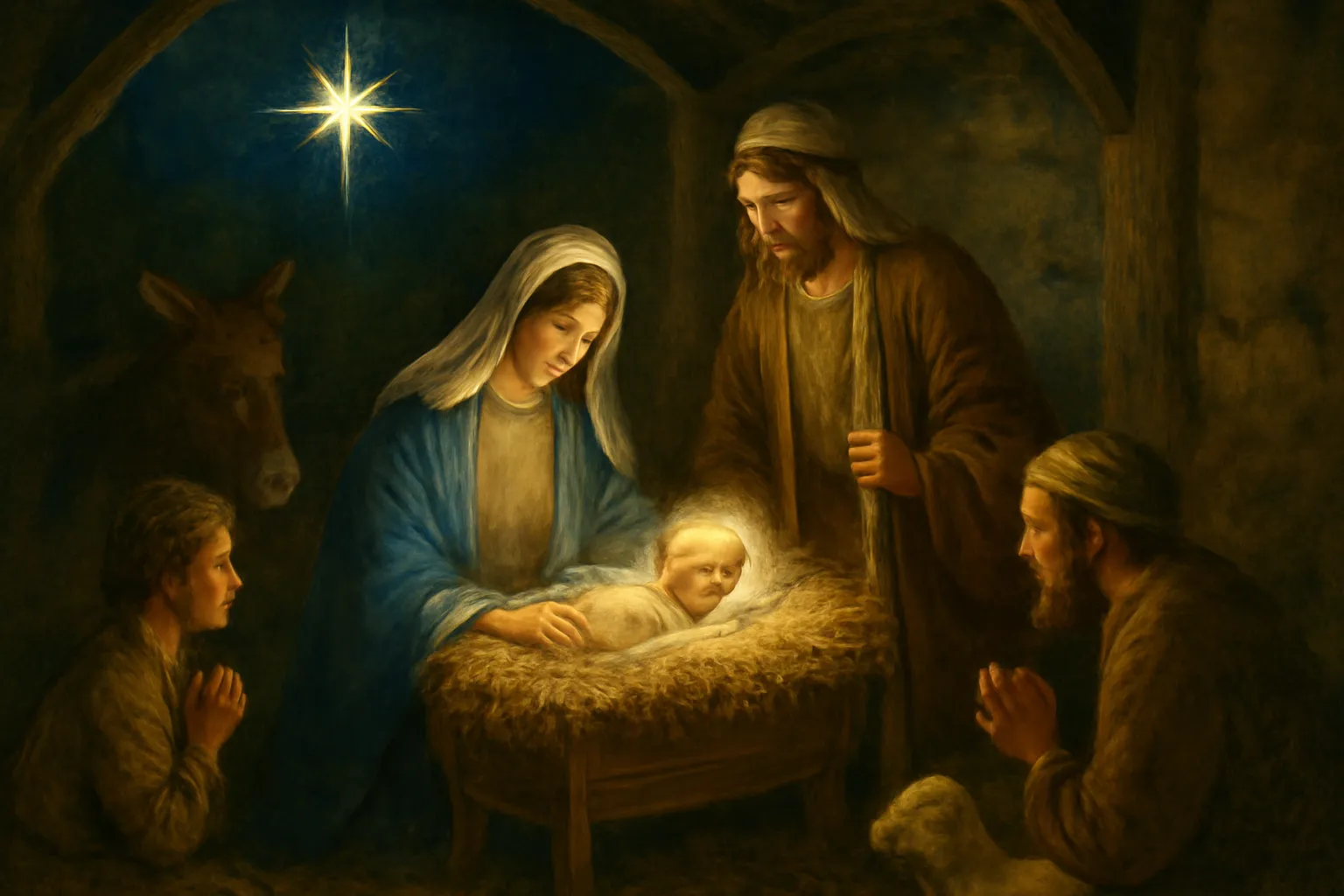
The Nativity Story—also known as the birth of Jesus—is one of the most influential narratives in world literature and religious history. It is not only a tale about a single family in a distant time; it is a story that has shaped calendars, art, music, customs, and countless acts of charity. When people speak of the Nativity narrative, they are referring to the moment when the eternal, divine Word becomes flesh and dwells among human beings. This article explores the nativity story, its sources, its key figures, its themes, and its enduring significance for individuals and communities today.
To understand the birth of Jesus in its fullness, it helps to distinguish the different strands within the nativity tradition. The accounts offered in the Gospels of Matthew and Luke provide complementary perspectives rather than a single, uniform biography. Taken together, they present a multi-voiced drama in which prophecy meets history, humility encounters glory, and a small inauspicious setting becomes the theater for a universal transformation. The birthstory of Jesus therefore invites readers and believers to reflect on mystery, meaning, and motive behind the divine act of taking on human life.
Placed within the broader sweep of first‑century Judaism and the Roman imperial world, the Nativity tale emerges in a concrete setting. Bethlehem, the City of David, serves as more than a physical stage; it signals a claim about lineage, messianic expectation, and fulfillment of ancient prophecy. The political and social backdrop—emperor Augustus’ rule, censuses, and dispersed peoples—frames the events in a way that invites readers to notice both the ordinariness of travel and the extraordinariness of the divine intervention.
Two distinct but harmonizing accounts in the New Testament illuminate the birth narrative from different angles:
Gospel accounts: Matthew and Luke
Matthew’s narrative emphasizes lineage and the fulfillment of prophecy. It begins with the genealogy of Jesus and moves toward the revelation of the Messiah to nations through the visit of the Magi, the danger posed by King Herod, and the dream-driven escape to Egypt. The Magi’s journey, guided by a star, frames the nativity story as a bridge between Jewish expectation and Gentile recognition of the Savior.
Luke’s narrative stresses the humility of the birth, the role of Mary, the annunciation to shepherds, and the proclamation of peace to the shepherds by the heavenly host. Luke’s account highlights themes of social reversals, mercy, and universal outreach, with the birth of Jesus announced first to the marginalized—shepherds in the field.
Parallels and differences to notice
Both Gospels place the birth in Bethlehem and link it to the prophecy concerning Messiah and the line of David.
Luke includes the angelic proclamation to Mary and to the shepherds, while Matthew centers the
Matthew emphasizes dreams and divine guidance for Joseph, ensuring the child’s safety and rightful guardianship.
Taken together, these two accounts do not conflict so much as complement. The nativity narrative becomes richer when we recognize that its authors were writing for different communities with different concerns—one highlighting the fulfillment of prophecy and the symbol of kingship, the other emphasizing humility, social scandal, and outreach to the marginalized.
Mary and Joseph are central figures in the narrative arc of the birth. Mary’s role is portrayed as faithful consent to God’s plan, while Joseph’s decisions—accepting the divine message, naming the child, and protecting the family—underscore obedience and care.
The angelic announcements across both Gospels function as divine confirmation. They announce not only birth but purpose: the child is divine in origin and mission.
In Luke’s account, shepherds hear the good news first and become witnesses to the event, highlighting God’s preference for the humble and ordinary.
In Matthew’s account, the journey of the Magi introduces Gentile recognition and a broader scope for the newborn’s significance, setting the stage for a universal mission.
These elements—prophetic expectation, angelic revelation, humble settings, and outward signs—together shape a narrative that is at once historical and theological. The birth of Jesus is not merely a date on a calendar but a claim about the nature of God, the destiny of humanity, and the relationship between heaven and earth.
Literary Structure and Thematic Threads
Crafted with intentional symbolism, the nativity story uses a network of motifs to convey its deeper meanings. The juxtaposition of humble surroundings with heavenly proclamation creates a dramatic tension that invites readers to consider the extraordinary in the ordinary. Here are some of the central themes and literary devices that recur in the birth narrative:
The humble setting as a sign
The stable or manger where the child lies becomes a powerful emblem of humility and accessibility. In Christian theology, God’s entrance into the world through lowliness challenges expectations of what the divine looks like or how it acts.
The phrase “no room at the inn” in Luke, whether interpreted literally or as a cultural marker, highlights the vulnerability of the newborn and invites reflection on hospitality, social margins, and the scope of divine welcome.
The motif of light breaking into darkness
Angels announce the good news, and their radiance illuminates the dark night. This light‑in‑darkness motif recurs in Christian art and hymnography as a symbol of revelation and hope entering a world that is in need of rescue.
Fulfillment and contrast: prophecy and novelty
Both gospel accounts align the birth with Old Testament expectations, yet the birth narrative also presents a new chapter in salvation history. The fulfillment of prophecy does not merely restate tradition; it inaugurates a new era in which the divine presence dwells among humans.
Universal invitation
From the angels to the Magi, the shepherds to the townspeople, the message travels outward. The narrative repeatedly emphasizes that the birth of Jesus is good news for all peoples, not just a select circle.
For readers today, the nativity story invites questions about where God is seen in the world, whom the story includes, and how divine invitations arrive in unexpected places. The narrative’s structure, with its tension, wonder, and outward reach, remains a powerful lens for examining faith, hope, and justice in contemporary life.
Theological Significance: The Incarnation and Beyond
Central to understanding the birth of Jesus is the doctrine of the Incarnation—the belief that the eternal God took on human nature in Jesus of Nazareth. The Nativity is the foundational moment of this mystery. It marks the moment when heaven enters history and God’s glory is made accessible in a vulnerable human form.
The Incarnation as a radical gift
The idea that God becomes a child invites a radical rethinking of power, authority, and divine availability. The Emmanuel motif—“God with us”—is not merely a comforting phrase, but a claim about the proximity of the divine to human experience.
In this light, the birth narrative reframes power: strength is shown in gentleness, leadership in service, and sovereignty expressed as vulnerability.
Fulfillment of prophecy and the messianic expectation
The birth of Jesus is presented as the culmination of a long arc of Jewish expectation. The child’s identity as Messiah and King is affirmed through genealogical links, angelic announcements, and the reactions of figures like the Magi and shepherds.
Salvation, mercy, and inclusion
The Nativity narrative foregrounds mercy—God’s favor toward the lowly, the inclusion of people on the margins, and the promise of peace to the world. The shepherds’ witness and the Magi’s homage illustrate the broad reach of salvation beyond social boundaries.
For believers, the Christological significance of the Nativity is not limited to the moment of birth. It points forward to the mission of Jesus—the revelation of God’s character, the call to repentance and faith, and the invitation to participate in a transformed life that mirrors God’s generosity and compassion.
Cultural and Creative Echoes: The Nativity Across Time
Across centuries and civilizations, the nativity story has inspired a vast spectrum of artistic, musical, and literary expressions. Its imagery—bethlehem’s quiet streets, the star, the manger, the angels, and the adoration of the Magi—has become a universal shorthand for Christmas celebrations, even for people who do not hold the narrative as a religious belief. Some of the key cultural resonances include:
Art and iconography: Paintings, icons, and sculptures often depict the holy family in intimate gestures, the stable’s rough textures contrasting with divine light, and the shepherds kneeling in reverence.
Music and carols: Hymns and Christmas songs reflect themes of hope, joy, and peace that originate in the Nativity accounts, translating the theological richness into memorable melodies.
Literary retellings: Poets and novelists frequently revisit the birth narrative to explore questions about faith, doubt, courage, and kinship, sometimes reimagining the setting or focusing on secondary characters.
These cultural expressions help keep the birth narrative alive in modern memory, inviting people to reflect on how the story speaks to issues such as welcome for strangers, care for the vulnerable, and the transformation of ordinary spaces into places of wonder.
Living with the Nativity Narrative Today
What does the Nativity story mean for contemporary readers and communities? While the historical details anchor the narrative in a real place and time, the theological implications invite ongoing interpretation and application. Here are some practical avenues through which people engage with the birth narrative in the modern world:
The theme of hospitality toward strangers resonates in contexts ranging from individual homes to civic spaces. The nativity invites acts of welcome, generosity, and support for those who are marginalized or in need.
In many faith communities, nativity plays, Christmas Eve services, and charity drives center on embodying the compassion the story models.
Humility and daily life
The image of Jesus’ birth in a humble setting encourages people to value modest means, simple acts of kindness, and quiet integrity in daily life.
Parents and families often find resonance in Mary and Joseph’s trust and obedience, drawing inspiration for decision-making, responsibility, and care for others.
Hope and universal welcome
The universal dimension—seen in the shepherds and the Magi—offers a framework for intercultural dialogue and social harmony. The gospel of peace that the angels proclaim in Luke extends an invitation to diverse communities to recognize a shared sense of dignity and purpose.
Scholars and educators also use the Nativity accounts to teach about biblical literacy, historical context, and the ways religious narratives shape memory and identity. For students and lay readers alike, the Nativity narrative provides a case study in how sacred stories render meaning through symbols, voices, and action.
Questions for reflection
What does Emmanuel—“God with us”—mean in your own life, especially in times of hardship or uncertainty?
How do the different Gospel perspectives help you see a fuller picture of the birth and mission of Jesus?
In what ways can the themes of humility, hospitality, and universal inclusion influence your community practices?
Glossary of Key Terms
To aid comprehension, here is a brief glossary of terms often used in discussions of the Nativity narrative:
Incarnation: The belief that God became human in the person of Jesus.
Emmanuel: A Hebrew name meaning “God with us.”
Messiah: The anointed one expected to save, deliver, and reign; interpreted in Christian tradition as Jesus.
Nativity: The birth story of Jesus, particularly as told in Matthew and Luke.
Incarnational theologies: The study of how divine presence enters the human story and transforms reality.
Concluding Reflections: The Nativity as a Doorway
In the end, the nativity narrative serves as more than a historical account or a literary artifact. It functions as a doorway—opening a space where readers are invited to encounter wonder, examine their loyalties, and reconsider what it means to welcome the divine into everyday life. Whether one engages the birth of Jesus as a theological claim, a historical memory, or a cultural motif, the story invites ongoing dialogue about purpose, justice, and hope for the world.
As a living tradition, the Nativity Story continues to shape how people think about family, community, and responsibility. It asks readers to look beyond the visible and to consider the possibility that illumination can arrive in the most ordinary of places. In that sense, the Nativity is not merely a moment in antiquity but a persistent invitation to live with gratitude, courage, and a sense of awe before the mystery of life itself.
Exploring the Christmas Story in Scripture The phrase Christmas story scripture captures the biblical accounts that together narrate the birth of Jesus Christ. This narrative is not limited to a single gospel or a single moment; rather, it is a tapestry woven from prophecies, annunciations, dreams, journeys, and songs that unfold across the Gospels of…