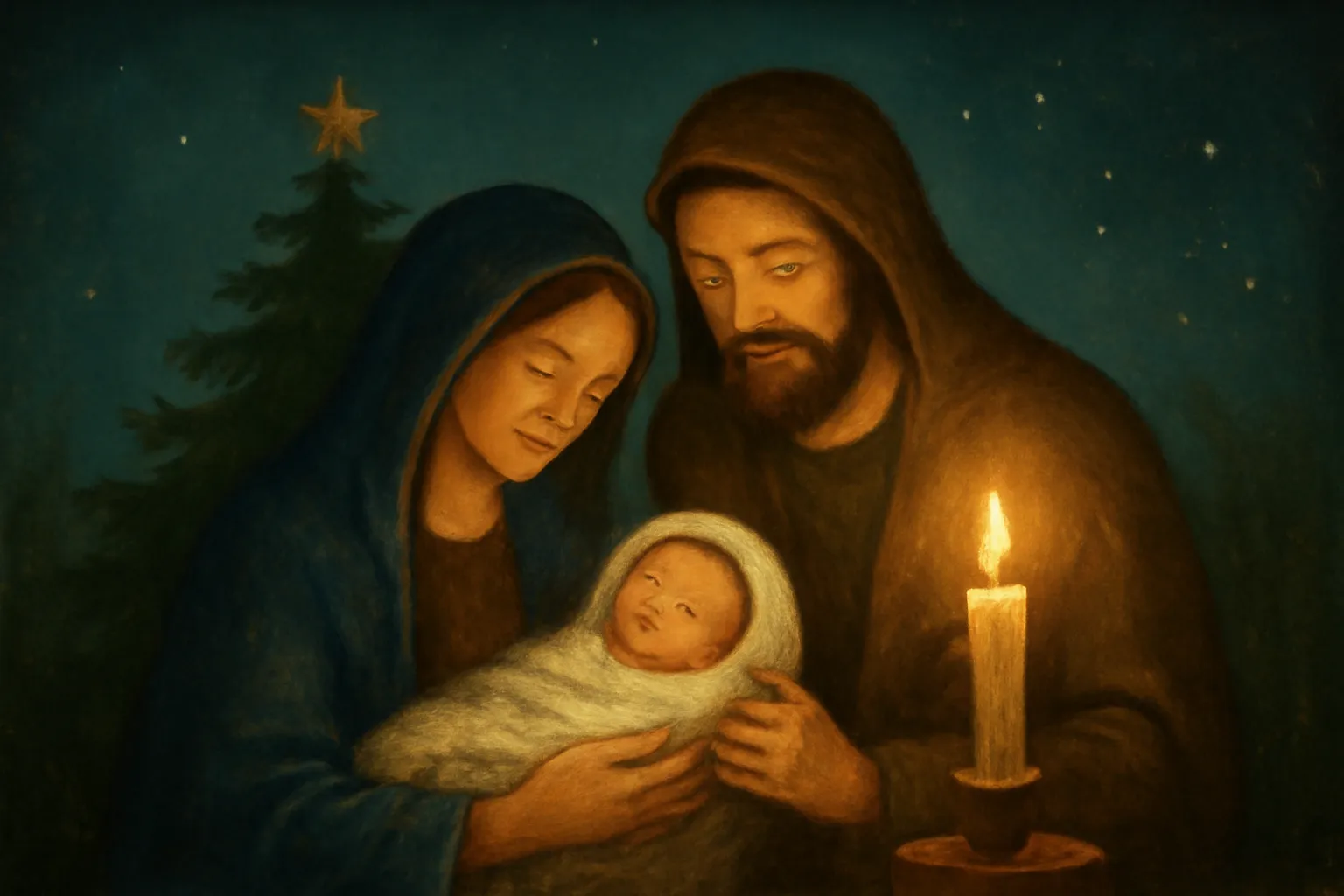
Introduction: Exploring the Christmas Story in Scripture
The phrase Christmas story scripture captures the biblical accounts that together narrate the birth of Jesus Christ. This narrative is not limited to a single gospel or a single moment; rather, it is a tapestry woven from prophecies, annunciations, dreams, journeys, and songs that unfold across the Gospels of Matthew and Luke. For readers and communities of faith, these sacred texts offer more than a historical account. They present a window into the mystery of the incarnate Word, the arrival of God with us, and the dawning of a new era in which mercy, justice, and peace begin to take hold in a broken world.
In this article, we will examine the major strands of the Christmas story in scripture, highlight the distinctive emphases of the two canonical accounts, and explore how these ancient words speak today. We will consider the prophetic groundwork that anticipates a miraculous birth, the surprising details of Mary and Joseph’s journey, the humble setting in Bethlehem, the angelic proclamations, and the implications of the nativity for faith, worship, and daily living. Whether you are studying this material for personal devotion, teaching a class, or preparing a Christmas-inspired message, the following overview aims to be both informative and devotional—rooted in the text and attentive to its enduring significance.
The Bible’s Birth Narrative: Where the Christmas Story Begins
The nativity story is anchored in a broader biblical framework of prophecy and fulfillment. The anticipation of a coming Savior runs from the Old Testament into the New Testament, where the birth of Jesus is presented as the culmination of divine promises. In the prophetic literature, a child is foretold, a sign is given, and a new era is proclaimed. In the Gospels, those prophecies are interpreted as being fulfilled in the birth of Jesus, who is described as Immanuel—“God with us.” This double movement—from expectation to realization—gives the Christmas story its depth and resonance.
To appreciate the full sweep of Christmas story scripture, readers should notice how the accounts align and diverge. Both Matthew and Luke agree on core elements—the miraculous conception, the infant Jesus, the role of faithful witnesses, and the significance of the birth for humanity. Yet each gospel emphasizes different angles: Matthew foregrounds lineage, kingship, and fulfillment of prophecy; Luke highlights humility, universal outreach, and the compassion of God toward the marginalized. Together they offer a richer and more complete portrait than either narrative could provide alone.
Matthew’s Portrait: The Royal Lineage and the Birth of the Messiah
The Genealogy and the Virgin Birth
The Gospel of Matthew opens with a genealogy that traces Jesus’ human line to Abraham and David. This opening sets the stage for a claim that Jesus is the rightful heir to the promises made to Israel’s patriarchs and kingly line. The narrative then moves to the dramatic birth circumstances: Mary’s miraculous conception by the Holy Spirit and the revelation to Joseph in a dream. The emphasis here is not merely on a family tree but on the legitimacy of Jesus as the long-awaited Messiah and the fulfillment of a divine plan.
A key verse often cited in this section is the prophecy that describes the child as Emmanuel—“God with us.” In the Matthew 1:23 text, the angel explains that the child’s name embodies God’s presence among people: “Behold, a virgin shall be with child, and shall bring forth a son, and they shall call his name Emmanuel.” This declaration anchors the nativity in a theological claim about God’s nearness and initiative in human history.
The Fulfillment of Old Testament Prophecy
Matthew’s telling makes explicit connections between Jesus’ birth and Old Testament expectations. The gospel writer views the nativity as a fulfillment of divine prophecy, including the anticipation of a king who will restore and bless Israel. The emphasis on fulfillment invites readers to see the events surrounding Jesus’ birth as integrally connected to God’s saving purposes across generations. For readers today, this framework reinforces the sense that the Christmas story is not isolated sentimentality but part of a larger, ongoing drama of redemption.
As you study Matthew’s account, you can note how the author uses names, places, and scriptural allusions to invite readers into a conversation with the ancient world and with contemporary life. The encounter between heavenly messages and earthly responses—dreams, obedience, and risk—offers a pattern for faithful response to divine revelation.
Luke’s Narrative: Annunciation, Journey, and the Nativity
The Annunciation to Mary
In Luke, the birth narrative begins with the annunciation to Mary by the angel Gabriel. This crucial moment centers on a young woman whose faith is tested and refined by God’s invitation to participate in a divine plan. The announcement stresses both personal obedience and cosmic significance: Mary’s response—“Behold the handmaid of the Lord; be it unto me according to thy word”—models trust in God’s purposes even when they defy human expectations.
The following sections show how Luke weaves together personal, communal, and universal dimensions of the Christmas story. Luke’s care for the marginalized—shepherds, cosmic messengers, and ordinary people in ordinary places—highlights a central theme: the gospel comes to the lowly as well as the noble. The narrative thus proclaims a God who chooses the humble as recipients of great news and invites all to participate in a joyful response.
The Journey to Bethlehem and the Nativity
The journey to Bethlehem, prompted by a decree that all should be counted, situates the birth in a historical moment while preserving the extraordinary nature of the event. The setting—“in a manger, because there was no room for them in the inn”—underscores a paradox at the heart of the Christmas story: God enters the world in humble circumstances, pointing to values of simplicity, receptivity, and dependence on divine grace.
Luke’s nativity scene often emphasizes the humility of Jesus’ birth and the universal scope of the message. The shepherds, who traditionally occupy the margins of society, become the first earthly witnesses to the Savior’s arrival, signaling that good news is meant for all people, not a select elite.
The Shepherds and the Heavenly Choir
A striking feature of Luke’s account is the appearance of angels who declare the glad tidings and reveal a chorus of praise: “Glory to God in the highest, and on earth peace, good will toward men” (Luke 2:14). This refrain communicates both the cosmic significance of the event and its practical implications for human life: peace, justice, and mercy begin to take shape through the birth of Jesus, inviting onlookers to respond with worship and action.
Prophecy, Fulfillment, and Divine Intervention: A Unified Theological Thread
Across the biblical accounts, the Christmas story is inseparably linked to the idea of divine intervention in history. Prophets anticipate a deliverer; angels announce a birth; ordinary people respond with faith, fear, and wonder; and the newborn infant embodies the intersection of human limitation and divine power. This theological thread invites readers to see the nativity not only as a narrative about a baby’s birth but as a revelation of God’s ongoing engagement with creation.
Important to this thread is the concept of incarnation—God taking human form. The Christmas story presents the paradox of the eternally existent Son who enters time, the one who is fully divine and fully human at the same moment. This dual reality becomes the heart of Christian faith and the focal point of worship as believers reflect on what it means that God chose to be with us in the most intimate and vulnerable way possible.
Geography, Chronology, and the Nativity: A World-Building Overview
The Christmas story unfolds in a sequence of places that readers can trace across the biblical landscape. The journey from Nazareth to Bethlehem, the setting in a humble stable or manger, and the proximity to fields where shepherds watch their flocks—all these elements contribute to a vivid sense of place. Geography matters in the nativity narrative because it grounds the extraordinary events in real spaces and human communities.
Nazareth as the hometown of Mary and Joseph, the place from which faith and obedience begin to radiate outward.
Bethlehem as the city of David, the predicted site of the Messiah’s birth, fulfilling prophetic expectation.
The manger setting, which highlights themes of humility, dependence, and hospitality—an unlikely throne room for the birth of the King.
The fields and the shepherds, representing the accessibility of revelation to ordinary people and the inclusion of the marginalized in God’s plan.
Reading the chronology of the nativity helps illuminate the drama at work. The infancy narratives do not present a single, linear timeline but rather a composite portrait that invites readers to reflect on how divine revelations unfold in cooperation with human choices. The sequence—from announcement to conception, from journey to birthplace, from visitation to adoration—invites a response of faith, worship, and service.
Theological Significance: Immanuel, the Incarnation, and Salvation
The Christmas story is profoundly theological. It centers on the doctrine of the incarnation, the belief that God became flesh in Jesus Christ. This divine self-revelation redefines how humanity understands divine presence and salvation. The title Immanuel—“God with us”—encapsulates the core vision: the Creator enters creation not as an abstract force but as a vulnerable child who grows in wisdom and grace.
Alongside the incarnation, the accounts emphasize the savior motif. Jesus is presented as Savior, Lord, and the long-awaited King whose birth inaugurates a new era of grace and mercy. While the manger scene may appear humble, its larger significance is cosmic, signaling that God’s purposes extend beyond national borders and cultural expectations to embrace all people. The nativity thus invites believers to align their lives with a divine agenda that prioritizes mercy, justice, and peace.
Key Characters and Roles in the Christmas Story
The biblical nativity comprises a cast of recognizable figures, each contributing a vital dimension to the narrative and its meaning for readers today:
Mary — A young woman whose faithful surrender to God models courageous obedience.
Joseph — A righteous man who chooses to trust God and protect the holy child, even when the path is unclear.
Jesus — The infant whose life and words would reveal God’s character and purposes for humanity.
Angels — Messengers who declare good news, heighten cosmic awareness, and guide human action.
Shepherds — Witnesses from the fields who symbolize God’s outreach to the humble and marginalized.
The Magi/Magi — Seekers from distant lands who represent the widening scope of the gospel and the invitation of all nations to come and worship.
The ensemble of characters in the Christmas story illustrates a central truth: God’s work often involves ordinary people responding with faith in the face of mystery. The narratives invite readers to mirror the openness, humility, and devotion seen in Mary, Joseph, and the shepherds as they encounter the incarnate Word.
Practical Implications: What the Christmas Story Teaches Today
Beyond the theological richness, the Christmas story scripture offers practical guidance for current life in faith communities and households. Several recurring implications emerge across the nativity narratives:
Hospitality and generosity become central virtues as the story highlights welcome for the vulnerable and the poor.
Humility marks the approach of people like Mary and Joseph, underscoring that divine reach often comes through humble means.
Trust in God’s timing and discernment, especially when plans unfold in unexpected ways.
Discernment and obedience as essential responses to God’s revelation, even when the next steps are uncertain.
Hope for all nations as symbolized by the Magi’s journey and the universal scope of the birth announcement.
Churches and families can translate these lessons into daily practices: welcoming guests at Christmas gatherings, supporting those in need, cultivating a rhythm of prayer and reflection, and sharing the good news in ways that honor the dignity of every person. The Christmas story becomes not only a celebration but a movement toward compassionate action in the world.
Ways to Engage with Christmas Story Scripture in Personal and Community Study
For individuals seeking to immerse themselves in the Christmas narrative, several approaches can deepen understanding and devotion:
Comparative reading of Matthew and Luke to notice how each gospel highlights different aspects of the birth event.
Contextual study of the Old Testament prophecies cited or alluded to in the accounts to appreciate the theme of fulfillment.
Character studies focusing on Mary, Joseph, the shepherds, and the Magi to understand different facets of trust and action.
Liturgical reflection using the nativity passages during the Advent and Christmas seasons to cultivate worship and gratitude.
Creative response through art, music, or drama that helps convey the emotional and spiritual layers of the Christmas story.
When engaging with the text, consider the following practical questions: What does this passage reveal about God’s character? How does this narrative shape my understanding of salvation and grace? In what ways can I imitate the faith and obedience demonstrated by the principal figures in the story?
Common Themes Across the Christmas Narratives
Although Matthew and Luke present different emphases, several enduring themes recur across the scripture about Christ’s birth:
Divine initiative in choosing and guiding ordinary people to participate in extraordinary work.
Humility as the aura surrounding the birth, contrasting with human expectations of power and splendor.
Peace as the outcome of God’s intervention in a broken world, proclaimed by the heavenly host.
Hope for all peoples through the universal invitation to encounter the Savior.
Formation of faith as individuals respond with awe, worship, and obedience.
Living the Christmas Message: From the Nativity to Everyday Life
The Christmas story is not merely a past event; it is a present invitation. The life of faith invites believers to carry forward the light and warmth of the nativity into daily interactions, community life, and service to those in need. By embodying hospitality, compassion, and generosity, Christians enact the very spirit of the Christmas narrative. The birth of Christ becomes a continual reminder that God desires to be near the weary and the wandering, offering comfort and courage in seasons of challenge.
In practical terms, this means turning away from cynicism and toward hopeful action: supporting families during holidays, ministering to the marginalized, engaging in acts of mercy, and sharing stories of the Christmas miracle in ways that invite others into the wonder of God’s grace. The nativity invites believers to cultivate a posture of listening to the Spirit, discerning God’s nudges, and answering with faith-filled courage.
A Chronological Outline of the Nativity Narrative
While the canonical texts present the nativity as a cohesive story, a concise outline can help in study and teaching. Here is a simplified chronology that captures the core sequence:
Prophetic groundwork and expectation that a savior would come to Israel and all nations.
Annunciation to Mary by the angel, announcing the miraculous conception by the Holy Spirit.
Joseph’s dream and divine reassurance to remain faithful to Mary and the mission.
Elizabeth and John the Baptist in Luke’s account, providing additional witness to divine initiative and blessing (contextual framing within Luke).
Journey to Bethlehem due to a census, illustrating the historical setting and human movement connected to the event.
The birth in Bethlehem, with the immediate surroundings (stable, manger) emphasizing humility.
Apostolic and heavenly confirmations through the angels’ proclamation to the shepherds and the shepherds’ visit to the infant Jesus.
Adoration and response from those who encounter the newborn King, setting a pattern for worship and mission.
Conclusion: The Christmas Story as a Living Word
The Bible’s accounts of Jesus’ birth, often summarized under the banner of Christmas story scripture, offer a multifaceted doorway into the mystery of God’s intervention in history. They invite readers to recognize the convergence of prophecy and fulfillment, divinity and humanity, weakness and power. The nativity presents a living proclamation: God does not distantly rule from heaven; instead, God becomes present among us, calling people to respond in trust, worship, and transformative action.
As you engage with these texts—whether in private devotion, family tradition, or church study—let the message of Christ’s birth shape your expectations, your relationships, and your sense of purpose. The advent of Jesus is the beginning of a story that continues to unfold in the lives of believers, in communities, and in the world. The Christmas story remains relevant because it speaks to the enduring human needs for meaning, hope, and grace. May your reading deepen your faith, broaden your compassion, and fuel your worship as you reflect on the remarkable truth that God became flesh and dwelt among us.
Further Resources for Exploring Christmas Story Scripture
The following suggestions can help you extend your study beyond this article and engage with the Christmas narrative in a variety of ways:
Bible study guides focused on Matthew and Luke’s nativity passages
Commentaries that explore historical context and textual nuances of the Christmas accounts
Devotional books centered on the themes of incarnation, grace, and mercy
Liturgical resources for Advent and Christmas seasons to structure worship and remembrance