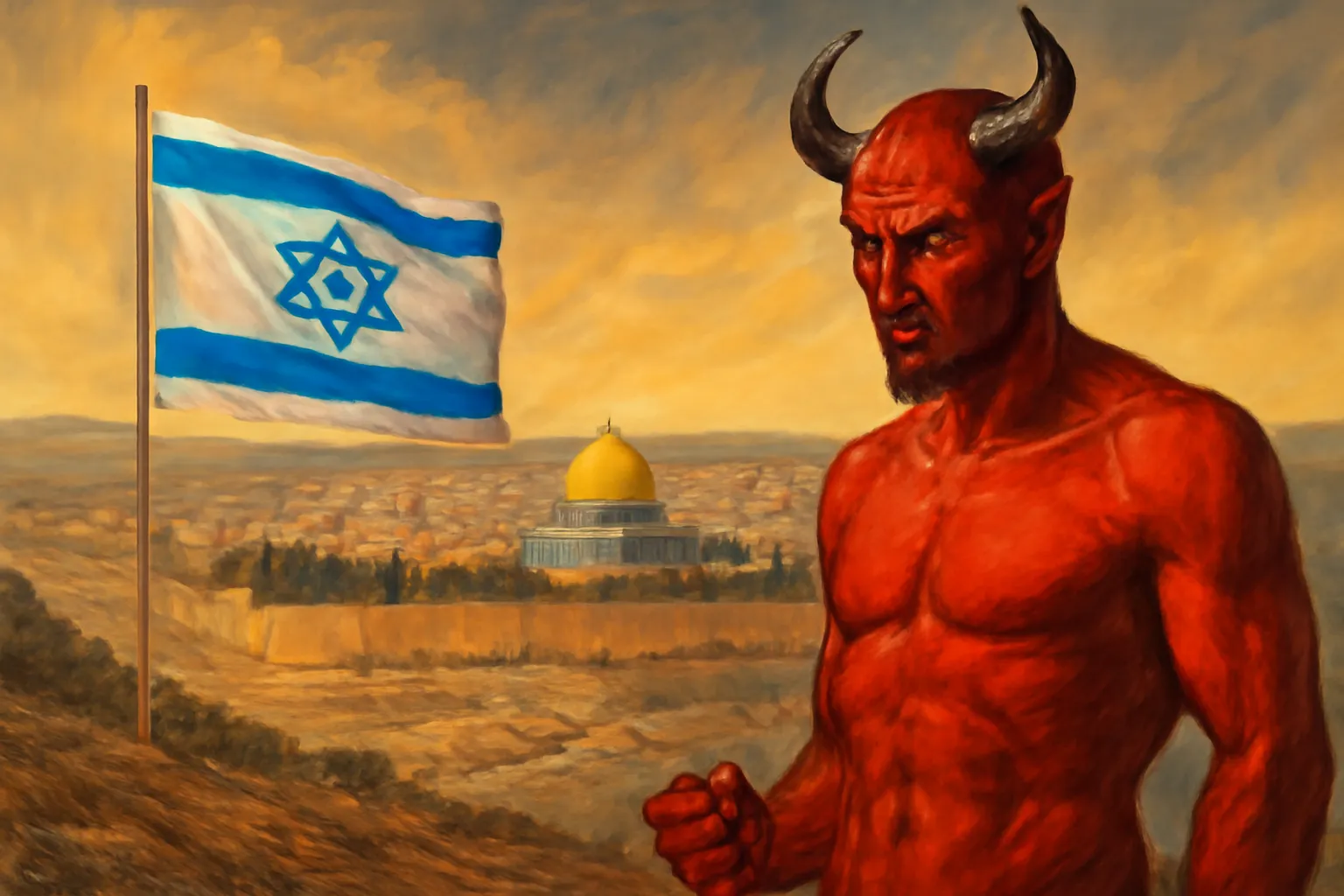
The topic of Antichrist and Israel sits at a crossroads of prophecy, history, and contemporary interpretation. Across traditions, the idea of a future adversary who opposes God’s plan intersects with long-standing narratives about the Holy Land, the restoration of the Land of Israel, and the destiny of the Jewish people. This article offers a comprehensive, nuanced survey of how these themes have developed, how they are read in different eras, and how modern readers think about them in relation to current events.
We will distinguish between textual interpretation, historical development, and modern discourse, while highlighting the ways in which the terms Antichrist, anti-Christ, and related labels have functioned in doctrinal systems, popular culture, and geopolitical debates. The aim is not to promote a single eschatological blueprint but to illuminate the diversity of thought, the weights of tradition, and the ethical questions that arise when prophecy and policy touch each other in public life.
Prophetic Framework: Key Biblical Texts
Central to any discussion of Antichrist and Israel are the prophetic passages that have guided Christian and Jewish imaginings for centuries. While the exact timing and identity of future events remain debated, scholars commonly trace a set of themes through prophetic literature, apocalyptic visions, and messianic expectation.
Old Testament foundations and the geography of salvation
The Promised Land as a focal point for covenantal faithfulness and national identity has shaped later expectations about blessing, judgment, and restoration for Israel.
In Daniel and related texts, symbolic beasts and empires are described in relation to continuity and disruption within the land of promise. Although the book speaks in code, many readers interpret these visions as pointing toward a struggle over authority in the Promised Land.
The theme of idolatry and apostasy in the Hebrew Bible—combined with a future judgment that affects the people of Israel—lays groundwork for later Christian readings about a rival figure who opposes God’s people.
New Testament apocalypse and the figure known as the Antichrist
In the Johannine epistles, the term Antichrist has been used to describe deceivers who deny the divine testimony about Jesus. This broader usage helps explain why the Antichrist is often cast as a driver of spiritual and moral conflict in the end times.
The book of Revelation and the related apocalyptic tradition frequently describe a climactic confrontation between divine sovereignty and human systems of power, sometimes personified in a single end-time antagonist—often labeled the Beast or the Antichrist.
In these strands of interpretation, the political and religious order in the last days is imagined as an arena in which nations converge around a dramatic center, with Jerusalem and the Land of Israel appearing as key stages for prophetic fulfillment.
Historical Trajectories: From Early Church to Modern Debates
The figure commonly described as the Antichrist and the place of Israel in prophetic scenarios have evolved through multiple historical phases. Each era reshaped the language, the imagery, and the political stakes tied to apocalyptic expectation.
Early Christian interpretations and the Roman horizon
In the early centuries, some interpreters connected the idea of the Antichrist with oppressive political powers that persecuted believers. The figure was sometimes read as a symbol of imperial Rome, a proxy for forces arrayed against the Church rather than as a single later-time individual.
The crisis of expectation—anticipating the imminent return of Christ—shaped how Israel and the Holy Land were imagined: the land could be seen as a stage on which divine salvation or judgment would unfold, rather than as a purely political entity.
Debates about reform, the church’s relation to secular authority, and the survival of the Jewish people in the Roman world also influenced how readers understood prophecy and the role of nations in the ultimate drama.
Medieval to early modern shifts: supersessionism, restoration hopes, and polemics
During the Middle Ages, some interpreters advanced supersessionist (or replacement) readings, in which the church was seen as the true custodian of God’s plan and Israel’s old covenant status was reinterpreted or superseded. In these frameworks, the future fulfillment of prophecy could be reimagined through a Christian-supersessionist lens.
The rise of Jewish communities, their political status, and later the modern state of Israel each forced revisions of traditional eschatologies. The re-emergence of Jewish sovereignty in the late 19th and 20th centuries opened new threads in Christian eschatology that linked biblical language with contemporary geopolitics.
The Reformation and post-Reformation era also broadened the conversation about prophetic timing, the interpretation of Daniel’s visions, and the meaning of Jerusalem as a symbolic and real center of history.
Israel in Prophecy: Theological Arguments and Interpretive Traditions
Across Christian and Jewish traditions, Israel plays a recurring role in the imagination of future events. Some readers emphasize a literal, geopolitical future centered on the Land of Israel, while others stress a more symbolic or spiritual fulfillment. This diversity of views shapes how people understand the potential appearance of the Antichrist and the events surrounding the end times.
Jewish perspectives on land, covenant, and messianic expectation
In Jewish thought, the Land of Israel remains central to covenants and messianic hope, but the framework for end-time events is often distinct from Christian prophecy. Figures such as the Messiah and the ingathering of the exiles are interpreted through rabbinic and prophetic literature without a uniform consensus on an Antichrist figure as understood in Christian tradition.
The modern return to sovereignty in Israel has amplified debates about how biblical language translates into political reality, moral obligations toward neighbors, and the possibility of prophetic fulfillment in a contemporary state.
Christian perspectives: the role of the Holy Land in eschatology
In many Christian interpretive traditions, Jerusalem remains a focal point for the climactic sequence. The idea that the capital city will become a pivot of global events is common in premillennial and dispensational readings, though not universal across all Christian groups.
The figure of the Antichrist is often associated with a period of tribulation that tests faith before divine victory. Some readers tie the emergence of the Beast to political or economic systems, while others stress spiritual deception and moral compromise as the core danger.
Islamic perspectives and cross-tradition dialogue
In Islamic eschatology, a figure sometimes described as the Dajjal (the false messiah) serves a role analogous in function to the Christian Antichrist in terms of deception and trials prior to ultimate divine judgment. This figure appears in various hadiths and is imagined within a distinct doctrinal framework, with interactions to be understood in relation to political and geographic signs surrounding Israel and the broader region.
Interfaith dialogue often emphasizes that prophetic expectations in Judaism, Christianity, and Islam share themes—such as the testing of faith, the vindication of the innocent, and the restoration of justice—while maintaining different theological vocabularies.
Modern Interpretations and Debates
The last two centuries have seen intense engagement with the questions of how Antichrist imagery and the status of Israel intersect with history, politics, and media culture. The modern landscape includes scholarly exegesis, theological reflection, and public discourse that links biblical language to contemporary policy and identity.
Dispensationalism and premillennial frameworks
Dispensationalism popularized a very structured chronology: a church age, a tribulation period, the Second Coming, and a millennial reign. In many dispensational systems, the return of the Jewish people to Israel is a sign of prophetic development, and the state of Israel is sometimes viewed as a prerequisite for the events described in Revelation and related texts.
The notion of a pre-tribulation or mid-tribulation Rapture is common in Western evangelical circles, with Israel framed as a stage for end-time events. Critics argue that such readings risk conflating religious narratives with political agendas.
Critics of these systems warn against over-politicizing prophecy, cautioning that eschatology should not be used to justify real-world policy that harms people or undermines interfaith trust.
Christian Zionism and political implications
Christian Zionism—a movement that links biblical promises to the modern state of Israel—has influenced public discourse, foreign policy debates, and interfaith relations. Proponents often argue that supporting Israel aligns with divine providence and scriptural fulfillment.
Critics contend that conflating eschatological expectation with political support can obscure humanitarian concerns and complicate peacemaking. They advocate a careful separation of religious belief from concrete political calculations to avoid harming vulnerable populations.
Alternative readings: historical-critical, Jewish, and interreligious perspectives
Many scholars emphasize historical-critical approaches to biblical texts, focusing on authorial context, audience, and literary genres. In these approaches, the Antichrist figure may be understood as a literary construction rather than a single, identifiable future person.
Within Jewish tradition, eschatology is often more plural, with different paths toward restoration and peace. Some Jewish thinkers view prophetic language as reflecting moral and spiritual dynamics in history, rather than as a predictive timetable tied to a particular nation or figure.
Contemporary Conversations: Ethics, Eschatology, and Interfaith Responsibility
When prophecy and real-world politics intersect, ethical questions emerge with urgency. How should religious communities engage with political narratives that invoke Antichrist or the Beast in ways that shape policy, law, or social attitudes toward vulnerable groups? How should readers approach the Land of Israel and the status of Jerusalem in a way that honors historical memory, religious conviction, and human rights?
Dialogue and restraint: Encouraging respectful conversation among Christians, Jews, Muslims, and secular readers helps prevent demonizing language and reduces the risk that prophecy becomes a tool for prejudice or coercive politics.
Historical memory: Recognizing the suffering and resilience of communities connected to the Holy Land enables a more compassionate approach to both prophecy discourse and modern geopolitics.
Ethical eschatology: Some scholars advocate an approach that emphasizes justice, peace, and the welfare of all peoples, regardless of one’s eschatological convictions.
Key Themes: Recurring Motifs in the Antichrist and Israel Conversation
Prophetic legitimacy vs. political legitimacy: How do religious claims about the Land of Israel relate to secular nation-building and international law?
Identity and memory: The memory of exile, return, and displacement informs how communities imagine the end of days and the place of the Antichrist in that drama.
Authority and deception: Apocalyptic literature often foregrounds deception as a moral hazard—how communities discern truth from illusion in a complicated world.
Ethics of power: When eschatology intersects with power, there is a responsibility to distinguish doctrinal interpretation from public policy that affects real people.
Interfaith reciprocity: The shared space of prophetic language invites mutual understanding among faith communities that hold different yet overlapping narratives about Israel and the end times.
Reading the Antichrist and Israel with Clarity and Care
The relationship between the Antichrist and Israel is not a single, fixed doctrine but a living conversation that spans centuries and traditions. From the Old Testament foundations to New Testament apocalyptic imagination, from medieval exegesis to modern political theology, readers encounter a tapestry of motifs: the Land of Israel as a site of promise and contest, the figure of Antichrist as a symbol of ultimate trial, and the real-world responsibilities that accompany such belief.
This analysis emphasizes balance: recognizing the power of prophetic language to shape moral conviction while also acknowledging the diversity of interpretation, the humanity at stake in political decisions, and the need for ethical discernment. Whether one approaches these questions from a distinctly Christian, Jewish, Islamic, or secular vantage point, the conversations about Israel and the end times invite deeper engagement with history, scripture, and the living responsibilities of faith in a complex world.
The phrase antichrist verse is a shorthand readers use to refer to biblical passages that mention an Antichrist or related ideas like the spirit of the Antichrist. These verses appear primarily in the Johannine epistles (1 John, 2 John) and are often discussed in relation to later prophetic or eschatological readings. This article explains the…
Why a Bible Verse About Anti Christ Matters The topic of the antichrist is one of the most debated and nuanced themes in Christian theology. Across centuries, readers have asked: who is the antichrist? Is this a single future figure, a historical power, or a recurring pattern of deception? The Bible uses several different terms…