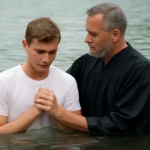
Baptism Holy Spirit Fire: Understanding Its Meaning and Impact Today
The phrase baptism Holy Spirit Fire invites a careful, prayerful exploration of
how Christians understand God’s work in a person’s life. Across history and across communities,
the language of baptism, the Holy Spirit, and fire has carried rich symbolism—ranging from cleansing
to empowerment, from purification to transformative mission. This article invites readers to consider
what these terms have meant in biblical times, how they have been interpreted within different church
traditions, and what their significance looks like for believers today. We will explore baptism with the Holy Spirit, the fire motif, and the practical
implications for faith, worship, and community life in a diverse religious landscape.
Understanding the core terms and their interconnection
What does baptism mean in Christian language?
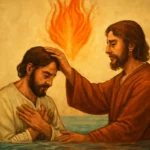
In its simplest sense, baptism speaks of immersion—being submerged into water as a symbol
of dying to an old way of life and rising to a new life in Christ. Yet Christian usage expands this
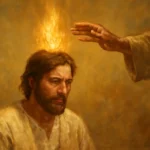
concept beyond water. The idea of being baptized by or with the Spirit carries a deeper dimension:
God’s own action coming upon a person, marking them as belonging to Christ, and equipping them for
service in a distinct way. In many traditions, the phrase baptism with the Holy Spirit is
linked to an inner transformation, a reception of divine power, and an intensified sense of God’s presence.
The Holy Spirit as a personal, active presence
The Holy Spirit is understood in Christian faith as the Spirit of God who dwells within and moves
among believers. In this sense, the Spirit’s presence is not a distant phenomenon but an ongoing,
interior relationship: guidance, conviction, comfort, and gifting. The language surrounding the Spirit
often emphasizes vitality, discernment, and truth-telling in the life of a community.
The symbolism of fire in biblical and contemporary language
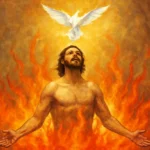
Fire in biblical imagery stands for several related realities. It can symbolize purification and refinement (removing impurities), judgment (the burning away of what is false),
and empowerment (the blazing energy of mission and witness). When Christians speak of
the Spirit as a fire, they often mean that God’s presence intensifies life—illuminating truth, shaping
character, and igniting bold action for the sake of love and justice.
Biblical foundations: how the language developed
The terms “baptism,” “Spirit,” and “fire” appear together most clearly in a few pivotal biblical
moments. In the New Testament, John the Baptist speaks of one who will come after him whose baptism
with the Holy Spirit and fire will refine and empower God’s people (Luke 3:16; Matthew 3:11). Later,
on the day of Pentecost, the outpouring of the Spirit fills the followers with boldness and gifts that
enable widespread proclamation and service (Acts 2). Across Christian history, these verses have
been interpreted in multiple ways, resulting in diverse practices and emphases.
Baptism with the Holy Spirit and fire: distinctions and connections
Some scholars and church traditions distinguish between water baptism and Spirit baptism, arguing that the
former is an outward sign of repentance and entry into the community, while the latter denotes an
inner reception of God’s life and power. Others teach that the two are inseparable moments in a single
gracious action of God. Still others describe multiple experiences—an initial reception of the Spirit at
conversion, and subsequent “fillings” or renewals that empower ongoing ministry. Regardless of the exact
framework, many agree that the Spirit’s work is always oriented toward transformation, testimony, and service.
Across Christian history, interpretations have varied widely. The earliest church did not have the risk-free,
uniform language we sometimes expect today. Over centuries, some groups emphasized the sanctifying work of
the Holy Spirit in daily life, others highlighted the spectacular signs associated with gift-bearing encounters.
Pentecostal and charismatic streams
In the Pentecostal and charismatic movements, baptism with the Holy Spirit is often described as a
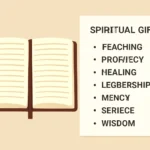
distinct second experience following conversion, one that is manifested through spiritual gifts such as
prophecy, healing, and speaking in tongues. In these contexts, the fire metaphor frequently
signals fresh courage, new obedience, and a renewed zeal for mission.
Mainline and historic Protestant interpretations
In many mainline churches, the emphasis might be on the Spirit’s presence in the life of a believer at
conversion and in moments of renewal rather than a separate, dramatic event. The language of Spirit-filled living is often connected to mature discipleship, ethical formation, and the
ongoing practice of prayer, worship, and service.
Catholic and Orthodox perspectives
Within Catholic and Orthodox traditions, the baptism of the Holy Spirit is often understood
through the sacramental life—baptism, confirmation, and the ongoing work of sanctifying grace. Fire imagery
is present in liturgy and hagiography as a symbol of purification, zeal for God, and the purifying love that
unites believers with the crucified and risen Christ.
The impact of Spirit baptism and fire on personal faith today
For many Christians, the concept of being empowered by the Spirit translates into a lived
reality of courage in witness, generosity toward neighbors, and a deepened commitment to justice and mercy.
The outpouring of the Spirit is often seen as enabling believers to grow in
virtue, to discern God’s will in daily choices, and to cultivate spiritual fruit—love, joy, peace,
patience, kindness, goodness, faithfulness, gentleness, and self-control.
Prayerful posture: setting aside time to listen, praise, and intercede.
Scriptural immersion: allowing Scripture to shape discernment and action.
Community discernment: seeking counsel and accountability within the church family.
Service and mission: translating inner renewal into outward acts of mercy and justice.
Some communities celebrate specific spiritual gifts and gathering practices as signs of the Spirit’s
presence. Others emphasize the fruits of the Spirit as evidence of inner renewal. Regardless of emphasis,
the overarching goal remains the same: to be more faithfully conformed to Christ and to participate in God’s
mission in a broken world.
Baptism with the Holy Spirit and fire in the life of the church
The impact of this topic on church life involves worship styles, preaching, catechesis, and liturgical
rhythms. It can shape how a congregation approaches evangelism, care for the vulnerable, and the
pursuit of holistic transformation in its neighborhoods.
Many communities speak of the Spirit’s presence as a catalyst for vibrant worship, creative
singing, and a sense of God’s nearness during communal prayer. Yet, a balanced approach asks
for reverence, discernment, and care for those who may be wary of extraordinary experiences.
The Spirit’s work is not merely about feelings or experiences; it is about shaping a life oriented toward
love of God and neighbor. The fire motif becomes a reminder that zeal without love can
be dangerous, while love without discernment may become ineffective. Healthy Spirit-centered communities pursue
both fervor and fidelity.
For readers who want to explore the possibility of a Spirit-empowered life in a thoughtful and responsible
way, consider these practical steps. They are offered as a framework rather than a formula.
Prayerful seeking: cultivate a posture of listening in humility, asking God for an authentic
encounter that aligns with truth and love.
Scripture engagement: immerse yourself in passages about the Spirit, fruit, and gifts, and reflect on their meaning for you.
Community formation: join a faith community that values discernment, accountability, and pastoral care.
Baptism and confirmation: participate in the appropriate sacraments or rites where your tradition teaches
they correspond to God’s work in you.
Gift discernment: seek to understand how spiritual gifts may operate in your life for the good of others and
the church, with guidance from wise mentors and church leaders.
Ethical consistency: ensure that any expression of Spirit-work is aligned with love, justice, and humility.
Is baptism in the Holy Spirit a one-time event or an ongoing experience? Many traditions describe it as a
significant event that reorients a person toward mission, with ongoing «fillings» or renewals that accompany
growth in faith and service. Others speak of Spirit reconciliation as an ongoing relationship rather than a single moment.
Is water baptism required for Spirit baptism? Opinions vary. Some traditions hold that water baptism is
the natural入口 into the life of Christ, while Spirit baptism is a separate, subsequent experience. Other
communities see water baptism and Spirit baptism as united in a single gracious act. The key question in all
cases is whether the experience leads to faithful discipleship and love for others.
What about signs and gifts, like speaking in tongues or prophecy? Gifts are understood differently
across traditions. Some see them as relevant and present today within orderly practice and discernment, while
others view them as less central or interpreted in a symbolic rather than a literal sense. Across the board,
most churches affirm that gifts should be exercised in love and for the common good, under wise leadership
and accountability.
Can a non-Christian or seeker experience Spirit-work? In many Christian communities, the language of Spirit
work is understood within the context of faith in Christ. Some traditions welcome seekers to encounter God’s presence
and to explore what it might mean to follow Jesus, while fostering respectful dialogue about belief and belonging.
When discussing baptism with the Holy Spirit and the fire metaphor, it is important to
recognize both the beauty and the complexity of the topic. People come to these conversations with diverse
experiences, questions, and spiritual backgrounds. A thoughtful approach includes:
Respect for conscience: not everyone will share the same experience or vocabulary, and that diversity
should be handled with care and mutual respect.
Guarding against sensationalism: genuine spiritual renewal is more about character and love than
dramatic signs. Hopeful discernment helps protect individuals from disappointment or manipulation.
Emphasis on love and service: the ultimate measure of Spirit-work is whether it leads to deeper love
for God and neighbor, and practical acts of mercy in the world.
When Christians reflect on baptism with the Holy Spirit and the idea of fire as refinement,
it invites a life that is both deeply intimate with God and outward-facing in compassion. Historically, movements
that have emphasized Spirit empowerment have often sought to address social injustices, provide care for the vulnerable,
and advocate for the dignity of every person. The modern church’s challenge is to translate spiritual renewal into
responsible action—to use the energy of the Spirit to build communities that are just, generous, and hospitable.
A healthy approach to the Spirit’s work invites perpetual discernment: when a church or believer experiences
renewal, it should be tested by Scripture, tested in community, and tested by the fruit it bears. In practice,
this means ongoing worship, confession, accountability, and a shared mission to love neighbor and care for creation.
The phrase baptism Holy Spirit Fire is not a single doctrine to memorize but a living invitation:
to encounter the living God who invites us into a transformed life, to be refined by divine love, and to join
God in repairing a fractured world. Across traditions, the core questions remain similar: How does the Spirit
empower us to love more fully? How does fire refine without destroying? How can believers steward gifts, callings,
and graces in ways that honor God and serve the common good? By holding these questions with humility and curiosity,
Christians today can explore a robust, hopeful vision of being baptized into Christ’s life—an identity marked not
by certainty alone but by faithful obedience, courageous hope, and steadfast love.
In a world that often looks for quick solutions, the teaching surrounding baptism with the Holy Spirit and
the fire imagery reminds believers that genuine renewal is a journey. It invites us to pursue God’s
presence with reverence, to welcome spiritual gifts with discernment, and to engage the world with a transforming
love that reflects the heart of Jesus. Whether one emphasizes the experiential aspects of Spirit-breath or centers
on discipleship and service, the enduring aim remains: to be shaped by God’s life, to witness with truth and
grace, and to live as people of hope who carry the flame of God’s love into every corner of life.
This exploration has opened multiple avenues for understanding the baptism Holy Spirit Fire in today’s
church. It is our prayer that readers find clarity, nourishment, and renewed direction for faith that is deeply
rooted in Scripture, faithfully practiced in community, and generously shared with the world.
This article explores the seven gifts of the Holy Spirit and how to recognize and practice them in everyday life. Overview of the Seven Gifts of the Holy Spirit The Christian tradition holds that there are seven gifts of the Holy Spirit that empower believers to live in closer union with God and to respond…
Anointing Sermon: 5 Keys to Delivering a Spirit-Led, Powerful Message An anointing sermon is more than a well-crafted outline or a polished delivery. It is a message that carries the presence of God into the meeting, stirring faith, hope, and transformation in the hearers. In Christian ministry, many preachers yearn for that moment when the…
This article offers a thorough exploration of the Bible spiritual gifts list, a guide to the gifts of the Holy Spirit described in Scripture. Whether you encounter the phrase bible spiritual gifts list, gifts of the Spirit in Scripture, or list of spiritual gifts in the Bible, the aim is the same: to illuminate how…
Anointed with Holy Spirit: What It Means and How to Walk in His Power Today Throughout biblical history, the phrase anointed with the Holy Spirit carries weighty significance. It signals a distinct moment of divine presence, empowerment, and commissioning for purpose. In the Christian tradition, the idea of being anointed by the Spirit is not…
Understanding the Baptism with the Holy Spirit and Fire: Meaning, Significance, and Biblical Insights The phrase baptism with the Holy Spirit and fire appears in the New Testament as a powerful description of a spiritual experience associated with divine empowerment, purification, and transformation. Across Christian traditions, this language is used to speak of a deeper…