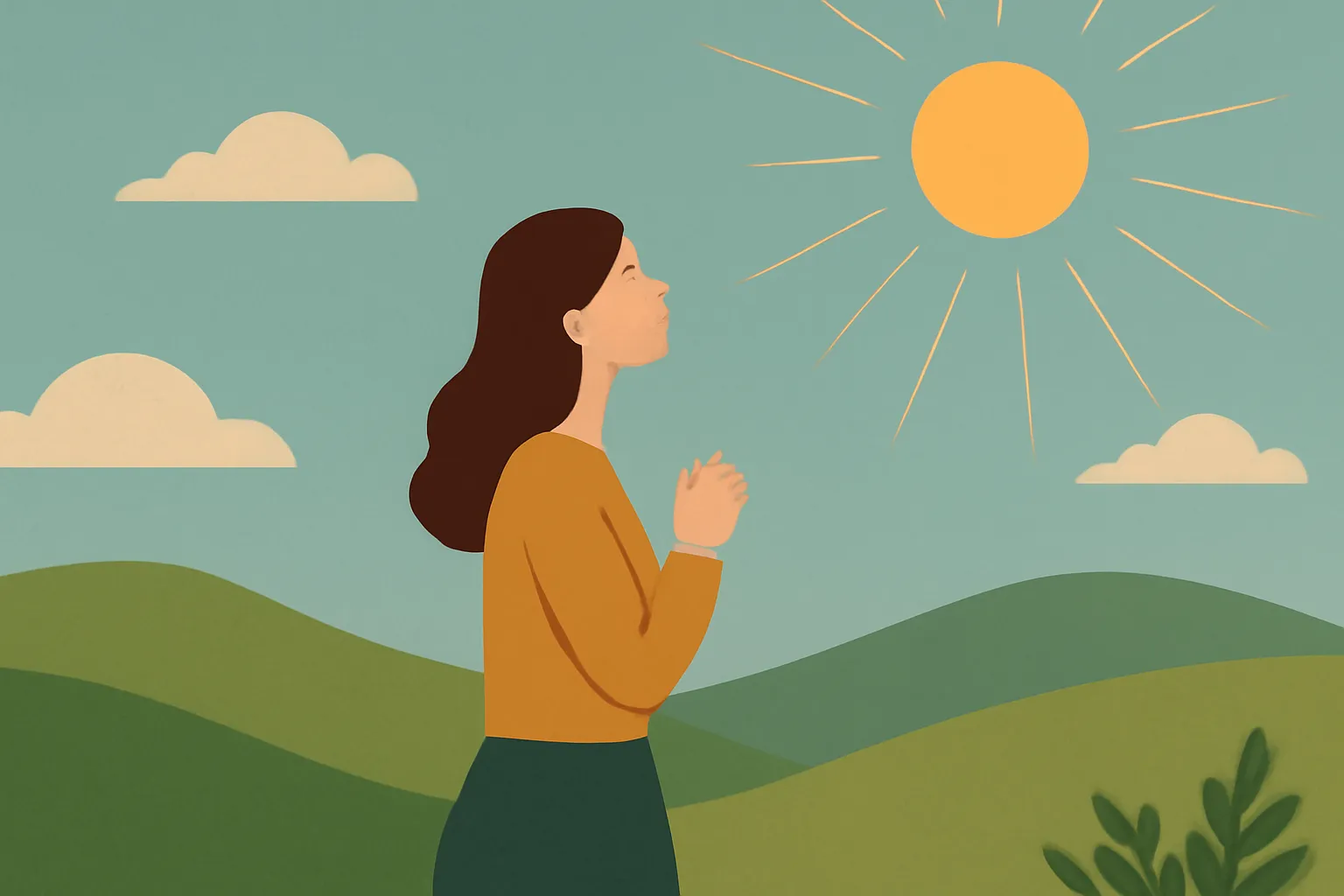
Psalm 121 belongs to the collection known as the Songs of Ascents, a group of short, lyrical prayers or hymns that many scholars believe were sung by pilgrims as they ascended toward Jerusalem. This psalm opens with a striking image: the speaker lifts their eyes to the hills, asking where their help comes from. The answer is clear and bold: my help comes from the LORD, the Maker of heaven and earth. Across centuries and cultures, readers have turned to this short composition for reassurance, guidance, and a sense of divine protection. In this article, we explore the meaning, the historical context, and a verse-by-verse interpretation to illuminate how Psalm 121 speaks to trust, providence, and continual care.
Historical and Literary Context
To understand Psalm 121, it helps to situate it within its literary category and historical setting. The Psalms of Ascents (Psalms 120–134) were likely used in liturgical settings, especially during annual pilgrimages to Jerusalem. They function as a bridge between the private prayer life of an individual and the communal worship of the temple. In many cases, the psalms address the realities of travel, danger, and dependence on God in the midst of a journey.
The authorship of Psalm 121 is not definitively settled in ancient sources. Tradition attributes many of the psalms to David, while contemporary biblical scholarship often describes them as anonymous or as products of a later period reflecting a wide spectrum of devotional practices. What matters for interpretation is not only who wrote it, but the way the text speaks to readers across time: a voice of trust in divine protection and a reminder that help comes from the LORD who made heaven and earth.
The imagery in Psalm 121—hills, the Creator of the cosmos, sleep and watchfulness, day and night—encourages readers to place their hopes in a divine guardian who transcends human weakness. The focus on God as keeper and protector resonates with travelers, families, and communities who face uncertainty yet remain invited to rest in God’s steadfast care.
Key Themes and Imagery in Psalm 121
The psalm juxtaposes a human gaze upward toward the hills with a theological claim about where help truly originates. Several motifs recur throughout the text, forming the backbone of its message.
Help from the LORD: The striking claim that help comes from the Creator, not from human effort or chance.
Maker of heaven and earth: An explicit declaration of God’s sovereignty over creation, affirming that God’s power informs care for the world and for the individual.
Watchfulness: The imagery of watching and not slumbering emphasizes God’s constant awareness and presence.
Protection and shade: The imagery of a protector who shelters travelers, especially on dangerous journeys.
Day and night safety: References to the sun and the moon symbolize a guardian who preserves from harms that come with both daylight and darkness.
Life and coming/going: A comprehensive scope of God’s care that extends to every phase of life and travel, “from this time forth, and forevermore.”
Verse-by-Verse Interpretation: A Detailed Walkthrough
The following section offers a verse-by-verse interpretation, organized to help readers grasp how each line contributes to the psalm’s overall message. For readability, the verses are presented in small clusters that capture their logical and theological connections.
Verse 1–2: Lifting the Eyes and the Source of Help
I lift up my eyes to the hills—where does my help come from?My help comes from the LORD, the Maker of heaven and earth.
This opening couplet frames the entire psalm: the speaker’s posture is one of elevation and attention—“lifting up the eyes.” The hills are a dramatic image; for a traveler, the hills may symbolize danger, distance, or the unknown. Yet the response is not trepidation but a confident proclamation: help originates from God. The refrain—the LORD, the Maker of heaven and earth—grounds this trust in God’s sovereignty over creation.
Meaning: The agency of help belongs not to human resources but to God, who is intimately connected with the created order.
Context: In a journey context, looking to the hills is both literal (the road ahead) and symbolic (the world’s elevations perceived as possible threats or sources of danger).
Theological emphasis: God’s role as creator underpins his ability to sustain, protect, and guide his people.
Verse 3–4: God as the Unfailing Guardian
He will not let your foot slip—he who watches over you will not slumber;indeed, he who watches over Israel will neither slumber nor sleep.
The rhetorical claim escalates: God is a reliable guardian who prevents disaster and remains vigilant. The repetition of watchfulness—“watches” and “slumber”—emphasizes constant, unwavering protection. The reference to Israel extends the promise from an individual to the entire community, suggesting a covenantal fidelity that transcends personal risk.
Protection: God is active in keeping feet from slipping, a metaphor for stability and safety along a dangerous path.
Continuity of care: The insistence that God does not sleep implies a perpetual, unceasing watchfulness.
Community dimension: While initially personal, the language broadens to the protection of the people of Israel as a whole.
Verse 5–6: The LORD as Keeper and Shade
The LORD is your keeper: the LORD is your shade at your right hand;the sun shall not smite you by day, nor the moon by night.
Here the psalm grounds protection in intimate, near imagery. The term keeper (often translated as guardian or preserver) conveys continuous care. The phrase shade at your right hand invokes a protective shade that shields a traveler on a bright day and a movie of proximity—indicating both security and arrangement. The mention of sun by day and moon by night expands the scope of protection to both cycles of time—daily and nightly—underscoring a complete safeguarding over life.
Nearness: The image of shade at the right hand suggests protection that is actively close, not distant.
Comprehensive safety: Protection covers both days’ heat and night’s cold or darkness.
Personal relationship with God: The use of “your” personalizes the divine care, transforming abstract doctrine into lived experience.
Verse 7–8: Protection from Evil and Enduring Presence
The LORD will keep you from all harm—he will keep your life. The LORD will watch over your coming and going both now and forevermore.
The closing couplet broadens the promise to include protection from all harm and the safeguarding of life. The verb keep occurs twice, reinforcing the divine act of preservation. The final line anchors the promise in time: now and forevermore, a declaration that God’s care is both immediate and enduring. The cadence suggests a comforting density: protection is active in the present and secure for the future.
Holistic protection: The psalm covers physical safety, spiritual well-being, and the preservation of life itself.
Everlasting presence: The assurance is not momentary but extends into the future—“forevermore.”
Practical Applications: How Psalm 121 Speaks to Modern Life
Readers today encounter Psalm 121 in a variety of life circumstances: travel, transition, illness, grief, or moments of decision. The text invites practical reflection on trust, prayer, and the way people navigate uncertainty.
Trust in divine sovereignty: Recognize that ultimate help comes from the LORD, not from human power alone.
Ritual and rhythm: For travelers or communities, reciting or singing this psalm can create a sense of continuity and orientation in the journey.
Presence in daily life: The notion of God as shield and keeper can translate into ordinary routines—protecting health, guiding decisions, sustaining hope.
In practice, readers might turn the psalm into a short prayer: a humble request for protection while acknowledging God’s sovereignty over all creation. The phrase “from this time forth, and forevermore” can function as a pathway into sustained trust, rather than a one-time consolation.
Psalm 121 Across Traditions: How Jewish and Christian Readings Shape Meaning
The interpretation of Psalm 121 has been shaped by its reception in various faith communities. Though the text is part of the Hebrew Bible, its application has extended deeply into Christian devotional practice and liturgy, as well as Jewish contemplative tradition.
Judaism: Pilgrim Faith and Covenant Trust
In Jewish tradition, the Psalm is often connected with the pilgrimage to Jerusalem, aligning with the broader theme of ascent. The assurance of God’s protection would have been especially meaningful for pilgrims traveling long distances, possibly facing dangers along the road. The image of the Creator sustaining creation connects to a long-standing Jewish emphasis on God’s providence in daily life and history.
Christian Traditions: Comfort in God’s Care and Christocentric Reflection
In Christian readings, Psalm 121 frequently appears in contexts of travel, spiritual pilgrimage, and personal crisis. It is used to teach about God’s care for the whole person—body, soul, and daily life. Some Christian interpreters see a typological reading in which Psalm 121 prefigures the protection found in Christ, while others emphasize the relational and covenantal dimensions of God’s keeping.
Across traditions, the central claim remains consistent: God’s vigilant care is reliable, and the traveler’s trust is placed in the Divine who transcends the uncertainties of the journey.
To broaden understanding, readers often rephrase or expand the question in variations of explain psalm 121. Here are several angles commonly explored in contemporary study and devotional practice.
Explain Psalm 121 meaning as a concise statement about divine provision and protection.
Explain Psalm 121 verse by verse to illuminate how each line contributes to the whole.
Explain Psalm 121 in context by situating it within the Songs of Ascents and the pilgrimage tradition.
Explain Psalm 121 with applications for modern life, including travel safety, resilience, and prayer life.
Explain Psalm 121 for stress relief or spiritual comfort by emphasizing trust and steady divine presence.
How might a reader apply the insights of Psalm 121 in daily life? Consider the following practical steps that reflect the psalm’s themes.
Begin with prayer: Use the psalm’s language to shape a short prayer for protection and guidance in today’s circumstances.
Practice mindful trust: When anxiety arises, recall the claim that the Lord is your keeper and not only a distant force but a present guardian.
Remember the Creator: Meditate on the phrase “the Maker of heaven and earth” to ground confidence in God’s power and care.
Discuss with others: Share interpretations with friends or a study group, inviting different perspectives on how God’s protection operates in diverse life contexts.
Beyond its practical value, Psalm 121 presents a robust portrait of God’s character. It portrays God as a sovereign Creator who is intimately involved in the life of the faithful. The psalm’s emphasis on watchfulness, protection, and lasting presence contributes to a framework in which divine care is not episodic or contingent but enduring and reliable.
In sum, Psalm 121 offers a concise yet deep meditation on where help comes from when the road is uncertain. From its opening declaration that help comes from the LORD, the Maker of heaven and earth, to its closing assurance of ongoing protection, the psalm invites readers to a posture of trust, gratitude, and steadfast faith. Its imagery—hills, shade, day and night—speaks a language that remains accessible across generations and cultures. Whether read as a traveler’s prayer, a community’s liturgical refrain, or a personal meditation on God’s unwavering care, Psalm 121 continues to provide a model of resilience anchored in God’s faithful keeping.