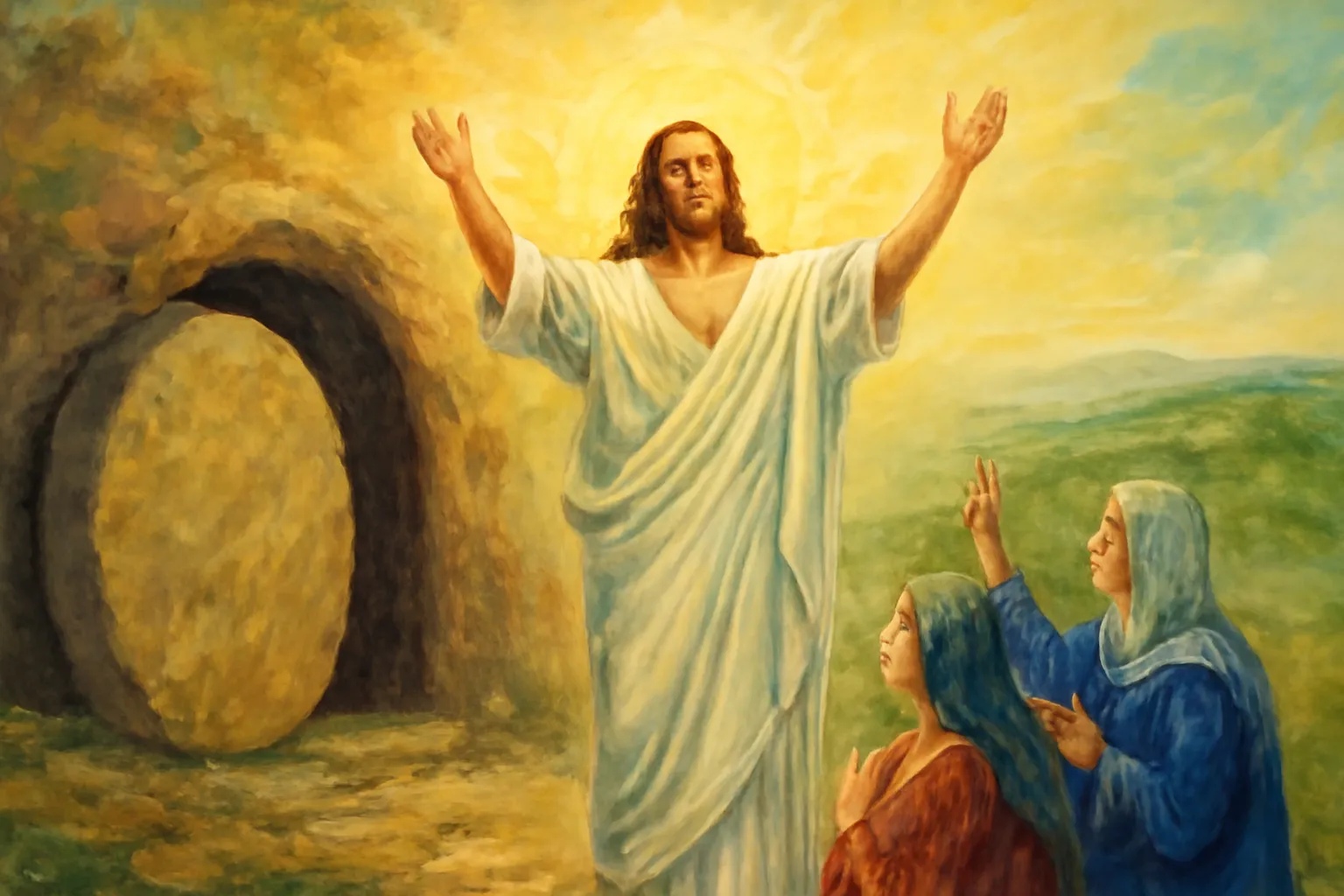
Overview: Jesus’s Resurrection, History, Significance, and Evidence
The topic often introduced in Christian tradition as the Resurrection of Jesus has deep roots in ancient history, theology, and culture. In many strands of Christian belief, this event is not merely a miraculous turnaround in a single life, but a cornerstone that reshapes timekeeping, hope, and ethical horizons. This article explores the Resurrection of Jesus from historical, theological, and evidentiary angles, while attending to how different communities have understood, proclaimed, and evaluated this event across two millennia. We will use variations of the phrase to reflect the breadth of meanings—from the succinct “Jesus rose from the dead” to more formal formulations like “the Resurrection of Christ” or “the risen Lord.”
To approach the subject with intellectual seriousness, we distinguish between the following domains: historical inquiry, which examines sources and context; theological interpretation, which reflects beliefs about meaning and divine purpose; and pastoral and devotional significance, which address how believers live, worship, and share commitments in light of the event. Each domain sheds light on different questions, yet they intersect in important ways when considering what the Resurrection has meant for individuals and communities across time.
Historical Background and Context
First-century setting: Judaism, empire, and messianic expectation
In the world where Jesus lived, Judaism carried a spectrum of beliefs about the afterlife, the nature of the Messiah, and the coming of God’s kingdom. Some traditions held that the righteous would be resurrected at the end of history (a generalized future hope), while others anticipated more immediate divine interventions or renewals of Israel’s fortunes. The political reality of Roman rule over Judea and Galilee created a backdrop in which stories about a crucified teacher and a proclaimed special status could circulate with provocative energy. The claim that Jesus had been raised was not simply a private conviction; it intersected with debates about who Jesus was, what his death signified, and what God might be doing in history.
The cross, death, and the claim of life after death
Crucifixion was a Roman method designed to execute political or social troublemakers. The death of Jesus on a cross is widely attested in early sources, but the claim that death was defeated or that life was reasserted in a new form after death becomes central in the Christian proclamation. Early followers did not merely claim that Jesus had died and stayed dead; they asserted that the risen Jesus appeared in tangible, transformative ways. This shift—from a historical figure who lived and died to a living, present reality—was perceived as evidence that God’s purposes were being fulfilled in a novel manner. In many accounts, the resurrection is framed not only as a reversal of death but as a vindication of Jesus’s mission, a confirmation of his authority, and a pledge of new life for believers.
Early sources and their historical milieu
The earliest fragments and testimonies come from diverse communities within early Christianity. Some sources emphasize preaching, others emphasize written accounts, and still others emphasize experiences of the risen Jesus in plural settings. Across the landscape, a recurring pattern appears: followers report encounters with the risen Jesus, declare that he is alive, and interpret these events as continuing acts of God in the world. This milieu gives rise to a robust set of narratives about appearances of the risen Jesus, the discovery of an empty tomb, and the forthcoming proclamation that God has inaugurated a new era through Christ.
Theological Significance
What the Resurrection means for faith
Across Christian traditions, the central significance of the Resurrection is that it reveals the truth about who Jesus is and what God is doing in history. It is often described as the moment when God breaks into the deepest reality of human mortality with renewed life. This has multiple theological resonances:
Vindication of Jesus’s teachings and messianic claims.
Affirmation of divine power over death and decay, providing a source of hope for believers.
Confirmation of new creation and the possibility of renewal for the entire cosmos.
Foundational support for the Christian confidence in eternal life and a future resurrection of all who belong to Christ.
The event is frequently connected to broader Christological claims, notably that Jesus is the Son of God in a unique way, and that his resurrection is a decisive declaration of his identity and authority. For many Christians, the Resurrection signifies the triumph of love and grace over sin and estrangement, and it frames the person of Jesus as both crucified mediator and living Lord who continues to guide and empower his followers.
Eschatological and ethical horizons
Beyond personal salvation, many theologians read the Resurrection as a sign of God’s future judgment and restoration. In this light, the risen Jesus serves as a model and location of hope for justice, reconciliation, and mercy in the present world. Ethical commitments—such as peacemaking, care for the vulnerable, and steadfast faith under pressure—are often explained as responses to the truth that God is not done with creation and that new possibilities have been inaugurated for individuals and communities alike.
What Counts as Evidence? Historical Methods and Theological Claims
Historical criteria and their application
Scholars who study the Resurrection as a historical phenomenon often apply traditional criteria of historical reliability, including the examination of multiple independent testimonies, the dating of sources, the geographical spread of claims, and the consistency of witness testimony with known historical circumstances. While historians generally approach the Resurrection as a claim about what happened, not as a matter of scientific replication, many seek to assess the plausibility of the report within its ancient milieu. The core questions include: What do the sources claim? How early are the accounts? What explains the rapid spread of belief in the risen Jesus?
Key sources and their characteristics
Pauline letters (circa 50–60 CE) preserve some of the earliest Christian claims about appearances and the importance of the Resurrection for preaching and belief. The emphasis is less on a narrative sequence and more on proclamation and implication for faith and practice.
Gospel narratives (Matthew, Mark, Luke-Acts, John) provide narrative accounts of the empty tomb, post-resurrection appearances, and the theological meaning of the event. These texts reflect the communities for whom they were written and the theological emphases of their authors.
Non-Christian sources from the ancient world, such as certain Jewish and Roman documents, reference Jesus and his followers in ways that scholars weigh when considering broad historical context. While these references are not primarily about the Resurrection, they contribute to the puzzle about how early Christians understood Jesus’s life and impact.
It is important to acknowledge that the Resurrection is not a hypothesis that can be subjected to modern scientific testing. In historical studies, the strength of the case often depends on interpretive frameworks. Some scholars emphasize the evidence for the empty tomb, others highlight the transformative experiences reported by witnesses, and still others point to the rapid growth and continuities within early Christian communities. The diversity of viewpoints is a sign of a rich scholarly field rather than a single agreed-upon verdict. In many discussions, the question is not whether the event occurred in a strictly modern sense, but whether the historical data support the claim that the early Church interpreted Jesus’s death and alleged appearances as a transformed reality of life beyond the grave.
Many readers approach the Resurrection with faith commitments that shape how they read the evidence. Others seek to examine the data without relying on prior theological assumptions. Both approaches can yield meaningful insights. The key is to distinguish between the claims about what happened (historical claims) and the claims about what those events mean (theological claims). The phrase “the risen Jesus” often functions as a shorthand for both the experience proclaimed by early Christians and the theological claim about God’s ongoing work in the world.
Accounts, Appearances, and the Empty Tomb
Post-resurrection appearances in early texts
In the earliest Christian materials, reports of encounters with the risen Jesus are central. The accounts describe appearances in various settings—on roadways, in homes, by the sea, and in rooms where the disciples gathered. These appearances are often described as tangible experiences, with Jesus speaking, eating, or enabling acts of recognition. For believers, such encounters function as experiential confirmation of doctrine; for critics, they are historical testimonials that require careful analysis in light of sources and context.
The discovery of the empty tomb is a recurring motif in the Gospel narratives. It raises questions about what happened to Jesus’s body and what the absence of the body signified to the early believers. The empty tomb is frequently interpreted as a sign that God has transformed the status of Jesus’s body and life. Some scholars view the empty tomb as a sociopolitical symbol within early Christian communities, signaling that Jesus’s message transcended a simple tomb narrative. For believers, the empty tomb becomes a prerequisite for understanding the Resurrection as a real event rather than a symbolic memory.
Language of proclamation and worship
In many traditions, the Resurrection is inseparable from the subsequent proclamations of the churches. The earliest Christians did not solely report a miracle; they declared a salvific reality: that God has acted decisively in history through Jesus. This rhetorical and liturgical dimension is visible in the way communities prayed, preached, and celebrated rituals that oriented life around the risen Lord.
Impact on Early Christianity and the Shape of Belief
Formation of liturgy and creed
The Resurrection helped shape early Christian ritual life, including the practice of remembrance, gatherings around the breaking of bread, and the singing of hymns that center on new life. Creeds and confessions that crystallized over the first few centuries—expressions of faith about Jesus’s identity and his resurrection—played a key role in preserving core convictions when communities faced persecution or doctrinal disputes. The preaching of the risen Christ became a template for mission and evangelism across diverse geographical regions.
Ethical and communal implications
If the Resurrection is true, it has ethical consequences. Believers are urged to live in light of new possibilities: forgiveness, reconciliation, and a renewed sense of purpose in daily life. The risen Jesus is often depicted as commissioning his followers to be agents of healing, justice, and mercy in the world. This ethical dimension helps explain why Resurrection-focused faith has spurred charitable works, education, and social reforms across different Christian communities and historical periods.
Diversity within the Christian tradition
Different Christian traditions emphasize various aspects of the Resurrection. Some stress its juridical or forensic dimensions—Christ’s act of justification before God. Others emphasize the personal encounter and the transformative power experienced by believers. Still others focus on the Resurrection as the dawn of cosmic renewal. The plurality of emphases does not negate a shared claim that God has acted decisively in Jesus, but it does illuminate how historical, cultural, and theological contexts shape interpretation.
Variations in Interpretation Across Time and Context
Historical-critical perspectives
Scholars who employ historical-critical methods often frame the Resurrection as a complex phenomenon that includes reported appearances, the spread of belief, and the maintenance of a living memory within communities. They ask how early followers could sustain the conviction that Jesus was alive and active after death, and what kinds of experiences or visions could underwrite such conviction. In this approach, the Resurrection is not reduced to a single moment but understood as a sequence of events and experiences embedded in a broader narrative about God’s ongoing work in the world.
Faith-based interpretations
For many believers, the Resurrection is primarily a theological claim about God’s victory over death and about the ongoing presence of Christ in the life of the Church. In this frame, the emphasis shifts from empirical verification to transformative trust: the risen Lord is trusted to guide, sustain, and empower the community in everyday life, even amid suffering and uncertainty.
Interfaith and secular perspectives
From an interfaith or secular vantage point, the Resurrection may be examined as a religious phenomenon with significant cultural influence rather than as a strictly historical event. These perspectives may highlight the Resurrection’s role in shaping Christian identity, institutional development, art, literature, and social ethics, while treating the event as a subject of belief rather than a provable historical occurrence.
Some readers and scholars question whether the Resurrection can be understood as a literal, bodily resurrection or if it should be interpreted metaphorically or symbolically. Others ask whether extraordinary claims require extraordinary evidence and whether early reports could be the product of literary, communal, or visionary processes. Common lines of inquiry include: the reliability of sources, the potential for competing explanations (such as the swoon theory, mythic development, or visionary experiences), and the role of memory in communal formation.
How scholars respond to critiques
Many scholars acknowledge the limits of historical reconstruction while still offering plausible scenarios that fit the data. Some emphasize early, liturgical, and creedal materials as evidence that the Resurrection mattered deeply to early Christians, regardless of the precise nature of the event. Others propose that the Resurrection narratives reflect a combination of memory, interpretation, and proclamation that emerged within a specific first-century milieu. In this sense, debates often revolve around whether to interpret the Resurrection as a historical occurrence, a religious experience, or a theological claim that shaped communal identity.
What can be learned from disagreements
Disagreement does not necessarily undermine the importance of the Resurrection in religious life. It can illuminate how people across eras grapple with questions of mortality, the meaning of life, and the possibility of transformation. The debates themselves reveal the durability of the event’s significance and how communities continue to wrestle with its implications for faith, ethics, and hope.
Impact on Culture, Worship, and Society
Worship and liturgical life
Around the world, resurrection-centered worship has inspired liturgies, seasons (such as Easter), hymns, and sacramental practices that celebrate new life. The language of rising from death, renewal, and light has shaped rituals that help believers articulate hope and gratitude in the face of suffering. This dimension shows how belief about the Resurrection translates into communal experience and shared memory.
Art, music, and literature
The Resurrection has been a fertile subject for artists, poets, composers, and writers throughout history. From early iconography and medieval churches to modern films and novels, the idea that Jesus is risen has energized creative exploration of themes such as mercy, forgiveness, transformation, and justice. The cultural imprint of this belief extends far beyond religious circles, influencing landscapes of public life and popular imagination.
Social ethics and public life
Historically, movements rooted in Resurrection-based faith have participated in advocacy for human rights, abolition of slavery, medical care, education, and relief for the marginalized. The claim that life overcomes death can translate into a vision for social renewal, communal solidarity, and resilience in the face of injustice and oppression.
The Persistent Question of the Resurrection
Across centuries and cultures, the Resurrection of Jesus remains a central event that has defined, challenged, and nourished countless lives. Its interpretations vary—some scholars frame it in historical terms, others in theological terms, and still others in existential or ethical terms. The common thread is a belief that God has acted in history in a way that inaugurates a new order, offering hope beyond ordinary human experience and inviting a response of faith, trust, and ethical living. Whether viewed through the lens of historical inquiry, theological reflection, or practical discipleship, the Resurrection continues to prompt readers to consider questions about mortality, meaning, and the possibility of renewal in every age.
For readers seeking a concise summary: the Resurrection of Jesus is not merely an ancient anecdote; it is a multifaceted claim that has shaped belief, worship, and society for two thousand years. Its study invites careful attention to sources, context, and interpretation while remaining attentive to the lived reality of faith communities that proclaim the risen Christ as Lord and Savior. As with any deep religious topic, engagement benefits from openness, critical thinking, and a respectful appreciation for diverse perspectives that have emerged in the long history of Christian thought.
Further avenues for exploration
Exploring the Pauline testimonies about the Resurrection and how they differ from Gospel narratives.
Comparative studies of empty tomb motifs across ancient literature and their significance in early Christian faith.
Analysis of creeds and confessions that articulate core Resurrection beliefs.
Investigation of how modern exegesis handles symbolic versus literal interpretations.
Evidence That Jesus Resurrected: Historical Proof and Key Arguments The claim that Jesus rose from the dead has been a central pillar of Christian faith for two millennia, and it also remains a topic of intense historical inquiry. This article surveys the major lines of evidence that proponents have cited to argue for the historicity…
Jesus’ resurrection is one of the most debated events in world history. This article provides a careful, informational overview of what scholars mean by resurrection evidence, how historians evaluate it, and what common questions arise. Rather than asserting unquestioned certainty, we will explore the ways in which different lines of inquiry interact, the strengths and…