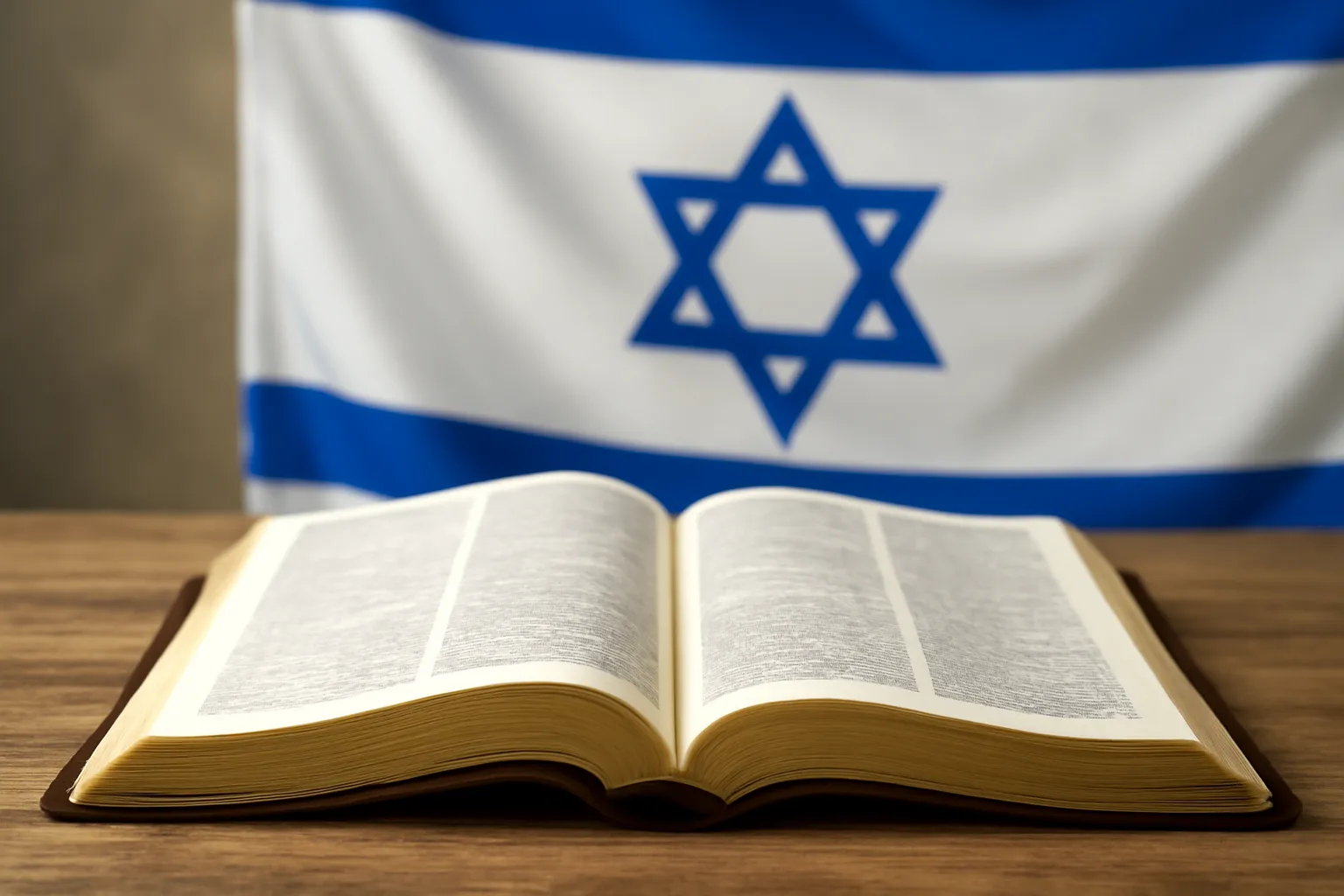
The phrase standing with Israel is commonly used by readers of the Bible to describe a stance of support, blessing, and prayers for the Jewish people and the land promised to them by God. This article gathers biblical verses that believers often reference when reflecting on what it means to stand with Israel in a way that is faithful to Scripture and constructive for contemporary life. While the language of politics and nations is present in modern discourse, the biblical foundation centers on God’s covenants, promises, and the call to be a blessing to the nations through the people of Israel. Below you will find key scriptures, brief reflections, and practical ways to apply these truths in daily life.
Biblical Foundations for Standing With Israel
Several biblical themes recur when Christians seek to understand what it means to stand with Israel in a way that honors God: divine blessing attached to those who bless Israel, Jerusalem as a city of prayer and peace, and God’s purposes to restore and bless the descendants of Abraham. The following verses illuminate these themes and offer a foundation for reflection and action.
Genesis 12:3 — Blessing to Those Who Bless Israel
“And I will bless them that bless thee, and curse him that curseth thee: and in thee shall all families of the earth be blessed.” (Genesis 12:3, KJV)
This early promise to Abraham has long been interpreted as a principle: to bless Israel is to align with God’s redemptive plan for the world. Believers who reflect on this verse often see a call to engage with Israel in ways that reflect God’s concern for her wellbeing, her security, and her spiritual heritage. The verse also reminds us that God’s purposes extend to all nations through Israel, making the stance both particular and cosmic in scope.
Psalm 122:6 — Pray for the Peace of Jerusalem
“Pray for the peace of Jerusalem: they shall prosper that love thee.” (Psalm 122:6, KJV)
Jerusalem sits at the heart of biblical narrative and prophecy. By praying for its peace, believers acknowledge the city’s spiritual significance and its people. The verse links divine blessing to those who hold Jerusalem in their prayers and affections. In a world of conflict and competing narratives, this verse calls Christians to posture themselves toward peacemaking and intercession on behalf of the city and its inhabitants.
Psalm 121:7–8 — God’s Protection Over the People and the Land
“The LORD shall keep thee from all evil: he shall keep thy soul. The LORD shall keep thy going out and thy coming in from this time forth, and even for evermore.” (Psalm 121:7–8, KJV)
While not speaking explicitly about a political stance, this psalm expresses confidence in God’s protective care—an emphasis many readers connect to the safety and security of Israel and its people. Standing with Israel in this sense includes trust in God’s providence, recognizing that ultimate security rests in Him.
Isaiah 41:8–9 — God’s Servant and Witness in Israel
“But thou, Israel, art my servant, Jacob whom I have chosen, the seed of Abraham my friend. Thou whom I have taken from the ends of the earth, and called thee from the chief men thereof, and said unto thee, Thou art my servant; I have chosen thee, and not cast thee away.” (Isaiah 41:8–9, KJV)
This passage affirms Israel’s chosen status in God’s plan. Believers who stand with Israel often see in these verses a reminder that God’s faithfulness to His people remains central to history. The language of being chosen and formed by God invites readers to approach Israel with humility, reverence, and a desire to honor God’s purposes in the land and among the people.
God’s promises regarding restoration, gathering, and future hope for Israel are a major strand in biblical prophecy. This section highlights several passages that many readers associate with the ongoing story of Israel’s national and spiritual renewal.
Ezekiel 37 — The Valley of Dry Bones: God Gathers and Revives Israel
“Thus saith the Lord GOD; Behold, I will cause breath to enter into you, and ye shall live: and I will lay sinews upon you, and will bring up flesh upon you, and cover you with skin, and put breath in you, and ye shall live; and ye shall know that I am the LORD.” (Ezekiel 37:5–6, KJV)
The vision of dry bones coming to life is often read as a powerful image of Israel’s restoration from exile and national awakening. For those who stand with Israel, this chapter provides a metaphor for divine initiative in the land and among its people—emphasizing that revival and unity come from God’s gracious renewal.
Jeremiah 31:10–12 — God Will Bring His People Back
“Hear the word of the LORD, O ye nations, and declare it in the isles afar off; And say, He that scattereth Israel will gather him, and keep him, as a shepherd doth his flock.” (Jeremiah 31:10, KJV)
This text frames Israel’s restoration as a divine action supervised by God, with the nations bearing witness to His faithfulness. Standing with Israel in this context often means praying for and supporting the processes by which communities are reconnected with their homeland and their God-given identities.
Isaiah 60:14 — A Vision of Honor From the Nations
“The sons also of them that afflicted thee shall come bending unto thee; and all they that despised thee shall bow themselves down at the soles of thy feet.” (Isaiah 60:14, KJV)
This prophecy envisions a future in which nations come to honor Israel and recognize the God of Israel. For readers today, it can be a reminder that intercession and witness play a role in the nations’ response to God’s redemptive history with Israel.
Zechariah 2:8–11 — God Protects and Establishes Jerusalem
“For he that toucheth you toucheth the apple of his eye.” (Zechariah 2:8, KJV)
These verses emphasize God’s protective care for Jerusalem and the people who live there. The imagery invites believers to approach the city with reverence and a sense of its sacred place in God’s plan, while also urging peacemaking and responsible engagement in light of divine ownership of the land.
New Testament Reflections on Israel and the Gospel
The New Testament offers important perspectives on Israel’s place in God’s overarching plan, including how Gentile believers relate to Israel and how God’s promises extend to all who trust in Christ. Reading these passages with an eye toward discernment can help believers stand with integrity and humility as they reflect on the biblical story.
Romans 11:11–12, 25–29 — Israel’s Steadying Place in God’s Redemptive Plan
“I say then, Have they stumbled that they should fall? God forbid: but rather through their fall salvation is come unto the Gentiles… for if the casting away of them be the reconciling of the world, what shall the receiving of them be, but life from the dead?” (Romans 11:11, 15, KJV)
Paul’s letter emphasizes that the broader salvation narrative includes Israel’s partial hardening and future restoration. Standing with Israel in this light means honoring the ongoing place of Israel in God’s redemptive work, while recognizing the inclusion of the Gentiles in the unfolding gospel. It is a call to humility, patience, and a hopeful expectation of God’s future mercy toward Israel.
Romans 11:26–27 — All Israel Shall Be Saved (Context for Hope)
“And so all Israel shall be saved: as it is written, There shall come out of Zion the Deliverer, and shall turn away ungodliness from Jacob.” (Romans 11:26–27, KJV)
These verses, read within the broader argument of Romans 11, point to a future redemptive work for Israel. For readers who advocate standing with Israel, this passage provides a theological anchor for hope that God will fulfill His promises to His people in the fullness of time, while the church remains grafted into the same divine story.
Galatians 3:7–9 — The Faith of Abraham: Blessing All Nations
“Know ye therefore that they which are of faith, the same are the children of Abraham. And the Scripture, foreseeing that God would justify the heathen through faith, preached before the gospel unto Abraham, Saying, In thee shall all nations be blessed.” (Galatians 3:7–8, KJV)
This passage broadens the scope of blessing from a single people to all who share Abraham’s faith. Standing with Israel, then, can be understood as participating in the continuity of God’s redemptive plan—honoring the origins of the faith while embracing its expansion to the nations through Christ.
Matthew 23:39 — A Call to Recognition of Jesus as Lord (Context for Zion Language)
“For I say unto you, You shall not see me henceforth, till you shall say, Blessed is he that cometh in the name of the Lord.” (Matthew 23:39, KJV)
While Jesus speaks to his contemporaries in a first-century context, this verse reflects the ongoing tension and longing related to Israel’s Messiah. For readers, it underscores the importance of recognizing God’s redemptive work through Israel’s history and invites ongoing reflection on prophetic expectation in light of Christ.
Knowing the biblical basis is valuable, but believers often want concrete ways to live out a stance that is faithful and constructive. The following practices aim to honor Scripture and foster peace, justice, and compassionate engagement with Israel and its people.
Pray regularly for Jerusalem and Israel’s peace (Psalm 122:6). Prayer can be a daily practice that lends spiritual vitality to your engagement with the land and its people.
Learn and teach the biblical story of Israel—its history, prophecy, and the ongoing life of the Jewish people. A grounded understanding helps prevent caricatures and promotes nuanced dialogue.
Support humanitarian aid and humanitarian organizations that assist refugees, the elderly, and vulnerable communities in Israel and in the region, ensuring aid reaches people in need without political conditions that distort the gospel message.
Attend to justice and peace with compassion—advocate for policies and actions that protect human dignity, uphold the rights of all residents, and promote safe, peaceful coexistence where possible.
Speak truth in love about biblical promises and current events, avoiding eliminative rhetoric that dehumanizes any group. Let truth be seasoned with grace (Colossians 4:6).
Stand for the vulnerable in all communities, including those whose safety and livelihoods are impacted by regional conflict, refugee flows, or discriminatory practices.
Foster dialogue across faith communities—partners that include Christians, Jews, and Muslims who share a commitment to peace and human dignity can contribute to constructive, lasting solutions.
Educational efforts that emphasize historical context, biblical literacy, and a commitment to nonviolence can help believers engage thoughtfully with Zionist and Palestinian narratives alike. Consider these approaches:
Study foundational biblical texts in a responsible way, using reputable commentaries that respect the complexity of Israel’s history.
Encourage respectful conversations that acknowledge the humanity of all involved and reject dehumanizing language.
Support efforts that promote humanitarian aid, reconciliation, and practical assistance for families affected by conflict.
Common Questions and Clarifications
As with any topic that blends faith and politics, readers frequently ask clarifying questions. The following points are offered to foster thoughtful, theologically grounded discernment about what it means to stand with Israel biblically and pastorally.
Question: Does standing with Israel mean endorsing every political action of its government?
No. Standing with Israel biblically is not a blanket endorsement of every political decision. It is a stance rooted in God’s promises to His people, the theological significance of Jerusalem, and a posture of blessing, prayer, and peace. Believers can support the well-being and security of Israelis without endorsing all governmental policies, and they can advocate for justice and peace in ways that reflect biblical righteousness.
Question: How should Christians relate to Palestinians and other neighbors?
Christian faith calls for dignity, mercy, and peacemaking for all people. Standing with Israel in a biblical sense can coexist with compassion for Palestinians and other neighbors. It invites believers to pursue justice and reconciliation, to reject hatred or dehumanization, and to work toward outcomes that honor human dignity and the God-given value of every person.
Question: What about the church’s relationship to the Jewish people in light of new covenant promises?
New Testament writers emphasize that Gentile believers are grafted into God’s people by faith in Christ (Romans 11). This means the church honors Israel’s biblical roots while recognizing the inclusion of all who trust in Jesus. Standing with Israel in this sense involves reverence for God’s promises to the children of Abraham and a shared commitment to the gospel’s advancement in ways that honor Israel’s role in redemptive history.
A Spirit of Blessing, Prayer, and Hope
From the earliest promises to Abraham to the prophets who foresaw restoration and the apostles who spoke of the gospel going to the nations, the biblical call to stand with Israel is infused with a sense of divine purpose. Blessing, prayer, restoration, and hopeful expectation form a consistent thread through the scriptures. When Christians reflect on these verses, they are invited to cultivate a stance that is humble, faithful, and oriented toward the peace of Jerusalem and the flourishing of its people.
In practice, standing with Israel means more than a slogan—it means a lifestyle of study, prayer, and compassionate action that aligns with God’s purposes as revealed in Scripture. It involves recognizing the sacred history of Israel, praying for divine protection and peace, seeking justice and reconciliation, and walking in humility before God and all people. By engaging with these biblical texts thoughtfully and prayerfully, readers can grow in wisdom and faith as they participate in God’s gracious work in the world through Israel and the nations alike.
Note: While the verses quoted here come from the King James Version (KJV) for accessibility and public-domain status, readers may consult other reputable translations to deepen understanding and to explore the nuances of language across biblical texts.
Bible Verses for Being Lost: Find Guidance and Hope Feeling lost can mean many things: you may be unsure about a path in life, overwhelmed by choices, or facing a season of doubt and fear. The Bible offers a steady and compassionate voice for those moments when guidance feels distant. This article gathers a wide…
Bible Verse: I Will Be With You – A Powerful Promise of Hope and Comfort Across generations, believers have clung to the simple yet profound assurance that I will be with you. This promise — whispered through Scripture in various forms and contexts — serves as a compass in times of fear, a beacon in…
Why the command to honor mother and father matters The biblical command to honor your father and your mother sits at a foundational crossroads of faith, family, and public life. It appears in the Ten Commandments, in the books of the Old Covenant, and, for Christians, is echoed and reinterpreted in the New Testament. This…
Bible Verses for the Poor: Comfort, Hope, and Help in Times of Need In times of challenge and scarcity, the scriptures offer a steady reservoir of comfort, hope, and practical help for those who are poor, hungry, or facing financial or social hardship. This article gathers a broad collection of verses—expressed in variations that speak…
Embracing Bible Verse Power in Daily Life In a world filled with noise and distraction, the power of Scripture can be a steady anchor for the heart. The phrase bible verse power captures a timeless truth: God’s Word carries a transforming energy that can realign our thoughts, refresh our spirit, and strengthen our faith when…
The Promise of God’s Presence Across the Scriptures, one refrain undergirds countless stories, prayers, and moments of crisis: God is with His people. The words that Christians often cling to in times of fear, loss, or uncertainty are not merely comforting clichés; they are concrete promises about God’s presence among His people. When the Bible…