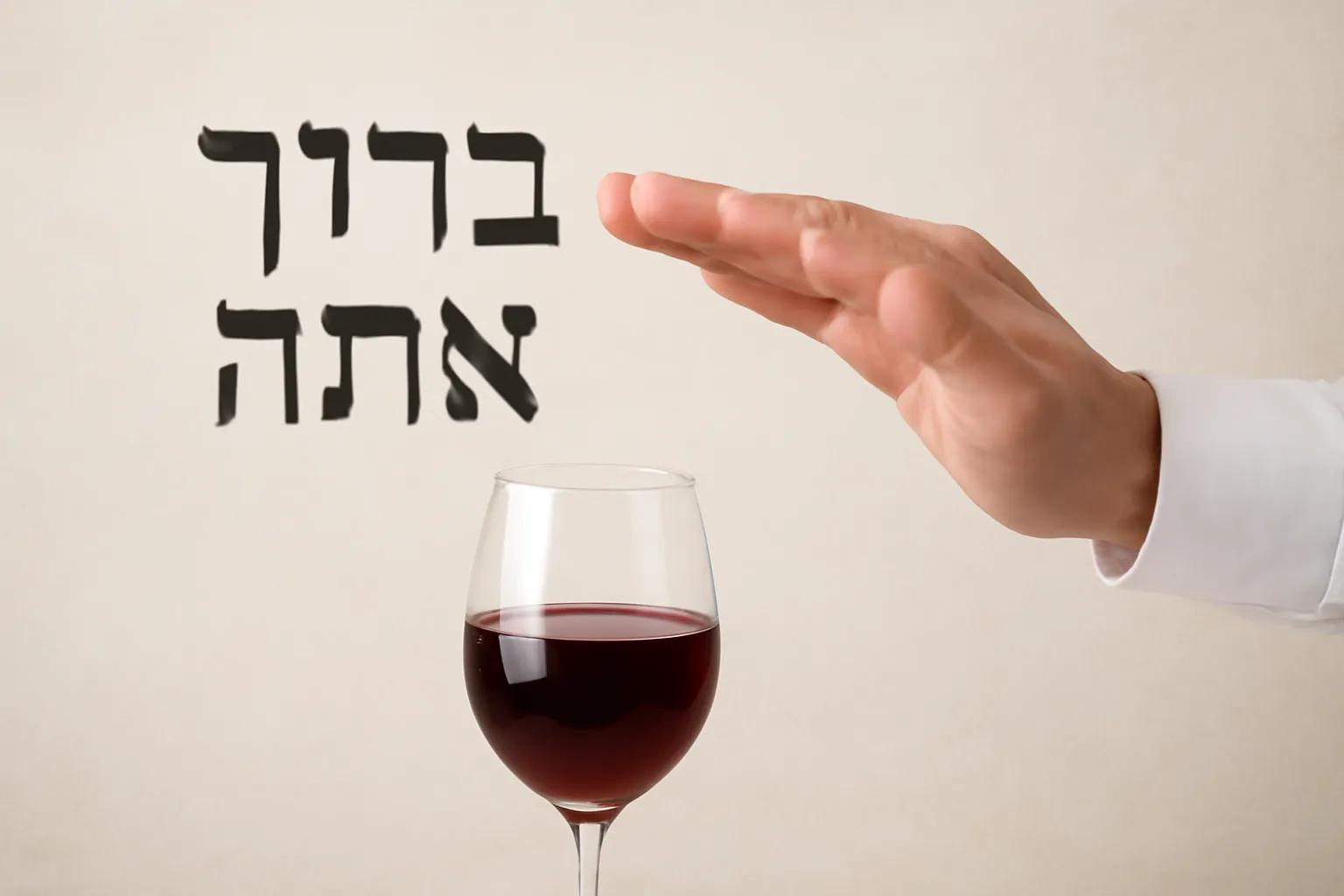
The Blessing Over Wine is a central ritual phrase in Jewish liturgy and daily life. In Hebrew, the standard formulary for the wine blessing is Baruch Atah Adonai Eloheinu Melech ha-olam Borei Pri Hagafen. This sacred sentence is recited to acknowledge the divine gift of the fruit of the vine and to sanctify moments of ritual, celebration, and closeness with family and community. Across traditions and generations, the blessing has carried deep symbolic resonance: wine is a symbol of joy, covenant, and hospitality; saying a blessing over it sets apart ordinary sustenance for a sacred purpose.
The topic Blessing Over Wine Hebrew spans language, history, and ritual practice. Readers will encounter it in liturgical texts, family customs, and scholarly discussions about the structure of blessings (berakhot) in Judaism. This article explains the meaning of the blessing, traces its origins, discusses its pronunciation variations, and describes how it is used in different Jewish rituals. The goal is to give a thorough, accessible overview that helps both learners and practitioners connect with the language and the practice itself.
Meaning and Core Idea
At its heart, the Blessing Over Wine is a succinct declaration of gratitude and acknowledgment. It literally translates to «Blessed are You, Lord our God, King of the Universe, who creates the fruit of the vine.» The essential components are:
Baruch Atah Adonai — Blessed are You, Lord
Eloheinu Melech ha-olam — our God, King of the World
Borei Pri Hagafen — who creates the fruit of the vine
Each element carries its own weight:
Baruch expresses gratitude and recognition that the blessing comes from a higher power.
Atah Adonai personalizes the relationship, addressing God directly.
Eloheinu Melech ha-olam situates the blessing within the framework of monotheistic worship, acknowledging God as the divine ruler of the universe.
Borei Pri Hagafen identifies the subject of the blessing—the grape’s product—and confirms the role of nature and human cultivation in producing wine.
The phrase “Pri Hagafen” (the fruit of the vine) is intentionally broad. In rabbinic thought, “the vine” stands for grape products more generally, so the blessing can apply to wine used for sanctification (Kiddush), for Havdalah, or for other ritual contexts where wine is present. While the exact wording is stable, its application and ritual context can vary by tradition and occasion.
The Hebrew Text, Transliteration, and Meaning
Hebrew Text
The classic Hebrew formulation of the blessing is:
ברוך אתה ה’ אלוהינו מלך העולם בורא פרי הגפן
For readers who want to see the transliteration alongside the Hebrew, a common rendering is:
Baruch Atah Adonai Eloheinu Melech Ha-olam Borei Pri HaGafen
Translation and Alternative Transliterations
A straightforward English rendering is:
«Blessed are You, Lord our God, King of the Universe, who creates the fruit of the vine.»
Because transliteration systems vary, you will encounter minor spelling differences, such as:
Baruch Atah Adonai Eloheinu Melech Ha-olam Borei Pri HaGafen
Barukh Atah Adonai Eloheinu Melekh ha-olam Boré Pri Ha-Gafen
Baruch Atah Hashem Eloheinu Melech HaOlam Borei Pri HaGafen
These variations reflect different transliteration traditions (e.g., Ashkenazi, Sephardi, or modern Hebrew usage). The essential components remain the same, and the meaning is clear across dialects.
History and Origins
The blessing over wine is one of the oldest and most established formulas in the Jewish practice of berakhot, the category of blessings that inaugurate praise or gratitude toward God for various aspects of creation and life. The broader system of berakhot was developed during the period of Rabbinic Judaism, with roots in earlier biblical texts that highlight wine as a significant agricultural product and ritual symbol.
Biblical and Rabbinic Foundations
The Bible frequently mentions wine as a blessing, symbol, and ceremonial ingredient. In Judaism, wine is associated with joy, covenant, and sacred reception. Rabbinic sages then codified specific formulas to be recited in the presence of wine, preserving an orderly approach to blessings that could be recited before or after actions and events.
In the Talmudic and post-Talmudic periods, the tradition of standing before God with a blessing on wine became integrated into everyday ritual life. The blessing was standardized as a short formula that could be recited before drinking. This standardization allowed wine to function as a conduit for celebrating spiritual moments—such as Shabbat, holidays, weddings, and other rites of passage—without requiring lengthy liturgical apparatus at every turn.
Continuity Through the Ages
Across centuries, communities have retained the core text while adapting practice to local customs. The Blessing Over Wine remains a visible link between ancient ritual states and contemporary religious life. It appears in:
Kiddush ceremonies on Shabbat and Jewish holidays
Havdalah, the ceremony that marks the separation between the holy and the ordinary at the week’s end
Special occasions such as weddings, circumcisions, and other celebratory meals
Daily or semi-formal observances in some households that maintain a ritual cadence around wine
In all of these contexts, the blessing functions as a linguistic and spiritual hinge: it acknowledges a gift of nature, it links human action with divine sovereignty, and it invites the participants to remember their relationship with the sacred in everyday life.
Usage in Jewish Rituals
While the Blessing Over Wine is itself a compact formula, it appears within several distinct ritual structures. Below is a survey of its role in major Jewish practices.
Kiddush on Shabbat and Festivals
In the ritual of Kiddush, wine (or grape juice) is used to sanctify the Sabbath and holiday. The Kiddush has its own liturgical text that typically begins with a declaration of sanctification and ends with blessing words about the day and the people assembled. The wine serves as the instrument of sanctification and is commonly the vessel on which the blessing over wine is implicitly or explicitly connected.
In many communities, the tradition of Kiddush includes the blessing over the wine in the sense that the barukh formula precedes the sanctification in the sequence. In some texts, the specific phrase Borei Pri Hagafen is explicitly pronounced as part of the blessing on the cup of wine that accompanies Kiddush, though the exact liturgical formulation can vary by tradition.
Regardless of textual variation, the underlying sentiment remains: wine is set apart as a conduit to connect people with the sacred time (Shabbat or festival). The blessing over wine thus plays a crucial role in creating a shared moment of gratitude and joy.
Havdalah
Havdalah marks the transition from the sacred time of Shabbat back to the ordinary weekdays. The ceremony uses a cup of wine, among other elements (spice, candle), and includes a blessing over the wine as part of its ritual sequence. The wine blessing in Havdalah reaffirms the idea that the fragrances of the sacred week should accompany us as we move forward into regular days, and it helps seal the experience of rest and renewal.
Other Occasions
Beyond Shabbat and Havdalah, the Blessing Over Wine appears at various life-cycle events and festive meals. For example:
Wedding receptions often begin with a blessing over wine to sanctify the gathering.
In certain meals during holidays or family celebrations, the wine blessing can be recited as a ceremonial preface to the feast.
Grape products used for ritual symbolism may prompt the same blessing when consumed in sacred contexts.
The versatility of the blessing arises from its concise formulation and its function as a bridge between human nourishment and spiritual gratitude.
Pronunciation, Variations, and Regional Practices
Pronunciation is a practical concern for anyone learning the blessing, especially for non-native speakers or Jews from different linguistic backgrounds. The core text is stable, but the way it is spoken can vary. Here are several aspects to consider.
Common Transliteration Variants
Baruch Atah Adonai Eloheinu Melech Ha-olam Borei Pri HaGafen
Barukh Atah Adonai Eloheinu Melekh ha-olam Boré Pri HaGafen
Baruch Atah Adonai Eloheinu Melech HaOlam Borei Pri HaGafen
Baruch Atah Adonai Eloheinu Melekh HaOlam Borei Pri HaGafen
The differences are largely in vowels and capitalization, not in meaning. For most learners, choosing one widely used transliteration and sticking with it helps with memory and pronunciation consistency.
Regional Pronunciation Differences
Ashkenazi pronunciation: The consonants and vowels reflect the historical Ashkenazi speech patterns. The text often sounds brisk and crisp in the Jewish communities in Central and Eastern Europe, and later in North America among many communities.
Sephardi and Mizrahi pronunciation: The cadence and vowel quality may shift, often with Mediterranean or Middle Eastern tonal influences. The core words remain the same, but the sound can be warmer or more melodic depending on community norms.
Modern Hebrew: In secular or modern religious contexts, the pronunciation tends to be very standard and close to contemporary spoken Hebrew, which can make the blessing sound straightforward and accessible to new learners.
Regardless of the regional accent, the essential aim is to pronounce the words clearly and with intention. For those learning the blessing, it can help to practice slowly, perhaps by chunking the phrase into its four main segments: Baruch / Atah / Adonai Eloheinu Melech ha-olam / Borei Pri HaGafen.
Practical Tips for Non-native Speakers
Practice the phrase in small chunks, paying attention to the emphasis on the major syllables (Bar-uch, A-tah, A-don-ai, Me-lekh Ha-o-lam, Bo-rei Pri Ha-Ga-fen).
Listen to audio recordings of native speakers reciting the blessing to capture natural rhythm and cadence.
When reading the Hebrew, try to connect the meaning to the sounds. For example, think of “Baruch” as an opening of gratitude, and let that sense shape your pronunciation.
Variations in Wording and Related Blessings
The Blessing Over Wine is part of a larger family of blessings that cover food, drink, and other natural phenomena. While the exact text for the wine blessing is fixed, it intersects with related phrases in several important ways.
Primary Variations You’ll Encounter
Borei Pri Hagafen vs. Borei Pri HaGafen: The transliteration shows minor Hebrew orthographic variants but refers to the same blessing.
Wine used for Kiddush vs. wine used for Havdalah: In Kiddush, the cup of wine is integral to sanctification; Havdalah also uses wine with the same blessing on the cup, followed by other blessings for spices and fire.
Juice substitutions: For children or guests who do not drink wine, grape juice can be used with the identical blessing text. The blessing formula stays the same, but the context (Kiddush, Havdalah, or other) dictates the surrounding liturgy.
Related Blessings That People Often Compare
Borei Pri Ha-gefhe is sometimes used informally as a variant spelling for Borei Pri Hagafen.
Blessings on fruits, grains, or other agricultural products: The berakhot system includes many berakhot that begin with Baruch Atah and name a particular product, such as Borei Pri Ha-adama (fruit of the soil) or Mezonot (for certain grain products).
Blessings recited before eating bread (Hamotzi) or before drinking wine without ritual context: While these are distinct blessings, the practice of saying a blessing before consuming something sacred often mirrors the structure and intention of the Blessing Over Wine.
Textual Notes and Common Clarifications
The standard prayer begins with Baruch Atah Adonai, a direct address to God.
The phrase Elokeinu Melech HaOlam expresses both God’s personal relationship and universal sovereignty.
The key descriptor Borei Pri Hagafen ties the blessing to the grape’s yield and its suitability for sacred use.
Cultural and Modern Interpretations
In contemporary life, the Blessing Over Wine continues to function as a bridge between tradition and everyday experience. It appears not only in formal synagogue settings but also in family tables, community gatherings, interfaith events, and educational contexts. Some trends in modern interpretation include:
Seen as a reminder to savor life’s gifts with gratitude and mindfulness.
Used as a teaching tool for children and adults about language, ritual structure, and the Jewish calendar.
In multi-faith or secular settings, the blessing can be appreciated as a poetic formulation about nature, labor, and gratitude, even when the religious framework is not the central focus.
Scholars and educators often emphasize that the blessing is less about a single moment and more about cultivating a habit of recognizing the divine spark in ordinary things—like wine—while sharing them with others in a spirit of hospitality and joy.
Frequently Asked Questions
What is the exact wording of the wine blessing? The standard form is “Baruch Atah Adonai Eloheinu Melech Ha-olam Borei Pri Hagafen”, translated as «Blessed are You, Lord our God, King of the Universe, who creates the fruit of the vine.»
Can grape juice be used instead of wine? Yes. The blessing remains the same, but it is common to adjust the surrounding ritual text to reflect the actual liquid used and the occasion.
Is this blessing recited only during Shabbat? No. It is recited whenever wine (or grape juice) is used in ritual contexts, including Kiddush on Shabbat and holidays, Havdalah, weddings, and other festive meals.
Are there regional variations in pronunciation? Yes. Ashkenazi, Sephardi, and Mizrahi communities have distinct pronunciations, but the essential text remains the same.
What is the relationship between this blessing and the Kiddush ceremony? The wine plays a central role in Kiddush; the blessing over wine is closely associated with sanctifying the time, though the exact liturgical phrasing can differ between the bare blessing formula and the full Kiddush text.
The Subtle Power of a Simple Blessing
The Blessing Over Wine in Hebrew—though consisting of a compact, four-part phrase—functions as a powerful anchor for religious memory, communal sentiment, and personal gratitude. It unites language, ritual, and meaning: a brief sequence that acknowledges the divine, honors the fruit of human labor, and prepares participants for meaningful connection—whether at a quiet Sabbath table, a joyful wedding, or a festive holiday gathering. The enduring appeal of this blessing lies in its clarity and universality: in a few words, it invites us to pause, reflect, and share joy with others, all through the humble, culturally rich act of raising a cup of wine.
Glossary and Quick Reference
Borei Pri Hagafen — who creates the fruit of the vine; the core phrase naming wine in the blessing.
Berakhot — the category of Jewish blessings, or benedictions, addressing different aspects of life and creation.
Kiddush — the sanctification of the Sabbath or festival, often conducted with wine and a blessing on the day.
Havdalah — the ceremony marking the end of Shabbat, which also uses wine in its blessing sequence.