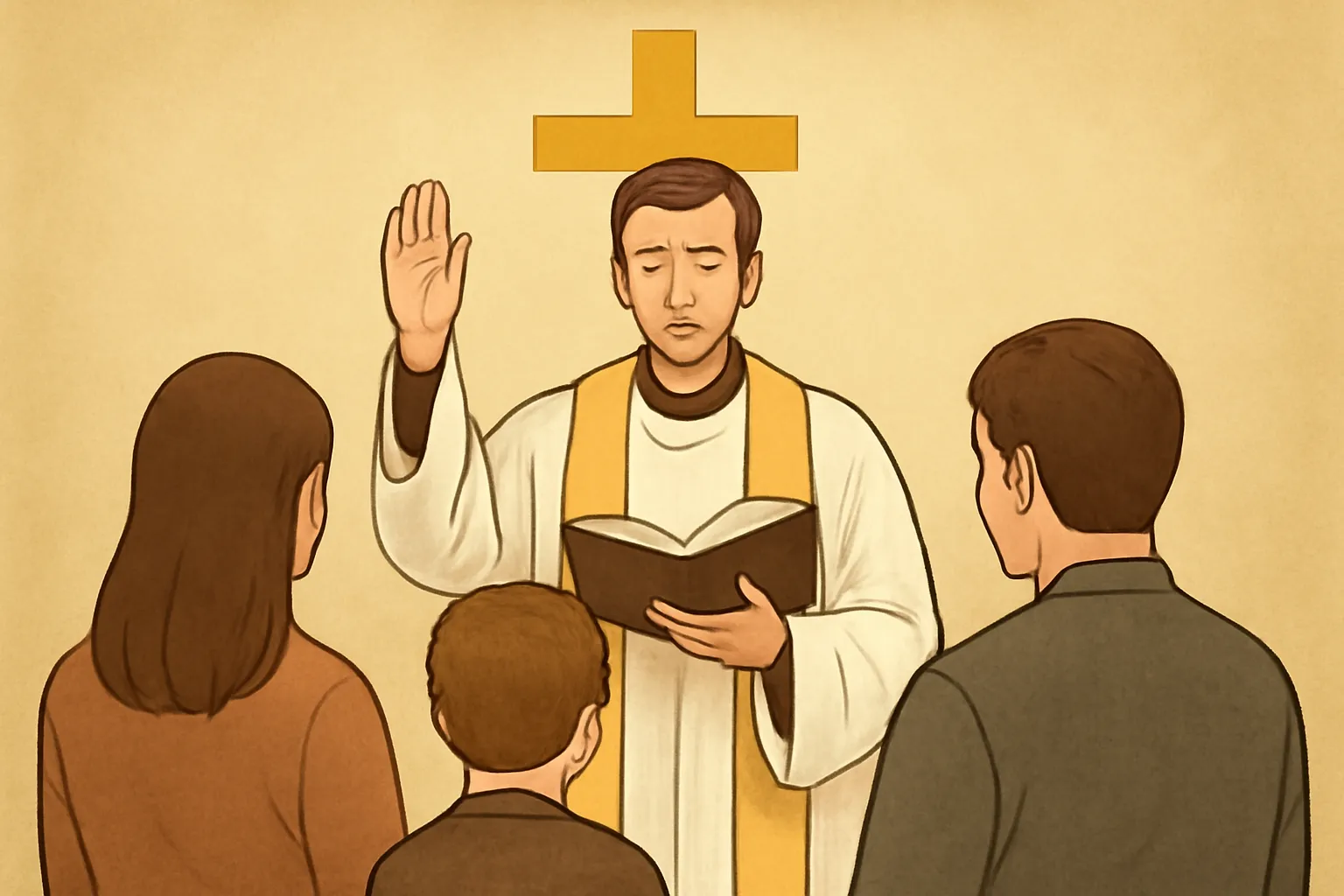
The Benediction prayer Catholic is a distinctive form of Eucharistic devotion that culminates in a blessing with the Blessed Sacrament. It is both a public act of worship and a deeply personal moment of encounter with Christ present in the Eucharist. In Catholic usage, the benediction is not merely a blessing worded as a prayer; it is a liturgical rite that encodes reverence for the Real Presence, invites contemplation, and sends the faithful forth with a renewed sense of vocation to love and serve. In this article, we explore the meaning, the history, and the practical aspects of the Benediction prayer Catholic—also known as the benediction with the Blessed Sacrament, the Eucharistic blessing, or simply the processional benediction in many parishes.
Meaning, significance, and variations of the Benediction
At its core, the Benediction is a form of blessing initiated by Christ through the Church. It carries a double sense: a sacred sign of God’s grace and a commissioning of the faithful to live as witnesses to the Gospel. When Catholics speak of the Benediction prayer Catholic, they often refer to the moment in which the priest blesses the people using the Blessed Sacrament held in a monstrance. This act is an outward, tangible sign of God’s mercy and protection, an invitation to respond with adoration, gratitude, and renewed commitment to live holiness in daily life.
Important terms to know in this context include:
Benediction (from the Latin benedictio): the act of blessing that culminates the faithful’s worship.
Blessing (benedicere): a divine favor communicated through the Church, often accompanied by a prayer or invocation.
Exposition of the Blessed Sacrament: the temporary display of the consecrated host for adoration.
Adoration of the Blessed Sacrament: reverent worship that recognizes Christ truly present in the Eucharist.
Monstrance: the ornate vessel used to display the Eucharist for public veneration.
Tantum Ergo and O Salutaris Hostia: two well-known hymns associated with the rites of Exposition and Benediction, often sung during the ceremony.
Scholars and clergy sometimes distinguish between several related practices:
Eucharistic Adoration as a broader practice of adoring Christ present in the Eucharist, which may occur without the formal benediction rite.
Benediction as a specific liturgical moment that ends the exposition with a blessing over the assembly.
Perpetual Adoration and First Friday Devotions, which often include occasional benedictions as part of a larger cycle of worship.
In Catholic life, the benediction with the Blessed Sacrament is understood not merely as a ritual closing but as a moment of mission—sent forth to be witnesses of Christ in the ordinary events of the world. The blessing is not magic; it is a sacramental sign that communicates grace according to the Church’s teaching on grace, sacraments, and liturgy.
Etymology and definitions
The word benediction comes from the Latin bene (well, good) and dicere (to say, to declare). It literally means “to say a good thing” or “to bestow a blessing.” In Catholic usage, the term has a formal liturgical sense that distinguishes the act of blessing with the Eucharist from a simple spoken blessing or from secular usage of the word.
To speak of the Benediction prayer Catholic is to reference a specific sequence within the liturgical life of the Church. It typically involves:
Exposition of the Blessed Sacrament
Silent or vocal adoration and prayer by the faithful
A formal Blessing administered by the priest or deacon with the monstrance
Concluding hymns and prayers, such as the O Salutaris Hostia and the Tantum Ergo Sacramentum
Different church traditions may emphasize slightly different elements, and the order can vary by liturgical rite or local custom. Nevertheless, the essential feature of the Eucharistic blessing remains the same: Christ is present in the Eucharist, and the church extends His grace to the people through a sacramental sign.
The ritual is designed to facilitate reverence, contemplation, and a sense of mission. A traditional Benediction service in a Roman Rite parish often follows a clear sequence, though regional variations exist. Here is a typical outline with explanations of each part:
Introductory rites – The congregation gathers in silence or with a brief greeting. The priest or deacon may lead a short invocation or prayer for the Holy Spirit’s presence.
Exposition of the Blessed Sacrament – The consecrated host is placed in the monstrance on the altar, often accompanied by soft lighting and instrumental or choral music to foster contemplation.
Acts of reverence – The faithful may kneel, bow, or make the Sign of the Cross as a sign of reverence before the Eucharist.
Prayerful readings or silent adoration – Individuals reflect in stillness or join in short prayers drawn from the Catholic tradition.
Blessing with the Blessed Sacrament – The priest leads the assembly in a formal blessing, using the monstrance to impart the grace of Christ to all present. The rite often includes the sung text O Salutaris Hostia and Tantum Ergo Sacramentum, though paraphrased or spoken forms are also common in some communities.
Concluding rites – After the blessing, the Blessed Sacrament is reposed in the tabernacle or removed from public exposure. The congregation may sing a concluding hymn or recite a final prayer of thanksgiving.
In many churches, you will also encounter First Friday Benedictions or daily/weekly Eucharistic adoration programs that culminate in a similar blessing. The essential aim across all these variations is the same: to honor the Real Presence, to deepen prayer, and to unite the faithful in a shared encounter with Christ.
Historical development and milestones
The practice of acknowledging Christ’s presence in the Eucharist with adoration, procession, and blessing has deep roots in Christian worship. The formal Benediction of the Blessed Sacrament—as a distinct rite within the Catholic liturgy—grew out of centuries of devotion to Christ’s presence in the sacrament and the desire to provide a structured moment of reverence and blessing for the faithful. While adoration of the Eucharist existed in various forms since the early Church, the specific ritual of the bending of the knee to bless with the Eucharist became more standardized over time.
Key phases in the history of the benediction include:
Early Christian devotion – Communities gathered for prayer before the Blessed Sacrament in various forms as a sign of reverence for the real presence.
Medieval development – The practice of exposing the Eucharist for adoration grew more widespread in medieval Europe. Monastic and parish life fostered a culture of contemplative worship, often linked to processions and devotional prayers.
Renaissance and Reformation era – The Catholic Church reaffirmed the importance of Eucharistic devotion in the face of theological and liturgical debates. The use of the monstrance became more standardized in many places.
Baroque through modern reform – The rite acquired a more formal structure in catechesis and liturgies, with music, hymns, and illuminated spaces enhancing the sense of sacred presence during Exposition and Benediction.
Post-Vatican II renewal – The Catholic Church maintained the practice of Exposition and Benediction while encouraging liturgical clarity and active lay participation. Local churches are free to adapt musical settings and prayers to their context, while preserving the essential sacramental meaning.
In addition to historical notes, it is helpful to recognize the breadth of Eucharistic devotion—from whispered prayers at a quietly lit chapel to grand processions through city streets. Across centuries, the core intention has remained constant: to worship the Real Presence in Christ and to send the faithful forth into the world with renewed grace and courage.
How to pray the Benediction: a practical guide for individuals and communities
Whether you are attending a parish Benediction or practicing a personal form of prayer at home, the essential posture is one of reverence and openness to God’s grace. The following guide offers practical steps you can follow to engage deeply with the Benediction prayer Catholic tradition.
Prepare: Find a quiet place. If you are in a church, approach with a humble posture; if at home, make a small altar space with a candle or icon that helps you focus.
Begin with a brief invocation: A short prayer asking the Holy Spirit for attention, or simply a moment of silence in the presence of the Blessed Sacrament.
Adore: Spend a few minutes in silent or spoken prayer, acknowledging the Real Presence. You might offer gratitude for the gift of the Eucharist, or place your intentions before Christ.
Listen: Read a short Scripture passage or a verse from a devotional book that draws you to contemplation. Let the word resonate in your heart.
Offer intercessions: Lift up the needs of others, your family, the Church, and the world. Ask for grace for those who suffer and for guidance to live according to the Gospel.
Conclude with the blessing: If you are in a church, you will typically receive the liturgical blessing from a priest or deacon. If you are alone, you can still consecrate your day to the Lord in a personal blessing or prayerful entrustment.
Remain in silence after the blessing: This helps consolidate the grace of the moment and invites continued conversion and peace.
For families and communities
Prepare together: Create a calm environment, perhaps with lighting, icons, or candles, and invite family members to participate in a shared time of prayer.
Participate in reverent singing: If your parish tradition includes hymns like O Salutaris Hostia and Tantum Ergo, encourage families to join in singing to foster a sense of communal worship.
Read a brief reflection: A short, child-friendly reflection on the meaning of Christ’s presence can engage all ages and help children connect with the mystery of the Eucharist.
Share intentions: Invite each family member to name a person or need to hold in prayer during the Adoration and Benediction.
End with a family blessing: Before concluding, offer a simple blessing over the family, recognizing that the benediction is a sign of divine grace for all ages.
Practical tips for praying well during the Benediction include maintaining a posture of attentiveness, not rushing the moments of silence, and avoiding distractions. Those who are new to the practice may find it helpful to follow a short guide or program from the parish, which can provide the specific responses and hymns used in that community.
Prayers, hymns, and liturgical texts commonly used in Benediction
Several elements are frequently part of the Benediction prayers Catholic, contributing to a consistent sense of sacredness across parishes. The most recognizable components include:
Exposition and Blessing with the monstrance, the central rite of the ceremony.
O Salutaris Hostia – a hymn traditionally sung during Exposition and sometimes at the moment of benediction; it meditates on the sacramental gift of Christ in the Eucharist.
Tantum Ergo Sacramentum – part of the longer sequence of the Pange Lingua text by St. Thomas Aquinas; the hymn is typically sung at the moment of blessing to honor the sacrament and inform the faithful of the mystery being celebrated. The title translates roughly to “Let us therefore venerate the Sacrament.”
Sacred prayers of thanksgiving – prayers that express gratitude for the gift of the Eucharist and request grace to live as faithful witnesses to Christ.
For those who wish to incorporate additional personal prayers, it is appropriate to include a time for gratitude, intercession, and a resolve to imitate Christ in daily life. The institution of these prayers in the Benediction is a reminder that the sacramental encounter is not only a moment of adoration but also a source of mission.
Common questions and misconceptions about Benediction
Several questions frequently arise among Catholics and others seeking to understand this practice more deeply. Here are a few clarifications that may help:
Is Benediction a magical rite? No. Benediction is a sacramental blessing that communicates grace through the Church’s ministry and the Real Presence of Christ in the Eucharist. It is a sign that invites reverence and conversion, not a guarantee of favor.
Does Benediction replace Mass? No. Benediction is an additional form of worship that follows Exposition and, if applicable, the Mass. It does not substitute for the Eucharistic liturgy but complements it by deepening adoration and blessing.
Can one participate in Benediction if not Catholic? Many non-Catholics attend Benediction to learn about Catholic devotion and to experience a moment of solemn worship. While the sacramental blessing is directed to Catholics, the reverence and silence can be meaningful for others as well.
What is the role of the priest in Benediction? The priest (and sometimes a deacon) leads the rite, administers the blessing, and invites the faithful to participate in contemplation and thanksgiving.
Across the global Catholic Church, Variations of benediction prayer Catholic exist in how the rite is celebrated, reflected by regional musical settings, languages, and local devotional customs. Some notable variations include:
First Friday Benedictions – Regular enactments of the blessing on the first Friday of the month or during special Marian or Eucharistic devotion programs.
Eucharistic processions – In some contexts the Benediction follows a solemn procession with the monstrance through church aisles or the streets, highlighting the journey of Christ’s presence among the people.
Parochial adaptations – Parishes may adapt the structure with shorter or longer periods of Adoration, chose different hymns, or incorporate contemporary devotional songs in place of classic hymns.
Home and family devotion – Families may observe a compact version at home, including Exposition in the home chapel, short periods of prayer, and a blessing at the end.
Regardless of the specific format, the underlying purpose remains: to cultivate >Adoration, gratitude, and a sense of mission—sent out to live the Gospel in the world with the grace received in the sacrament.
For many Catholics, the practice of Benediction acts as a spiritual anchor. It helps believers cultivate habits of interior prayer, patience in suffering, and a healthy sense of humility before the divine mystery. Through the communal dimension of the rite, the faithful are reminded that they belong to a larger Body—the Church—and that their personal prayer is linked to the Church’s universal worship.
Several spiritual benefits are commonly associated with regular participation in Benediction experiences:
Deepened contemplation of Christ’s presence in the Eucharist.
Renewed sense of vocation to love and serve, especially toward the vulnerable and marginalized.
Solidarity with the Church through shared praise and liturgical memory.
Grace-filled moments of mercy, healing, and inner peace that sustain daily life.
For leaders of parishes and families, Benediction offers an opportunity to teach about the Eucharist not only as a doctrine but as a living reality that transforms hearts and actions. It invites catechesis about the presence of Christ, the meaning of the sacrament, and the call to witness through service and love.
The Benediction prayer Catholic is more than a moment of ritual; it is a doorway into a deeper encounter with Jesus Christ. By lifting the Eucharist in the monstrance, the Church proclaims Christ’s ongoing presence among his people and commissions them to go forth in peace to love and serve. Whether experienced within a grand cathedral or a quiet parish chapel, the rite carries a timeless invitation: to pause, to adore, to be blessed, and to be sent into the world with grace and courage.
As you explore the practice of Benediction, you may encounter various names for the same sacred event—Benediction with the Blessed Sacrament, Eucharistic blessing, or simply the Blessing at Exposition. All these expressions point to one core reality: Christ truly present in the sacrament, offering grace, making himself accessible to every heart that seeks Him in reverence and prayer. May your journey into benediction prayers Catholic deepen your faith, enrich your prayer life, and empower you to witness the Gospel with renewed warmth and confidence.
Overview: Catholic Pre-Meal Prayer as a Practice of Gratitude and Community Within the Catholic tradition, the pre-meal prayer is a short, sacred moment before sharing food that invites gratitude, blessing, and unity. It is more than a courtesy; it is a form of disciplined thanksgiving that aligns a family, a classroom, or a parish meal…
Catholic Prayer for Protection from Evil: Spiritual Shield Prayers In Catholic devotion, protection from evil is understood as a gift of grace that strengthens the soul, guards the family, and fortifies daily life against spiritual harm. This article explores spiritual shield prayers—prayers and practices that invite God’s protective care, rely on the intercession of angels…
Catholic Before Meal Prayer: Meaning, How to Say It, and Examples In Catholic households around the world, meals are often surrounded by a moment of gratitude and dependence on God. A short prayer before eating helps families pause, acknowledge the gifts of nourishment, and invite God’s blessing over the table. This article explores the meaning,…