23rd Psalm – Roman Catholic Version: Text, Meaning & Prayers
The 23rd Psalm, known in Catholic tradition as «The Lord is my shepherd,» stands as a touchstone of trust, consolation, and daily guidance. In Roman Catholic usage, this psalm appears in the Liturgy of the Hours (the Divine Office), in Catholic prayer books, during funeral rites, and in personal devotion. Catholic readers often draw on both modern English translations like the New American Bible, Revised Edition (NABRE) and traditional versions such as the Douay-Rheims, to reflect different liturgical eras and spiritual sensibilities. This article presents the text in the Roman Catholic English tradition, then unpacks its rich theological meaning, and offers practical prayers and devotional practices inspired by Psalm 23.
Text
Roman Catholic English – NABRE (New American Bible, Revised Edition)
The Lord is my shepherd; there is nothing I shall want. In verdant pastures he gives me repose; beside restful waters he leads me. He refreshes my soul; he guides me along right paths for the sake of his name. Even though I walk through the valley of the shadow of death, I fear no evil, for you are at my side, with your rod and your staff that comfort me. You spread the table before me in the sight of my foes; you anoint my head with oil; my cup overflows. Surely goodness and mercy shall follow me all the days of my life, and I shall dwell in the house of the Lord for years to come.
Traditional Catholic English – Douay-Rheims (paraphrase)
The Lord is my shepherd; I shall not want. He maketh me to lie down in green pastures: he leadeth me beside the still waters. He restoreth my soul: he leadeth me in the paths of righteousness for his name’s sake. Yea, though I walk through the Valley of the shadow of death, I will fear no evil: for thou art with me; thy rod and thy staff they comfort me. Thou preparest a table before me in the presence of mine enemies; thou anointest my head with oil; my cup runneth over. Surely goodness and mercy shall follow me all the days of my life; and I shall dwell in the house of the Lord forever.
Notes on the textual family: the NABRE represents the modern Catholic English translation used in many parishes and liturgical books, while the Douay-Rheims family represents a traditional English rendering often cherished by older generations of Catholics. Both share the same core imagery—God as shepherd, provision, guidance, protection, and a prospect of eternal dwelling in the Lord’s house.
Psalm 23 is a compact theology of God’s covenant care and a man-centered expression of trust in divine providence. In Catholic exegesis, the psalm is read not only as a personal confession of faith but also as an invitation to live in the presence of God, who shepherds, sustains, purifies, and blesses. The imagery resonates with Christology, liturgical use, and spiritual accompaniment across the Church’s life. Key motifs include the shepherd’s care, guidance, and protection; the imagery of green pastures and still waters as signs of rest and renewal; the valley of the shadow of death as a crucible of faith where fear yields to the nearness of God; and the table set before the presence of enemies and the anointing with oil, which signal blessing in the midst of struggle.
The shepherd and the flock: God’s intimate care
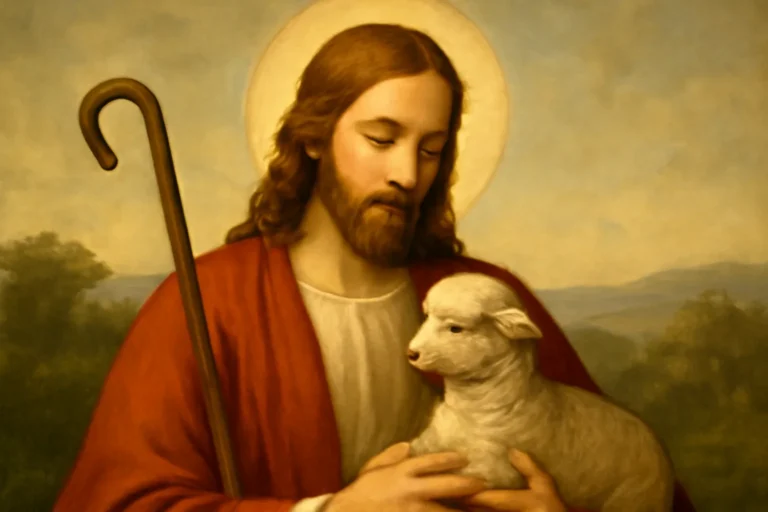
The Lord as shepherd—A compassionate guide who knows his sheep, calls them by name, and leads them toward safety and fullness of life.
Protection and presence—Even in danger, the shepherd’s rod and staff symbolize direction, correction, and comfort; God’s presence dispels fear.
Restoration and nourishment—Green pastures and still waters express renewal of soul and inner peace in God’s care.
Provision, righteousness, and divine NAME
Verdant provision and repose highlight God’s generosity toward the faithful, a sign of his fidelity to the covenant.
Paths of righteousness—Guidance that aligns life with God’s justice, for the sake of God’s name (glory and fidelity to God’s character).
Mercy and goodness—A lifelong accompaniment, not a momentary gift; the psalm promises ongoing divine benevolence.
Descent, ascent, and the eternal home
The valley of death—A powerful portrayal of life’s darkest corridors, where fear could overwhelm, yet trust remains because God accompanies.
Table in the sight of adversaries—Graces given under pressure; blessing is not withheld in the face of opposition.
Oil and overflowing cup—Symbols of honor, healing, and abundance, pointing to God’s sanctifying touch and generous blessing.
House of the Lord forever—A final, sustained dwelling with God, indicating the promise of eternal life and unending worship in divine presence.
Prayers and Devotions Based on Psalm 23
Short prayers and meditations
Morning Trust Prayer: Lord, you are my Shepherd. Lead me this day along straight paths for your name’s sake. May I rest in your care and follow where you guide me, with gratitude and trust.
Evening Rest Prayer: Into your verdant fields and quiet waters, I entrust my heart. If fear arises, remind me you are with me—the rod and staff offer comfort as I sleep in your mercy.
Protection in Trials: O Shepherd of souls, amid life’s pressures be my guide. Let your presence reassure me, your grace sustain me, and your mercy pursue me all my days.
Thanksgiving for Blessing: Blessed be you, Lord, for your table set before me in the presence of my enemies, for your anointing that heals and consecrates, and for the cup that overflows with your generosity.
Prayerful role-play of the Shepherd: A short litany imagining Jesus as the Good Shepherd who calls his sheep by name, restores souls, and leads through difficult valleys to a hopeful future.
Table of Blessing Prayer: A meditation on the image of a table prepared in the sight of enemies, inviting trust that God’s blessing surpasses human opposition.
Oil of Healing: A brief blessing invoking the oil symbolism for healing, sanctification, and honor as a sign of God’s intimate care.
Devotions in the Liturgy and personal prayer
Divine Office use: Psalm 23 is often integrated into Vespers and other hours, providing a balm of trust for priests, religious, and lay people alike.
Rosary and Psalm 23: A contemplative practice where one uses Scriptural verses as a framework for meditation while praying the rosary, focusing on God’s guiding presence.
Funeral and memorial prayers: Psalm 23 is a classic choice for funeral liturgies, expressing confidence in God’s shepherding—leading a faithful departed one to the Father’s house.
A practical guided practice
Find a quiet place and take several slow, deep breaths to settle the body and mind.
Read the NABRE text aloud, or listen to a recording, letting the cadence shape your prayer.
Pause at each image—green pastures, still waters, valley of the shadow of death, table, oil, cup—to reflect on how God shepherds your life today.
Offer a personal response: gratitude for God’s presence, trust in his care, and a petition for grace where you lack trust or courage.
Historical and Catholic Context
In Catholicism, Psalm 23 holds a long liturgical heritage and a broad range of devotional uses. The imagery of the shepherd resonates with Jesus’ own self-understanding as the Good Shepherd (John 10) and with the Church as the flock under Christ’s care. The psalm’s themes have enriched Catholic spirituality, from medieval monastic practice to contemporary catechesis. It is frequently employed in funeral rites to comfort the bereaved and to proclaim the hope of eternal life in God’s eternal house. In the Liturgy of the Hours, Psalm 23 provides a unifying language of comfort, trust, and covenant faithfulness that is suitable for morning, evening, and night prayer. Catholic devotion also highlights the sacramental dimension embedded in the text: oil as anointing in healing liturgies, table as a sign of blessing, and shepherding as a symbol of divine guidance and guardianship.
Translations, Variations, and How Catholics Use Psalm 23
Translations of Psalm 23 in Catholic practice reflect a balance between ancient liturgical language and contemporary pastoral clarity. Here are some key points about variations and usage:
Latin Vulgate: The ancient Latin text uses the phrase Dominus pascit me—“The Lord shepherds me”—which remains foundational in Catholic liturgical and theological reflection.
NABRE: The modern English Catholic edition typically renders the psalm as “The Lord is my shepherd; there is nothing I shall want,” highlighting a slightly different nuance from older translations.
Douay-Rheims: A traditional English rendering that preserves classical diction, e.g., “The Lord is my shepherd; I shall not want,” and uses phrasing that resonates with many Catholics who grew up with this translation.
Liturgical use: Catholics may encounter Psalm 23 in the Divine Office, Catholic retreats, funeral rites, and parish prayers—each context shaping its emphasis (trust, consolation, or proclamation of God’s faithfulness).
For readers seeking to incorporate Psalm 23 into daily life, here are practical reflections and prompts that align with Catholic spirituality:
Trust over fear: In times of anxiety, repeat the refrain “The Lord is my shepherd” and recall God’s nearness in every circumstance.
Providence in daily chores: Consider how God’s care manifests in ordinary tasks—work, family life, health, and community service—as part of the sheep’s daily journey.
Hospitality of God: The image of “table before me” invites warmth and fellowship with God, even when others oppose or forget you.
Hospitality to the soul: Let the oil imagery remind you that you are being blessed, refined, and set apart for God’s purposes.
Eternal hope: Use the closing line to anchor your outlook in eternity—dwelling with the Lord forever, beginning here and now through sacramental graces and faithful living.
Psalm 23 as a Living Rock of Catholic Faith
The Roman Catholic rendition of Psalm 23—whether in the NABRE’s contemporary clarity or the Douay-Rheims’ timeless cadence—remains a living, practical theology of God’s steadfast care. It invites believers to entrust their lives to the Good Shepherd, to walk confidently through green pastures and dark valleys alike, and to recognize that God’s blessings—his mercy, goodness, and companionship—accompany us on every mile. Through prayer, liturgy, and personal devotion, Psalm 23 continues to form Catholic hearts toward faithfulness, hope, and everlasting worship in the Father’s house.
Introduction to the 23rd Psalm in Catholic Practice The The Lord is my shepherd is one of the most cherished lines in sacred Scripture, and within Catholic devotion it stands as a compact creed of trust: guidance, providence, rest, and a steadfast hope for eternal communion with God. In Catholic usage, Psalm 23 is primarily…
Psalm 23 Catholic Version: Complete Text, Prayers, and Meaning In Catholic devotion, Psalm 23 is a timeless hymn of trust, comfort, and guidance. Attributed to David, this brief yet richly symbolic prayer presents God as a loving Shepherd who cares for every need of the soul. The Catholic tradition often uses the Douay-Rheims wording or…