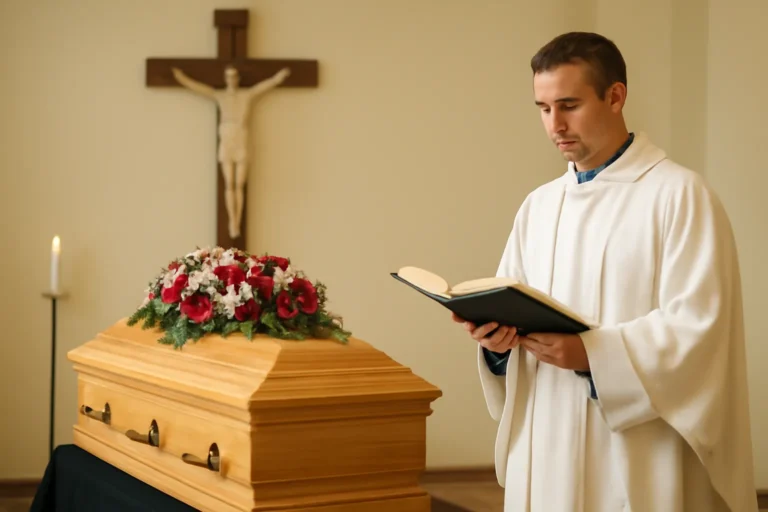
Catholic Funeral Readings are a central part of the Mass for the Dead, offering consolation, perspective, and a reminder of the hope that faith proclaims. Within this framework, the Old Testament readings—often chosen as the First Reading—provide timeless themes such as suffering transformed by love, the certainty of God’s providence, the promise of eternal life, and the memory of the righteous before God. This article explores the Old Testament passages commonly used in Catholic funeral Masses, explains why these readings are meaningful, and offers guidance on selecting and presenting them with care and sensitivity.
What role do Old Testament readings play in a Catholic Funeral Mass?
In the Catholic liturgical structure, the First Reading of a funeral Mass is drawn from the Old Testament or, less commonly, from the Sephardic tradition’s prophetic literature. The reading is paired with a Responsorial Psalm (taken from the Book of Psalms) and a Second Reading from the New Testament, followed by the Gospel. The Old Testament selections are chosen to:
Affirm the value of life in God and the reality of death in a fallen world where God’s plan for salvation remains active.
Offer a theological framework for bereavement: trust in God, hope of resurrection, and the solidarity of the community in grief.
Highlight eternal life, justice, and mercy through the ancient wisdom of Israel and the prophetic voices.
Provide a bridge between the Scripture’s narrative of a people’s journey and the individual story of the person who has died.
When a family selects an Old Testament reading, they participate in a centuries-old tradition that places our present losses within the larger movement of God’s saving work. The passages are not merely soothing words; they are the Word of God proclaimed to a wounded world, inviting trust and offering the possibility of peace.
Common Old Testament passages for Catholic funeral readings
The following passages are frequently chosen for the First Reading in Catholic funeral Masses. They are presented with brief notes on their themes and why they resonate in the context of mourning and remembrance.
1) Job 19:25-27 — “For I know that my Redeemer lives”
Theme: steadfast faith in the midst of lament, the assurance of personal resurrection, and the ultimate victory of God over death.
This passage is beloved for its direct expression of hope in a personal God who will restore life. The speaker, traditionally identified as Job, maintains confidence in a living Redeemer despite afflictions. In a funeral Mass, it offers a bridge from grief to the confident expectation that death does not have the final word.
it acknowledges suffering while insisting that God’s redemptive plan includes the living person who has died. It is especially comforting for those who have known long illness, sudden loss, or ongoing struggle.
2) Isaiah 25:6-9 — The Lord will remove the veil of death
Theme: victory over death, universal feast, and consolation in God’s hospitality.
This portion from the prophetic book of Isaiah envisions a future banquet and the annihilation of death, a central image for Christian hope. It is frequently chosen for its evocative imagery of God’s victory and the gathering of all peoples in the presence of the Lord.
for funerals, because it reframes death as a passage into a new, blessed life with God. It invites the assembly to contemplate the fidelity of God to His promises and to trust in that promise amid sorrow.
3) Wisdom 3:1-9 and/or Wisdom 4:7-15 — The righteous live with God
Theme: the fate of the righteous, the preciousness of virtue, and the consolation that death is not the end for the faithful.
The books of Wisdom (also called the Book of Wisdom) are part of the Catholic and Orthodox canons. The passages commonly read at funerals emphasize how the righteous are received by God and how their memory is cherished. They often speak of light, peace, and the enduring good that accompanies fidelity to God.
these readings remind the faithful that a life rooted in wisdom and righteousness contributes to a blessed afterlife and that God’s mercy makes possible a hopeful rest beyond death.
4) 2 Maccabees 12:43-46 — Prayer for the dead
Theme: the practice of praying for the dead and the belief in merits and intercession for the departed.
Although not present in all Christian traditions, this Old Testament passage is used in Catholic liturgy to support the Catholic doctrine of Purgatory and the living Church’s intercessory prayer. It recounts Judas Maccabeus’ prayers and sacrifices for fallen soldiers, illustrating the community’s responsibility to pray for those who have died.
it is a robust reminder that the living bear responsibility for the dead through prayer and sacrifice, reinforcing the continuity of faith between the Church militant and the Church triumphant.
5) Baruch or Sirach selections (older Testament literature) – alternative wisdom literature
Some parishes include passages from Sirach (Ecclesiasticus) or, less commonly, the Book of Baruch as part of the Old Testament readings in special funeral rites. These selections often emphasize trust in God, the endurance of virtue, and the assurance that God’s judgment and mercy prevail.
they offer practical wisdom about how to bear loss, remain faithful, and trust in divine mercy during times of sorrow. When selected, they are typically paired with a Psalm of consolation and a New Testament reading that underscores resurrection hope.
Choosing an Old Testament reading: considerations and guidance
Selecting an Old Testament passage for a Catholic funeral Mass is a pastoral act that should reflect the deceased’s faith, family’s hopes, and the liturgical setting. Here are practical considerations to guide the choice:
The deceased’s faith and life: consider passages that resonate with the person’s spiritual journey, vocation, or life experiences (e.g., someone known for patience, endurance, or compassion).
The family’s bereavement needs: some families may prefer readings that emphasize consolation and hope, while others may seek a strong statement about resurrection and life beyond death.
Liturgical fit: check the parish’s usual First Reading options for funeral Masses. Some readings are standard in particular liturgical years or regions, while others are offered as choices.
Connections with other readings: ensure harmony with the Responsorial Psalm, the Second Reading, and the Gospel so that the whole Mass forms a coherent narrative of death, judgment, and life in Christ.
Audience sensitivity: select language and imagery that is appropriate for the entire assembly, including children and those newly bereaved.
Practical tips for presenting Old Testament readings at a funeral Mass
Delivering an Old Testament reading well requires planning and sensitivity. Here are some practical tips to help readers, family members, and clergy.
Choose accessible translations: many parishes use the New American Bible (Revised Edition) or the Douay-Rheims Bible for Catholic liturgy. For readings chosen from the Old Testament, the wording should be clear and resonant to a mixed audience.
Provide context briefly: when possible, offer a one-sentence introduction that sets the scene of the passage without overwhelming the assembly with scholarly details.
Prepare the reader: have the reader practice aloud, with attention to pronunciation of names, places, and difficult phrases.
Respect the liturgical rhythm: the reading should be delivered with a calm tempo that allows the words to penetrate the gathering’s consciousness and emotions.
Balance consolation and truth: choose passages that acknowledge grief while pointing toward God’s mercy and hope.
Pairing Old Testament readings with other liturgical elements
In a Catholic funeral Mass, the Old Testament reading is part of a larger triad that includes the Psalm and the New Testament reading, followed by the Gospel. Here are some example pairings to consider for a cohesive and meaningful service.
First Reading: Job 19:25-27 — Responsorial Psalm: Psalm 23 or Psalm 27 — Second Reading: 1 Thessalonians 4:13-18 — Gospel: John 14:1-6. This pairing emphasizes personal trust in God, consolation, and the hope of eternal life in Christ.
First Reading: Isaiah 25:6-9 — Responsorial Psalm: Psalm 46 or Psalm 130 — Second Reading: Romans 8:31b-39 — Gospel: John 11:21-27. This combination leans into God’s victory over death and the assurance of life through Jesus.
First Reading: Wisdom 3:1-9 — Responsorial Psalm: Psalm 4 or Psalm 90 — Second Reading: 1 Corinthians 15:20-26 — Gospel: John 5:24-29. This set emphasizes the destiny of the righteous and the ultimate fulfillment of God’s plan.
First Reading: 2 Maccabees 12:43-46 — Responsorial Psalm: Psalm 23 or Psalm 84 — Second Reading: Romans 8:38-39 — Gospel: Luke 2:29-32. This pairing foregrounds prayer for the dead and the hope of resurrection in Christ.
What makes these readings meaningful for today’s families?
The Old Testament passages chosen for Catholic funerals connect readers across generations with a shared spiritual heritage. They:
Offer a framework for understanding loss in light of faith, not merely as an ending but as a transition into God’s care.
Affirm that life has meaning beyond the grave, rooted in God’s design for salvation and eternal presence.
Invite communal prayer and intercession, particularly through passages that emphasize the living Church’s memory and love for the dead (e.g., 2 Maccabees 12:43-46).
Provide language for meaning-making in moments of sorrow, enabling families to speak hope aloud while acknowledging pain.
Incorporating Old Testament readings into family plans
Families preparing for a Catholic funeral Mass can approach the selection of Old Testament readings as a collaborative, reverent process. Consider the following steps:
Meet with a pastor or liturgy planner to explore approved options for the First Reading in your parish.
Invite family members to reflect on passages that spoke to them in times of grief, as well as passages that reflect the deceased’s life and values.
Pray or reflect together on the chosen reading to ensure it aligns with the Mass’s tone and the community’s needs.
Prepare a brief introduction if the reader can offer one, providing a gentle bridge to the passage’s meaning.
Textual and doctrinal notes on Old Testament readings
When engaging with Old Testament readings for the Catholic funeral Mass, a few doctrinal and textual notes can be helpful:
Canon and liturgical approval: The readings come from the Catholic Lectionary, which organizes passages for Mass, including funeral rites. Some readings are standard, while others are offered as options based on local practice.
Context matters: Reading the broader context of a passage—whether from Job’s lament, Isaiah’s prophetic visions, or Wisdom’s reflections—can illuminate its relevance for a funeral sermon or homily.
Language and imagery: Old Testament imagery (lamplight, hosts of the righteous, the banquet) resonates with Catholic sacramental symbolism, and when explained carefully, it deepens faith rather than obscuring it.
Pastoral sensitivity: not every text will suit every family. In some cases, adjusting phrasing or choosing a clearly consoling passage can make the liturgy more meaningful and less troubling for mourners.
Examples of how to present an Old Testament reading in a homily or liturgical note
To help readers and celebrants, here are sample approaches to introducing an Old Testament passage in a Catholic funeral Mass:
Introduction for Job 19:25-27: “Today we hear the voice of Job, who speaks even in the depths of suffering, confessing a faith in a living Redeemer. We too place our trust in God, who keeps his promises even when we cannot see clearly.”
Introduction for Isaiah 25:6-9: “The prophet envisions a future fullness of joy where tears are wiped away. In our sorrow, we hold onto the promise that God’s provident plan leads to a feast of life and healing.”
Introduction for Wisdom 3:1-9: “Wisdom speaks of the light given to those who walk with God. In the wake of loss, we look to the one who is faithful and true.”
Introduction for 2 Maccabees 12:43-46: “The living pray for the dead, and the dead are remembered in the prayers of the faithful. We now invoke that mercy on behalf of our sister/brother who has died.”
keeping hope at the center
The Old Testament readings in a Catholic funeral Mass are more than historical documents; they are living words of faith that continue to speak to the church in times of grief. They invite us to trust in God’s mercy, to pray for the dead, and to hold fast to the hope that life in Christ transcends death. By selecting passages such as Job 19:25-27, Isaiah 25:6-9, Wisdom 3:1-9 and 4:7-15, and 2 Maccabees 12:43-46, families can anchor the Mass in biblical language that has sustained the Christian community for generations. In doing so, the funeral becomes not only a farewell but also a proclamation: through suffering, we are led by God’s grace into a future where love remains and death is overcome by the power of the resurrection.
If you would like help selecting specific Old Testament readings for a Catholic funeral Mass, you can consult with your parish liturgy coordinator or a diocesan guidance resource. They can provide the approved options for your region and help you craft introductions and reflections that honor the deceased while sustaining the prayerful mood of the community.
Catholic Funeral Verses: Timeless Readings, Prayers and Quotes explores the enduring power of Scripture, liturgical prayers, and venerable expressions of faith that accompany Catholic funerals. These verses provide comfort, offer a framework for lament and hope, and help families honor a loved one while trusting in God’s mercy and eternal life. In Catholic tradition, readings…
Funeral Gospel Readings Catholic form a central thread in the Rite of Christian Burial, weaving scripture into the fabric of grief with a message of comfort, hope, and the promise of life beyond death. In Catholic practice, the Gospel reading is not merely another verse to hear; it is a proclamation of the risen Christ…