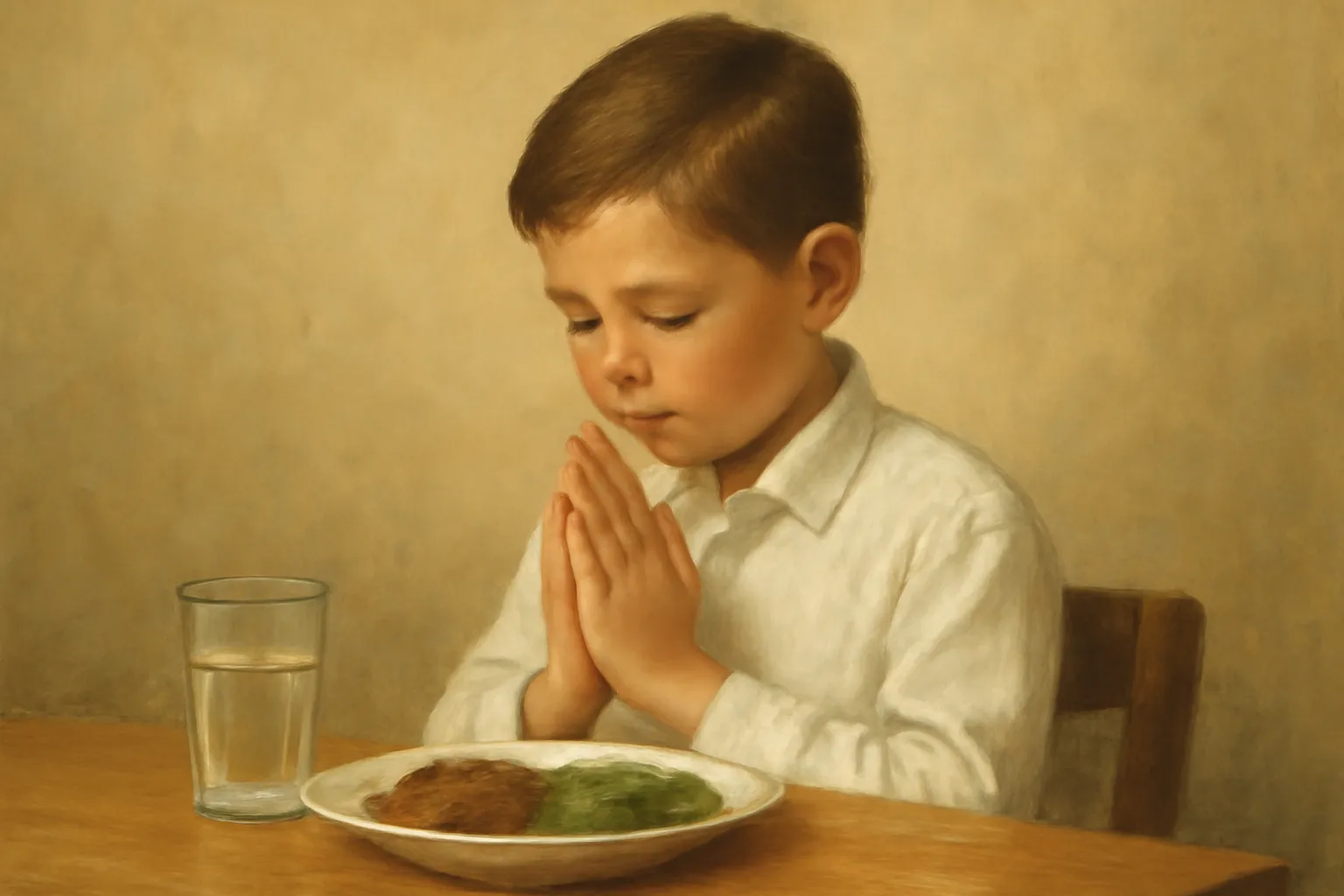
Catholic Before Meal Prayer: Meaning, How to Say It, and Examples
In Catholic households around the world, meals are often surrounded by a moment of gratitude and dependence on God. A short prayer before eating helps families pause, acknowledge the gifts of nourishment, and invite God’s blessing over the table. This article explores the meaning, the ways to say such prayers, and a variety of examples and variations you may encounter or adopt. Whether you are a parent teaching children, a lifelong Catholic seeking to refresh your practice, or a curious reader exploring Catholic domestic devotion, you will find practical guidance, textual options, and ideas for making the prayer meaningful in everyday life.
Meaning of the Catholic Before Meal Prayer
A Catholic before meal prayer is more than a formula. It expresses a deliberate attitude of thanksgiving, a recognition that the food on the table is a gift from God, and a
chance to bless others—the cooks, servers, farmers, and those who prepared the meal. The core meanings commonly carried by these prayers include:
Gratitude for the food and for the human labor that brought it to the table.
Recognition that all good things come from God, and that we depend on divine generosity for daily sustenance.
A petition for blessing—that God will keep the company safe, healthy, and mindful of those who are in need.
A sense of communion—the meal unites family and friends, and in a larger sense unites us with the universal Church and the poor around the world.
A formation of habits of prayer in daily life—turning ordinary meals into small acts of worship.
The traditional English wording famously used in many Catholic homes carries these layers of meaning in a concise expression. Yet the exact words can vary, reflecting family tradition, local culture, or liturgical influences. Regardless of the version, the essential aim remains the same: to turn a routine meal into a moment of grace, thanksgiving, and awareness of God’s providence.
How to Say It: Practices, Phrasing, and Framing
There are practical ways to approach saying a before meal prayer that can help it become a natural and meaningful part of daily life. Here are common elements and recommendations:
Time and place: Typically just before the meal begins, when plates are set or before prayer, and often with the family gathered at the table.
Posture and demeanor: A modest voice, a calm pace, and a posture of listening and attention. For some families, hands joined or folded at the table expresses reverence; for others, a simple open posture is comfortable.
Content choices: Use a standard text, or adapt it in light of contemporary circumstances—such as thanking God for the meal, for the hands that prepared it, and for those who may be in need.
Frequency: Some households include the prayer every day; others reserve it for Sundays, special occasions, or meals shared with guests. The essential thing is the intent behind the words, not the frequency alone.
Inclusion of others: It is common to include a brief petition for others—neighbors, the sick, the poor—and for those who prepared the meal.
Variations in length: A longer form may include a short reflection or a request for guidance in sharing bread and resources with others; a shorter form may be a single sentence or a brief blessing.
For families with children, you can make the practice engaging by explaining the meaning of the prayer, encouraging children to name one thing they are grateful for, or inviting them to offer a small intention for someone else at the table. The goal is to make intentional gratitude a living habit rather than a rote recital.
Variations and Examples: Texts You Might Hear or Use
The Catholic tradition includes several common English versions of the before meal blessing, as well as Latin variants and adaptations for contemporary life. Below are representative forms along with notes on when they might be used and how they connect with the meaning described above.
Standard English Version (Traditional)
Bless us, O Lord, and these Thy gifts, which we are about to receive from Thy bounty, through Christ our Lord. Amen.
Notes: This is the archetype most people recognize. It directly invokes God’s blessing over the meal, acknowledges the gifts as coming from God, and anchors the act of eating in Christ. It uses the language of traditional Catholic prayer and remains popular in many households and parishes.
We Give You Thanks Version
We give you thanks, O Lord, for these and all thy gifts, and for the hands that prepared them. Bless us as we share this meal, through Christ our Lord. Amen.
Notes: This variant expands the focus to express gratitude for the effort and labor of others who contributed to the meal. It acknowledges generosity beyond the food itself and can be especially meaningful in families that emphasize stewardship and social justice.
For These and All Thy Gifts Version
For these and all thy gifts, we bless you, O Lord, and we ask for the grace to share what we have with others. Amen.
Notes: A version that foregrounds sharing and charity, inviting the family to consider how to use blessings for good beyond their own table. It can be adapted to include specific intentions such as helping a neighbor, supporting a parish project, or funding a meal program.
Short, Child-Friendly Version
Bless us, O Lord, and these thy gifts. Amen.
Notes: Short forms are often useful for younger children or for quick meals. You may accompany this with a brief pause of gratitude or a simple comment such as “Thank you, God, for our food.” This keeps the practice accessible while preserving the essential tone of blessing and thanksgiving.
Latin and Cultural Variants
Benedic, Domine, nos et haec tua dona, quae de tua largitione sumimus; et haec dona, quae tibi sunt, per Jesum Christum, dominum nostrum. Amen.
Notes: In Catholic households that preserve a Latin heritage or celebrate a tradition in a bilingual parish, Latin prayers can be part of family life or liturgical education. The Latin form above mirrors the sense of blessing the dona (gifts) and asking for continued grace through Jesus Christ. Latin prayers connect families to a broader Church history and the universal nature of Catholic practice.
Variations for Guests and Special Occasions
Bless us, O Lord, and these thy gifts, which we receive from thy bounty; bless our guests and those who prepared this meal, through Christ our Lord. Amen.
Notes: When hosting a meal with guests or at a parish gathering, many families add a line honoring the people present and those who prepared the food. This variation fosters inclusion and gratitude in a communal setting.
Modernized or Contemporary Wording
Lord God, we thank you for this meal and for all your gifts—food, family, and friends. Please bless this food to our bodies and care for those who have less. Through Christ our Lord. Amen.
Notes: Some households prefer a more conversational tone that still respects Catholic faith and doctrine. This version can be especially approachable for interfaith gatherings or mixed-faith families while preserving a Catholic sense of reverence.
Latin and Catechetical Context: What a Catholic Might Learn
The Catholic tradition places a strong emphasis on grace before meals as part of domestic piety, a practice that harmonizes daily life with the rhythm of the liturgical year. While the Eucharist in Mass is the central sacrament of Catholic life, the before meals blessing reflects a theology of daily life in which ordinary actions—eating, sharing, and caring for others—are occasions for grace. In catechetical settings, children learn that food is a sign of God’s providence and that stewardship includes thanking God for sustenance and recognizing the needs of people who do not have enough to eat.
Across cultures, you may encounter regional variations in cadence, language, and imagery. Some families pair the before meal prayer with a brief blessing for the hands that prepared the meal, the farmers who grew the crops, or the calls for justice and mercy that echo Catholic social teaching. These expansions remain fundamentally consistent with the meaning outlined earlier: thanksgiving, dependence on God, and generosity toward others.
Start small: If your family is just starting, begin with a brief phrase and gradually add a few words or intentions as comfort grows.
Involve others: Invite children or guests to name someone they want to thank or a person in need who could be prayed for during the moment.
Keep it regular: Consistency helps form habit. Even a few minutes every day can anchor the practice in daily life.
Respect diversity: If guests come from different faith backgrounds, offer a neutral blessing or an expression of gratitude that is respectful to all.
Use written text: If you have trouble remembering the exact words, keep a small card at the table with the chosen version, or write the next line on a placemat — then recite it together.
Incorporate opportunities for reflection: After the blessing, allow a moment for silent gratitude or for family members to share a brief intention (which can be optional).
Examples for Different Settings
If you’re looking for ready-to-use language suitable for various occasions, here are a few examples tailored to different settings, with practical notes.
Family dinner with children:
Bless us, O Lord, and these thy gifts, which we are about to receive from thy bounty. May we always share our blessings with others, through Christ our Lord. Amen.
Casual lunch with friends:
Lord, we thank you for this meal, for our friends, and for your many gifts. Bless this food to nourish our bodies and our conversation with kindness. Amen.
Meal after a long day or in a busy household:
Bless us, O Lord, and these thy gifts, which we are about to receive from thy bounty. Help us to use what you give us to love others and serve you. Through Christ our Lord. Amen.
Latin heritage or bilingual family:
Benedic, Domine, nos et haec tua dona, quae de tua largitione sumimus; et haec dona, quae tibi sunt, per Jesum Christum, dominum nostrum. Amen.
Common Questions and Clarifications
Is this prayer required in Catholicism?
Catholicism emphasizes personal prayer and family devotion as valuable practices, but there is no universal requirement that households recite a before-meal prayer. It is a devotional discipline that many families adopt to foster gratitude and communal grace.
Can this be adapted for non-Catholic guests?
Yes. You can use a version that is respectful to all, such as a general blessing or a non-denominational note of thanks for the food and the hands that prepared it, while keeping your own Catholic text for family use.
What about meal prayers at large family gatherings or parish events?
In larger settings, a brief communal blessing can be delivered by a host or a designated person. It can be a simple phrasing like: “We give you thanks for this meal and for all your gifts. May we be mindful of those in need. Amen.” The key is conciseness and sincerity.
Are there variations for special liturgical seasons?
While the standard blessing remains common, some families connect a brief seasonal reflection—such as gratitude for harvest in autumn or for the Lord’s provisions in times of hardship—without compromising the core sense of gratitude and dependence on God.
The practice of saying grace before meals has roots in early Christian piety and reflects the broader Catholic understanding of creation as gift. In the Catholic tradition, God is viewed as the creator and the provider, and daily activities like eating become opportunities to acknowledge that God sustains life and enables human labor. The Eucharistic theology at the heart of Catholic life—where bread becomes the Body of Christ—also inspires a reverence for bread as a sign of God’s generosity.
Domestic prayer life in Catholic households often mirrors the rhythm of the parish and the liturgical year. The pre-meal blessing is a simple, accessible form of prayer that connects the personal table with the larger Church’s prayers and sacraments. It serves as a bridge between private devotion and social responsibility: giving thanks, recognizing God’s gifts, and turning abundance into a call to share with those in need.
Tips for Incorporating a Meaningful Practice
Combine clarity and simplicity: Choose a version that feels natural for your family’s language and church tradition. A simple phrase recited consistently has more impact than a longer version recited irregularly.
Link with daily life: After the Amen, you might add a quick reflection such as “Let us remember those who are hungry today.” or another intention relevant to your community.
Embed in family rituals: Tie the prayer to other routines—before homework, before bedtime meals, or at family assembly times—so the practice becomes part of daily life rather than a separate activity.
Use visual cues: A small sign, a table card, or a bookmark with the chosen prayer text can help remind family members of the words and meaning.
Adapt for guests: When hosting a diverse group, consider a version that is inclusive and respectful while still meaningful to Catholics at the table.
Conclusion
A Catholic before meal prayer is a compact yet powerful practice that turns ordinary meals into moments of gratitude, recognition of God’s providence, and charity toward others. Whether you stick to the classic English form, try a variant that highlights thanksgiving for workers and gifts, or adopt a Latin version to honor a historic tradition, the essential aim remains the same: to invite God’s blessing over the table, to acknowledge the gifts we receive, and to lay hold of the opportunity to be generous to others.
If you are just starting out, begin with a single line that speaks to you or your family’s values. You can gradually expand to longer forms, include more intentional petitions, or weave in reflections on current life circumstances. The beauty of Catholic domestic prayer is its adaptability to real life while preserving a shared sense of faith, gratitude, and community. May your meals become occasions of grace, and may the words you speak at the table nourish both body and soul.
The Benediction prayer Catholic is a distinctive form of Eucharistic devotion that culminates in a blessing with the Blessed Sacrament. It is both a public act of worship and a deeply personal moment of encounter with Christ present in the Eucharist. In Catholic usage, the benediction is not merely a blessing worded as a prayer;…
Overview: Catholic Pre-Meal Prayer as a Practice of Gratitude and Community Within the Catholic tradition, the pre-meal prayer is a short, sacred moment before sharing food that invites gratitude, blessing, and unity. It is more than a courtesy; it is a form of disciplined thanksgiving that aligns a family, a classroom, or a parish meal…
Catholic Prayer for Protection from Evil: Spiritual Shield Prayers In Catholic devotion, protection from evil is understood as a gift of grace that strengthens the soul, guards the family, and fortifies daily life against spiritual harm. This article explores spiritual shield prayers—prayers and practices that invite God’s protective care, rely on the intercession of angels…