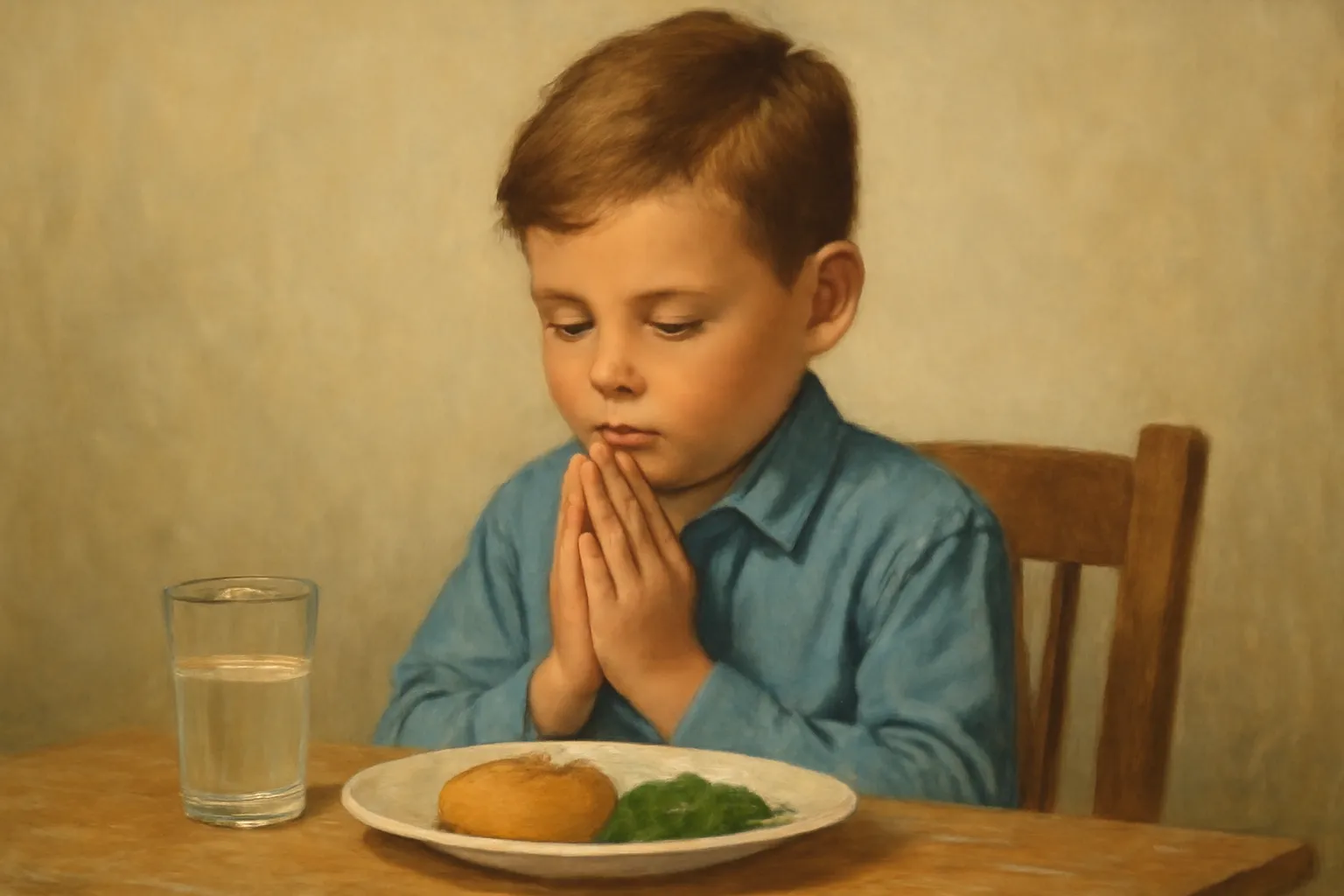
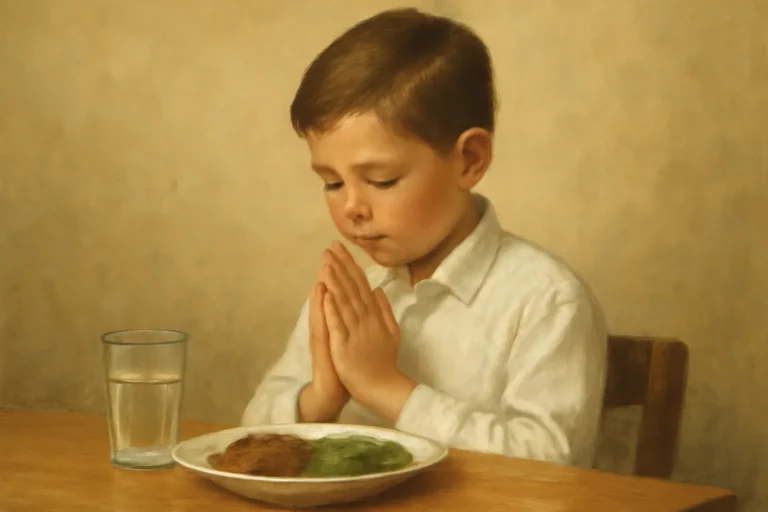
Overview: Catholic Pre-Meal Prayer as a Practice of Gratitude and Community
Within the Catholic tradition, the pre-meal prayer is a short, sacred moment before sharing food that invites gratitude, blessing, and unity. It is more than a courtesy; it is a form of disciplined thanksgiving that aligns a family, a classroom, or a parish meal with the larger currents of Catholic spirituality. In homes and religious communities, this practice is often referred to as a grace before meals or, in Latin, a Benedictio prandii (though the exact Latin phrase may vary by tradition). The act situates ordinary nourishment within the sacred and helps people remember that all gifts come from God, who provides through creation and through the labor of others.
The domestic church—the family gathered around a table—becomes a place where faith is taught, shared, and lived. A well led pre-meal prayer can cultivate reverence, foster family conversation, and teach children an essential habit of prayer: to pause, give thanks, and acknowledge dependence on God’s providence. While there are many possible texts and formulations, the core intention remains the same: to bless the meal and to acknowledge the divine origin of daily bread.
The canonical text: the classic English form and its meaning
The most recognizable and enduring form of the Catholic pre-meal prayer in English-speaking communities is the classic blessing that begins, “Bless us, O Lord, and these thy gifts, which we are about to receive from thy bounty, through Christ our Lord. Amen.” This short petition elegantly expresses several key ideas:
Petition for blessing of the people gathered around the table.
Acknowledgment of gifts that come from God’s generosity—“these thy gifts.”
Recognition of the source—“from thy bounty,” which points to divine providence rather than accidental luck.
Christocentric framing—“through Christ our Lord” situates the blessing within the life of the Church and the Eucharistic mystery.
Conclusion—“Amen,” a communal assent and seal of prayer, inviting everyone present into the shared act of thanksgiving.
Although the exact wording may vary by family, parish, or region, many households keep a cadence of gratitude and shared responsibility with this core form. It is often recited aloud by the head of the household or by a designated family member, and sometimes the person who leads will invite others to offer a short addendum or a silent intention.
Variations of the pre-meal prayer: breadth, depth, and adaptability
Catholic households around the world use an array of variations on the pre-meal prayer, each preserving the essential elements while reflecting language, culture, and spiritual emphasis. Below is a guided overview of several common forms, followed by short examples you can adopt or adapt.
Standard English version (the anchor form)
This form closely resembles the traditional English text cited above. In some families, the prayer begins with the imperative “Bless us, O Lord” and continues with a dependent clause about the gifts and the giver.
Text example:Bless us, O Lord, and these thy gifts, which we are about to receive from thy bounty, through Christ our Lord. Amen.
Expanded or family-friendly variants
Some households add a brief personal note after the traditional line or insert a short intention for a particular person, a project, or a need in the family or world. These expansions preserve the structure while inviting family members, especially children, to engage concretely with their prayers.
Text example 1:Bless us, O Lord, and these thy gifts, which we are about to receive from thy bounty, through Christ our Lord. Amen. We thank you for this food, for the hands that prepared it, and for the love that holds our family together.
Text example 2:Bless us, O Lord, and these thy gifts, which we are about to receive from thy bounty. Grant us grateful hearts today and always, through Christ our Lord. Amen.
Latin and Latin-into-English versions
In Catholic communities with a strong Latin heritage, you may encounter the prayer in Latin, especially in schools, monasteries, or liturgical contexts. A typical Latin form is: Benedíc nos, Dómine, et haec munera tua, quae sumimus ex tua largitate, per Christum Dóminum nostrum. Amen. In English, this is often rendered as the canonical form above, preserving the structure while translating reverently.
The Latin form emphasizes the grace of God as source and the communal nature of the meal as a shared participation in God’s providence. In communities that celebrate the Latin rite, hearing the Latin version at meals may also be a reminder of the Church’s universal language and the continuity of prayer across centuries.
Spanish and Portuguese variants
In many Spanish-speaking Catholic households, the pre-meal prayer is rendered in a form that mirrors the structure of the standard blessing while reflecting idiomatic language. A typical Spanish version is: “Bendícenos, Señor, y estas son tus dádivas que vamos a recibir de tu generosidad, por Cristo nuestro Señor. Amén.”
In Portuguese-speaking communities, a common formulation is: “Bendize, ó Senhor, a nós e estas suas dádivas que vamos a receber da tua bondade, por Cristo nosso Senhor. Amém.” These versions maintain the same theological emphasis—blessing, thanksgiving, and the recognition of God’s generosity—while using the natural cadence of local languages.
French, Italian, and other European variations
Catholic households in francophone or Italophone regions may use prayers with subtle but distinct phrasing. For example, a French formulation might begin, Bénis-nous, Seigneur, et ces dons que nous allons recevoir de ta bonté, par le Christ notre Seigneur. Amen. An Italian version could read, Benedici, o Signore, noi e queste doni che stiamo per ricevere dalla tua beneficenza, per Cristo nostro Signore. Amen.
These regional variants demonstrate how the same spiritual posture—thanksgiving and acknowledgment of God’s gifts—travels across cultures. The essential structure remains intact: a petition for blessing, a reference to the gifts and the giver, and the closing assent.
Practical guidance: leading, cadence, and inclusivity at the table
The pre-meal prayer is most effective when it is not merely spoken, but lived as a moment of intentional pause and collective focus. Here are practical guidelines to help families, classrooms, and communities circulate a meaningful and respectful practice.
Choose a lead: rotate the role of the person who says the blessing, or designate a child occasionally. This helps teach ownership of prayer and fosters confidence in younger participants.
Establish a ritual cadence: a consistent time and place around the table helps everyone know what to expect. In schools or parish halls, you can begin with a short conductor’s cue—hands folded, quiet room, then the prayer.
Be concise: pre-meal prayers should be brief—often one to two sentences plus the closing Amen. The goal is to invite contemplation, not to monopolize the meal or create discomfort.
Include intentions: after the traditional line, consider inviting one person to offer a quick personal intention, or silently hold a moment of prayer for a specific need (health, peace, a meal for all, etc.).
Adapt for children: for younger participants, indicate that they may repeat after the leader or speak a short intention. This makes the prayer inclusive rather than intimidating.
Respect diverse meals and dietary contexts: you can acknowledge that some participants fast on certain days or have dietary restrictions, emphasizing gratitude rather than specifics about the food itself.
Cultural breadth: how pre-meal prayers manifest around the world
The Catholic Church is universal, and the pre-meal prayer reflects that universality in form and spirit. In different regions, communities include language, posture, and even musical settings that enrich this moment of grace.
In homes where multiple languages are spoken, a family may alternate between versions, or offer a bilingual version of the blessing. This practice can become a catechetical tool, teaching children how to translate sacred ideas into everyday speech and showing respect for each community’s linguistic heritage.
Monastic, seminary, and parish settings
In monasteries or religious houses, a pre-meal blessing may be led by a monk or priest with formal solemnity, sometimes accompanied by a brief blessing of the table or a note of gratitude for the day’s labors. In seminaries and parishes, you may hear a version that emphasizes hospitality and service—blessing the food while praying for those without enough to eat.
Schools and catechetical programs
Catholic schools often begin meals with a standardized prayer that students memorize. Such practices help inculcate virtue, courtesy, and reverence in the daily rhythm of school life. For catechetical instruction, teachers may explain the meaning of the prayer, highlighting how gratitude and generosity are not confined to special occasions but are woven into ordinary meals.
Theological significance: how pre-meal prayer connects to the Eucharist and daily life
The pre-meal prayer embodies several theological currents that are central to Catholic spirituality:
Gratitude as a theological virtue: acknowledging God’s gifts daily develops a heart of gratitude that characterizes a disciple’s life.
Providence and dependence: recognizing that food is given by God and through human hands emphasizes humility and trust in God’s provision.
Communal Eucharist in miniature: while a home meal is not the same as the Mass, the practice echoes the Eucharistic logic of thanksgiving, blessing, and sharing in love; the family table becomes a small church, a domestic ecclesia.
Prayer as formation: speaking these words regularly shapes dispositions—thankfulness, consideration for others, and a habit of turning attention away from self to God and neighbor.
Because of these dimensions, pre-meal prayer is not a mere rote ritual but a pedagogical tool in catechesis, family life, and parish evangelization. It supports the formation of conscience by turning routine meals into occasions of grace.
Historical context: how the practice developed in Catholic culture
The exact origins of standardized pre-meal blessings are difficult to trace to a single moment in history. What can be said with confidence is that gratitude before meals became common in Catholic Christian households as part of the broader medieval and early modern devotion to grace before nourishment. Monastic communities practiced formal benedictions before meals, and as Catholic families sought to cultivate piety within domestic life, those forms adapted into the vernacular languages used at table. Over time, the practice became widely taught in catechesis and spread through schools, families, and parish life.
In the modern era, many Catholic families retain a balance between traditional form and contemporary expressiveness. Some prefer a strictly liturgical cadence, while others integrate personal intentions, song, or shared reading of a short reflection. The flexibility of the tradition allows the pre-meal prayer to endure as a meaningful family ritual while remaining faithful to its core purpose: to bless and to thank, together.
A practical catalog: quick samples you can use or adapt
If you’re seeking ready-to-use text options, here is compact guidance you can copy, adapt, or rotate through your family or group. Each example is concise, suitable for most meals, and designed to be easy for children to learn.
Short standard form
Bless us, O Lord, and these thy gifts, which we are about to receive from thy bounty, through Christ our Lord. Amen.
Standard with a shared intention
Bless us, O Lord, and these thy gifts, which we are about to receive from thy bounty, through Christ our Lord. Amen. May we use these gifts in love and service to one another, through Christ our Lord. Amen.
Benedic nos, Domine, et haec munera tua, quae sumimus ex tua largitate, per Christum Dominum nostrum. Amen.(English): Bless us, O Lord, and these thy gifts, which we are about to receive from thy bounty, through Christ our Lord. Amen.
Bendícenos, Señor, y estas son tus dádivas que vamos a recibir de tu generosidad, por Cristo nuestro Señor. Amén.
Alternative children-friendly variant
Bless us, O Lord, and these thy gifts, which we are about to receive with grateful hearts. Amen. Help us to share our blessings with others today.
Practical considerations for diverse settings
When applying the pre-meal prayer in diverse contexts—home dinners, school cafeterias, parish gatherings, or community meals—consider the following practicalities to maintain dignity and unity.
Inclusivity: ensure the prayer language respects diverse ages, backgrounds, and abilities. If someone is uncomfortable with a long or formal prayer, a shorter form is acceptable and appropriate.
Participation: invite everyone to join in, but allow space for silent reflection or a whispered personal intention if that suits the group’s norm.
Tempo: keep the pacing deliberate but not rushed. A measured pace helps quieter participants absorb the meaning and join in confidently.
Contextual sensitivity: in solemn gatherings (funerals, memorial meals) or solemn fast days, adjust the tone and length accordingly, possibly prefacing the prayer with a brief note about the occasion.
Educational value: for families with children, explaining the meaning of the gifts and the prayer’s purpose can deepen engagement and create a richer learning moment.
Common questions about Catholic pre-meal prayers
Below are answers to questions frequently raised by families, educators, and parish leaders who want to understand and implement this practice more effectively.
Why is the pre-meal prayer important for Catholic families?
It reinforces a habit of gratitude, fosters family unity, and articulates a shared religious identity around daily life. It makes faith concrete by linking the sacred with ordinary meals and acknowledges God’s providence in everyday nourishment.
Who should lead the prayer, and does everyone have to participate?
Traditionally, the head of the household leads, but rotation or alternate leadership by different family members, including children, is encouraged. Participation should be voluntary in spirit; those who do not wish to join in can stand or sit respectfully, but the goal is to invite everyone into a shared moment of prayer.
What if we have dietary restrictions or someone is not Catholic?
The core intention—gratitude and blessing—transcends doctrinal boundaries. You can maintain the same form and invite others to join or offer a neutral blessing that emphasizes gratitude for nourishment without specific doctrinal references. The emphasis remains on respect, hospitality, and the recognition that others share in the table’s nourishment.
Can I use the pre-meal prayer in non-domestic settings?
Yes. The same format works well in classrooms, youth groups, and parish meals. In these contexts, leaders can adapt the language to be inclusive and educational, perhaps adding a brief sentence about the food’s origin, the workers who supplied it, or the charity that serves those in need.
Conclusion: the enduring value of the Catholic pre-meal prayer
The practice of saying a pre-meal prayer is a simple yet powerful way to connect daily life with faith, to acknowledge God’s providence, and to cultivate a sense of community around the table. Whether one adheres closely to the canonical form or embraces regional variations, the essential intention remains the same: to bless the moment, to thank God for gifts, and to remember those who do not have enough to eat. In doing so, Catholic families and communities participate in a long lineage of prayer that shapes hearts, teaches virtue, and strengthens the bonds of communion—first at home, then in church, and outward into the world.
Catholic Prayer for Protection from Evil: Spiritual Shield Prayers In Catholic devotion, protection from evil is understood as a gift of grace that strengthens the soul, guards the family, and fortifies daily life against spiritual harm. This article explores spiritual shield prayers—prayers and practices that invite God’s protective care, rely on the intercession of angels…
The Benediction prayer Catholic is a distinctive form of Eucharistic devotion that culminates in a blessing with the Blessed Sacrament. It is both a public act of worship and a deeply personal moment of encounter with Christ present in the Eucharist. In Catholic usage, the benediction is not merely a blessing worded as a prayer;…
Catholic Before Meal Prayer: Meaning, How to Say It, and Examples In Catholic households around the world, meals are often surrounded by a moment of gratitude and dependence on God. A short prayer before eating helps families pause, acknowledge the gifts of nourishment, and invite God’s blessing over the table. This article explores the meaning,…