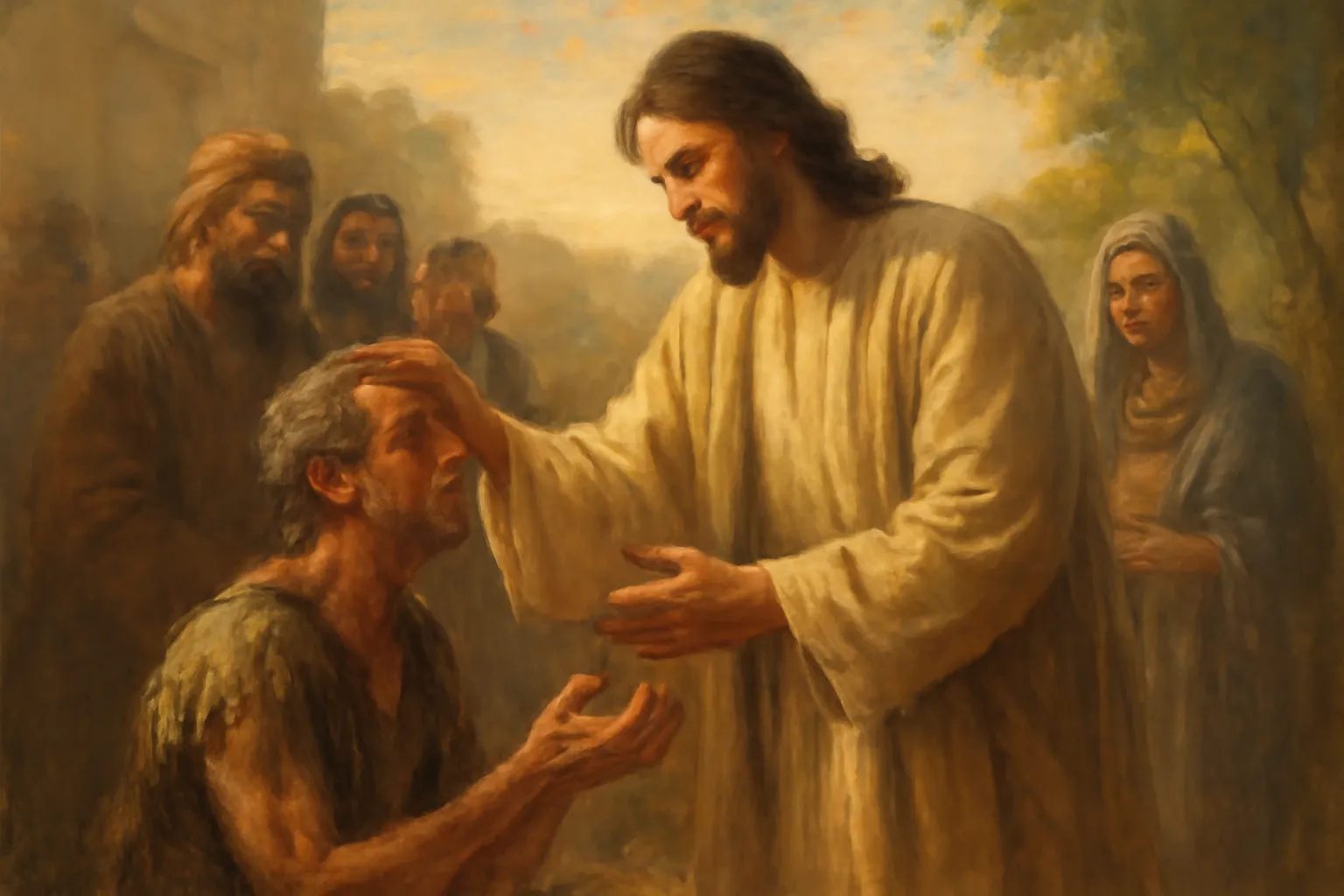
Christ healing refers to the numerous accounts in the Gospels where Jesus demonstrates authority over illness, disability, and demon oppression. This article offers a comprehensive overview of that religious and literary phenomenon, situating the healing ministry of Christ within its historical moment, explaining the key patterns that recur across narratives, and exploring the theological significance that has shaped Christian faith for centuries. We will consider not only individual miracle stories but also the broader themes—such as faith, compassion, the coming of the Kingdom, and the relationship between physical healing and spiritual renewal—that together form a rich picture of Jesus’ healing ministry.
While many readers approach Jesus’ miracles of healing from a devotional perspective, this guide also treats them as literary and historical sources. We will look at how the Gospel authors present healing, what these accounts reveal about first-century beliefs about illness, how healings function as signs of divine authority, and what they imply for modern readers seeking hope, guidance, or theological insight. The aim is to illuminate how the Messiah’s healing power is portrayed in the texts, how it relates to personal faith, and how Christians have understood healing as part of salvation history.
Historical and theological background
To understand Christ healing in the Gospels, it helps to situate it within the broader Jewish and Greco-Roman world. Illness was often seen as a mixture of medical condition, ritual impurity, and spiritual affliction. In this cultural milieu, the healing mission of Christ emerges as a radical assertion that divine compassion intersects with human vulnerability. The Gospel writers deliberately frame these events as more than acts of mercy; they present them as signs that the Kingdom of God is breaking into the present age.
Theologically, the healings point to several interrelated claims: first, Jesus’ authority over sickness and evil; second, the inauguration of redemption through bodily restoration and spiritual renewal; and third, the invitation to trust in the Messiah whose presence among people brings healing and wholeness. Across the four canonical Gospels, the message is consistent even as the details differ. The phrase Christ healing thus signals both a pattern of narrative episodes and a theological statement about who Jesus is and what his coming means.
Categories of healing in the Gospels
Biblical accounts of Jesus’ healing miracles can be grouped into several broad categories. While these categories are not always mutually exclusive, they help readers organize the material and reflect on the different forms through which healing manifests.
Physical healing and restoration
The most familiar dimension of Christ healing concerns physical restoration—from leprosy to paralysis, from blindness to fevers. Each case often shows a unique interaction between Jesus, the sufferer, and sometimes family or friends. These stories emphasize the tangible relief of pain and disability and demonstrate that the healing power of Christ extends to the whole person—body, mind, and social standing.
Healing through touch, word, and command
In many narratives, the Master heals by a simple act or uttered command. Sometimes a touch is essential; other times a word suffices. This variety reflects different settings and the Gospel writers’ storytelling aims, but the underlying pattern is consistent: authority over illness is exercised with intention and compassion, and the one who heals is never distant or indifferent.
Exorcism and the casting out of demons
Another major dimension of Christ healing is the defeat of demonic influence. Jesus addresses spiritual affliction in ways that appear to restore social and mental health as well. Exorcisms—such as the casting out of a legion of spirits from a man in a graveyard—underscore the belief that evil spiritual forces could bind and harm persons, and that divine power can liberate and restore dignity.
In many scenes, those who suffer are healed not only physically but socially and spiritually. Lepers, the poor, women, foreigners, and people deemed unclean often appear in the narratives. By healing and welcoming these individuals, the healing ministry of Christ signals a reversal of stigma and exclusion. The acts of restoration thus point toward a broader social and cosmic renewal that is central to Jesus’ message.
Raising the dead and moments of resurrection anticipation
While not every healing story ends with a resurrection, several episodes move toward life from death, such as Jairus’ daughter and the widow’s son. These episodes serve as powerful demonstrations of Jesus’ authority over life itself, anticipating the larger Christian hope of ultimate renewal and resurrection.
Patterns and motifs in healing narratives
Readers will notice recurring motifs that recur across the miracles of Jesus. These patterns help explain why the Gospel writers record these events and how early Christian communities interpreted them.
Faith and receptivity: In many stories, faith—whether the sufferer’s own or the faith of friends and family—plays a crucial role. Examples include the paralytic whose friends lower him through the roof and the blind man who calls out for mercy.
Compassion and inclusivity: Jesus consistently reaches out to those who are marginalized or considered unclean, showing that healing is an invitation into community and restoration rather than an isolated miracle.
Authority and identity: The healer’s power is linked to Jesus’ identity as the Messiah and Son of God. The healing miracles function as signs that point to a deeper spiritual truth about who Jesus is and what God is doing in the world.
Foretaste of the Kingdom: Each act of healing is presented as a foretaste of the coming fullness of God’s reign, where suffering, sickness, and spiritual bondage will be removed.
Faithfulness under challenging circumstances: The narratives often unfold in tension—crowds, opposition, and questions from religious leaders—yet the healing takes place, underscoring confidence in divine mercy.
These patterns invite modern readers to reflect on how Christ healing can inform personal faith, communal care, and mission. The emphasis on compassion, inclusion, and the transformation of life circumstances remains relevant for churches, healthcare workers, caregivers, and communities seeking to embody mercy.
Notable healing accounts and what they teach
The paralytic lowered through the roof (Mark 2; Matthew 9; Luke 5)
In this story, friends bring a paralyzed man to Jesus. When they cannot access him due to the crowd, they lower him through the roof. Jesus responds to their faith with forgiveness of sins and physical healing. This narrative illustrates that inner healing and moral restoration often accompany physical cure, and it highlights communal intercession as a vehicle for healing.
The centurion’s servant and a word of authority (Matthew 8; Luke 7)
A Roman centurion requests healing for a beloved servant. Jesus commends the centurion’s faith and heals with a single word, saying the servant is healed at that very hour. This account demonstrates that divine authority does not hinge on proximity or ritual purity, but on trust in Jesus’ power and authority.
Peter’s mother-in-law and next-door healings (Matthew 8; Mark 1; Luke 4)
Jesus heals Simon Peter’s mother-in-law, who immediately rises and serves. This short vignette foregrounds immediacy and integration of healing into daily life, implying that wellness enables fuller participation in family and community tasks.
The hemorrhaging woman and the touch of faith (Mark 5; Luke 8)
A woman with a long-term bleed touches Jesus’ cloak and is healed by faith. Jesus notices her, calls her by name, and commends her faith. This story depicts intimate healing that reaffirms personal dignity and highlights the vulnerability and persistence of those who seek mercy.
Jairus’ daughter and the delay of faith under pressure (Mark 5; Matthew 9; Luke 8)
A synagogue leader pleads for his daughter’s life; news arrives that she is dead, and Jesus raises her. The episode emphasizes that healing may occur even when circumstances appear hopeless, and it reinforces trust in Jesus’ power over life and death.
Recovery of sight: Bartimaeus, the blind beggar (Mark 10; Luke 18)
Bartimaeus persists in calling for mercy and after receiving sight, follows Jesus on the way. This story underscores the link between spiritual sight, discernment, and committed discipleship—healing enables seeing rightly and choosing a new path.
Healing of the ten lepers (Luke 17)
Ten lepers are cleansed, but only one returns to thank Jesus. This account raises questions about gratitude, faith, and the social boundaries that illness created. It invites readers to reflect on response to mercy and the inclusivity of God’s healing grace.
Exorcism at the Gerasene shore (Mark 5; Matthew 8; Luke 8)
A man possessed by many demons is freed and clothed, restored to his community, and sent to proclaim what God has done. This story highlights the liberating dimension of healing from spiritual bondage and the re-integration of a person into society.
Healing at Bethesda: the pool and a divine instruction (John 5)
A man waiting by the pool for healing encounters Jesus, who offers a direct command: «Rise, take up your bed and walk.» This account foregrounds questions about dependence, healing timing, and the ethical dimensions of cure within a faith community.
Texts, authorship, and how the Gospels shape our view of healing
The Gospel writers—Matthew, Mark, Luke, and John—each present healing narratives with distinctive emphases. Some emphasize chronological sequences and the pace of Jesus’ ministry, while others foreground theological symbolism or the establishment of Jesus as the divine Word made flesh. In the healing ministry of Christ, readers encounter both shared motifs and unique angles:
Synoptic emphasis on Jesus’ acts of healing in Galilee and Judea, with systematic grouping of episodes to illustrate Jesus’ authority and compassion.
Johannine portrayal of healing as a sign that reveals Jesus as the light of the world, often linking physical healing to belief in him as the source of eternal life.
Thematic continuity across the Gospels that healing is inseparable from preaching, teaching, and the call to repentance and faith.
For students of theology and history, these differences are not contradictions but windows into how early Christian communities remembered Jesus and told stories that spoke to their particular contexts. The central claim remains consistent: Jesus heals because he embodies God’s mercy and authority, and healing acts function as signals of God’s redemptive work in the world.
The role of faith, prayer, and community in healing
Across many Jesus healing stories, faith and prayer play crucial roles, but the exact relationship between human response and divine action can be complex. Some accounts emphasize the faith of the afflicted person or their supporters, while others stress Jesus’ sovereign initiative. A few guiding themes emerge:
Faith as trust: Trust in Jesus’ power is often the catalyst that opens the door to healing. Yet faith itself is portrayed as a relationship—trusting Jesus leads to healing, not as a mere formula but as a dynamic encounter with divine mercy.
Intercession and community: The healing narratives frequently involve someone bringing the suffering person to Jesus, reflecting the corporate dimension of healing in early Christian life.
Healing, forgiveness, and reconciliation: Physical cures often accompany or precede forgiveness of sins, suggesting that authentic well-being integrates bodily health with moral and spiritual renewal.
Healing as empowerment: Restored persons are often reinserted into family life, work, and civic life, illustrating that healing is a path to renewed participation in creation and community.
For congregations today, these themes translate into practical practices: compassionate outreach, accessible ministries for illness and disability, prayer networks, and educational programs that help people understand the biblical concept of healing as integral to a life of discipleship.
Healing narratives are not merely demonstrations of compassion; they carry theological weight about who Jesus is and what God intends for humanity. Some core implications include:
Divine authority: Christ healing shows that Jesus stands in a unique relationship to God, displaying authority over nature, illness, and evil spirits.
Salvation and restoration: Healing is part of the larger salvation story—the restoration of creation, the reconciliation of persons, and the reversal of brokenness caused by sin and suffering.
Incarnational presence: By healing in embodied, personal ways, Christ demonstrates God’s proximity to human life and vulnerability. God with us becomes healer among us.
Hope beyond present suffering: The healings point toward a future fullness of life where all afflictions are healed, a future described in Christian eschatology as the renewed creation.
Thus, the healing wonders of Christ are widely interpreted as signs that the inbreaking of God’s kingdom is real and that God’s mercy is actively working in history through Jesus.
Healing and modern applications: lessons for today
How does the ancient record of Christ healing affect contemporary faith communities, individuals seeking comfort, and healthcare-minded ministry? Several practical implications emerge:
Compassionate care: The healing stories emphasize mercy and presence. Modern ministries can model healing by offering compassionate listening, spiritual care, and practical support to those who suffer.
Holistic wellness: Physical health, mental well-being, relationships, and spiritual life are interwoven. A holistic approach addresses medical needs while fostering spiritual resilience and social connection.
Faith formation: The narratives invite believers to trust in God, even when healing does not come as quickly as hoped. They teach perseverance, gratitude, and a grateful imagination about God’s work in daily life.
Community inclusion: Healing stories routinely break barriers of social exclusion. Churches today can follow that example by welcoming marginalized groups and creating spaces where everyone can belong and contribute.
Some communities also explore the ongoing relevance of divine healing. Whether interpreted as miracles still possible today or as symbolic motifs that convey God’s saving presence, these discussions can foster respectful dialogue about faith, medicine, and human dignity.
Frequently asked questions about Christ healing (at a glance)
Did Jesus heal everyone? The Gospels show numerous healings, but not every request is answered in the way people expect. The emphasis is on faith, mission, and the gathering of communities around God’s mercy.
Is healing primarily about physical cure? While physical healing is prominent, the narratives consistently link healing to forgiveness, spiritual renewal, and restoration to community, suggesting a holistic understanding of wellness.
What role does faith play? Faith in these stories often correlates with healing, but Jesus also acts with sovereign generosity. The emphasis is on trust in God’s mercy, not on a formula for guaranteed outcomes.
What can modern readers learn? The core lessons include compassion, inclusion, personal encounter with mercy, and a hopeful vision of God’s redemptive work in history and daily life.
Conclusion: Embracing the message of Christ healing
The tapestry of Jesus’ healing miracles reveals a God who is near to human suffering, with authority over disease, evil, and death. The narratives invite readers to respond with faith and gratitude, to engage in compassionate action, and to trust that healing—whether experienced in this life or fulfilled in the age to come—belongs to the larger drama of salvation. By studying the healing power of Christ, believers gain a richer understanding of who Jesus is, what God is doing in the world, and how the church can embody mercy in tangible ways.
In this examination of Christ healing, we have sought to balance historical context, literary craft, and theological insight. The aim has been to provide a thorough, accessible guide that helps readers perceive the depth and breadth of Jesus’ miracles, appreciate their lasting significance, and consider how these ancient stories continue to shape faith, hope, and love in diverse communities today.
By His Stripes I Am Healed: Scripture, Context, and a Bible Study on Healing in Isaiah 53:5 The phrase “By His Stripes I Am Healed” sits at the crossroads of theology, personal faith, and biblical storytelling. It is a compact confession drawn from the Holy Scriptures that has energized countless believers to seek God for…