By His Stripes I Am Healed: Scripture, Context, and a Bible Study on Healing in Isaiah 53:5
The phrase “By His Stripes I Am Healed” sits at the crossroads of theology, personal faith, and biblical storytelling. It is a compact confession drawn from the Holy Scriptures that has energized countless believers to seek God for healing in every dimension of life. This article offers an in-depth study of Isaiah 53:5, exploring its historical background, theological significance, and practical application for today. We will consider how translations shape understanding, how the verse relates to other healing passages, and how to read it in a way that strengthens faith without oversimplifying difficult realities. The intention is not merely to quote a slogan but to engage with the text faithfully, to examine its promises with discernment, and to practice its truths with wisdom.
Across churches and traditions, readers encounter many ways of stating the promise of healing. Variations such as “by His stripes we are healed”, “by His wounds you have been healed” (reflecting New Testament parallel language), and “by His stripes I am healed” all point to the same foundational conviction: Jesus’ suffering opens a path to healing. In the pages that follow, we will survey the passage in context, compare translations, and lay out a practical study approach so that readers can encounter healing in Christ—physically, spiritually, emotionally, and relationally—through a balanced, biblically grounded lens.
Isaiah 53:5 in Context
“But he was wounded for our transgressions, he was bruised for our iniquities: the chastisement of our peace was upon him; and with his stripes we are healed.”
This verse is part of the broader prophetic passage often titled the “Suffering Servant” section (Isaiah 52–53). It presents the Servant as one who bears pain, punishment, and illness on behalf of others, resulting in healing and restoration for God’s people. The text uses vivid imagery of suffering to communicate a deeper reality: human brokenness is addressed not merely by human effort but by God’s redemptive action in the Servant. The phrase “we are healed” signals a healing that is comprehensive—bodily, moral, spiritual, and relational—rooted in the Servant’s atoning work.
Translations and semantic breadth
KJV: “and with his stripes we are healed.” (present tense, indicating a result of the Servant’s suffering that believers may experience now)
ESV/NIV: “by his wounds we are healed.” (emphasizes wounds as the symbolic instrument of healing)
NASB: “by his scourging we are healed.” (sober, clinical terminology for the pain inflicted)
NLT: “by his stripes, we are healed.” (modern phrasing that captures the sense of consequence and outcome)
Different English translations adjust nuance, but the core message remains constant: Jesus’ suffering is the means by which healing is made available. Theologically, this aligns with the New Testament understanding that Christ’s life, death, and resurrection inaugurate the kingdom’s healing power. The verse’s placement in Isaiah also invites readers to see healing as part of the broader redemptive plan—not merely a personal wish but a fulfilled reality in God’s saving work.
Theological Significance: Healing as Substitution and Restoration
Substitutionary atonement
Central to interpreting Isaiah 53:5 is the concept of substitution. The Servant’s suffering is presented as taking on the penalty and the consequence of humanity’s sin. In Christian theology, this substitution is not only juridical but relational and restorative. The suffering becomes the pathway by which God’s justice and mercy intersect to produce healing. When believers say “By His stripes I am healed”, they are affirming that healing arises from a substitutionary act—Christ taking the injury, the punishment, and the burden that humanity deserved, and exchanging it for wholeness and peace with God.
Multidimensional healing: physical, spiritual, emotional, and relational
The biblical concept of healing in Isaiah 53:5 spans more than physical restoration. The verse ties healing to the peace that comes through chastisement borne by the Servant. This indicates that healing in Scripture is holistic: it touches physical health, but also spiritual renewal (reconciliation with God), emotional wholeness (freedom from fear and distress), and relational reconciliation (restoration of harmony within communities and families). For many believers, the phrase “by His stripes I am healed” is understood as a sequence: sin is dealt with through the Servant’s suffering; healing follows as a natural outworking of being reconciled to God.
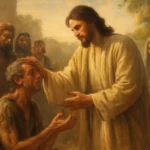
In the New Testament, this theme is reinforced as Jesus’ ministry is described as fulfilling prophetic expectations. Passages such as Matthew 8:16–17 quote Isaiah 53 to show that Jesus bore infirmities and carried diseases, thereby enacting healing among people. The link between the Servant’s suffering and healing becomes a motif for understanding Jesus’ life and mission: healing is not earned by human merit but received through faith in the completed work of Christ.
Living by the Promise: How Believers Use the Phrase Today
Personal confession and prayer
For many Christians, declaring “By His stripes I am healed” is a devotional practice that anchors faith in God’s character and the sufficiency of Christ’s work. When facing illness, pain, or emotional upheaval, believers often turn to these confessional phrases as anchors for prayer. The practice is not a mere slogan but a devotional posture: to remind the heart that healing is found in the person and work of Jesus, not in one’s own strength. A personal variation might be, “I declare today that by His stripes I am healed” or “I trust in the power of His wounds to restore me.”
Liturgy, worship, and confession
In congregational settings, the idea of healing appears in hymns, prayers, and responsive readings. When a community sings lines such as “By His stripes we are healed”, there is a shared affirmation that healing is part of the redemptive package secured by Christ. Such confessions can foster hope, encourage perseverance, and provide a common language for praying for the sick, the hurting, and the discouraged. The corporate dimension of healing emphasizes that God’s healing work often unfolds in community—through prayer, lay ministry, and mutual support.
Variations and Semantic Breadth: How the Phrase Travels Across Texts
The idea behind “By His Stripes I Am Healed” travels beyond Isaiah 53:5. A number of parallel and related phrases appear throughout the biblical text that enrich our understanding of healing as a comprehensive blessing of salvation. Some important variations include:
1 Peter 2:24: “by his wounds you have been healed.” This verse grounds the healing promise in the crucifixion narrative and explicitly frames healing in the past tense for believers who are united with Christ by faith.
Matthew 8:17 (quoting Isaiah): “He took up our infirmities and bore our diseases.” This linkage shows how Jesus’ earthly ministry echoes the Servant’s suffering and healing role.
Cross-references to other healings in the Gospels that demonstrate faith, obedience, and the kingdom of God breaking into the present age.
Variations in wording across translations do not undermine the central message: healing is a fruit of God’s redemptive work accomplished through Christ. In addition to the canonical verses, many believers reference the broader Bible’s healing motifs, including restoration, deliverance from fear, and renewal of strength. When studying this topic, it is helpful to compare the language in Isaiah with the language of the New Testament to see a coherent narrative about healing as part of salvation.
Key cross-links for broader study
Isaiah 52–53 (the Suffering Servant section) for thematic unity
1 Peter 2:24 for perspective on the New Covenant understanding of healing
Matthew 8:16–17 for Jesus’ fulfillment of prophecy through healing ministry
A Practical Bible Study Approach to Isaiah 53:5
Observe: Read Isaiah 52:13–53:12 in a single sitting, noting how the Servant’s suffering leads to healing and peace. Mark any phrases that emphasize substitution, healing, or peace.
Interpret: Consider how the Hebrew concept of healing encompasses physical, spiritual, and relational dimensions. Reflect on how the Servant’s wounds serve as the means of healing for God’s people.
Correlate: Compare Isaiah 53:5 with 1 Peter 2:24 and Matthew 8:17. Observe how the New Testament authors connect the Old Testament prophecy to the life of Jesus and to the experience of believers.
Apply: In prayer and daily life, contemplate which aspects of healing you need most—physical relief, spiritual renewal, emotional wholeness, or relational reconciliation—and invite God to work in those areas.
Respond: Create a personal or communal confession that centers on healing in Christ, such as a simple, repeated refrain: “By His stripes I am healed”, adapted to your context and led by the Spirit.
A faithful study also involves careful listening: seek guidance from reliable biblical commentaries, reflect on how your tradition reads the passage, and allow room for mystery in God’s timing and methods of healing. This approach helps prevent simplistic readings and encourages a robust, hopeful faith that remains honest about suffering while anchored in the gospel.
Does this verse guarantee physical healing in every circumstance? The biblical witness affirms healing as part of God’s blessing, while recognizing that suffering is not always removed immediately or in the way we expect. Healing is often multidimensional and includes peace with God and restoration of the soul, even amid ongoing physical illness.
Is healing always instantaneous? Not necessarily. Scripture records both instantaneous miracles and gradual processes of healing, growth, and restoration. The broader arc of Scripture emphasizes God’s faithful presence and ultimate fullness of life in the new creation.
How does faith relate to healing? Faith is consistently presented as trusting in God’s character and promises. It is not a magical formula but a posture that aligns the believer with God’s redemptive work through Christ.
What about those who do not experience physical healing? Healing is real and promised in Christ, but its realization can occur in ways beyond our immediate perception. The Bible teaches that God cares for the whole person: body, soul, and community. Spiritual healing and the fellowship of God’s people can be powerful and transformative even when physical healing is not evident yet.
Embracing the Healing Narrative in Christ
The declaration “By His Stripes I Am Healed” unfolds within a larger biblical narrative in which suffering and healing are inseparably linked to God’s redemptive act in Jesus Christ. From the prophetic message in Isaiah 53 to the apostolic proclamation in 1 Peter 2 and the gospel narratives in Matthew, the Bible speaks of healing as a gift won by Christ’s atonement and applied through faith. This healing is holistic, addressing not just physical ailment but the brokenness of sin, fear, and separation.
For readers today, engaging with this truth means more than repeating a well-known line. It invites a disciplined, prayerful approach to Scripture that honors its depth and respects its complexity. It calls believers to trust in the sufficiency of Christ’s suffering, to seek healing in accordance with God’s will and wisdom, and to live out the healing gospel in everyday life—in family, church, and community. Whether you are seeking physical relief, spiritual renewal, emotional healing, or relational restoration, the biblical promise remains: through the suffering Servant, there is a path to wholeness that is bigger than any one moment and deeper than any single miracle.
As you continue your study, may you encounter the healing power of the gospel—not merely as a doctrinal assertion but as a lived reality that shapes hope, courage, and steadfast faith. May your reflections on Isaiah 53:5 lead you to a fuller understanding of who Christ is, what He has accomplished, and how His stripes continue to bring light, peace, and restoration to a world in need.
What this guide covers Christ healing refers to the numerous accounts in the Gospels where Jesus demonstrates authority over illness, disability, and demon oppression. This article offers a comprehensive overview of that religious and literary phenomenon, situating the healing ministry of Christ within its historical moment, explaining the key patterns that recur across narratives, and…