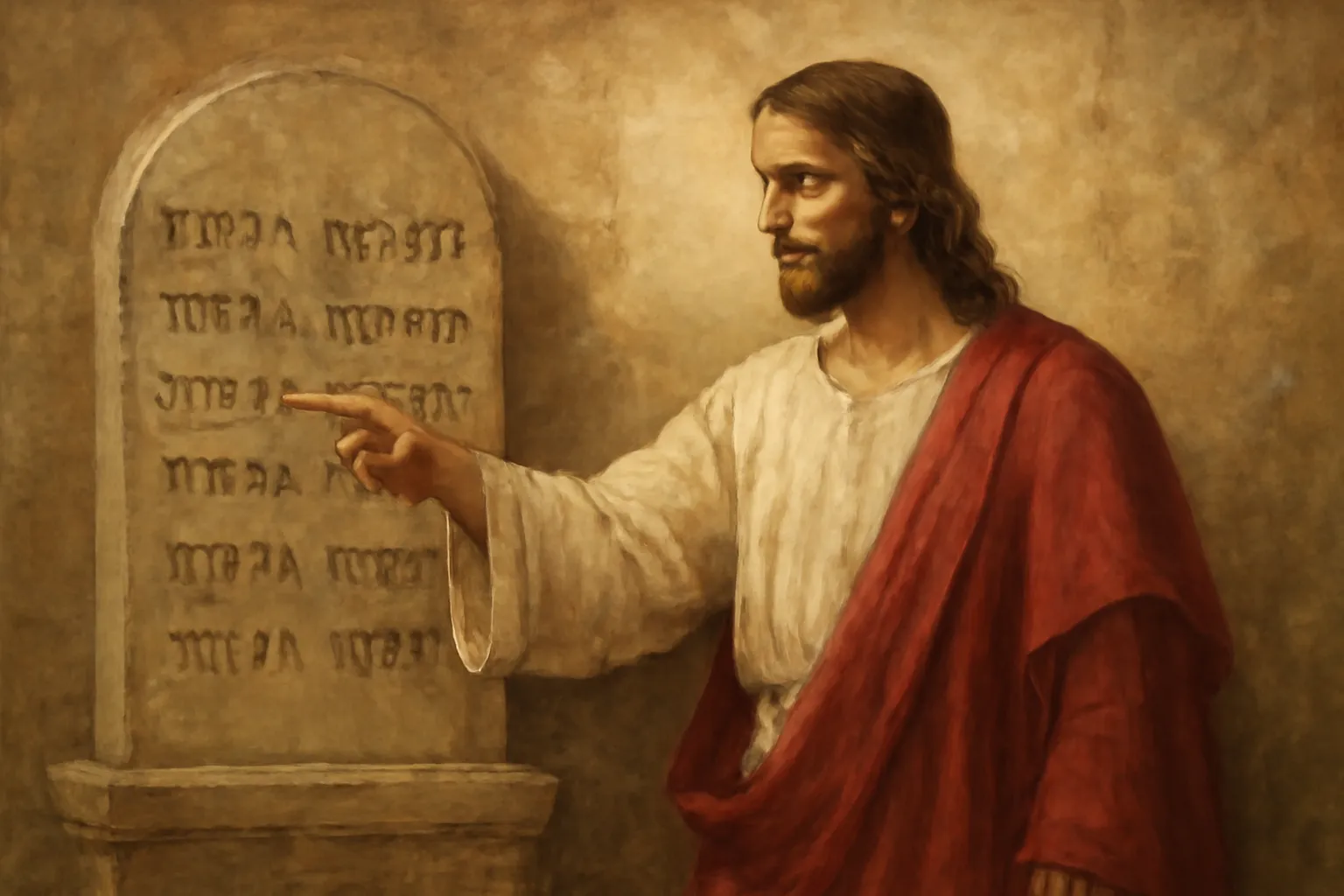
The question of how Christ fulfilled the Law sits at the center of biblical understanding for many Christians. This article offers a comprehensive, biblically grounded guide to the topic, exploring what the Law is, how Jesus fulfilled it, and what that fulfillment means for faith, ethics, and daily living. We will trace the biblical narrative from the Law’s purpose in Israel to its transformation under the New Covenant, and we will provide practical guidance for interpreting Scripture in a Christ-centered way. Throughout, you will encounter various expressions that describe the same truth: Jesus fulfilled the Law, Christ came to fulfill the Law, and the Messiah completed what the Law promised.
To say that the Messiah fulfilled the Law is to say that Jesus did what the Law required, completed its purposes, and revealed its deepest meaning. In biblical terms, fulfillment does not simply mean “finished” in a mechanical sense; it means that Jesus embodies, completes, and brings to fruition the intentions God had when he gave the Law to Israel. This includes inaugurating a new work of God in which grace, faith, and the promise of righteousness are now realized in him.
Key ideas to keep in view include:
Fulfillment and continuity: Christ did not discard the Law but deepened its meaning. The moral law remains authoritative, while ceremonial and civil aspects are fulfilled in him.
Fulfillment and prophecies: Jesus’ life, death, and resurrection are presented in the Gospels as the realization of Old Testament prophecies and types.
Fulfillment and transformation: The Law points forward to the Gospel, and the Gospel interprets the Law through the lens of grace and faith.
The Law in biblical context: moral, ceremonial, and civil dimensions
In biblical terms, the Law is often described as a comprehensive instruction given to God’s people. Scholars commonly divide it into three broad categories, though there is some overlap in practice:
Moral law — universal ethical principles that reflect God’s character and apply across cultures and eras (for example, prohibitions against murder and theft, and the call to love God and neighbor).
Ceremonial law — rites, sacrifices, calendar observances, and ritual purity laws given to the Israelites to point toward reverence, holiness, and eventual redemption.
Civil law — statutes related to governance, justice, and social order within the nation of Israel, which were tied to their unique covenantal circumstances.
Understanding these distinctions helps explain how Christ fulfilled the Law in different ways. The moral law continues to illuminate ethical living; the ceremonial law finds its culmination in Christ’s once-for-all sacrifice; and the civil law was specific to ancient Israel and does not carry the same binding force for all Christians today. Throughout this discussion, maintain the conviction that God’s ways are good, and that Jesus is the faithful interpreter of the Father’s intent for his people.
How Jesus fulfilled the Law: key avenues of fulfillment
Perfect obedience and personal righteousness
One central claim is that Christ fulfilled the Law by living a life of perfect obedience to its commands. Jesus’ righteousness stands in for the imperfect obedience of others and becomes the basis for justification by faith. When Jesus says, “I did not come to abolish the Law but to fulfill it” (a manifestation of Matthew 5:17), he signals that his life fulfills the obligations the Law imposes and shows what true faithfulness looks like in practice. This is not merely outward compliance; it is a righteousness that arises from a union with God and a heart transformed by grace.
Prophetic fulfillment and types
The fulfillment of the Law also includes the way Jesus embodies the prophetic pattern and the types embedded in the old covenant. Passages and figures point forward to Christ: Isaac bearing the wood for sacrifice, the sacrificial system, the Passover lamb, and the Day of Atonement all prefigure Jesus as the true fulfillment of those symbols. In this sense, Christ is the fulfillment of the old covenant’s “shadow” and reveals its “substance” (Colossians 2:17; Hebrews 10:1).
Ceremonial law and the sacrificial system
The ceremonial laws, with their priesthood, sacrifices, and festivals, find their ultimate relevance in the work of Christ. His death on the cross accomplishes forgiveness, reconciliation, and a new way to approach God. The writer of Hebrews emphasizes that Christ’s sacrifice is superior to animal offerings and that his body becomes the once-for-all fulfillment of ritual requirements. Thus, Christ fulfilled the Law”’s ceremonial aspect by fulfilling and surpassing the sacrificial system through his own sacrifice and resurrection.
End of the ceremonial and civil constraints for believers
As the new covenant emerges, many Christians understand that the ceremonial and civil aspects of the law no longer bind Gentile believers in every region and culture. The temple system, priestly rites, and many civil regulations were specific to Israel’s national life and worship. With the advent of the Holy Spirit and the spreading of the gospel, the church enters a new era where the gospel’s universality takes precedence. This does not negate the moral law, but it reorients how Christians live in community and culture, guided by the Spirit, not by ritual performance alone.
Theological themes: from law to gospel
The transformation from the Law to the Gospel is a major thread in Christian theology. Several interwoven themes help Christians grasp what it means that Christ fulfilled the Law:
Law and grace: The Law reveals God’s holy standard; the Gospel provides grace through faith in Christ. The two are not opposed but joined in the Person and work of Jesus.
Justification by faith: The New Testament presents righteousness as a gift received by faith, not earned by perfect adherence to the Law. This is a cornerstone of the message that Jesus fulfilled the Law in a way that enables believers to live by faith in him.
New covenant realities: The promise of the Law written on stone is replaced by the promise of the Law written on hearts (Jeremiah 31:33; Hebrews 8). The Spirit empowers believers to live out God’s purposes from within.
Christocentric hermeneutic: Interpreting Scripture through the lens of Christ’s life and work brings unity to the biblical narrative. This approach helps avoid legalism or antinomian extremes and highlights the intended meaning of the Law in light of the Gospel.
Thus, the declaration that Christ fulfilled the Law means that the old covenant’s aims—righteousness, holiness, and blessing—are now realized in Jesus, and believers participate in that fulfilled reality through faith, union with Christ, and the gift of the Spirit.
How to interpret the Bible now: guidance for Christians
Reading the Bible with the understanding that Christ fulfilled the Law shapes interpretation in several practical ways:
Keep the moral law binding as a faithful reflection of God’s character and the standard for loving God and neighbor (the two greatest commandments).
Recognize the ceremonial law as fulfilled in Christ and thus not binding in the same way for Gentile believers, though their spiritual significance remains instructive and symbolic.
Respect civil law in its historical context while recognizing its direct application to ancient Israel; apply underlying principles rather than copying cultural specifics.
Read through the lens of the Gospel: allow the life, death, and resurrection of Jesus to interpret old texts, especially prophetic and typological passages.
For example, in preaching or teaching, you might emphasize how Jesus embodies both faith and obedience. In counseling or pastoral care, you could point to the sufficiency of Christ’s work for forgiveness and renewal, rather than urging people to try harder by legalistic rules. This Christ-centered approach helps avoid both legalism and moral laxity by maintaining fidelity to the unified witness of Scripture.
Practical implications for daily living
Understanding that Christ fulfilled the Law has tangible consequences for how Christians live day to day. Here are some practical directions:
Live under grace, not under law
Believers are invited into a relationship with Christ powered by grace, not by a checklist of external requirements. This means dependence on the Holy Spirit for growth, transformation, and obedience, rather than relying on personal effort apart from God’s empowering presence.
Love as the summary of the Law
Jesus summarized the Law by commanding us to love God with all our heart, soul, mind, and strength, and to love our neighbor as ourselves. In light of Christ’s fulfillment of the Law, the church can interpret obedience as a love response to God’s gift in Christ, rather than mere rule-keeping.
Ethics in community and culture
With ceremonial and civil laws understood in their historical context, Christians can shape ethical decisions in contemporary settings by applying moral principles that reflect God’s character, guided by the Spirit and grounded in Scriptures that reveal Jesus as the ultimate fulfillment of all God’s purposes.
Scripture study and spiritual formation
Studying how Christ fulfilled the Law can enrich private devotions and group study. Suggested practices include: tracing typology from Old Testament passages to their New Testament fulfillments; noting how Jesus redefines purity, worship, sacrifice, and justice; and applying the Gospel’s implications to personal transformation and mission.
Common questions about the fulfillment of the Law
Many readers have questions about how this doctrine works in practice. Here are some common queries with concise responses:
Did Jesus abolish the Law? Not exactly. He fulfilled it and reinterpreted it through the gospel. The moral law remains binding, while ceremonial and civil laws are fulfilled in him and thus no longer binding as legal requirements for believers in most contexts.
Are Christians under the Ten Commandments? Yes, in the sense that they reflect God’s eternal moral character. The command to love God and neighbor remains foundational, and the Ten Commandments continue to guide ethical living, though their enforcement is now through grace and the Spirit, not through ritual observance alone.
What about Sabbath observance? The New Testament presents a shift in how Sabbath rest is understood. Some traditions emphasize a weekly day of rest and worship, while others stress sabbath rest as a pattern rooted in creation and fulfilled in Christ, now lived out in faith and worship in Christ’s body, the Church.
How should we treat Old Testament ceremonial laws today? Interpret them as fulfilled in Christ; learn their spiritual lessons, symbolism, and historical function, but apply them in light of the Gospel rather than legalistic imposition.
What is the relationship between law and grace in mission? The Church’s mission expands as the Gospel extends beyond Israel to all nations. The fulfillment of the Law in Christ makes the message of grace accessible to everyone and empowers transformed living for all believers.
Case studies: how the fulfillment of the Law informs biblical interpretation
To illustrate the practical impact of this doctrine, consider two brief case studies:
Case study A: The command to love In Jesus’ words, the two greatest commandments summarize the Law. Christians often begin with this by asking, “What does love require in this situation?” This approach aligns with the idea that the Law’s moral core remains intact, while the ceremonial and civil aspects are reinterpreted in light of Christ’s work.
Case study B: Worship and sacrifice In the New Covenant, Jesus is the ultimate sacrifice. How we worship is not about repeated sacrifices but about responding to God’s grace through Christ with praise, prayer, generosity, and service—the fruits of a life transformed by the Gospel.
Resources for further study
For those who want to study more deeply, here are categories and suggestions that honor the structure of the fulfilled Law in Christ:
New Testament studies: Romans, Galatians, Hebrews, and Colossians provide focused insights into justification, law, grace, and the significance of Christ’s work for both Jews and Gentiles.
Gospel accounts: Matthew, Mark, Luke, and John show Jesus’ teachings and actions in relation to the Law, including the Sermon on the Mount and the fulfillment motifs in Jesus’ ministry.
Old Testament types: Passover, the Day of Atonement, the sacrificial system, and prophetic passages illuminate how Christ fulfills what the Law pointed toward.
Systematic theology resources: Works that discuss the relationship between Law, Gospel, Covenant, and Spirit can help readers integrate the topic into their broader faith framework.
embracing the fulfilled Law in daily faith
In summary, the statement that Christ fulfilled the Law is not merely a doctrinal claim; it is the basis for a transformative faith. It assures believers that Jesus is the faithful Son who obeyed God’s standard, bore humanity’s failure, and opened a new way to know God through grace. The old legal system pointed to God’s holy character and his plan of salvation; the new covenant reveals that plan fulfilled in the person and work of Jesus. For Christians today, this means living in gratitude, empowered by the Spirit, and guided by a Christ-centered interpretation of Scripture. It means embracing grace and obedience together, living out the love command, and bearing witness to the one who fulfilled the Law and established the path to eternal life.
As you continue to study, may you grow in recognizing how the Messiah fulfilled the Law and how that fulfillment invites you into a living, vibrant relationship with God through Jesus Christ.