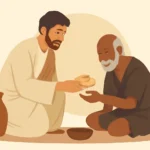
The Bible places loving God and loving others at the center of a life of faith. Across books, authors, and centuries, this ordered pair forms what many theologians call the Great Commandment: to love God with all you are, and to love your neighbor as yourself. In this article, we explore a wide range of verses that speak to loving God and loving others, show how they connect, and offer practical ways to live them out in daily life. We’ll look at variations of the theme, from direct commands to ethical exhortations, and we’ll consider how different parts of Scripture harmonize to form a coherent call to action, not merely to feeling but to doing.
The foundation of biblical love is directional: toward God. One of the most explicit statements is when Jesus encapsulates the greatest commandment as a twofold duty: to love God with all one’s being, and to love one’s neighbor as oneself. In the Gospel of Matthew, the Lord Jesus declares:
“Thou shalt love the Lord thy God with all thy heart, and with all thy soul, and with all thy mind.” (Matthew 22:37, KJV)
“This is the first and great commandment.” (Matthew 22:38, KJV)
“And the second is like unto it, Thou shalt love thy neighbour as thyself.” ( Matthew 22:39, KJV)
The wording points to a total, undivided devotion. The heart, the soul, and the mind are not compartmentalized when it comes to God; they are invoked in love that covers every dimension of a person. The phrase “first and great” signals both priority and gravity: nothing else may rightly displace the supreme allegiance to God.
Love God with Every Dimension of Life
Related verses echo and deepen the same idea, often with a slightly adjusted emphasis to highlight different facets of devotion:
Deuteronomy 6:5 — “And thou shalt love the LORD thy God with all thine heart, and with all thy soul, and with all thy might.” This command, given to Israel, grounds present obedience in unwavering affection toward the one true God.
Luke 10:27 — “And he answering said, Thou shalt love the Lord thy God with all thy heart, and with all thy soul, and with all thy strength, and with all thy mind; and thy neighbour as thyself.” The Gospel reader sees a synthesis: ardor for God accompanied by concern for others, integrated as a unified commandment.
John 14:15 — “If ye love me, keep my commandments.” Loving God expresses itself in obedience, trust, and fidelity to Jesus’s teaching.
Theologically, these passages do not merely command an emotional sentiment; they call for a living relationship characterized by allegiance, trust, and transformative action. The lover of God is visible not only in posture or worship but in daily fidelity to God’s will.
Exploring the Concept of “Love” in the Biblical Language
The Bible often uses several Greek and Hebrew terms interchangeably in discussing love, but with nuances:
Ahavah (Hebrew) often conveys covenantal love, commitment, and deep bond.
Agape (Greek) emphasizes selfless, benevolent, choosing love that seeks another’s good.
Philia (Greek) describes affectionate friendship and mutual regard.
When Scripture commands the people to “love God,” it typically envisions ahavah directed toward the Creator—rooted in gratitude, obedience, and reverence. When it commands love for neighbor, agape and related terms underscore a steadfast, costly, and practical generosity toward others. Together, these linguistic shades help readers understand that biblical love is both internal disposition and outward action.
ESV and NIV emphasize clarity and readability while preserving the command’s integrity: “Love the Lord your God with all your heart…”
NLT and CSB offer contemporary language that highlights the personal relationship with God in daily life.
Regardless of the translation, the essential exhortation remains: love God with every part of yourself, and let that love propel you into a life that honors Him. The variations help believers see the breadth of application—heart, soul, mind, strength—and the consequences for how we live and treat others.
What the Bible Says About Loving Others
The Command to Love Your Neighbor
The command to love others—often phrased as “love thy neighbour as thyself”—appears repeatedly in Scripture, anchoring ethical behavior in neighborly regard. The core biblical injunction is universal, addressing friends and strangers alike, and even enemies in some contexts:
Leviticus 19:18 — “Thou shalt not avenge, nor bear any grudge against the children of thy people, but thou shalt love thy neighbour as thyself: I am the LORD.”
Matthew 22:39 — “And the second is like unto it, Thou shalt love thy neighbour as thyself.”
Romans 13:8-10 — “Owe no man anything, but to love one another: for he that loveth another hath fulfilled the law. Love worketh no ill to his neighbour: therefore love is the fulfilling of the law.”
The command is not merely a feeling but an active, ethical stance toward others. It is framed as a fulfillment of “the law” because the ethical center of biblical guidance is relational: how we treat others is a concrete measure of faithfulness to God.
Love in Action: Key Texts Emphasizing Others
Several passages illuminate how love for others should express itself in concrete acts of service, mercy, and justice:
Galatians 5:14 — “For all the law is fulfilled in one word, even in this; Thou shalt love thy neighbour as thyself.” The call to neighbor-love is presented as the summary of ethical living.
John 13:34-35 — “A new commandment I give unto you, That ye love one another; as I have loved you, that ye also love one another. By this shall all men know that ye are my disciples, if ye have love one to another.”
1 John 4:20-21 — “If a man say, I love God, and hateth his brother, he is a liar: for he that loveth not his brother whom he hath seen, how can he love God whom he hath not seen?”
These verses connect the love of God with tangible love of people. The faith that loves God is not known only by what one believes about God, but by how one treats the vulnerable, the stranger, and the neighbor in practical ways.
Love as the Measure of True Faith
In addition to direct commandments, Scripture pictures love as a benchmark against which true faith and spiritual maturity are measured:
1 John 4:11 — “Beloved, if God so loved us, we ought also to love one another.”
1 John 4:19-21 — “We love him, because he first loved us… If a man say, I love God, and hateth his brother, he is a liar.”
James 2:8 — “If ye fulfil the royal law according to the scripture, Thou shalt love thy neighbour as thyself, ye do well.”
The consistent thread is that love for God is inseparable from love for people. The Bible argues that genuine worship is proven by ethical living—caring for others, seeking justice, and bearing one another’s burdens.
Love in the Context of Community and Justice
Loving others goes beyond private piety and extends to community life. Some verses emphasize justice, mercy, and compassion as expressions of neighbor-love:
Romans 13:8 — “Owe no man anything, but to love one another: for he that loveth another hath fulfilled the law.”
1 John 3:17 — “But whoso hath this world’s good, and seeth his brother have need, and shutteth up his bowels of compassion from him, how dwelleth the love of God in him?”
James 2:14-17 — “What doth it profit, my brethren, though a man say he hath faith, and have not works? can faith save him?… even so faith, if it hath not works, is dead.”
The exhortation is not to mere sentiment but to active concern for others—especially those in need, those who are marginalized, and those who are vulnerable. Love thus has social and communal dimensions, shaping attitudes toward poverty, oppression, and injustice.
The Great Commandment Across Variations and Contexts
Harmonizing the Command with Everyday Life
The Great Commandment is not just a theological statement; it is a clarion call to align life with God’s design for humanity. When we read the commandments together—loving God and loving neighbor—we encounter a comprehensive ethic: worship, obedience, mercy, justice, and relational integrity across all spheres of life.
For example, the Lord’s Prayer, while focusing on worship and petition, is often read in the context of genuine love that seeks God’s kingdom to come in power, mercy, and transformation. The life of a community that embodies love will be characterized by:
Hospitality to strangers and the vulnerable
Mercy and forgiveness within families and communities
Truth-telling and justice that protect the weak and uplift the oppressed
Mutual encouragement in times of trial and sorrow
These practices reveal the truth of love: it remains active, concrete, and costly. It costs us time, comfort, and sometimes reputation to place others’ needs alongside or above our own.
Parallels in the Writings Beyond the Gospels
The Bible’s tapestry shows echoes of the Great Commandment in varied voices:
Romans 12:9-10 — “Let love be without dissimulation. Abhor that which is evil; cleave to that which is good. Be kindly affectioned one to another with brotherly love; in honour preferring one another.”
Ephesians 4:32 — “And be ye kind one to another, tenderhearted, forgiving one another, even as God for Christ’s sake hath forgiven you.”
Colossians 3:12-14 — “Put on therefore, as the elect of God, holy and beloved… And above all these things put on charity, which is the bond of perfectness.”
Taken together, these passages remind readers that loving God and loving neighbor are not competing demands but joined threads that weave a life of integrity, to the glory of God and the good of others.
Living It Out: Practical Ways to Practice Love
In Worship and Prayer
Let gratitude shape praise by naming God’s mercies and asking for a heart that loves as He loves.
Center petitions on transformation—not only personal comfort but the growth of love toward God and toward neighbors in need.
Practice Sabbath and rest as a way to reorient life toward God and away from constant self-centeredness, creating space to serve others.
In Relationships at Home and in Community
Practise active listening—to understand before judging, to validate others’ experiences, and to respond with grace.
Offer forgiveness proactively when wrongs occur, knowing forgiveness aligns with God’s own mercy toward us.
Serve one another—small acts of service, hospitality, and generosity often speak louder than grand declarations of love.
Advocate for the vulnerable—use your voice and resources to promote justice and relieve oppression where possible.
Work with integrity and fairness, treating coworkers and clients with respect and honesty.
Support charitable causes that help the poor, the marginalized, and the oppressed, translating faith into acts of mercy.
Engage across differences—learn from people with different backgrounds, practicing humility and curiosity while seeking common good.
Learning and Growth Practices
Study the Word to understand how love is defined and demonstrated in Scripture.
Join a community of believers that models love in action and holds one another accountable in love.
Practice personal reflection—invite God to expose areas where love is misplaced or where fear or prejudice blocks neighbor-love.
Questions People Often Ask About Loving God and Loving Neighbor
What does it mean to love God with all your heart, soul, and mind in everyday life?
It means aligning the whole person—emotions, will, intellect, and actions—with God’s will as revealed in Scripture. It includes worship, obedience, pursuing righteousness, and seeking to honor God in every decision. Love for God impacts values, time, priorities, and goals, guiding choices to reflect God’s character in the world.
Biblical love, especially agape, is not an emotion detached from reality; it is a deliberate, steadfast commitment to the good of another, even when it costs us. Practical steps include listening, showing mercy, setting healthy boundaries when needed, praying for the person, and asking God to soften hard hearts. The goal is reconciliation, transformation, and, where possible, restored relationship.
Is loving neighbors always safe or easy?
Not always. Scripture does not promise safety or ease, but it does promise presence and empowerment from God. Love calls believers to pursue justice and mercy, sometimes at personal cost. The gospel ultimately enables believers to forgive, endure, and persevere in love, knowing that God’s love first reached out to us in Jesus Christ.
The Bible’s teaching on loving God and loving others forms a synergistic ethic: genuine love for God manifests as obedience and worship that spill over into love for neighbor. Conversely, love for neighbor testifies to authentic love for God, as Jesus indicated that the two commandments are inseparable. Across the witness of Scripture—from the Law to the Gospels, through Paul’s letters and John’s writings—the invitation remains the same: to pursue a life where devotion to God and service to others are inseparable and mutually reinforcing.
As you meditate on the verses above, consider how each one can shape your daily routines, relationships, and communities. Whether you are new to the Bible or have walked the faith for decades, there is always more to learn about the breadth and depth of God’s love and the practical outworking of that love toward others. May you grow in affection for God, deepen compassion for neighbors, and become a person whose life testifies to the transformative power of love that is rooted in God.
For further reflection, you might revisit the core verses in different translations, keeping the same essential message before your heart: put God first in every area of life and let that love flow outward in acts of kindness, mercy, and justice toward all people. In doing so, you participate in a story that is larger than yourself—the story of a God who loves, and a people who learn to love in return.
Introduction to Bible SMS Messages Bible SMS messages are short, shareable drops of spiritual encouragement designed for the compact format of text messaging. In a world where daily life moves quickly, a well-chosen verse or a thoughtful paraphrase can arrive just when someone needs it most. This article explores how to craft uplifting Bible messages…
Bible Verse About Friday: Find Hope and Strength in Scripture Fridays in the Bible carry a distinct resonance. They are often described as the day of preparation, a moment when labor on earth gives way to a sacred pause before the Sabbath. For Christians, Friday also marks Good Friday, the day when the crucifixion of…
Introduction to Bible Short Messages: Short Bible Messages for Daily Inspiration In a fast-paced world, a pocket-sized source of wisdom can make a big difference. Bible short messages are concise, clear, and powerfully uplifting statements drawn from Scripture or inspired by biblical themes. These brief messages are designed to be memorable, easy to recall, and…
Understanding God’s Glory in Scripture Across the pages of the Bible, the glory of God stands as a central, radiant theme. It is not merely a word about brightness or splendor; it is a profound declaration of who God is, how He acts, and what He desires for creation. When the Bible speaks of God’s…
Discovering a Promise in Scripture In a world full of uncertainties, the idea that God has a plan for you can feel like a steadying anchor. This article explores the biblical theme that your life is not random or accidental, but known, valued, and guided by a personal Creator. We will walk through what it…
The Comfort of a God Who Is Always With Us Across the pages of Scripture, a consistent and deeply reassuring theme runs from ancient times to the advent of Christ and into the early church: God is with us. This message appears in poetic psalms, in prophetic announcements, in the life of Jesus, and in…