The Bible Verses Good Samaritan and the Rich Thread of Kindness
The story commonly known as the Good Samaritan has become a canonical touchstone for kindness, mercy, and practical charity in the Christian tradition. Yet the message does not reside only in one parable; it is echoed across a tapestry of biblical verses that expand, deepen, and translate the spirit of the Good Samaritan into everyday life. This article gathers and explains passages on kindness and charity under the umbrella of the Good Samaritan theme, offering direct verses, paraphrased insights, and guidance on how readers can embody these teachings in modern contexts.
Throughout the Bible, the concept of loving one’s neighbor—even those who are different or distant—receives sustained attention. By studying verses that illuminate this virtue, readers can gain a practical framework for compassionate action: who to help, how to help, and why the act of helping matters to God and to the community. In what follows, you will find a careful survey of the core Luke narrative, along with a broader set of verses that resonate with the Good Samaritan’s ethos. The aim is not merely to admire a story of old but to equip readers with a living, actionable ethic that honors human dignity and serves the common good.
The Parable of the Good Samaritan (Luke 10:25-37)
Context and setup
The parable of the Good Samaritan unfolds within a question-and-answer moment about eternal life and the greatest commandment. A lawyer asks Jesus what he must do to inherit eternal life. Jesus replies by inviting him to recite the core commandments, and the man answers with a summary that focuses on love for God and love for neighbor. The narrative then pivots to a practical test of neighbor-love in the most ordinary, risky, and culturally charged circumstances.
What happens in the story
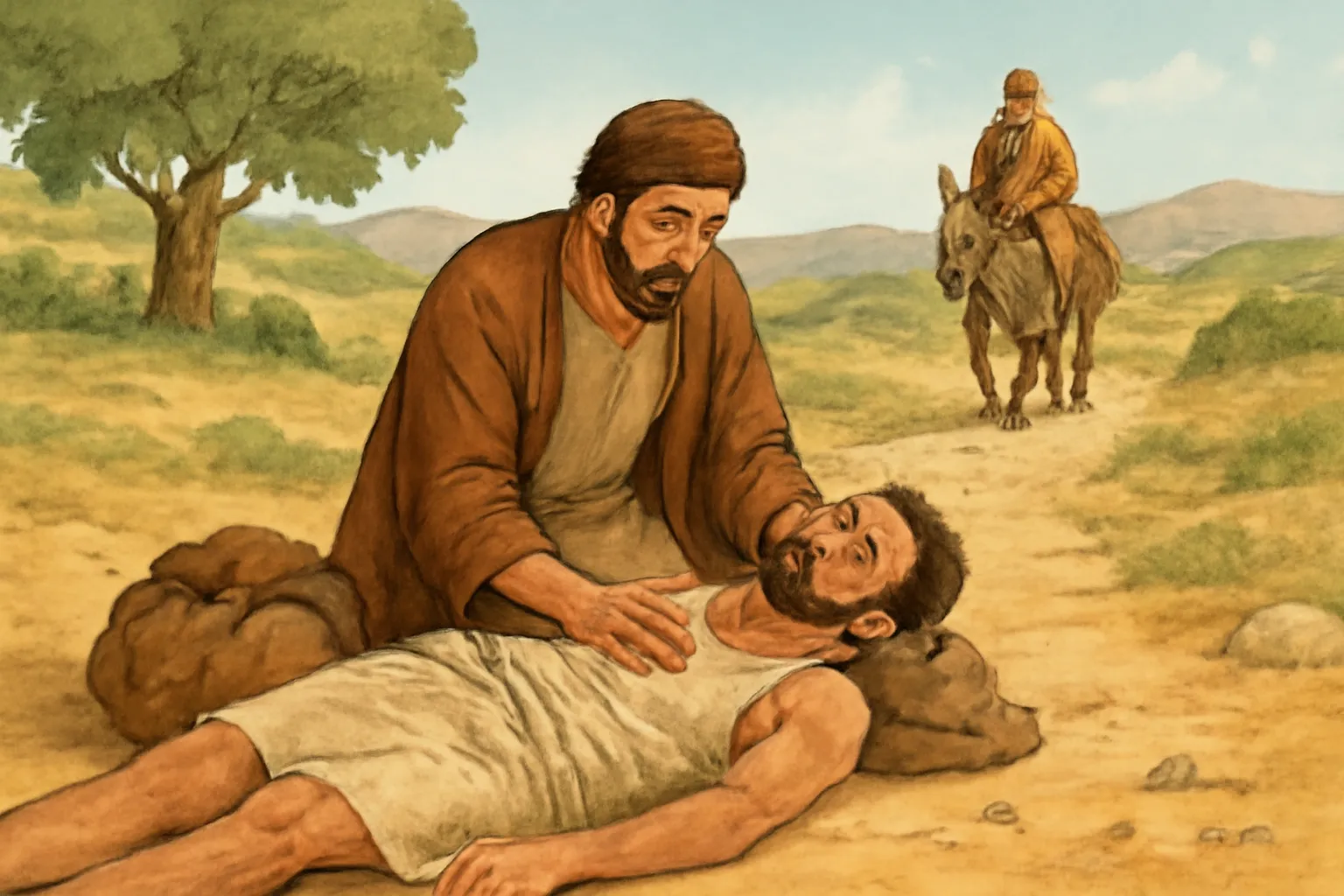
In the road-worn scene from Jericho, a traveler is attacked by robbers and left injured. A succession of people passes by:
The Priest and the Levite, who see the man but cross to the other side.
A Samaritan, who, despite deep social enmity between Jews and Samaritans, stops, binds wounds, and shows generous care.
The Samaritan tends to the injured man, takes him to an inn, and pays for his care, even promising to cover further expenses. The story culminates with the command to “Go, and do thou likewise” (Luke 10:37), making the parable a practical template for how to respond to human need.
Key phrases to remember
The parable is compact, but its imagery is precise: compassion on the injured, generosity toward the vulnerable, and a breaking down of prejudice in the interest of neighbor-love. When you hear the phrase “Go, and do thou likewise”, let it be a prompt to translate belief into action—whether in daily errands, workplace relationships, or community life.
Core Themes: Compassion, Neighbor Love, and Practical Charity
The Good Samaritan narrative foregrounds a set of inseparable themes that recur in many biblical passages. These themes are not merely abstract ideals; they are ethical obligations that shape behavior, social relationships, and communal responsibility.
Compassion is not a feeling that ends in sentiment; it is a discernible action that interrupts indifference. The Samaritan’s compassion is tangible: he binds wounds, takes the injured man to an inn, finances care, and ensures ongoing support. The text invites readers to cultivate a posture of mercy that translates into concrete deeds.
Love of neighbor across boundaries
The neighbor in Jesus’ teaching is not limited to one’s geographic or ethnic circle. The Good Samaritan embodies a radical redefinition of “neighbor,” urging readers to extend mercy beyond social familiarity and to include even those who are culturally distant or morally suspect. This widening of the circle is a recurring biblical motif: mercy is universal, but practical acts of kindness are often personal and costly.
Charity as a moral and social good
The biblical concept of charity often intersects with justice. It is not merely an inward virtue but a form of social participation that supports the vulnerable, sustains the weak, and alleviates human suffering. This is a corrective to individualism and a booster to communal life, reminding readers that generosity strengthens the health and dignity of society as a whole.
Mercy as a test of discipleship
The Good Samaritan is framed as a test: does one’s faith translate into action when faced with human need? Other biblical passages echo this same conviction—faith accompanied by works, love expressed in deeds, and a life shaped by mercy that becomes a public witness to God’s character.
Bible Verses about the Good Samaritan and Related Teachings
Direct verses from Luke and related moments
The core Luke passage is brief but loaded with meaning. Here are key verses to study, memorize, and reflect upon:
Luke 10:30-33: A traveler is beaten and left for dead; a Priest and a Levite pass by, while a Samaritan stops to help. The moment you read this, consider who you might overlook and what it would take to respond with mercy.
Luke 10:33-34: “But a certain Samaritan, as he journeyed, came where he was: and when he saw him, he had compassion on him, and went to him, and bound up his wounds, pouring in oil and wine.” This line captures the essence of compassionate care as an intentional act.
Luke 10:37: “Go, and do thou likewise.” The imperative here is clear: imitate the Samaritan’s mercy in your own life.
Verses that echo the Good Samaritan in broader moral terms
Beyond Luke, the Bible repeatedly calls readers to extend kindness to those in need, to treat others as they would want to be treated, and to actively bear one another’s burdens.
Matthew 22:39 – “Love your neighbor as yourself.” This commandment anchors the Good Samaritan ethos within the larger law of love.
Luke 6:31 – The Golden Rule: “And as ye would that men should do to you, do ye also to them likewise.” Mercy is reciprocal in intention and in practice.
Romans 12:9-13 – A declaration of authentic love behaving graciously towards others, including hospitality and generosity.
Galatians 6:2 – “Bear ye one another’s burdens, and so fulfill the law of Christ.” Caring for others is a concrete burden-bearing act.
James 2:14-17 – “Faith without works is dead.” The connection between belief and charitable deeds is explicit here, reinforcing the idea that generosity is a visible sign of inner faith.
1 John 3:17 – “But whoso hath this world’s goods, and beholds his brother in need, and shutteth up his bowels of compassion from him, how dwelleth the love of God in him?” A stern reminder that material solidarity reveals true love.
Hebrews 13:16 – “Do not neglect to do good and to share with others, for such sacrifices please God.” Mutual care is a form of worship.
Acts 20:35 – “It is more blessed to give than to receive.” The blessing of generosity is celebrated in the earliest Christian communities.
Paraphrased or variation-focused verses for semantic breadth
Some readers benefit from paraphrase-style renditions that preserve the core intent while speaking in contemporary language. The following paraphrases capture the same neighbor-love and charity spirit found in the canonical verses:
“When you see someone in need, stop, help, and pay what’s necessary to keep them cared for.” (Paraphrase of Luke 10:34-35, focusing on practical mercy)
“Treat others as you wish to be treated, even when it costs you something.” (Paraphrase of Luke 6:31; Matthew 7:12)
“True faith is measured by acts of kindness that uplift those who cannot repay you.” (Paraphrase of James 2:14-17)
“Let charity become your daily habit—open your hands and your heart to those in need.” (Paraphrase of Hebrews 13:16 and Romans 12:13)
How these verses inform interpretation
The Good Samaritan passage functions as a narrative argument for compassionate action. The surrounding verses and related scriptures offer a theological frame: love is not merely a sentiment but an ethical impulse that reshapes behavior toward neighbors who are near and far, known and unknown. Taken together, these passages form a coherent curriculum for moral formation: read, reflect, and act in ways that visibly demonstrate mercy, generosity, and hospitality.
Preferred translations and considerations
If you study these verses in different Bible translations, you’ll notice subtle variations in tone, emphasis, and wording. Whether you study in the King James Version (KJV), the English Standard Version (ESV), the New International Version (NIV), or the New Revised Standard Version (NRSV), the essential call remains: to embody neighbor-love through tangible acts of mercy and generosity. Consider keeping a small journal of verses that speak most directly to your life circumstances and reviewing them during times of need or opportunity.
Practical Applications: How to Live Like the Good Samaritan Today
The biblical image of the Good Samaritan translates into a wide set of practical disciplines. Below are actionable steps, organized for personal growth, community life, and public service.
Personal habits that cultivate mercy
Notice and name needs: Train yourself to notice suffering, injustice, and hardship around you—whether in your home, workplace, or neighborhood.
Move from noticing to acting: Develop a habit of asking, “What can I do right now to help?” rather than postponing or rationalizing inaction.
Budget for mercy: Allocate time, money, and resources for acts of kindness—whether a meal for a struggling friend, paying for a neighbor’s utilities, or donating to a shelter.
Communal and family practices
Hospitality as a practice: Open your table and home to guests, refugees, or those in transition. Hospitality strengthens community bonds and models mercy for children and peers alike.
Volunteer and serve: Volunteer with charities, food banks, medical clinics, or outreach programs. Consistency matters more than intensity.
Mentor and invest: Use your skills to empower others—tutoring, career coaching, mentorship, or sharing professional networks with those who lack access.
Ethical and spiritual reflections
Reflect on boundaries: Mercy should be wise. Learn to discern when to help directly, connect someone with professional services, or advocate for systemic change to alleviate root causes of need.
Pray and seek guidance: Bring your acts of kindness before God in prayer—asking for wisdom, courage, and resilience in mercy-filled action.
Share stories of mercy: In families and churches, tell stories of practical kindness to encourage others and to normalize compassionate decision-making.
At work: Offer support to a stressed colleague, mentor a new employee, or help someone balance heavy workloads.
In traffic or public spaces: Show patience, assist someone who is lost, or help a stranger with a heavy load.
In your community: Volunteer for neighborhood cleanups, food drives, or crisis-response teams.
Frequently Asked Questions about the Good Samaritan and Bible Verses
What exactly distinguishes the Good Samaritan from other charity stories?
The distinctive feature is the reversal of expectations: the hero is not the neighbor closest in social proximity or moral standing, but a member of a group traditionally seen as an enemy. This reversal enlarges the circle of who qualifies as a neighbor and who is entitled to mercy.
How should modern readers balance mercy with personal safety and responsibility?
The biblical vision encourages courage and discernment. It urges generosity, but it does not require reckless risk. Contemporary readers can exercise prudent mercy by seeking to help in safe ways, connecting people to appropriate local resources, and supporting systemic solutions that reduce vulnerability.
Can these verses be applied in non-Christian settings?
Yes. The ethical core—care for the vulnerable, treat others with dignity, and practice generosity—transcends religious boundaries. Many people of different faiths and humanistic values find these same virtues compelling for building humane communities.
How can one teach children about the Good Samaritan?
Use age-appropriate stories, role-playing, and concrete acts of service. Emphasize the values of kindness, empathy, and responsibility. Encourage children to look for small, practical ways to help others in daily life, and model these behaviors consistently.
The Good Samaritan narrative is not a distant tale but a living template for neighbor-love, charity, and compassion. When paired with the wider catalog of biblical verses on kindness, the parable offers both a story that captures the imagination and a tradition that guides daily actions. By meditating on Luke 10:25-37 and engaging with related scriptures—such as the call to love one’s neighbor in Matthew 22:39, the practical care urged in Romans 12 and Galatians 6, and the ethical insistence on deeds in James and 1 John—readers gain a robust, actionable framework for mercy.
The goal is simple in theory and profound in practice: to embody the spirit of the Good Samaritan by recognizing the humanity of every person, welcoming need with courage, and offering sustainable support that respects dignity. If you commit to regular acts of mercy—whether a small daily kindness or a meaningful long-term project—you participate in a long-standing biblical tradition. In doing so, you answer the call to Go, and do thou likewise, not as a solitary gesture but as a shared rhythm of life within a faith community and beyond it.
As you continue to explore these biblical verses on kindness and integrate their lessons, consider keeping a personal or family practice: a small journal of mercy moments, a weekly plan for service, and a habit of reflection on how neighbor-love can reshape relationships, institutions, and the social fabric for the better.
Across the pages of Scripture, the theme of second chances appears repeatedly as a core throughline—not as a one-time moment, but as a rhythm of mercy, repentance, and restoration. The Bible speaks to human failure without abandoning us to it. It offers redemption, hope, and renewal as real possibilities for people and communities who turn…
Overview: Bible Verses About Love and Marriage in the King James Version (KJV) The King James Version (KJV) of the Bible remains one of the most enduring translations for readers seeking romance, commitment, and spiritual guidance on matters of love and marriage. This article gathers a wide range of verses from the KJV, presenting them…
Esther is one of the most powerful stories in the Bible about courage, faith, and deliverance. In this book, a Jewish orphan becomes queen, a plot unfolds in the Persian Empire, and a people is saved through bold trust in God and wise human action. The verses in Esther teach readers how to respond to…
John 13:34 is often cited as a cornerstone of Christian ethics: a directive from Jesus to his followers to treat one another with a deepest form of love. In many translations the verse is framed as a new commandment to love one another, with a clear model: as I have loved you. This article unpacks…
What it Means to Stand With Israel Biblically In recent decades, the phrase “stand with Israel” has appeared in sermons, articles, prayer meetings, and public discourse across many faith communities. While the political and historical dimensions of the modern state of Israel can be complex, the biblical record offers a set of foundational ideas about…
Overview: Bible Verses About Standing With Israel The phrase standing with Israel is commonly used by readers of the Bible to describe a stance of support, blessing, and prayers for the Jewish people and the land promised to them by God. This article gathers biblical verses that believers often reference when reflecting on what it…