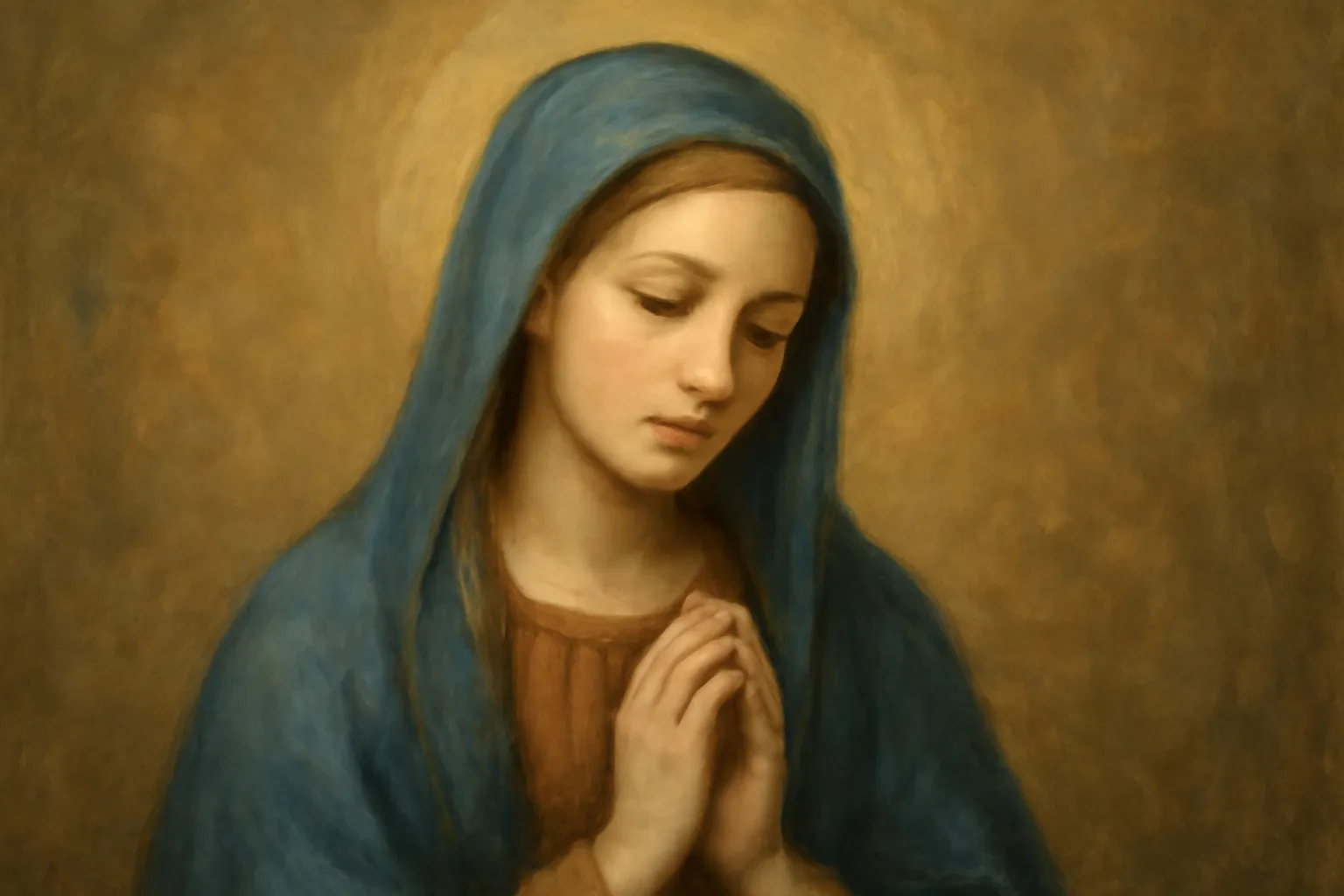
is one of the most enduring and influential canticles in the Christian tradition. Found in the Gospel of Luke, it is a prayerful poem spoken by Mary after her visit with Elizabeth. Across centuries and across cultures, the Magnificat has echoed in liturgy, music, theology, and art. This article offers an in-depth look at Mary’s prayer song—its lyrics, its meaning, and its history—with attention to how the text has been read, sung, and reinterpreted in different eras and traditions.
In most Christian circles, Mary’s Prayer Song is more commonly known as the Magnificat, a canticle or poem that Mary speaks in response to the news of Elizabeth’s pregnancy. The Magnificat is found in the Gospel of Luke, usually placed after the account of the Annunciation and before the birth narrative. It is beloved for its bold imagery of divine justice, mercy, and reversal—an embrace of the humble and a challenge to the proud.
The Magnificat has earned its place as a central text in Christian worship and devotion. It is not merely a personal prayer of Mary; it is often understood as a proclamation that God’s kingdom disrupts human hierarchies and redefines social value. The language is rich with rich biblical motifs: mercy, faithfulness to the promises made to Abraham and his descendants, and a note of social reversal where the lowly are elevated and the mighty are brought down.
Because the Magnificat resonates with numerous religious, cultural, and artistic currents, it has become a touchstone for discussions of humility, justice, and divine mercy in world history. In this article, we will explore the lyrics, unpack the meaning, and trace the history of Mary’s prayer song—from biblical origins to its vast musical and liturgical legacy.
Lyrics: The Magnificat
The text of the Magnificat appears in Luke 1:46-55 in the New Testament. Because there are several traditional translations, readers often encounter multiple renderings in English. Below are two well-known translations to illustrate how the language can vary while preserving the same core meaning. Each version is presented to illuminate the core phrases that have shaped centuries of devotional life.
Luke 1:46-55 (King James Version)
And Mary said, My soul doth magnify the Lord,
And my spirit hath rejoiced in God my Saviour.
For he hath regarded the low estate of his handmaiden: for behold, from henceforth all generations shall call me blessed.
For he that is mighty hath done to me great things; and holy is his name.
And his mercy is on them that fear him from generation to generation.
He hath showed strength with his arm; he hath scattered the proud in the imagination of their hearts.
He hath put down the mighty from their seats, and exalted them of low degree.
He hath filled the hungry with good things; and the rich he hath sent empty away.
He hath helped his servant Israel, in remembrance of his mercy;
As he spoke to our fathers, to Abraham, and to his seed for ever.
For behold from henceforth all generations shall call me blessed.
For he that is mighty hath done great things to me; and holy is his name.
And his mercy is from generation to generation to them that fear him.
He hath showed strength with his arm: he hath scattered the proud in the conceit of their hearts.
He hath put down the mighty from their seat, and hath exalted the humble.
He hath filled the hungry with good things, and the rich he hath sent empty away.
He hath helped his servant Israel, in remembrance of his mercy.
As he spoke to our fathers, to Abraham and to his seed for ever.
Note on translations: the exact wording shifts with each tradition, but the essential lines—Mary praising God, the reversal of social orders, and God’s mercy—remain constant. Many modern Bibles, including the NIV and NRSV, render the Magnificat with more contemporary diction, while still preserving the canonical structure and key phrases. In liturgical contexts, you may also encounter Latin texts of the Magnificat, as well as paraphrased paraphrases used in various hymnals and worship songs. Across languages, the Magnificat often serves as a bridge between biblical narrative and devotional poetry.
Across translations, certain phrases gain emphasis that can influence interpretation. For example, the phrase “magnify the Lord” serves as a theological center, highlighting Mary’s action of giving praise and credit to God. Other translators stress the verb forms that signal God’s mercy, faithfulness to Abraham’s descendants, and the sustenance of the hungry. These variations are not simply stylistic; they reveal how different communities hear the same ancient text in ways that align with their liturgical calendars, theological traditions, and social concerns.
In addition to the biblical text itself, its recitation and singing have shaped countless musical settings. The Magnificat is a favorite text for choral composers, orchestral works, and even simple congregational hymns. The sense of joy and reverence in Mary’s words invites rich interpretive choices—whether in a somber evening prayer or a jubilant procession of praise.
Meaning and Themes: What the Magnificat Teaches
The Magnificat is a compact poem that layers several theological and ethical claims. While its language is sacred, its themes speak to human experience in every era. Below are some of the most discussed motifs and how readers—past and present—have understood them.
Humility and Reversal
Humility sits at the heart of Mary’s song. The opening line centers God, not Mary, and speaks of lifting up the lowly. The text repeatedly contrasts the proud and the humble, the rich and the hungry. The Magnificat presents a divine economy in which social hierarchies are inverted: those who have been marginalized are treated with dignity, while the powerful are challenged to use their influence justly. This theme has made the Magnificat a frequent point of reference in discussions about social justice within Christian ethics.
Mercy and Covenant Faithfulness
The Magnificat foregrounds mercy as a defining attribute of God. The refrain that God’s mercy is “from generation to generation” signals a consistent pattern in biblical faith—God remembers the covenant with Abraham and remains faithful to his people. This mercy is not abstract; it is enacted in real-world outcomes: the hungry are fed, the faithful are sustained, and the marginalized are lifted up. For many readers, this is a proclamation of God’s ongoing fidelity to the biblical promise.
God’s Mighty Deeds
Language of power—“mighty,” “arm,” “strength”—appears repeatedly. Yet the text redirects power toward justice: the mighty are brought down from their seats, and the humble are exalted. The Magnificat thus reframes strength not as domination but as the capacity to fulfill God’s redemptive purposes for the vulnerable and the weak.
The final lines connect Mary’s personal experience to a larger historical arc: God’s work reaches back to the fathers, to Abraham, and extends “for ever.” The Magnificat situates Mary within the broader arc of God’s ongoing narrative—a story that began in ancient covenants and continues into the present moment for those who inhabit the faith tradition.
Liturgical and Artistic Resonance
Beyond its theological content, the Magnificat has a distinctive liturgical and artistic resonance. Its cadence, imagery, and rhythm invite musical and meditative reflection. This makes it a natural candidate for musical settings, processions, and daily prayer in many Christian communities. The text’s universality—the appeal to the hungry as well as the humble—explains its role in both private devotion and public worship across cultures.
In sum, the Magnificat is a multifaceted text. It is a personal testimony, a social critique, a covenantal reaffirmation, and a call to respond to God’s mercy with faithful action. Its enduring impact lies in its ability to speak to every generation about who God is and what God does in history and in the human heart.
Historical Context and Development
The Magnificat emerges within a specific historical and religious milieu. Luke’s Gospel is generally dated to the late first century CE, and the Magnificat reflects both Jewish piety and early Christian faith. Several facets of its history are worth noting:
Biblical setting: The canticle occurs in the visitation scene—Mary’s song after the annunciation and Elizabeth’s greeting. It is part of a narrative that foregrounds recognition, blessing, and the dawning realization of Jesus’s vocation.
Jewish canticles and worship: Luke’s Gospel is steeped in Jewish liturgical language. The Magnificat participates in a biblical tradition of canticles (poetic hymns) that respond to God’s saving acts.
Early Christian use: In the earliest Christian communities, the Magnificat became a standard text for prayer and worship, often recited at Vespers or evening prayer in the Western Church and incorporated into the liturgies of the Eastern churches as well.
Influence on doctrine and practice: Historically, the Magnificat has informed Marian theology, soteriology (doctrine of salvation), and ethical instruction about humility, mercy, and justice.
Liturgical evolution: Across centuries, the Magnificat has been used in Latin, Greek, and vernacular liturgies. It has a prominent place in Catholic, Orthodox, Anglican, Lutheran, and other Protestant traditions, and it has inspired a vast range of musical settings.
Because the Magnificat is so deeply integrated into liturgical cycles (notably the daily rhythm of prayer known as the Liturgy of the Hours or Divine Office), it has been a constant companion to generations of believers. In some traditions, it is particularly associated with the Advent season and the preparations for Christmas, while in others it functions year-round as a proclamation of God’s saving mercy.
Influence on Music, Liturgy, and Art
One of the most striking aspects of Mary’s Prayer Song is its powerful imprint on music and visual art. The Magnificat has inspired countless composers, poets, painters, and theologians. Its verses have been set to music in nearly every era of Western classical music, as well as in folk and modern worship songs. Here are some key threads in the Magnificat’s musical legacy.
Renaissance and Baroque settings: Composers such as Josquin des Prez, Heinrich Schütz, Johann Sebastian Bach, and Antonio Vivaldi wrote choral settings that range from intimate motets to grand oratorios, highlighting the canticle’s dramatic praises and social themes.
Classical and Romantic treatments: In the 18th and 19th centuries, the Magnificat appeared in orchestral and choral works that explored its emotional breadth—praise, awe, and social justice motifs—often with elaborate instrumental color.
Modern hymnody and worship songs: The Magnificat remains a staple in churches worldwide, often incorporated into hymnals and contemporary worship songs that emphasize mercy and social reversal.
Iconography and prose: Beyond music, artists have depicted Mary’s Magnificat as a lens on mercy and justice, illustrating themes of feeding the hungry, lifting the lowly, and keeping God’s promises.
In liturgical contexts, the Magnificat is often sung or chanted during the Vespers service, especially in Catholic and Orthodox traditions. Its cadence—alternating between praise and proclamation—lends itself to antiphonal singing, with choirs and congregations exchanging phrases in a call-and-response pattern. The text’s musical adaptability helps it to bridge the ancient and the modern, the sacred and the everyday.
In addition to classical music, the Magnificat has inspired many modern composers to experiment with form and language. It has been translated, paraphrased, and recast to suit new audiences while preserving the profound message of God’s mercy and the reversal of social orders at the heart of Mary’s prayer.
Variations and Modern Usage
Today, readers encounter the Magnificat in a wide array of formats. It appears in printed bibles, prayer books, hymnals, and digital devotional apps. Variations may include:
Translations tailored to different linguistic communities, preserving the original theology while making the language accessible to contemporary readers.
Musical adaptations ranging from organ voluntaries and choral motets to contemporary worship songs and vocal quartets.
Liturgical placements in daily prayer cycles, vigil services, Marian feasts, or Advent season, depending on the denominational tradition.
Interfaith and ecumenical dialogue use of the Magnificat as a shared scriptural motif, highlighting themes of mercy, justice, and the dignity of the poor.
Despite diverse contexts, the core message endures: God acts in history to lift up the humble, to fulfill promises to the faithful, and to meet the hungry with good things. This enduring message gives the Magnificat a universal appeal that transcends particular religious communities, inviting readers and listeners to reflect on how mercy and justice can shape their own lives and societies.
Why Mary’s Prayer Song Continues to Matter
The Magnificat is not only a biblical text; it is a living witness to faith in motion. It speaks through ages to people who experience deprivation and injustice, and it offers a vision of a world reordered by divine mercy. The poem’s power lies in its succinct but expansive vision: God’s might is exercised not through oppression but through the elevation of the meek, the fulfillment of past promises, and the nourishment of the hungry. Through its lyrics, its meanings, and its history, Mary’s prayer song invites readers to join in the ancient and ongoing labor of praise, hope, and justice.
For scholars, musicians, theologians, and lay readers alike, the Magnificat remains a rich source for reflection. It challenges believers to consider what it means to be faithful in a world of inequities and to imagine a future shaped by mercy and solidarity. In sum, Mary’s Prayer Song—the Magnificat—is a cornerstone of Christian devotional life, with a breadth of influence that continues to grow as new generations discover its words and its witness.
Introduction to Bible Song: An Essential Guide to Worship Hymns, Scripture Lyrics, and Spiritual Melodies The world of bible song stretches far beyond a single genre or era. It encompasses ancient chants that echoed through temple courts, classic worship hymns that shaped congregational life, and contemporary scripture-inspired lyrics that connect believers with timeless truths today….