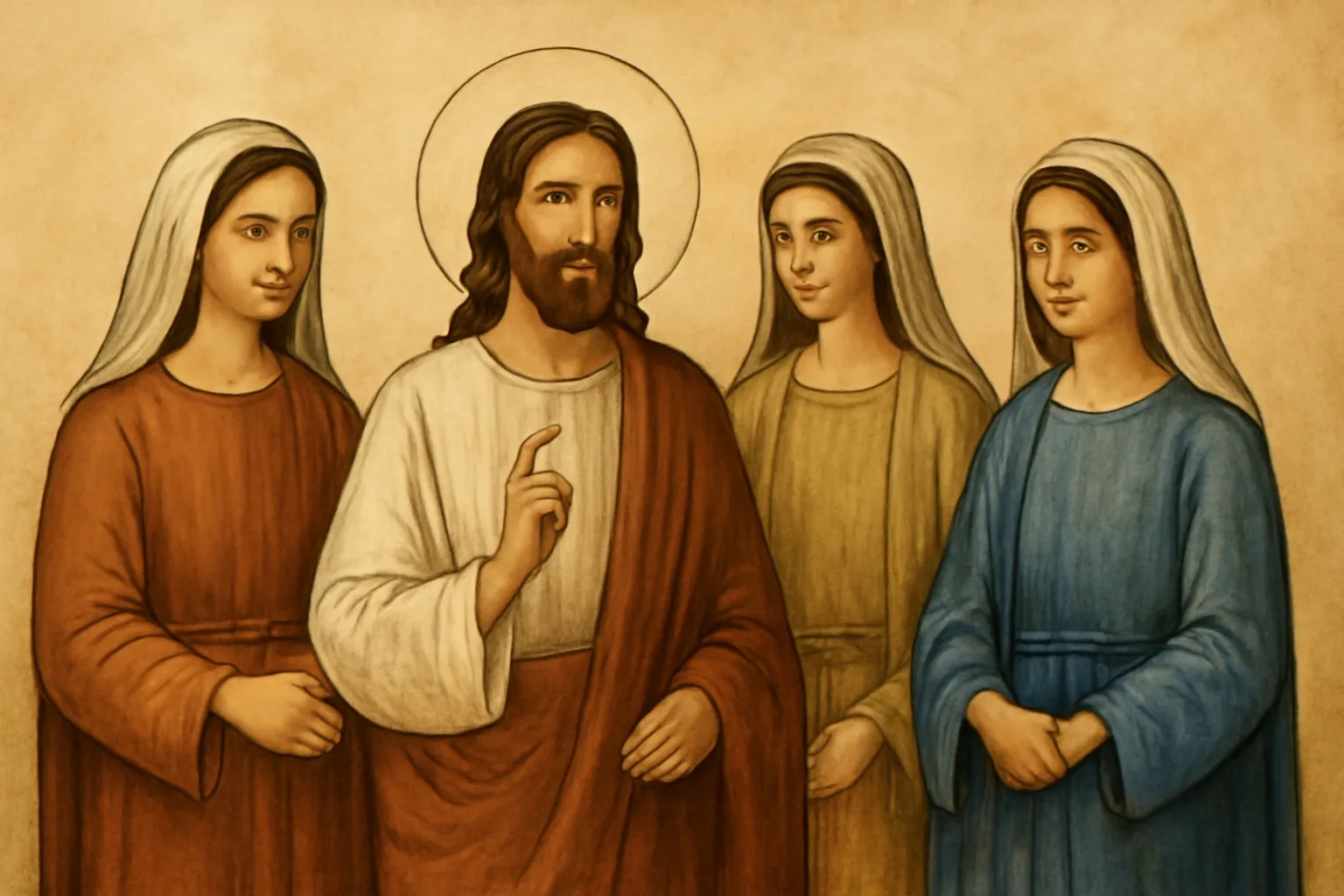
Overview: Jesus and His Siblings — What the Bible Says About Sisters’ Names
The question of Jesus’ sisters touches both the historical text of the New Testament and the long-running traditions of Christian interpretation. In canonical scriptures, Jesus is explicitly described as having brothers and, in some passages, sisters, but the sisters are never named. This has led to a mix of scholarly discussion and later devotional traditions that attempt to identify or name Jesus’ sisters. This article gathers the biblical references and outlines the range of traditions, clarifying what is textually certain, what is debated, and what how later writers have approached the question. We will explore canonical passages, the named brothers, the issue of unnamed sisters, and the diverse non-canonical traditions that have arisen over the centuries.
What the New Testament Actually Says About Jesus’s Siblings
In the canonical Gospels, Jesus is described as having brothers and, in some verses, sisters, but there is no listing of the sisters’ names. The references to siblings are concise and do not provide a roster of female family members. Here are the core biblical points:
Matthew 13:55–56 presents a direct set of questions: “Is not this the carpenter’s son? Is not his mother called Mary, and are not his brothers James and Joseph and Simon and Judas? And are not his sisters with us?” This passage identifies four named brothers and mentions sisters in the plural, though it does not name the sisters.
Mark 6:3 adds a similar list, phrased as: “Is not this the carpenter, the son of Mary, the brother of James and Joses and Judas and Simon? And are not his sisters here with us?” In this instance, the brothers are named (James, Joses, Judas, Simon), but the sisters remain unnamed.
Luke 8:19–21 mentions Jesus’ mother and brothers, but again, the sisters are not named in this passage. The text emphasizes the claim that Jesus’ true family is meant to respond to his teaching and mission.
John 2:12 and John 19:25 refer to Mary (Jesus’ mother) and some of Jesus’ siblings in the broader family context, but they do not supply the sisters’ names. The Gospel of John uses phrasing that places Mary in relation to Jesus and the “disciples” or “brethren,” but the sisters are not named here either.
From these citations we can summarize a clear scholastic point: The New Testament names Jesus’ male siblings—the brothers James, Joseph (often called Joses), Simon, and Judas—in two of the four canonical Gospels. It does not provide a list of female siblings. The ambiguity around the sisters’ identities has fueled centuries of discussion, theology, and tradition. The lack of sister names in the canonical text means that any proposed names for Jesus’ sisters arise from non-biblical sources or from interpretive traditions that attempt to fill in the biblical blank.
Names of Jesus’s Brothers: What the Bible Actually Names
Even though the title asks about “Jesus’ sisters,” it is important to anchor the discussion by naming his brothers, as these names are explicit in the scriptures. The lists of brothers appear in parallel with the unnamed sisters, and they have shaped how scholars and readers understand Jesus’ family background. The canonical names attributed to Jesus’ brothers are:
James — often identified in later tradition as James the Brother of Jesus or James the Just, a key early Christian figure who is sometimes associated with leadership in the Jerusalem church.
Joseph (often rendered as Joses in some English translations) — the second name in the lists, usually understood as the son of Mary and Joseph.
Simon — a frequently appearing name in early Gospel lists; not to be confused with one of Jesus’ Twelve, but listed here as a sibling in a broader family context.
Judas (sometimes rendered as Judas the Zealot or Judas not Iscariot depending on tradition) — another brother named in the textual accounts.
These names appear in parallel in both Matthew 13:55–56 and Mark 6:3, illustrating that the Gospels were careful to identify Jesus’ male siblings while leaving the sisters unnamed. This textual pattern has contributed to ongoing discussions about Jesus’ family and how early Christian communities understood kinship within the holy family.
The Sisters in the New Testament: Unnamed but Not Unimportant
Where the Gospel writers name the male siblings, they consistently omit the female siblings’ names. The phrase “his sisters” appears in Matthew and Mark, but the sisters themselves are not named in these texts. This absence is not a mere oversight; it reflects a common pattern in ancient literature where female relatives are acknowledged in the context of the family unit but not identified individually. Several important considerations arise from this:
Unnamed sisters highlight how early Christian writers prioritized certain family details—namely, the male siblings who appear in debates about Jesus’ legal and social lineage—while leaving the female siblings unnamed.
The absence of names invites interpretation. Do the sisters remain unnamed because their lives were not central to the Gospel narrative, or because the authors anticipated they would be identified in other sources or traditions?
In the modern study of biblical language, the Greek term for “sisters” in these passages is adelphai, a plural feminine form. The use of adelphai often signals close kinship but does not specify genealogical details beyond the family connection.
In light of these considerations, many biblical scholars treat the sisters as part of Jesus’ broader family while also noting that their names aren’t supplied in canonical scripture. This openness—“the sisters” without names—has left room for later traditions to attempt to supply the missing information, with varying degrees of acceptance across Christian communities.
Traditions That Have Attempted to Name Jesus’s Sisters
Beyond the canonical texts, a broad landscape of early Christian literature, church tradition, and later legends has attempted to identify or name Jesus’ sisters. It is important to emphasize that these attributions are not universal and are not part of the original biblical text. They reflect the ways communities sought to understand Jesus’ family and to connect the sacred story to living memory, kinship, and local church histories. Common patterns in these traditions include:
Mary of Clopas or Mary of Alphaeus is named in some early sources as a relative of Mary, the mother of Jesus. In certain traditions, she is described as the wife of Alphaeus and the sister of Mary; if adopted this would place her children among Jesus’ cousins rather than direct siblings. The status of Mary of Clopas varies across sources, and this identification is not uniformly accepted by all Christian communities.
Salome appears in the Gospel lists as a participant in the events surrounding Jesus’ crucifixion and as a sister or mother figure in certain later writings. In some traditions, Salome is linked to the sisters of Jesus, although this association is not supported by the canonical text and remains controversial among scholars.
Other names—Over the centuries, various legends and marginal writings have proposed different names for Jesus’ sisters, sometimes placing them in close kinship with Mary or attributing to them notable roles in early church communities. These names are part of the broader patristic and medieval tradition, but they are not considered canonical or universally accepted.
Several important points deserve emphasis when examining these traditions:
Context matters — The way early Christians described Jesus’ family depended on their theological goals and pastoral concerns. Names attributed to Jesus’ sisters often served to connect Jesus’ life to real families and local churches, not to present a definitive genealogical record.
Canonical authority vs. tradition — Names of the sisters in non-canonical writings are interesting for understanding how communities imagined Jesus’ family, but they do not bear the same weight as the canonical lists of brothers (James, Joses, Simon, Judas).
Mary’s perpetual virginity — In many traditions, the doctrine of Mary’s perpetual virginity influenced how people read the phrase “brothers and sisters.” Some groups held that Jesus’ brothers and sisters were either Jesus’ cousins or children of a previous marriage of Joseph, while others accepted the possibility of full siblings. This theological debate shaped how traditions named or treated Jesus’ sisters.
In formulating a balanced view, scholars differentiate canonical data from traditional attributions, recognizing the former as primary and the latter as secondary, often rooted in the devotional and local histories of ancient Christian communities.
Mary of Clopas, Salome, and the Kinship Question: A Closer Look
Two names often appear in discussions about Jesus’ extended family in non-biblical sources: Mary of Clopas and Salome. Each has a distinct place in the tradition, but neither name yields a universally accepted list of Jesus’ sisters. Here is a concise look at how these figures are treated in various traditions:
Mary of Clopas — Some early sources identify her as a Mary-related figure who may be Mary’s sister or sister-in-law, depending on the tradition. If this identification is accepted, her children might be seen as cousins to Jesus (or, in some lineages, as siblings, depending on how kinship terms are interpreted). The identification varies regionally and historically, and it is not a uniform teaching across Christian denominations.
Salome — The presence of Salome in the Gospel lists as a female participant at the crucifixion and as a relative of Jesus is a source of later tradition. In some legends, Salome is depicted as a sister of Mary or a close kin figure; in other traditions, she is simply a named woman who accompanied Jesus’ family in important moments. Once again, these identifications are not part of the canonical Gospels.
These discussions illustrate a broader pattern: in the absence of sisters’ names in the canonical texts, communities have repeatedly sought to connect Jesus to known female figures through kinship narratives. The result is a tapestry of associations—some well-supported by early sources, others more speculative—that reflect the desire to understand Jesus’ family within the social and religious networks of the time.
Apocryphal and Later Writings: Names That Appear in Legends
Outside the canonical books, various apocryphal and later Christian writings present narratives about Jesus’ family, sometimes including named sisters. It is important to approach these sources with caution: they are valuable for understanding the diversity of early Christian thought but do not carry canonical authority. Typical patterns include:
Protoevangelium of James and other apocryphal gospels discuss Mary, Jesus’ mother, and her kin, often giving more family detail than the canonical gospels. In some narratives, familial relationships are expanded, which can lead to proposed names for Jesus’ sisters. However, these texts are not part of the New Testament canon and their historical reliability is debated.
Gnostic and other late writings sometimes mention women in Jesus’ circle in ways that have been read as identifying sisters, aunts, or close relatives. These works reflect early Christian communities’ attempts to interpret Jesus’ family in ways that fit their own theological agendas.
Patristic traditions — Early church fathers often discussed Mary and Jesus’ family in doctrinal terms (e.g., Mary’s perpetual virginity, the relationships among Mary, Joseph, and Jesus). In some cases, this discussion indirectly influences how people read references to siblings and kin in the Gospels, even if they do not supply specific sister names.
In all these cases, the takeaway is clear: non-canonical writings provide a spectrum of proposed sister names, but none of these names are universally accepted as authoritative or standard in Christian churches. They illustrate how diverse communities engaged with Jesus’ family life while remaining rooted in different theological aims and historical contexts.
Theological and Historical Implications: Why Names Matter (And Why They Don’t Always)
Names, especially of women in ancient texts, carry weight for both historical reconstruction and theological interpretation. The question of Jesus’ sisters’ names touches on several broader issues:
Patriarchal focus in ancient sources — The Gospels often foreground male figures when detailing family relations and lineages. The lack of named sisters can reflect literary priorities of the period.
The issue of Mary’s perpetual virginity — This doctrinal stance affected how later interpreters treated references to Jesus’ siblings. If Mary remained forever a virgin, some readers argued that Jesus’ brothers and sisters must be step-siblings or relatives by marriage rather than biological children of Mary. This has shaped entire streams of Christian thought and practice.
Historical-critical approach — Modern scholars distinguish between the historical Jesus family and the theological interpretations of early Christian communities. In that framework, the sisters’ names, when proposed, are tested against the reliability of sources and the plausibility of social and family norms in first-century Judea.
Ultimately, the absence of canonical sister names does not erase the significance of Jesus’ family in early Christian life. The brothers named in Matthew and Mark provide a window into the social networks surrounding Jesus, while the sisters’ names—though not supplied in the canonical text—signal the broader real-world context in which Jesus lived and ministered. The discussion about sisters’ names is, at its core, a study of how early Christians remembered and interpreted Jesus’ family within their own faith communities.
How Modern Readers Approach the Topic
Today, readers approach the question of Jesus’ sisters with a combination of textual study, historical inquiry, and theological reflection. Here are some guiding points that often shape contemporary understanding:
Respect for canonical authority — The primary weight rests with the Gospels and the verses that explicitly name Jesus’ brothers. The sisters’ names are not part of that canonical roster, so any proposed names come from other sources that must be evaluated on their own terms.
Awareness of interpretive tradition — The histories of various Christian communities include lively debates about Mary, Jesus, and kinship. Recognizing these debates helps readers understand why different traditions might prefer certain identifications over others.
Scholarly humility — Scholars often emphasize the ambiguity surrounding the sisters’ identities and encourage readers to distinguish between what is textually certain and what is the product of later interpretation.
Summary: The Core Points About Jesus’s Sisters’ Names
To summarize the key points in plain terms:
The Gospels name Jesus’ male siblings—James, Joseph (Joses), Simon, and Judas—in both Matthew and Mark.
The Gospels do not name Jesus’ sisters; the text explicitly refers to sisters but leaves their names unrevealed.
Traditions and apocryphal writings have proposed various names for Jesus’ sisters, but none is universally accepted, and these attributions vary across communities and eras.
Important theological questions—The discussion intersects with debates about Mary’s perpetual virginity, kinship terms in the first-century Mediterranean world, and how early Christians remembered Jesus’ family.
Further Reading and References
For readers who want to explore this topic further, consider these pathways:
The canonical passages in Matthew and Mark that list Jesus’ brothers and mention his sisters (e.g., Matthew 13:55–56; Mark 6:3).
Scholarly discussions of adelphos and adelphai in the Greek New Testament and their implications for kinship terms.
Patristic and early church writings that address Mary’s perpetual virginity and how that doctrine influenced interpretations of Jesus’ family.
Non-canonical literature and apocryphal gospels that offer various names for Jesus’ sisters and discuss family relationships in early Christianity.
In conclusion, the question of Jesus’ sisters’ names is best understood as a combination of textual fact (brothers named in canonical texts) and interpretive tradition (names proposed in later writings). This dual lens helps readers appreciate both what the Bible explicitly says and how Christian communities throughout history have sought to fill in the gaps with reverence for the family context in which Jesus lived and preached.