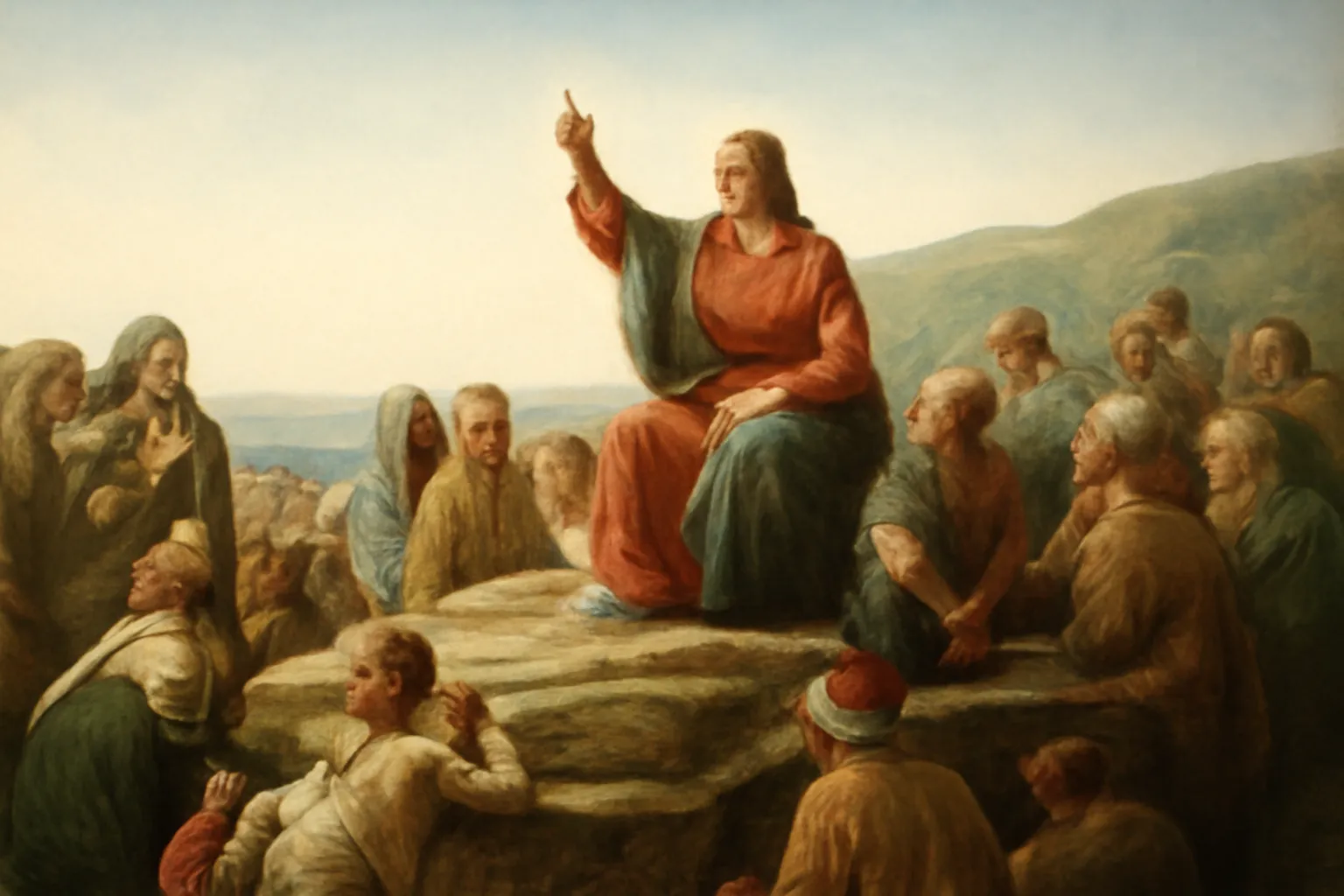
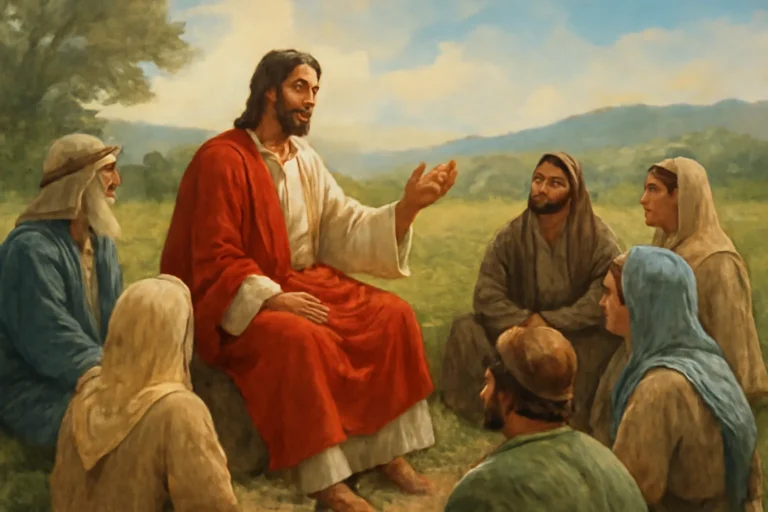
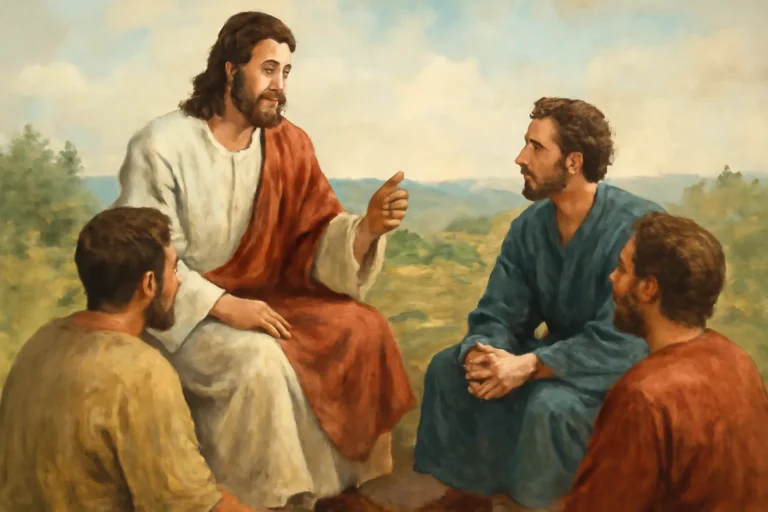
The Sermon on the Mount is one of the most influential collections of teachings in the Christian tradition. Found in the Gospel of Matthew (chapters 5–7), it presents a continuous discourse attributed to Jesus as he teaches a gathered crowd along a hillside, often described as a mountain or elevated place by tradition. This assembly is sometimes referred to as the Sermon on the Mount, the Mountaintop discourse, or the Sermon from the Mount, and it is also linked, in parallel tradition, to the Sermon on the Plain in Luke. Across literary forms, historical contexts, and religious communities, this sermon is treated as a foundational articulation of what it means to live as a member of the kingdom of heaven and to embody a distinctive ethic that exceeds mere rule-keeping.
In many Christian traditions, the Mount is seen not only as a geographic setting but as a symbolic space where Jesus reveals the principles that should guide conduct, worship, and social life. The teachings span from personal virtue to communal justice, from private devotion to public witness. The breadth of the Sermon on the Mount has led scholars and believers to describe it as a manifesto for the ethics of the Kingdom, a pedagogy of interior transformation, and a challenge to prevailing cultural norms of power, status, and success.
Context: Setting, History, and Literary Shape
Geographic and social setting
Where exactly Jesus delivered these teachings is a matter of textual and historical reflection. The Gospel narrative locates the event near a hill by the Sea of Galilee, a setting that offers a natural amphitheater for teaching a diverse audience. The crowd is described as consisting of ordinary people—fishermen, farmers, laborers—as well as religious teachers and the curious seeking spiritual guidance. In this hillside sermon, Jesus speaks to a community at a crossroads between traditional Jewish law and a newly proclaimed interpretation of the ethics of the Kingdom.
The setting matters because it frames how listeners would have understood the speech. A hillside location emphasizes blessing and revelation, clarity and accessibility, and the idea that the message is meant to radiate outward like light across human society. The audience’s varied backgrounds also helps explain why the sermon moves from blessings to practical instruction, from ideal visions to concrete admonitions about daily life.
Relation to Jewish law, rabbinic teaching, and first-century expectation
In the first-century context, Jewish religious life revolved around the Torah, the Prophets, and the interpretive debates of the rabbis. Jesus’ pronouncements in the Mount deliver a fulfillment of the Law and a radical redefinition of righteousness. Rather than abolishing the commandments, the text emphasizes that true obedience is rooted in the heart, intention, and relationship with God, not only in outward acts. This shift invites readers to consider the difference between external conformity and internal disposition.
Some scholars view the Sermon on the Mount as a counter-script to prevailing systems of power, status, and prestige. The promise of blessing to the marginalized, the condemnation of outward piety without inner sincerity, and the call to pursue justice in interpersonal relationships all point toward a countercultural ethic that binds communities through mutual love, humility, and trust in God’s provision.
Key Teachings: the Core Messages of the Sermon on the Mount
The Beatitudes: a radical vision of blessing
The opening beatitudes inaugurate the sermon with a compact program for the life of the disciple. They shift emphasis from conventional measures of success to divine countersigns of blessedness. The beatitudes are a compact blueprint for a life shaped by dependency on God and solidarity with the vulnerable. The eight statements are often cited as a core summary of the ethical imagination of the movement Jesus inaugurates.
Blessed are the poor in spirit, for theirs is the kingdom of heaven.
Blessed are those who mourn, for they shall be comforted.
Blessed are the meek, for they shall inherit the earth.
Blessed are those who hunger and thirst for righteousness, for they shall be filled.
Blessed are the merciful, for they shall receive mercy.
Blessed are the pure in heart, for they shall see God.
Blessed are the peacemakers, for they shall be called children of God.
Blessed are those who are persecuted for righteousness’ sake, for theirs is the kingdom of heaven.
These lines announce a reversal of expectations: the humble, the grieving, the persecuted are invited into blessing, not the powerful or privileged. They point beyond mere consolation to a present and future reality shaped by the values of the Kingdom, including justice, mercy, and solidarity with the weak.
Two short images—salt and light—describe the role of Jesus’ followers in the world. Salt preserves, flavors, and is valuable; light dispels darkness. These metaphors call disciples to influence culture ethically and to embody a visible, hopeful presence in everyday life. Jesus also insists that he has come not to abolish the Law or the Prophets but to fulfill them, signaling continuity with Jewish tradition while reorienting its meaning through Kingdom-centered interpretation.
Righteousness, law, and obedience: a deeper righteousness
The sermon repeatedly challenges superficial religiosity by pointing to the interior life as the site of true righteousness. Three themes stand out:
The acquisition of a heart that loves rather than merely adheres to rules.
A reframing of moral seriousness beyond legalistic compliance.
A call to pursue integrity within fellowship and in public life.
Prayer, almsgiving, and fasting: authentic piety
Jesus condemns public displays intended to earn admiration and invites practices done in secret as a form of authentic relationship with God. The speaker gives the pattern and content of prayer, including a model you now know as the Lord’s Prayer, and places charitable giving and spiritual disciplines within a framework of dependence on God rather than on human praise.
Ethics of the Kingdom: nonretaliation, radical love
Across several lessons, the Mount teaches a way of life characterized by nonretaliation and love for enemies. The call to turn the other cheek, to go the extra mile, and to pursue reconciliation stands in stark contrast to common norms of revenge and social power. This section also addresses material wealth, trust, and anxiety, encouraging trust in God’s provision and a prioritization of divine riches over earthly abundance.
Wealth, anxiety, and the trust that sustains daily living
In passages that address worry about daily needs, Jesus invites listeners to pursue the “little kingdom” of daily life by seeking first the kingdom of God and his righteousness. The famous admonition, “Do not worry about tomorrow”, is not a call to passive resignation but a challenge to reorder life around a confident trust in God’s providence.
Interpersonal ethics receive sustained attention: judgments of others, the measure by which we judge, and the imperative to treat others as we wish to be treated. The Golden Rule—to do unto others as you would have them do unto you—summarizes a practical, universal ethic grounded in reciprocity and humility.
The Mount functions as a catechetical document for early Christian communities, shaping how discipleship is conceived and practiced. It situates Jesus as a teacher who invites followers into a new way of life that is both ethically demanding and spiritually transforming. The speech links belief with behavior, creed with conduct, and worship with compassion for neighbors.
Connections to eschatology and the Kingdom
Many scholars interpret the Sermon on the Mount as a window into Jesus’ vision of the kingdom of God, a present reality that is being inaugurated and a future hope to be realized more fully. The moral demands—peacemaking, mercy, humility, righteousness—are presented as signs of life under the reign of God, inviting readers to participate in a transformative social order that transcends the prevailing structures of power and privilege.
Structurally, the Mount reads like a thoughtfully arranged discourse with a progression from blessedness to ethical instruction to practical exhortations about worship, prayer, and daily living. Its rhythm—blessing, instruction, exhortation—encourages listeners to internalize the message and then translate it into concrete steps for life within their communities and families.
Significance for Early Christianity and Later Christian Traditions
The Sermon on the Mount catalyzed a broad range of later Christian teachings, from monastic practices emphasizing simplicity and sincerity to social ethics that inform debates about justice, mercy, and the treatment of the marginalized. Its influence extends into art, music, literature, and public theology, where it often serves as a touchstone for discussions about moral responsibility and the nature of a life oriented toward God.
Continuity with Jewish tradition
Despite its radical departures, the sermon maintains a deep continuity with Jewish ethical traditions. The claim that Jesus fulfills the Law does not erase the Law; rather, it reorients and deepens its purpose. The emphasis on mercy, justice, and piety in private life resonates with prophetic calls for righteousness and care for the vulnerable, making the Mount a point of convergence for ancient and emerging Christian ethics.
Influence on Western moral imagination
Across centuries, the Beatitudes, the Golden Rule, and the call to seek God’s kingdom first have informed debates about human dignity, human rights, and social responsibility. The Sermon on the Mount has been invoked by reformers, theologians, pastors, and laypeople seeking to articulate a vision of communities rooted in love, truth-telling, and hope even in the face of suffering.
Application: How the Sermon on the Mount Guides Contemporary Life
Personal formation and spiritual practice
Humility and sincerity in prayer, fasting, and almsgiving as practices that shape the interior life rather than the outside appearance.
Inner purity and integrity, recognizing that motives matter as much as actions.
Trust in God as a guard against anxiety and an orientation to daily providence.
Ethics in the private sphere
Aiming for reconciliation in conflicts and avoiding harboring anger or contempt toward others.
A commitment to truth-telling and honest speech, including the careful use of vows and promises.
Respect for others as fellow beings made in the image of God, which informs how we treat strangers, friends, and enemies alike.
Ethics in the public sphere
Mercy and justice as public goods that transcend factionalism.
Advocacy for the vulnerable and a stance against systems that perpetuate exploitation or neglect the needy.
Promotion of peace, nonviolence, and constructive civic engagement as expressions of the disciples’ allegiance to the Kingdom.
Liturgical and catechetical use
In worship and catechesis, the Sermon on the Mount provides a framework for teaching moral formation and the character of discipleship.
In devotional life, the Lord’s Prayer serves as a model for how to address God and align one’s will with God’s purposes.
In preaching and teaching, the Beatitudes offer a stable vocabulary for discussing blessing, hope, and human flourishing.
Contemporary challenges and opportunities
Modern readers encounter questions about how to translate ancient imagery and parables into real-world contexts. The Sermon’s emphasis on mercy, reconciliation, and non-retaliation provides a compelling frame for discussions about social justice, restorative practices, and community healing. Interpreters continue to wrestle with questions such as how to practice obedience in pluralistic societies, how to pursue justice without coercion, and how to maintain spiritual depth in a highly connected, often noisy world.
Contemporary Interpretations and Debates
Literal versus figurative readings
Scholars and theologians debate the extent to which the Sermon on the Mount should be read as normative instruction for all Christians in every era or as a portrait of Jesus’ own ministry within a particular time and place. Some affirm a universal ethical ideal that transcends culture, while others emphasize historical and literary context to distinguish first-century circumstances from timeless principles.
The Gospel of Matthew presents a Mount setting, while Luke’s parallel text is often described as the Sermon on the Plain. Scholars discuss whether this reflects a different tradition, a different audience, or a literary strategy to present similar content in a variant setting. The core messages—blessing, righteousness, mercy, and trust—are widely recognized as central across both accounts, even when the details differ.
Kingdom now versus kingdom coming
Interpretive debate also centers on whether the Sermon emphasizes an immediate, present reality of the Kingdom of God or a future consummation. Most scholars today understand it as a dynamic tension: the Kingdom is already present in Jesus’ ministry and begins to unfold in the lives of his followers, while its fullness remains a future expectation. This dual horizon shapes how Christians read the ethical demands: they are to be lived now as a visible sign of God’s reign, while always looking forward to its ultimate fulfillment.
Ethics in a pluralistic world
In pluralistic societies, the Sermon’s call to mercy, peacemaking, and humility raises questions about how Christians engage with people of other faiths and belief systems. Debates focus on how to practice ethical universalism (the Golden Rule, for example) without compromising distinctive religious convictions or enabling harm. Many communities find in the Sermon a robust ethical method—prioritizing the vulnerable, seeking reconciliation, and embodying virtuous habits that invite dialogue rather than coercion.
Related Passages and Thematic Echoes
Readers often compare the Sermon on the Mount with other teachings in the New Testament that address similar topics, noting thematic echoes and differing emphases. For instance, parallels can be drawn with Jesus’ parables about mercy, forgiveness, and risk in faith. The ethical vision articulated in the Mount informs Jesus’ broader ministry, including how parables frame moral discernment and how miracles confirm the authority of his words.
Sermon on the Plain and other early Christian traditions
Some early Christian communities remembered and transmitted similar ethical teachings in various settings. The shared emphasis on poverty of spirit, mercy, and love for enemies appears in different Gospel traditions and later Christian writings, illustrating how the core values of this discourse resonated across diverse audiences and historical moments.
The Enduring Relevance of the Sermon on the Mount
From its poetic openings to its challenging exhortations, the Mount remains a benchmark for what it means to follow Jesus. Its combination of blessing, ethical rigor, and spiritual trust invites readers to imagine a community lives by different criteria—one shaped by mercy, humility, and steadfast hope in God’s provision. Whether approached as a historical document, a theological manifesto, or a guide for daily living, the Sermon on the Mount continues to provoke reflection on how individuals and communities can pursue justice, cultivate integrity, and cultivate the kind of love that transforms relationships and societies.
In contemporary conversation, we can engage this text as both a mirror and a compass: a mirror that reveals our desires and biases, and a compass that points toward a humble, hopeful, and courageous way of life. As modern readers encounter the various expressions of this sermon—its Beatitudes, its calls to prayer and fasting, its insistence on true righteousness—they are invited to enter into a conversation with the text, with the historical context, and with one another about how to live out these ancient convictions in a complex, ever-changing world.
Ultimately, the Sermon on the Mount—in its many names and forms—offers a durable invitation: to see life through the lens of the Kingdom, to orient daily actions toward God and neighbor, and to bear witness to a reality beyond the ordinary scope of human power. Whether one approaches this discourse as a timeless ethical ideal or as a transformative influence embedded in the story of Jesus, its enduring claim remains clear: a life shaped by these teachings is a life that seeks blessing for others, a life that pursues justice, and a life that embodies hope amid difficulty.
Why Learning About Christianity Matters Learning about Christianity is not just an academic exercise; it is a journey into a vast set of historical traditions, beliefs, practices, and communities that have shaped millions of lives across two millennia. Whether you approach it from a curiosity about world religions, a desire to understand Western history, or…
Learn About Christianity: A Beginner’s Guide to Beliefs, History, and Practices Welcome to a comprehensive introduction designed for someone who wants to learn about Christianity. This guide aims to present the essentials in clear language, while also offering historical context and practical guidance. Whether you are exploring for personal reasons, school, or intellectual curiosity, you…
Christ Teaching: A Practical Guide to Jesus’ Teachings for Modern Life Across two millennia, the voice of Jesus has remained one of the most influential sources of ethical wisdom in the world. The idea of Christ teaching is not just a historical curiosity; it is a living framework that many people draw on to navigate…
Free Bible Object Lessons for Youth: Engaging Teen Bible Activities Teaching teenagers through hands-on Bible object lessons helps ideas stick, invites questions, and turns familiar stories into vivid experiences. When you design lessons that require little or no money, you remove a common barrier to participation and focus the group on heart-level growth, not on…
Why Christian Teaching Matters for Everyday Faith Christian teaching is not a distant academic exercise reserved for church buildings; it is a practical, transforming way of understanding God’s Scripture and applying it to daily life. When we speak of biblical instruction or gospel instruction, we are describing a method of shaping character, renewing the mind,…