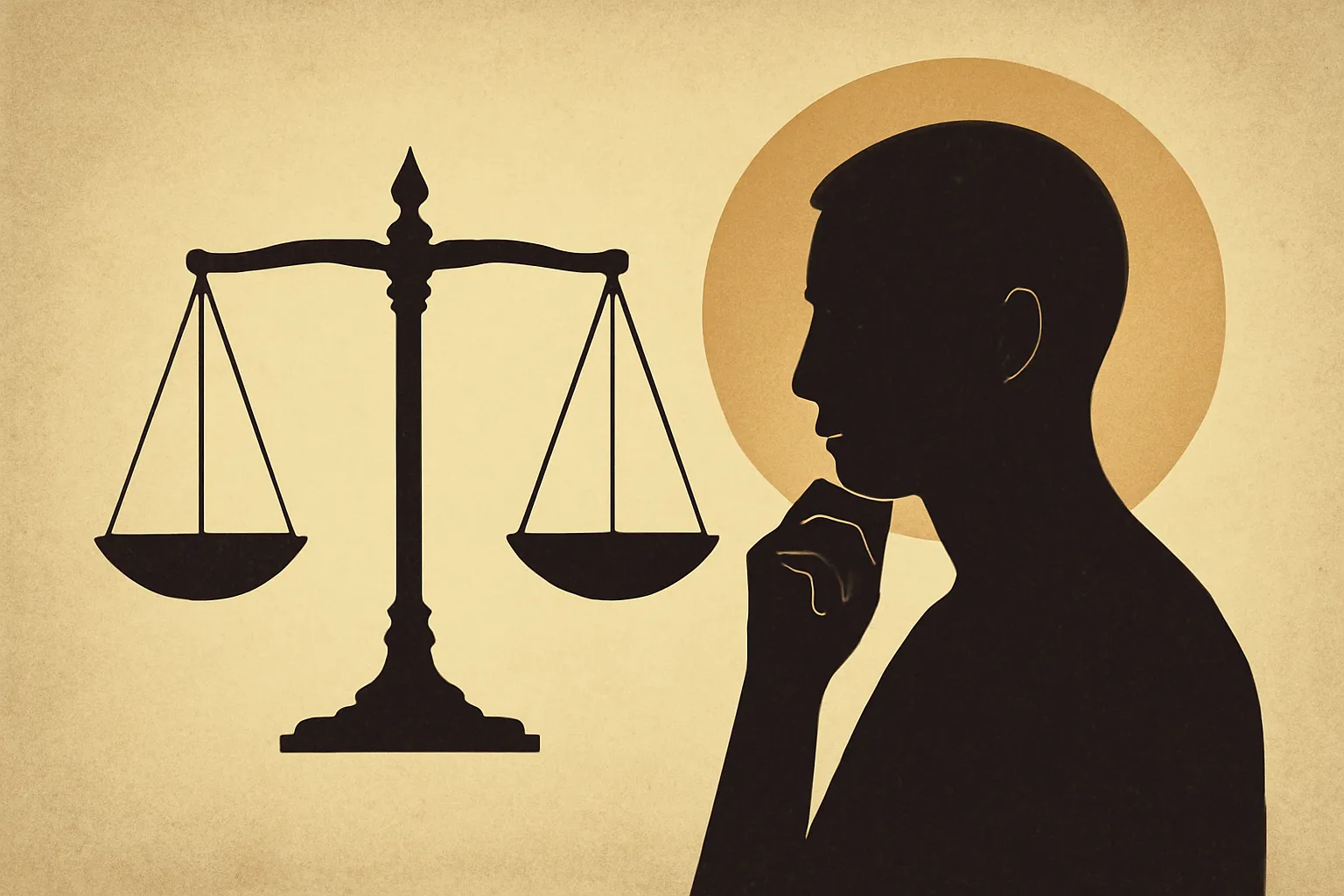
The question of whether God exists has echoed through philosophy, theology, and public discourse for centuries. Among the many lines of inquiry, the Moral Argument for God’s Existence stands out for grounding the belief in a divine source of moral order. This article offers a comprehensive analysis of the moral argument in its various forms, traces its intellectual roots, surveys major lines of defense and critique, and considers implications for philosophy, religion, and everyday life. While the term moral argument can be used in several senses, this discussion centers on arguments that connect the existence or nature of morality—especially objective moral values and duties—with the existence of a theistic grounding, typically understood as God.
The moral argument has deep roots in classical philosophy and later Christian scholasticism. Early thinkers frequently treated morality as something anchored in the order of the cosmos or in the rational nature of human beings. In medieval thought, moral law was often tied to the idea of natural law, which posits that certain norms are discoverable by human reason and correspond to the order established by a divine intelligence. The idea that moral obligation rests on a transcendent source gained substantial development through thinkers such as Aquinas, who argued that human beings have an inherent inclination toward good that points beyond themselves, toward a good that ultimately is grounded in divine law.
In modern philosophy, the debate became more nuanced, with some defenders formulating the argument in a way that emphasizes the objectivity of moral values and duties. Proponents often seek to establish that without a theistic foundation, moral facts would lack a solid grounding, or that the very notion of moral obligation would be unintelligible. Critics, meanwhile, have proposed naturalistic or non-theistic accounts of morality—such as moral realism without God, moral fictionalism, or evolutionarily grounded accounts—that challenge the necessity of a divine anchor.
Core Formulations of the Moral Argument
The moral argument is not a single, monolithic claim. Rather, it comprises several variations that share a common aim: to show that the existence or nature of moral values and duties presupposes or implies the existence of God. Below are several representative formulations, each with its own structure and intuition.
Variant A: The Argument from Objective Moral Values
One influential version maintains that if there are objective moral values—values that are true independent of human beliefs or feelings—then there must be a transcendent source that grounds these values. The argument can be outlined as follows:
There exist objective moral values (for example, the wrongness of torture, the goodness of helping the innocent, or the virtue of justice).n
Objective moral values require an explanation beyond social conventions, personal preferences, or evolutionary advantages.
Therefore, God or a supremely good being provides the best, if not the only, account of those values.
Proponents argue that without a divine source, moral values would be either mere emergent properties of biological evolution or mere expressions of personal or cultural attitudes. If morality is simply a product of natural selection or subjective sentiment, the status of moral statements as objectively true becomes questionable. Theistic advocates insist that a moral lawgiver best explains why moral obligations resonate across cultures and time in a way that mere social utility or subjective feeling cannot capture.
Variant B: The Argument from Moral Duties
A related formulation emphasizes moral duties rather than values alone. The core idea is that human beings are creatures of rational agency who recognize obligations that transcend personal desire. The structure often appears as:
Humans possess moral duties that require justification beyond personal preference or social utility.
Such duties demand a grounding that is objective and secure from the changing tides of opinion.
Therefore, the existence of a rational, morally conscious grounding—often identified with God—provides a coherent basis for those duties.
Supporters claim that moral duties, like the duty not to commit genocide or the obligation to treat persons as ends in themselves, resist reduction to mere preferences. They argue that only a grounding with real normative authority—perceived as binding regardless of individuals’ beliefs—can account for why these duties feel compelling and non-derivative.
Variant C: The Natural Law and Teleological Argument
Some versions connect moral order with a broader teleological account of nature. The Natural Law tradition contends that moral norms are discernible in rational reflection upon human nature and purposes. The argument often proceeds as follows:
Human beings have a natural inclination toward certain ends (e.g., life, knowledge, friendship).
Rationality and intentionality reveal a design by a divine intelligence that orders these ends into a coherent moral framework.
Thus, God is the best or sufficient explanation for the intelligible moral order we experience.
Proponents emphasize that moral norms are not arbitrary but bear a close relationship to human flourishing and the proper functioning of persons within communities. The natural law approach often appeals to shared human goods and universalizable norms as evidence of an objective source that transcends local custom.
Variant D: Kantian and Rational Obligation Readings
A philosophical bend often presented within debates about theistic morality draws on Kantian ideas. The core idea is that rational agents recognize a form of categorical obligation—moral laws that hold universally and unconditionally. Some theistic interpreters argue that:
Rational agents perceive objective moral laws as binding.
To grounds these laws as binding in a way that is not merely practical or contingent, a transcendent source may be invoked.
Therefore, God provides a coherent foundation for moral law as an objective, universal imperative.
This line of argument is not universally accepted among Kantian scholars or broad ethics communities. Critics raise questions about whether rational obligation necessarily implies a divine source and whether secular frameworks can preserve the force and universality of moral law without invoking theism.
Natural Law, Moral Ontology, and Divine Governance
A central claim in the moral argument is that the moral order is part of a broader ontological framework that connects moral properties to the world’s structure. Several strands converge on the idea that morality and ontology reflect a divine governance of reality.
Morality as an aspect of rational nature: Moral truths are knowable through reason and reflection on human purposes, which some view as oriented toward the divineAuthor of order.
Justice, mercy, and divine attributes: If moral goods require a source that embodies perfection (omnibenevolence, justice, wisdom), then a perfect being becomes a plausible candidate to ground those goods.
Universality of moral norms: The cross-cultural presence of certain moral intuitions (e.g., prohibitions on murder, theft, deceit) is argued by some to reflect a common, transcendent standard rather than purely social convergence.
Critics may respond by noting that universality can emerge from shared human needs or evolutionary pressures, and that even a theistic grounding must address how moral properties inherit their force—whether they are ontologically grounded in divine intention, or whether they are discovered as part of the world’s moral landscape.
Conscience, Moral Experience, and the Intuition of Obligation
A significant portion of the moral argument centers on human conscience and moral experience. Proponents contend that the way people feel compelled to act, especially in situations of moral conflict, offers prima facie evidence for a transcendent authority. The argument can be summarized as follows:
Intuition and conscience reveal an inner sense of obligation that seems to point beyond subjective preference.
This sense of obligation appears more robust than mere personal risk assessment or cultural conditioning.
To account for this robust sense of obligation, a theistic grounding—often a morally active deity—provides a comprehensive framework for why humans experience duties as binding.
Some moral philosophers push back by arguing that conscience is a natural product of socialization, cognitive biases, and evolutionary history. They maintain that moral experiences, while meaningful, do not compel belief in a deity. Defenders of the moral argument, however, claim that even if conscience has natural roots, its most demanding and universal claims align with the idea of a transcendent source that instills objective validity into moral norms.
Variations on the Moral Argument: A Semantic and Thematic Breadth
To offer semantic breadth, it helps to distinguish several nuanced variants that are commonly discussed in contemporary debates. The following categories illustrate how scholars tailor the core idea to different philosophical commitments.
Strong Moral Realism with Theistic Ground: Objectivity of moral values is best explained by a divine source with authoritative nature and perfect knowledge.
Weak Moral Realism with Theistic Support: Moral realism can be defended apart from God, but theism offers a more parsimonious or explanatory account of cross-cultural moral convergence.
Divine Command and Moral Objectivity: Moral duties are grounded in commands issued by a sovereign God, with normative force derived from divine authority.
Natural Law with Theistic Teleology: The structure of nature itself, including human nature and purposes, is best understood within a teleological framework that points to God as the designer.
Kantian-Teology Synthesis: A synthesis of reason-based moral law with the theistic hypothesis that rational beings are oriented toward a personal, morally perfect lawgiver.
Each variant emphasizes different aspects of morality—objectivity, obligation, universality, or rational coherence—and each engages distinct objections. The discussion that follows addresses common criticisms and thoughtful replies to strengthen the overall appraisal of the moral argument.
Objections, Replies, and Philosophical Tensions
No robust philosophical claim is immune to critique, and the moral argument for God’s existence is no exception. Below are some representative objections along with typical replies that defenders offer.
Objection 1: Moral facts can exist independently of God
Critics argue that we can coherently hold that moral values and duties exist without appealing to divine existence. Prominent naturalist accounts claim: moral properties are real but reducible to natural properties or social facts; moral discourse is a product of rational agents negotiating constraints for cooperative living.
Reply: Proponents contend that naturalistic accounts struggle to explain the authority and binding nature of moral duties, especially in situations where moral norms appear independent of social utility. They claim that without a transcendent source, the universality and objectivity of moral requirements lose explanatory purchase, as disagreement about moral norms would push us toward relativism or nihilism.
Objection 2: The Euthyphro Dilemma Revisited
The classic Euthyphro dilemma asks whether moral goodness is what God commands (divine command theory) or whether God commands what is already good (which would imply a standard independent of God). This raises questions about divine sovereignty and moral autonomy.
Reply: Defenders offer nuanced responses, such as distinguishing between attributes of divine commands and the nature of goodness, or suggesting a richer model in which God’s will is informed by an independent moral order that God Himself upholds and embodies. Some defend a non-voluntarist reading in which God’s nature is the good, so moral values reflect God’s essential character rather than arbitrary commands.
Objection 3: The problem of evil undermines the plausibility of theism as a moral anchor
The existence of moral and natural evil seems to challenge the idea of a benevolent, all-powerful, morally precise God grounding moral order.
Reply: Theists frequently respond with theodicies that attempt to reconcile the presence of evil with divine goodness and sovereignty. These responses may appeal to the value of free will, the purposes of soul-making, or the redemptive aspects of suffering, arguing that even morally complex realities can be consistent with a divine plan that ultimately grounds moral order and human flourishing.
Objection 4: Moral progress and pluralism challenge moral objectivity
Critics point out that moral beliefs change over time and vary across cultures, suggesting that moral truth is not fixed or universal in the way the strongest forms of the moral argument require.
Reply: Proponents may acknowledge historical change while arguing that core moral commitments—like prohibiting genocide, respecting basic human rights, and treating persons as ends—display continuity and convergence that point to an underlying objective order. They may also argue that moral progress itself presupposes a standard by which progress is measured, which in turn invites a transcendent source.
Comparative Analysis: The Moral Argument vs. Other Theistic Arguments
The moral argument sits alongside other major routes to theism—cosmological, teleological, and ontological arguments—yet it offers a distinct lens: morality as a window into the existence of a divine ground. A comparative glance helps illuminate strengths and weaknesses.
Compared to the Cosmological Argument: The moral argument appeals to normative facts (oughts rather than merely to contingency or causation) to justify belief in God. It can complement cosmological reasoning by offering a normative dimension that the purely existential argument may miss.
Compared to the Teleological Argument: While design considerations in nature can support a designer, the moral argument foregrounds moral intelligibility and obligatory norms. It can stand independent of, or work in tandem with, teleology depending on the theorist’s framework.
Compared to the Ontological Argument: The ontological path appeals to the very concept of a greatest possible being. The moral argument, by contrast, grounds moral realities in a personal, normative source, which might be more intuitive to those who emphasize human experience of duty.
The moral argument is not merely a theoretical enterprise; it bears practical implications for how people understand moral responsibility, civic life, education, and interfaith dialogue. Several strands deserve emphasis:
Moral education: If morality is anchored in a transcendent standard, classrooms and families may emphasize not only critical thinking about values but also the cultivation of virtue and reverence for objective norms.
Law and public policy: A theistic framing of morality can influence debates about justice, human rights, and social welfare by appealing to universal norms that claim trans-cultural durability.
Interreligious dialogue: Shared elements of the moral argument can facilitate respectful conversation among people of diverse religious traditions and even among non-believers who acknowledge objective moral concerns.
Personal conversion and motivation: For some, the conviction that moral duties arise from a divine source can inspire a deeper sense of accountability, humility, and commitment to others’ welfare.
Critics may respond that moral motivation can be sustained by secular or pluralistic frameworks, and that the moral argument should be evaluated on its logical soundness and empirical adequacy rather than on its religious or spiritual implications. Both sides acknowledge that morality touches the heart as well as the mind, and the argumentative enterprise remains a bridge between reasoned inquiry and lived religious experience.
Definitional Clarity: What Counts as a “Ground” for Morality?
A critical part of assessing the moral argument concerns what counts as a valid grounding. Several competing conceptions exist:
Transcendent grounding in a personal, intelligent, morally perfect being—God—whose nature and will decisively shape moral norms.
Transcendental grounding in a rational, necessary structure of morality that exists independently of minds but is best explained by a divine intelligence.
Constitutional grounding in the laws of nature or the fabric of reality, with morality emerging from the way rational agents interact within that framework.
Dispositional grounding in human psychology and social practices that nonetheless point to a metaphysical reality when examined closely.
The choice among these views affects how the argument handles objections like moral disagreement, cultural diversity, and the possibility of moral progress. A robust defense often includes careful distinctions about moral ontology (the nature of moral properties) and moral epistemology (how we know moral truths) while remaining clear about what theism contributes to the explanation.
The Moral Argument for God’s Existence offers a compelling framework for understanding how many people experience morality as more than a collection of social conventions or personal preferences. By appealing to the objectivity and binding character of moral duties and values, proponents argue that a transcendent source provides a comprehensive and plausible explanation for the moral order immanent in human life. The analysis above has sketched several prominent formulations, highlighted common objections, and outlined responses that defenders offer. It has also explored the relationship between moral theory, natural law, and divine governance, and it has considered practical implications for personal belief, education, and public discourse.
Whether one accepts, rejects, or remains undecided about theistic morality, the moral argument remains a central and fruitful site of inquiry. It invites careful examination of what morality requires, what gives moral facts their force, and how our deepest commitments relate to the possibility of a transcendent source. For readers who wish to delve deeper, there is ample scholarly literature that engages these issues from historical, analytic, and pastoral perspectives. The conversation continues to evolve as philosophers, theologians, scientists, and students of ethics interact across traditions.
Is God True or Not? An Honest, Balanced Look at the Debate The question “Is God true or not?” sits at the intersection of philosophy, theology, science, history, and personal experience. It is not a single-point test with a single, universally agreed-upon method of answering. Rather, it is a family of related questions about truth…
Arguments for and Against God’s Existence: A Balanced Analysis The question of whether there is a God has occupied philosophers, theologians, scientists, and laypeople for centuries. It is not a single issue but a family of related arguments, each with its own strengths, assumptions, and counterarguments. This article offers a comprehensive yet even-handed survey of…
The phrase “God’s Name Is I Am” has resonated through centuries as a summary of the divine self-disclosure that appears in the Bible. This article explores the meaning, significance, and biblical context of the I Am name, including its Hebrew roots, its appearances in both the Old and New Testaments, and its ongoing impact on…
God and Rest: Finding Divine Peace and Renewal In a world that moves at a relentless pace, the idea of rest as more than mere cessation of activity becomes a doorway to deeper meaning. When paired with the concept of the divine, rest transforms from a practical need into a spiritual practice—an invitation to encounter…