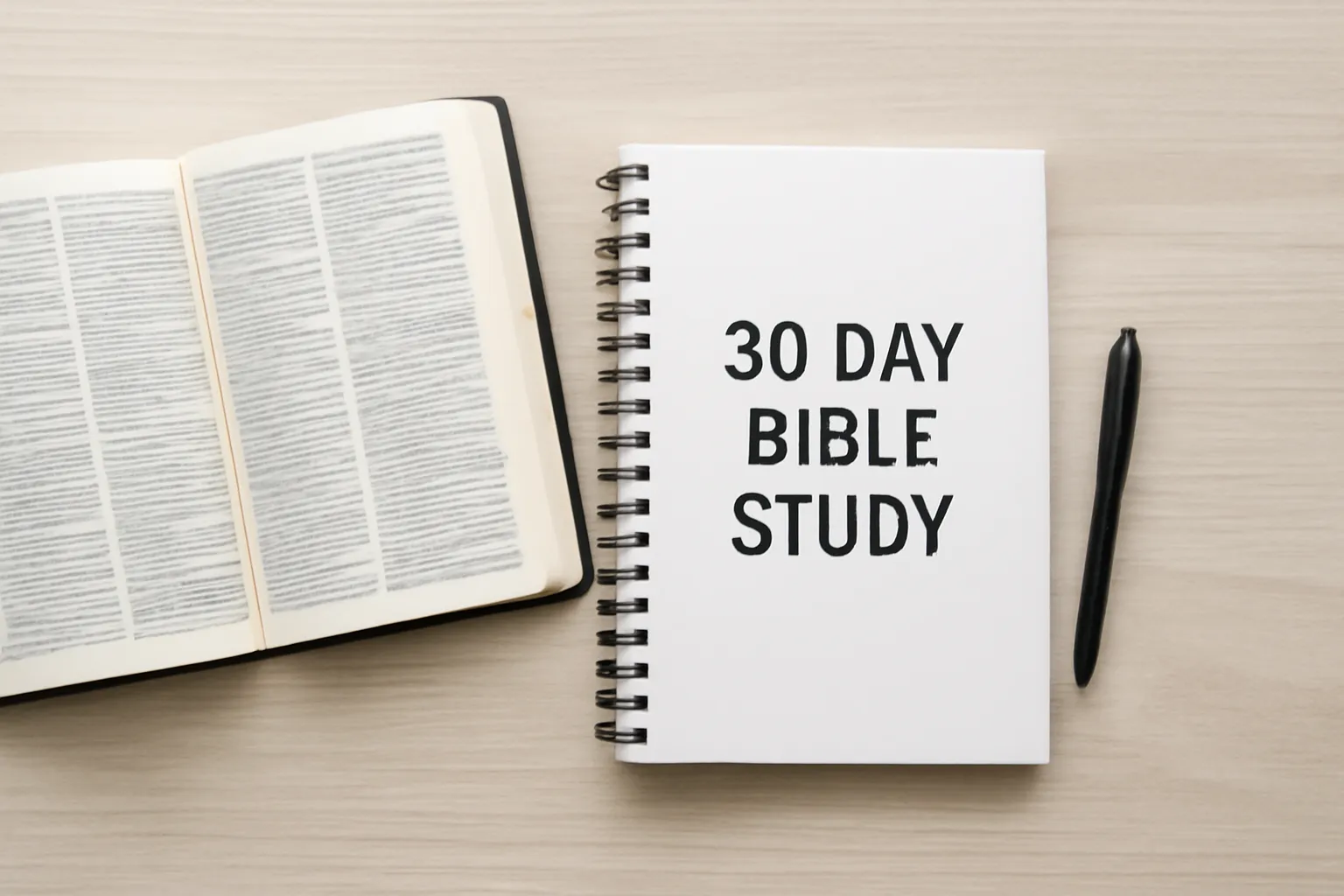
The title “30 Day Bible Study: A 30-Day Plan to Deepen Your Faith” speaks to a practical, intentional approach to scripture that fits into busy lives while still offering meaningful growth. This article lays out what a month-long Bible study can look like, why it can be transformative, and how to tailor a thirty-day study to your personal rhythm, spiritual tradition, and learning style. Whether you are starting from scratch or returning to a long-standing practice, a month-long Bible study can provide fresh eyes, renewed motivation, and concrete spiritual outcomes—such as clearer priorities, stronger habits, and a deeper sense of God’s presence.
In the pages that follow, you will find guidance on planning a 30-day study plan, a day-by-day outline you can adapt, and practical tips to keep you engaged without overwhelming your schedule. You will encounter variations of the 30-day Bible study concept, including a thirty-day study, a month-long Bible study, and a 30-day plan designed for group or individual use. The aim is not simply to read more, but to read with intention, observe deeply, apply faithfully, and reflect honestly.
What is a thirty-day Bible study?
A thirty-day Bible study is a purposeful cycle of daily scripture reading, meditation, and response that spans an entire calendar month. It is not a one-off devotional or a quick skim of a single passage; it is a cohesive journey that ties together themes, passages, and practices to cultivate lasting change. Common features include:
Daily reading of selected verses or chapters.
Reflection on what the text reveals about God, humanity, and your life.
Response in the form of journaling, prayer, or action.
Consistency as a core discipline, reinforcing study as a habit rather than a sporadic task.
Guided prompts or a simple framework to help you stay focused.
The concept also scales to a one-month Bible study or a month-long study that is designed for a small group. For groups, the plan can include shared discussions, accountability checks, and collective prayers, making the experience more dynamic while preserving the core rhythm of reading, reflecting, and responding.
Why embark on a 30-day plan?
Undertaking a 30-day plan to deepen your faith offers several tangible benefits:
Consistency builds spiritual muscle. Showing up each day, even for a few minutes, trains your heart toward regular worship and trust.
Focus reduces distraction. A set sequence helps you avoid aimless reading and encourages intentional discovery.
Clarity emerges about God’s character, your values, and your call to live out your beliefs in daily life.
Growth in discipline translates into other areas, such as prayer, service, or relationships.
Community (in group formats) offers accountability, shared insight, and mutual encouragement.
The long arc of a month-long Bible study makes it easier to measure progress and celebrate small victories—like a deeper sense of peace after quiet reflection, a new habit of prayer before meals, or a more hopeful outlook in difficult circumstances.
Preparing for success: setting the stage for a fruitful thirty-day study
Preparation matters as much as the content you engage with. Below are practical steps to set up your 30-day Bible study for success:
Choose a time that you can consistently keep—whether early morning, lunch break, or evening winding-down—and guard it as a non-negotiable appointment with God.
Reserve a quiet space where you can focus without interruptions; even a small, dedicated corner can become a sacred place.
Gather essentials—a Bible or a reliable Bible app, a notebook or journal, a pen, and a dependable reading plan or guide for the month.
Define your aim for the month. Is your goal to deepen trust, improve prayer life, gain biblical literacy, or practice generosity? Write it down and refer to it often.
Communicate boundaries with others in your life so you can protect your study time and avoid last-minute interruptions.
Structure of the plan: what a 30-day study typically includes
A well-structured 30-day study balances exposure to Scripture with time for reflection and practical application. While you can adapt elements to your context, the core components usually include:
Reading—short, focused passages that illustrate a theme or question.
Observation—noting key ideas, questions, and insights that stand out.
Application—determining how the passage calls you to respond in your life today.
Prayer—asking for wisdom, strength, and transformation in light of the reading.
Journaling—recording observations, prayers, and any commitments you plan to make.
A common framework you will encounter is the S.O.A.P. method—Scripture, Observation, Application, Prayer. Although not mandatory, having a simple method can keep you anchored in a process that produces real outcomes.
A practical, day-by-day outline for a 30-day Bible study
The following day-by-day outline provides a concrete path for a month-long Bible study. It blends passages from different parts of Scripture to foster a broad understanding while offering focused themes for personal growth. You can follow this exact outline or adapt it to your preferred translation, topic, or devotional style.
Day 1 — Set your intention. Read Psalm 1 and Proverbs 3:5–6. Reflect on trust and direction. Write a short prayer about committing to God’s guidance for the coming days.
Day 2 — God as Creator. Read Genesis 1 and John 1:1–5. Observe God’s order, light, and life. Note any traits of God you want to emulate in daily living.
Day 3 — The call to discipleship. Read Matthew 4:18–22 and Luke 9:23. Consider what it means to follow Jesus in your workplace, family, and community.
Day 4 — Prayer posture. Read Psalm 63:1–8 and Luke 11:1–4. Practice a simple, personal prayer rhythm and journal your experience.
Day 5 — Gratitude and contentment. Read 1 Thessalonians 5:16–18 and Philippians 4:6–9. List blessings and areas of contentment you can cultivate.
Day 6 — Faith and doubt. Read Mark 9:14–29. Bring your questions to God and note how faith grows through struggle.
Day 7 — Scripture and life change. Read James 1:22–25 and Romans 12:1–2. Consider how you can live out your beliefs in practical ways this coming week.
Day 8 — Mercy and justice. Read Micah 6:8 and Matthew 25:31–46. Reflect on acts of mercy you can pursue in your community.
Day 9 — Love and relationship. Read 1 Corinthians 13 and John 15:12–17. Reflect on how love shapes your interactions with others.
Day 10 — Wisdom and decision making. Read James 3:13–18 and Proverbs 15:22. Journal decisions you face and steps toward wise choices.
Day 11 — Forgiveness and freedom. Read Ephesians 4:31–32 and Colossians 3:13. Consider whom you need to forgive and how to extend grace.
Day 12 — The promises of God. Read 2 Corinthians 1:20 and Hebrews 10:23. Hold onto God’s faithfulness in your current season.
Day 13 — Work and vocation. Read Colossians 3:23–24 and Psalm 37:3–5. Reflect on how your daily work can honor God.
Day 14 — Sabbath-rest. Read Exodus 20:8–11 and Mark 2:27–28. Evaluate pace and rest patterns in your life.
Day 15 — Peace amid trials. Read John 16:33 and Philippians 4:6–7. Practice a short breath prayer in moments of stress.
Day 16 — Stewardship. Read Luke 16:10–13 and 1 Timothy 6:17–19. Consider generous living and careful use of resources.
Day 17 — Identity in Christ. Read Galatians 2:20 and Ephesians 2:8–10. Contemplate who you are in God’s family and what that means for daily choices.
Day 18 — Community and belonging. Read Hebrews 10:24–25 and 1 Corinthians 12:12–27. Reflect on your role in the Body of Christ.
Day 19 — Hearing God’s voice. Read John 10:27 and Psalm 46:10. Practice a listening prayer exercise and note impressions gently.
Day 20 — Hope in God’s plan. Read Jeremiah 29:11 and Romans 8:28–30. Rehearse hopeful promises in your mind and prayers.
Day 21 — Spiritual disciplines. Read 1 Timothy 4:7–8 and Matthew 6:33. Consider adding or refining one habit (reading, fasting, service, or study).
Day 22 — Covenant faithfulness. Read Jeremiah 31:31–34 and Hebrews 8:6–12. Reflect on the new covenant and what it means for your trust.
Day 23 — Gospel joy. Read Romans 1:16 and 2 Corinthians 5:17. Let the message of reconciliation shape your outlook and conversations.
Day 24 — God’s sovereignty and your response. Read Isaiah 55:8–9 and Proverbs 16:9. Affirm God’s plan while inviting your own submissive will.
Day 25 — Service and generosity. Read Luke 6:38 and Acts 20:35. Plan a concrete act of service or a generous gift.
Day 26 — Scripture memory. Read Psalm 119:11 and Colossians 3:16. Choose a verse to memorize and reflect on how it shapes your day.
Day 27 — Spiritual growth through others. Read Ecclesiastes 4:9–12 and Galatians 6:2. Seek mentorship or a trustworthy accountability partner.
Day 28 — Worship as life. Read Romans 12:1–2 and Psalm 95:6. Explore ways to turn daily routines into moments of worship.
Day 29 — Reflection and consolidation. Review your journal entries and identify recurring themes, questions, and victories.
Day 30 — Celebration and next steps. Revisit your initial goals, celebrate progress, and outline practical steps to continue growing beyond the month.
This day-by-day outline is designed to be flexible. If a particular passage resonates, you can spend extra time there; if another theme calls to you, you can follow that thread while maintaining the overall rhythm of the plan.
Variations of the 30-day Bible study
While a 30-day Bible study typically follows a daily rhythm, you can tailor the format to your context. Here are a few common variations:
Group-led thirty-day study — A facilitator guides daily readings and weekly discussions, fostering accountability and shared insight.
Focused topic study — Each day centers on a theme such as grace, fear, or prayer, drawing from multiple passages that illuminate the topic.
Scripture interwoven with devotionals — Short, reflective devotionals accompany each day’s reading to spark meditation.
Chronological 30-day plan — Read in roughly the order the events occurred in Scripture to gain a narrative sense of the Bible story.
Illustration and action plan — Each day ends with a small concrete action (service, study, or hospitality) that reflects the reading.
Tools and resources to support a month-long study
A successful 30-day study benefits from practical tools. Consider these:
Printed or digital Bible reading plan that provides the daily passages or themes.
Journaling notebook or a dedicated section in your Bible for reflection and prayer.
Commentaries or study guides to deepen understanding and offer historical context (use sparingly to avoid information overload).
Prayer prompts or a simple prayer journal to record requests, answered prayers, and meditations.
Accountability partner or small group where you can share insights and maintain momentum.
Journaling and reflection: making meaning from your readings
Journaling is a powerful companion to a 30-day Bible study. It helps you articulate what you hear, observe, and apply. Consider the following prompts to enrich your journaling practice:
What did I observe? Note any repeated words, surprising details, or questions that arise.
What does this reveal about God? Record insights into His character, promises, and authority.
What does this require of me? Identify a concrete, measurable action you can take in response.
What am I praying for? Capture requests, intercessions, and gratitude related to the passage.
What is the verse I will memorize? Choose a verse and write it on your mirror or phone lock screen for daily reminder.
Practical tips for ongoing motivation
Sustaining a month-long rhythm can be challenging, but a few practical strategies help you stay engaged:
Keep it brief if time is tight—five to ten minutes is enough for a meaningful reading, reflection, and note-taking.
Use a timer to prevent study from spilling into other tasks. Short, focused sessions beat long-but-disconnected stretches.
Mix formats—alternate between a traditional reading, a narrative devotion, or a short audio or video reflection.
Reflect on impact weekly: ask how the readings have changed your perspective, choices, or relationships.
Invite accountability—share weekly summaries or questions with a friend or group.
Common questions about a 30-day Bible study
Is it okay to skip days?
Life happens. The goal is consistency over perfection, so do not be discouraged if you miss a day. Pick up where you left off and adjust your plan as needed.
What if I don’t understand the passages?
Start with a childlike question: What does this reveal about God? What does this require of me? Consider small, incremental study steps rather than exhaustive commentary.
Can I do this alone or with others?
Both options work. A single-person journey can be intimate and reflective, while a group plan offers accountability, shared insights, and communal encouragement.
How do I measure progress?
Progress can be silent and internal—an increased sense of peace, clearer decision-making, or a strengthened habit. You can also track days completed, insights gained, and actions taken.
Guidance for lifelong growth beyond the 30 days
A month-long Bible study is a milestone, not a finish line. To sustain growth after day 30:
Establish a new rhythm by carrying forward the best practices you discovered—daily reading, reflection, and prayer.
Transition to a shorter cadence such as a weekly mini-study or a daily verse memorization plan to keep the momentum.
Expand your sources by exploring different biblical genres (poetry, history, gospel narratives, letters) to broaden your understanding.
Engage with community—a small group or online forum can provide ongoing accountability and encourage perseverance.
Apply with intention—set quarterly aims for service, generosity, or relational growth and revisit them regularly.
Closing encouragement: your invitation to deeper faith
A 30-day Bible study invites you into a disciplined, hopeful journey toward a more intimate relationship with God. It is a pathway to deepened faith, greater clarity in decision-making, and a more consistent posture of prayer and service. As you embark on or renew this plan, remember that real growth happens not only in what you read, but in what you allow the readings to prompt you to become—in your thoughts, your conversations, your choices, and your love for others.
May this month-long journey be marked by curiosity, courage, and grace. If you are beginning the thirty-day study today, welcome the process, celebrate small wins, and trust that steady, faithful steps can transform your daily life and your understanding of God’s love and purpose for you.
Embarking on a consistent Bible study routine can be more attainable with thoughtful planning. This article explores free bible reading plans printable and why they are a practical tool for daily devotion and Bible study. Whether you are new to Scripture or seeking a reliable rhythm for long-term growth, printable plans offer structure, accessibility, and…
Embarking on a journey through scripture can feel daunting for someone new to the faith. A well‑structured Bible reading plan for new believers offers a practical path that builds habit, enhances understanding, and deepens spiritual life. This article, titled Bible Reading Plan for New Believers: A Beginner’s Guide to Reading Scripture Daily, provides a thorough…
Welcome to a comprehensive guide to the August Bible Reading Plan, featuring 31-Day Daily Devotions designed to foster regular time with Scripture, reflection, and prayer. Throughout the month of August, this plan offers a steady rhythm for individuals, families, and small groups. Whether you prefer to call it the August Bible Reading Plan, the August…
Free Printable Chronological Bible Reading Plan: Read the Bible in Order The idea of reading the Bible in chronological order is to follow the events of Scripture as they occurred in history, rather than jumping from book to book. A free printable chronological Bible reading plan offers a convenient way to approach this method by…
Introduction to the 40 Day Challenge Bible Welcome to a practical exploration of the 40 Day Challenge Bible, a pathway designed to transform faith through focused Scripture, daily discipline, and intentional reflection. If you have ever wondered how to cultivate a deeper relationship with God in a way that is both manageable and meaningful, the…
12 Steps and the Bible: A Practical Guide to Spiritual Growth The journey of spiritual growth often invites us to hold two powerful resources in tension: the practical wisdom of the 12-step process and the timeless wisdom of the biblical story. This guide offers a practical, visitable pathway for integrating the language of the 12…