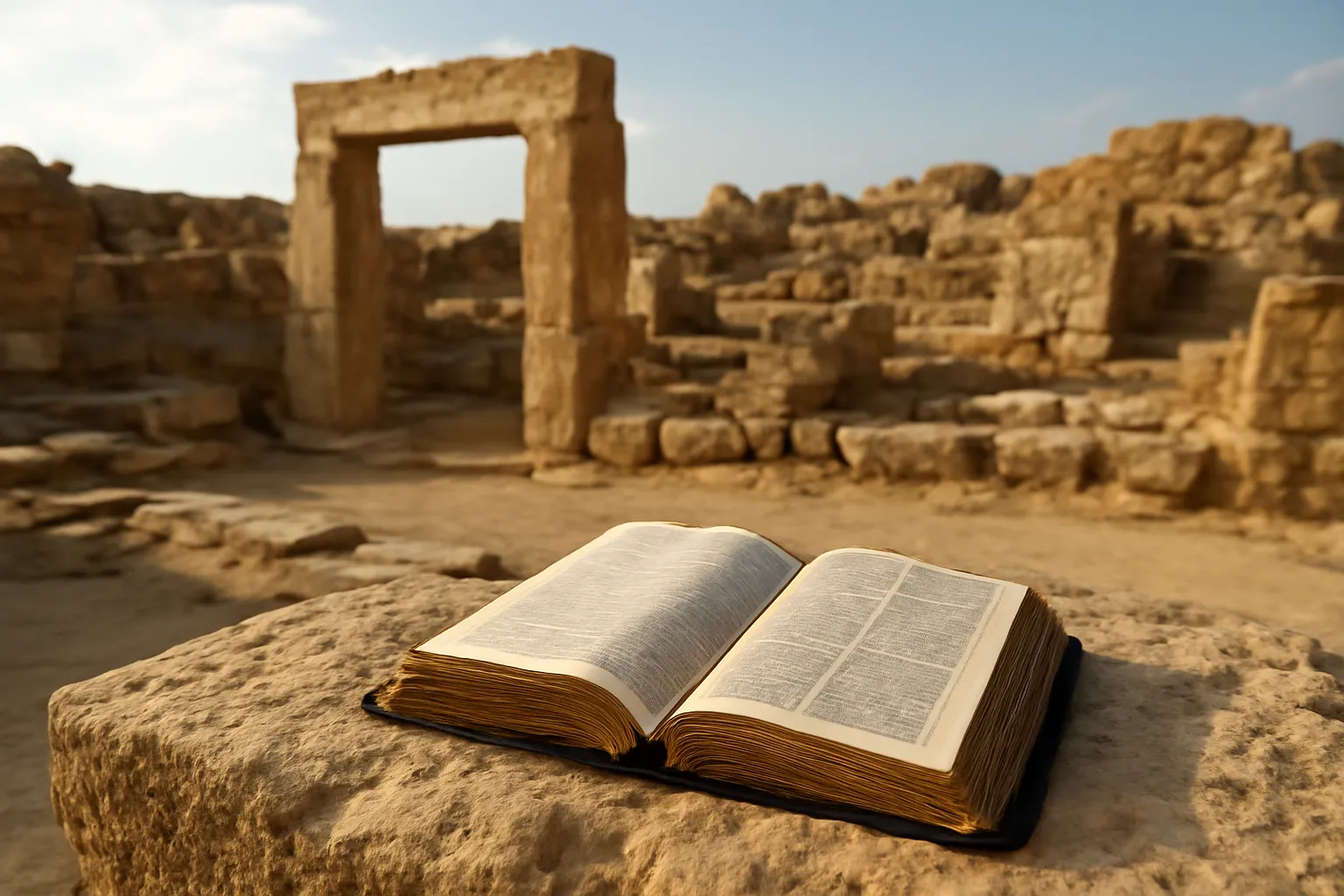
Introduction to Bible Archaeology News: What Readers Should Know
Bible archaeology news blends fieldwork findings with scholarly analysis to illuminate the worlds described in biblical texts. This coverage tracks the discovery of inscriptions, artifacts, architectural features, and environmental remains that can shed light on ancient communities, religious practices, daily life, and historical events mentioned in scripture. It also covers the methods, debates, and ethics surrounding archaeological practice. For students, teachers, and curious readers alike, understanding how new discoveries are evaluated helps distinguish compelling claims from speculative commentary. This article surveys the landscape of recent discoveries, the research that underpins them, and the insights they offer into biblical history, language, and culture.
In the following sections you will find a structured overview of the latest discoveries, the research frameworks used by scholars, and the broader implications for how we read biblical narratives against the backdrop of material culture. You will also see careful notes on the limits of evidence and the need for interdisciplinary approaches that bring together archaeology, epigraphy, philology, history, and science.
Latest Discoveries and Their Significance
New Textual Fragments and Inscriptions
In recent years, researchers have highlighted the discovery of fresh inscriptions and textual fragments that offer new angles on biblical languages, literacy, and social networks. These discoveries often come from archaeological sites in the Levant and nearby regions where ancient scripts flourished. Textual fragments can range from lithic inscriptions carved in stone to ostraca (potsherds with writing) that preserve everyday administrative or religious records.
The significance of newly found inscriptions lies in:
Language and paleography: Decipherment, dating, and stylistic analysis help place texts in a historical sequence and illuminate scribal practices.
Social and political insight: Names, titles, and official terminology reveal the structure of governance, ethnicity, and interregional connections.
Religious practice: References to rituals, calendars, or deities contribute to understanding how faith shaped daily life.
Textual relationships: Comparisons with canonical biblical passages or other contemporary writings can illuminate how communities understood sacred texts.
Artifacts Illuminating Daily Life and Ritual
Artifacts such as household tools, cooking ware, inscribed vessels, and ceremonial objects offer a tangible sense of how people lived, worshipped, and organized their communities. When found in contexts like domestic rooms, courtyards, or temple precincts, these items help archaeologists reconstruct routines—meals, trade, craft specialization, and observance of sacred times.
Key takeaways from artifact-centric discoveries include:
Economic patterns inferred from storage jars, weights, and coinage, revealing trade networks and monetary practices.
Architectural alignments showing how spaces were divided for religious, commercial, or residential purposes.
Iconography and symbolism used in art and inscriptions that reflect belief systems and shared narratives.
Settlement and Urban Planning: Cities in Ancient Israel and the Surrounding Region
Studies of city walls, gates, water systems, and urban layouts are central to understanding how biblical communities organized themselves for defense, administration, and sacred observance. Discoveries in this area often focus on:
Waterworks such as cisterns, aqueducts, and wells that reveal engineering ingenuity and daily life.
Fortifications indicating security concerns, political dynamics, and the scale of urban growth.
Residential architecture offering glimpses into household economics, family structure, and social status.
Chronology, Dating, and Scientific Approaches
Dating ancient remains is a blend of scientific technique and historical interpretation. Recent advances in radiometric dating, luminescence techniques, and material analysis contribute to a more nuanced picture of timelines associated with biblical events and eras. Researchers emphasize cross-checking methods and transparent reporting to avoid overstating a single line of evidence.
Important concepts in this area include:
Radiocarbon dating applied to organic materials to estimate age, with caveats about calibration and local reservoir effects.
Thermoluminescence and optically stimulated luminescence (OSL) used for pottery and sediment dating, helping anchor occupations and activity periods.
Paleography and script analysis for dating inscriptions and understanding scribal practices.
Biblical Texts and Correlations: Reading Scripture Through Material Culture
A major goal of archaeology is to place biblical texts within their historical milieu while acknowledging the interpretive boundaries between sacred literature and material remains. Recent discourse emphasizes:
Correlation versus confirmation—how archaeological contexts can support or challenge readings of biblical passages without forcing a one-to-one match.
Textual plurality—the recognition that multiple texts from the same period may provide complementary or competing perspectives on events.
Historical memory—how communities remembered and reinterpreted past events in later periods, as reflected in inscriptions and architectural reuse.
Research Frameworks: Methods Behind the News
Interdisciplinary Approaches
Bible archaeology news emerges at the intersection of several disciplines. The most robust studies typically combine archaeology, epigraphy, philology, history, and the natural sciences. This cross-disciplinary approach strengthens interpretations and provides multiple lines of evidence for or against a proposed scenario.
Common methodological pillars include:
Stratigraphic excavation to establish temporal layers and cultural phases within site sequences.
Epigraphic analysis for reading inscriptions in their original languages and scripts, with attention to paleography and orthography.
Contextual interpretation linking material remains to social, political, and religious life.
Scientific dating methods (radiocarbon, luminescence, metallurgical analysis) to ground textual claims in empirical timeframes.
Publication and Peer Review: How Findings Move from Field to Public Knowledge
Reliable Bible archaeology news typically follows a chain from field report to scholarly publication. This involves:
Site reports released by excavation teams, often accompanied by preliminary interpretations.
Peer-reviewed articles in established journals where specialists scrutinize methods and conclusions.
Public communication through museum exhibits, university press releases, and responsible media coverage.
Readers should look for statements that clearly separate descriptive findings from interpretive claims and note when conclusions are provisional or debated within the field.
Ethics, Provenance, and Preservation: A Growing Theme in the News
An increasingly prominent thread in Bible archaeology news concerns ethics and conservation. Responsible reporting emphasizes:
Provenance and legal excavation ensuring artifacts come from legitimate contexts with proper documentation.
Repatriation and museum ethics addressing the responsibilities of institutions that house relics from ancient sites.
Local collaboration with descendant communities, host countries, and local archaeologists to share benefits and knowledge.
Public education about the complexities of archaeology to avoid sensationalism.
Interpreting Findings: Debates, Cautions, and How to Read a News Report
Understanding Certainty Levels
News about archaeology often conveys varying degrees of certainty. A cautious report might describe a discovery as «preliminary» or «potentially significant» until corroborated by additional evidence and peer review. Readers should pay attention to qualifiers such as probable, possible, likely, and disputed, which indicate the status of interpretation.
Distinguishing Myth, Legend, and History
Biblical narratives mix mythic, legendary, and historical elements. Archaeology does not prove every event in scripture; rather, it tests possibilities about where and when communities lived, worshipped, and faced crises. News pieces may highlight correlations or tensions between textual tradition and material remains, inviting readers to weigh competing hypotheses.
Case Studies in News Coverage
Across different outlets, you may encounter recurring patterns in coverage:
Discovery announcements paired with a description of the site context, the artifact, and the dating approach.
Scholarly commentary offering alternate readings or pointing out methodological limits.
Conservation updates explaining how sites are being preserved for ongoing study and public access.
Regional Spotlight: Where Bible Archaeology News Comes From
The field draws material from a broad geographic area that covers the Levant, parts of North Africa, and neighboring regions. Each area contributes its own types of artifacts, inscriptions, and architectural features that illuminate different biblical texts and themes.
Israel and the Occupied Territories
This region remains central to many Bible archaeology studies due to the density of ancient settlements, inscriptions, and fortified sites. News from here often emphasizes water systems, city gates, fortifications, and domestic contexts that help illuminate daily life and political organization in Iron Age to late antique periods.
Jordan, Lebanon, and the Syrian Frontier
Sites across these areas contribute to our understanding of cross-cultural interactions, trade routes, and religious landscapes. Inscriptions and architectural remains in these zones can offer comparative data for correlating biblical accounts with regional histories.
Egypt and the Nile Corridor
Egypt’s textual and material remains can intersect with biblical narratives in areas such as migration, diplomacy, and monarchical power. News coverage here often centers on papyri, tomb inscriptions, and architectural programs that reveal interactions between Egyptian and Levantine communities.
Anatolia and the Aegean World
Excavations in modern Turkey and nearby regions contribute to understanding the broader ancient world in which biblical texts circulated. Discoveries may illuminate linguistic diversity, mercantile networks, and the movement of peoples through long-established trade corridors.
Implications for Students, Educators, and General Readers
How to Use Bible Archaeology News in Education
Teachers and students can leverage current discoveries to illustrate several learning goals:
Critical thinking about sources—analyzing how archaeologists interpret finds and what remains uncertain.
Interdisciplinary skills—connecting archaeology with history, languages, and science.
Historical empathy—gaining a sense of how communities understood themselves in the ancient world.
For Curious Readers: How to Follow the News Responsibly
If you follow Bible archaeology news, consider these guidance points:
Check the source: peer-reviewed journals, museum press releases, and university publishers generally provide more robust analyses than sensational media blurbs.
Differentiate discovery from interpretation: look for language indicating whether a finding is descriptive or interpretive.
Watch for updates: initial reports can be revised as more evidence becomes available or new analyses are published.
Public Engagement, Preservation, and the Future of the Field
Ethics and Access
A mature field emphasizes ethical standards, transparent provenance, and opportunities for local communities to participate in and benefit from research. Public outreach should strive to present complex information accessibly while avoiding misleading simplifications.
Preservation and Policy
Preservation of sites and artifacts is an ongoing concern. International collaborations, funding structures, and national heritage laws shape what can be learned and how findings are shared with the public. The news often includes updates on conservation measures, digital documentation, and outreach initiatives such as museum exhibitions and online databases.
The Role of Digital Innovation
Digital technologies—including high-resolution imaging, 3D modeling, photogrammetry, and online publication platforms—are transforming how discoveries are documented and accessed. Readers can expect more interactive and searchable resources that enable deeper engagement with the material culture behind biblical texts.
Concluding Reflections: What These Developments Mean for Our Understanding of the Bible
Bible archaeology news is not about replacing sacred texts with artifacts but about enriching our understanding of the worlds these texts describe. The material culture of ancient communities—houses, boats, inscriptions, sanctuaries, and artifacts—provides a companion narrative to the biblical record. Together, they offer a fuller picture of how people lived, worshipped, governed themselves, traded with neighbors, and responded to crises. While new discoveries can adjust interpretations, they also deepen our appreciation for the historical contexts that shaped biblical literature.
As you engage with this news, remember that archaeology is a living, collaborative field. Findings emerge, are debated, and are refined through ongoing fieldwork and scholarly dialogue. By keeping a critical eye on sources, embracing methodological diversity, and valuing ethical considerations, readers can better understand the evolving story of Bible archaeology and what it teaches about the ancient world.
The question of biblical historical accuracy invites careful distinction between what the texts claim about past events, what can be verified by external sources, and what remains in the realm of theological interpretation. In scholarly discourse, terms like biblical historicity, historical reliability, and historical probability are used to discuss how well the biblical narratives align…