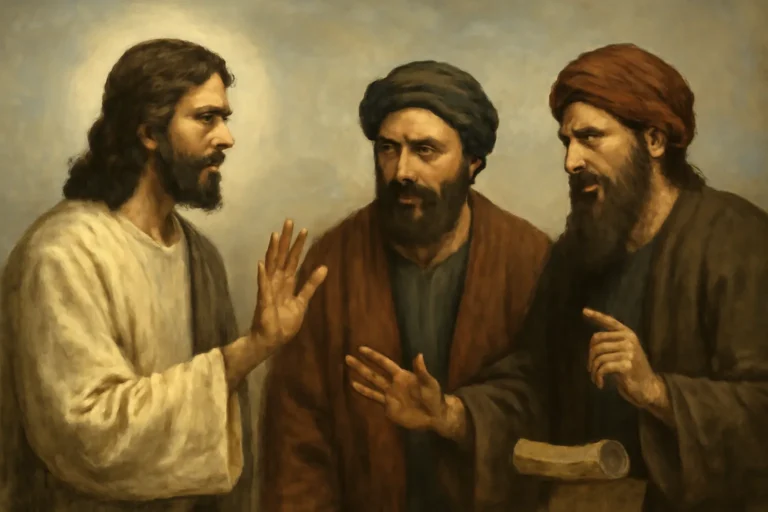
In many arenas—religious, political, social, or organizational—there are figures who present themselves as ultimate authorities, claiming access to special knowledge, hidden revelations, or guaranteed outcomes. The phenomenon is age-old: individuals or groups who weaponize certainty, fear, and charisma to lead others astray. This article examines the phenomenon of beware false prophets and offers a practical, evidence-based framework to recognize deceptive leadership. Rather than aligning with a single tradition or creed, the guidance here aims to be broadly applicable: the same warning signs that reveal a fraudulent messenger in one context often show up in others.
The goal is not to cynically dismiss every visionary or controversial voice, but to encourage careful inquiry, open dialogue, and accountability. By understanding the patterns of manipulation and the nature of credible evidence, you can spot deception, protect vulnerable communities, and navigate complex claims with greater confidence. Throughout this article, you will encounter several ways to beware false prophets, watch out for false prophets, and think critically about the messages you encounter.
Red Flag 1: Extraordinary Claims Without Sufficient Evidence
A hallmark of deceptive messengers is the tendency to present claims that require huge leaps of faith without offering credible support. This is where the concept of falsifiability—the capacity for a claim to be tested and possibly disproven—becomes essential. If a teacher, guru, or leader asserts revelations, prophecies, or miracles that are consistently backed by anecdotes alone or by unverifiable testimonials, proceed with caution.
Definition: Claims that exceed the available data, often framed as absolute or eternal truths, with little or no external verification.
Common tactics: miraculous signs, sudden prophecies, precise timing that cannot be independently corroborated, or selective use of ambiguous language to cover up uncertainty.
How to verify: demand independent, transparent evidence; look for peer review, reproducible results, or corroboration from credible third parties; check whether predictions have consistently failed or been revised.
What to look for in responses to extraordinary claims
Does the claimant provide clear methodology for how conclusions were reached?
Are there alternative explanations that have been considered and addressed?
Is there a pattern of adjusting the narrative after failures instead of acknowledging them?
The danger here is not skepticism itself but the absence of credible verification. When someone relies on dramatic rhetoric or comfortingly absolute statements, it is essential to examine the evidence, assess the source, and consider whether the claim remains meaningful in the absence of extraordinary authority. In the wider landscape of deception, extraordinary claims without robust evidence often signal a red flag that should not be ignored.
Red Flag 2: Authority Based on Threats, Isolation, or Shaming
A second red flag centers on how influence is exercised. When a messenger asserts that dissent equals danger, or that those who question the message will face social, spiritual, or legal consequences, that is a powerful tool for coercion. This pattern—constraining discussion, creating an echo chamber, and using fear to enforce obedience—undermines autonomy and invites coercive control.
Definition: The deployment of fear, punishment, or social sanctions to compel adherence rather than presenting evidence or respectful dialogue.
Common tactics: threats of excommunication, shaming, social isolation, demonizing critics, and creating an “in-group vs. out-group” dynamic.
How to verify: assess whether there is room for constructive disagreement, whether leaders invite transparent scrutiny, and whether dissenting voices are marginalized or silenced.
Is criticism welcome, or is it met with ridicule or punishment?
Are decisions and policies open to public review, or are they guarded by secrecy?
Do the leaders demonstrate consistency in applying rules to themselves and others?
Accountability and transparency are antidotes to coercive authority. While genuine leadership may involve boundaries and boundaries, it should not thrive on fear or exclusion. When fear becomes the currency of influence, the risk of deception rises sharply. This is a crucial red flag for anyone evaluating a spiritual, political, or organizational figure: if the path to belonging depends on fear rather than informed consent, beware the messenger.
Red Flag 3: Financial Exploitation and Material Gain
A striking pattern in many warning cases is the fusion of spiritual or moral claims with financial or material demands. The older term “prosperity gospel” captures a form of reckoning where wealth and success are presented as divine rewards. Even outside religious contexts, the allure of money can be used to bind followers to a leader who promises spiritual benefits in exchange for donations, investments, or control over personal finances.
Definition: Exploiting beliefs or trust to secure financial contributions, often with opaque accounting or misaligned incentives.
Common tactics: demand for large seed offerings, “tithes” with minimal transparency, pressure to privatize assets, or claims that money is essential for divine favor.
How to verify: review public financial records, request independent audits, and seek third-party evaluations of how funds are used. Consider whether donations correlate with real, measurable outcomes or show evidence of mismanagement.
Guardrails for financial integrity
Require transparent accounting and independent audits.
Separate personal wealth from organizational finances; clarify who benefits.
Watch for perpetual fundraising cycles without outcomes or accountability.
The danger here lies not in charitable generosity or religious devotion per se but in the monetization of faith or belief. When financial demands are coupled with coercive language, or when leadership treats donations as a path to legitimacy rather than a voluntary act, the risk of manipulation grows. A trustworthy messenger should be comfortable with clear financial reporting and open questions about how funds are used to support legitimate aims rather than personal enrichment.
Red Flag 4: Emotional Manipulation and Fear Appeals
The power of emotion is a well-documented driver of human behavior. Deceptive figures often harness intense feelings—fear, guilt, shame, or exhilaration—to push people into quick commitments or unquestioning obedience. The use of emotional manipulation can short-circuit critical thinking and make people less likely to scrutinize the facts.
Definition: Tactics that rely on high-arousal emotions to motivate action, often bypassing rational discussion.
Common tactics: apocalyptic warnings, existential threats, urgent deadlines, perpetual crisis framing, and conflating personal fate with the group’s success.
How to verify: pause to assess the evidence in a calm state; ask for time to verify claims; seek diverse perspectives to test if the emotional response aligns with verifiable data.
Managing emotional arousal
Take a pause when a claim feels immediately alarming; time often reveals better judgment.
Check the source of the emotion: is it fear-based or evidence-based?
Engage with multiple viewpoints to test the intensity of the message against independent data.
Emotional transparency is not the same as honesty. A credible claimant can still evoke strong feelings without exploiting fear or inducing rushed decisions. When you notice that a message consistently depends on fear appeals rather than evidence, treat the claim as suspect and seek alternative explanations or sources.
Red Flag 5: Lack of Accountability and Secrecy
A pattern of secrecy, guarded leadership, and purposeful avoidance of public accountability is a telltale sign of manipulation. If a message comes from someone who insists on inner-circle control, refuses to publish basic information, or discourages independent scrutiny, you are probably looking at a red flag.
Definition: A leadership style that prioritizes secrecy, insulates the core message from external review, and discourages transparency.
Common tactics: hidden identities, vague or contradictory biographical claims, refusal to disclose affiliations, and a pattern of blocking or dismissing critics.
How to verify: examine public records, verify affiliations, request access to sources cited by the claimant, and look for documented accountability mechanisms (audits, external validators, or external boards).
Is there an independent body that reviews the leader’s actions and claims?
Do critics have a platform to express concerns without retribution?
Are there documented outcomes and measurable metrics that can be independently verified?
The absence of accountability is not merely a procedural flaw; it often correlates with a higher risk of abuse of trust and harm. When leaders hide or obscure critical information, supporters are left to rely on charisma rather than evidence. The healthiest dynamics involve transparent processes, open dialogue, and clear lines of accountability that hold leaders to the same standards as everyone else.
Red Flag 6: Inconsistent or Evolving Messages Across Time or Group
A common sign of deceptive leadership is the inconsistency of doctrine, prophecy, or policy across time or across branches of a movement. When a teacher’s or leader’s statements shift unpredictably—often after a discrepancy becomes visible—it signals opportunistic messaging rather than a stable, well-supported worldview.
Definition: A lack of doctrinal stability, with messages that change in response to circumstances or audience.
Common tactics: reinterpretation of past statements, selective quotation, or claiming that “new revelation” supersedes prior commitments.
How to verify: trace the historical trajectory of the claims, compare primary sources, and look for consistency across official publications, interviews, and transcripts.
Consistency as a criterion for credibility
Has the claimant publicly acknowledged errors and corrected them?
Are core principles stable, or do they shift to accommodate current circumstances?
Do members of the community remain aligned with the central claims, or do factions emerge that disagree on basic tenets?
Inconsistent messaging can be a signal that the leader is adapting the story to maintain influence rather than pursuing truth. While it is natural for any system to refine its understanding, radical shifts that lack explanation or accountability should prompt careful scrutiny. A credible messenger will address inconsistencies with clear reasoning, verifiable evidence, and a willingness to revise in light of better information.
Red Flag 7: Pressure to Dismiss Critics or Enforce Blind Obedience
The final red flag concerns the suppression of dissent. When a promoter of a belief system brands dissent as betrayal, apostasy, or sinful, personal sin becomes the instrument to maintain group cohesion. This pattern—demanding unquestioning obedience and labeling critics as enemies—often signals a coercive dynamic designed to minimize scrutiny.
Definition: A strategy to delegitimize or silence critics and to compel conformity by labeling disagreement as moral failing or rebellion.
Common tactics: public shaming of dissenters, threats of expulsion, “us vs. them” narratives, and heavy emphasis on obedience over inquiry.
How to verify: observe how the group handles dissent, whether critical questions are answered with substance or dismissed with moral judgments, and whether there is space for open dialogue.
Healthy boundaries and constructive critique
Are critiques welcomed and addressed, or are they automatically dismissed as invalid?
Do dissenters receive respectful engagement, or are they labeled as heretics?
Is there a mechanism for updating beliefs when credible arguments arise?
The presence of a culture of critique is a strong indicator of ethical leadership. When legitimacy relies on suppressing dissent, or when obedience is prioritized over truth-seeking, you should treat the claims with heightened skepticism. The healthy ecosystem for any belief system or organization thrives on transparent debates, robust evidence, and accountability for leaders as well as followers.
Strategies to Guard Against Deception: How to Evaluate Bold Claims
Recognizing the seven red flags is only the first step. The next step is adopting practical habits that help you stay safe while engaging with challenging ideas. The goal is not cynicism but discernment—the ability to differentiate between sincere inquiry and manipulation.
Question and verify: Treat extraordinary claims as hypotheses to be tested, not as givens to be accepted on faith.
Seek sources: Look for independent sources, primary documents, data, and peer-reviewed analysis whenever possible.
Diversify perspectives: Read or listen to a range of voices, including critics and experts who challenge the narrative.
Test predictions: If a claim makes specific predictions, assess how many have been tested and what the results were.
Assess motive: Consider whether personal gain, power, or status might influence the message.
Establish boundaries: Protect yourself from coercive tactics, and do not commit resources or identity to a cause without solid evidence.
It’s important to recognize that deception does not always disguise itself as overt cruelty. Often it blends charisma, warmth, and compelling storytelling with manipulative patterns. The strongest defense is a habit of critical thinking coupled with practical checks: transparent information, accountability, and openness to critique.
Practical Tools for Everyday Discernment
In addition to the seven red flags, you can adopt a toolkit of habits that help you discern reliable guidance from manipulation. Here are practical steps you can apply in daily life when you encounter bold claims or charismatic leaders.
Request specifics: Ask for concrete details, sources, and a transparent plan. Ambiguity is a warning sign.
Check for cross-checks: Do independent analyses align with the claimed position?
Identify incentives: Who benefits from your support or resources? Are the claimed benefits tied to tangible outcomes?
Evaluate the community climate: Is the environment hospitable to dissent, or are questions discouraged?
Pause before pledges: Give yourself time to reflect, sleep on major decisions, and consult trusted peers.
By incorporating these discernment tools into your routines, you can maintain autonomy while remaining open to new ideas. The aim is not to police belief but to uphold the conditions under which beliefs are formed: evidence, reason, accountability, and respectful dialogue.
What to Do if You Suspect a False Prophet
If you start to suspect that a leader or teacher exhibits patterns consistent with deceit or coercion, consider a structured approach to protect yourself and others. Use the following steps as a practical plan.
Pause and assess: Take stock of the situation, review the seven red flags, and be honest about your own biases and emotions.
Gather evidence: Collect documents, recordings (where legal), and third-party analyses that can illuminate the claims.
Seek diverse input: Discuss concerns with trusted friends, mentors, or professionals who can provide objective perspectives.
Set boundaries: If the relationship is causing harm, establish clear boundaries or disengage if necessary.
Report concerns: For organizations or communities, escalate concerns to appropriate accountability structures or external bodies when warranted.
It’s essential to distinguish between healthy critique and hostility. The aim is not to discredit people with strong opinions but to ensure that claims are subjected to scrutiny, evidence, and ethical standards. Even if you decide to disengage from a particular path, you can continue to treat others with respect while exercising prudent caution about the information you accept as truth.
Addressing Cultural and Contextual Sensitivities
The topic of false prophets intersects with rich cultural, religious, and historical contexts. Different traditions have their own vocabulary, norms, and criteria for legitimate authority. It is important to avoid applying a one-size-fits-all standard to every spiritual teacher or public figure. In some communities, strong symbolic language and decisive leadership are valued and not inherently deceptive. The key is to assess behavior against universal standards of evidence, accountability, and the protection of members from harm.
Cultivating Discernment in a Noisy World
From religious teachers to political gurus, from new-age promoters to bold corporate figures, the temptation to follow a charismatic authority can be powerful. Yet the risk of deception rises when critical inquiry is discouraged, when evidence is scarce, or when personal gain overshadows communal well-being. The seven red flags outlined in this article serve as a practical, memorable framework to beware false prophets and to guard against manipulation. By foregrounding evidence-based thinking, accountability, and respectful dialogue, you can navigate the world of bold claims with greater confidence and less risk of harm.
Remember, discerning truth in a noisy landscape is not about cynicism; it’s about building a resilient habit of verification, transparency, and ethical engagement. Whether you are evaluating a spiritual teacher, a political figure, or a self-styled expert, the same principles apply: look for credible evidence, demand accountability, and be willing to revise your beliefs when the facts do not support them. In a society where information is abundant but judgment is often contested, the ability to spot deception is a vital skill for individuals and communities alike.
False prophets have been part of religious discourse since ancient times. In Christian tradition, these figures are often described as pseudo-prophets or deceptive teachers who claim divine insight while steering crowds away from the core message of Jesus. This article explores how to identify deception, understand Jesus’ warnings, and stay anchored to his teachings when…