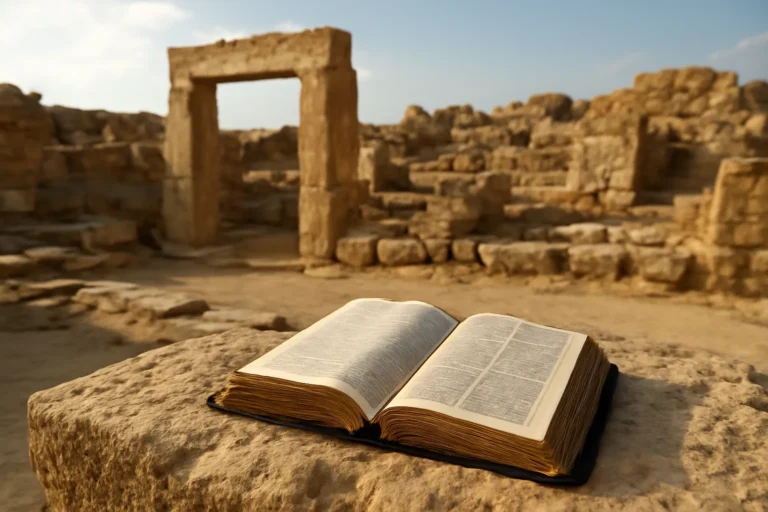
The question of biblical historical accuracy invites careful distinction between what the texts claim about past events, what can be verified by external sources, and what remains in the realm of theological interpretation. In scholarly discourse, terms like biblical historicity, historical reliability, and historical probability are used to discuss how well the biblical narratives align with the known facts of ancient history, archaeology, and contemporary writings. This article surveys the landscape of evidence, explains the importance of historical context, and addresses common misconceptions that arise when people read the Bible as if it were a single, uniform historical document. The goal is not to settle every debate, but to provide a clear, nuanced overview of how historians and textual scholars approach this topic and what readers can reasonably conclude about the Bible’s past.
To evaluate historical accuracy in biblical texts, it helps to separate three interrelated questions: enactment (what the text asserts about events), evidence (what can be observed or corroborated by external sources), and interpretation (how literary, theological, and cultural aims shape the account). The Bible is not a single genre; it comprises poetry, prophecy, history, letters, apocalyptic literature, genealogies, parables, and sermons. Each genre has its own conventions and expectations for what counts as reliable information. As a result, readers should be prepared to adjust expectations depending on the section of the Bible in view. A useful working principle is to consider geography, chronology, and material culture alongside theological message when judging historical plausibility.
When scholars speak of historical reliability, they typically mean the extent to which the biblical record can be cross-checked against independent data: inscriptions, coins, administrative records, architectural remains, and other contemporary texts. They also examine whether events described in the text could reasonably be expected to occur given what is known about the societies involved, their technologies, and their political processes. This approach does not aim to eliminate religious belief or divine action from the discussion; rather, it seeks to understand how ancient authors recorded memory, identity, and covenantal language in a way that interacts with, but is not reducible to, modern historiography.
Evidence supporting historical reliability: archaeology, texts, and corroboration
Archaeology and material culture
Archaeology provides a corpus of data that can confirm or adjust certain biblical details. While archaeology does not “prove” every event in a straightforward sense, it reveals patterns of life, city layouts, political structures, and material culture that frequently align with biblical descriptions. Some notable kinds of corroboration include:
Place names and municipal structures: Excavations often confirm the existence of cities and districts mentioned in the Bible, such as ancient Jerusalem, Jericho, Megiddo, and Lachish. Even when the biblical accounts differ in emphasis or sequence, the identification of places and their general features lends credibility to the historical framework.
Engineering works and infrastructure: Structures like Hezekiah’s tunnel and the Broad Wall in Jerusalem provide physical evidence of a fortified city in the late monarchic period, consistent with biblical narratives about political consolidation and defense.
Inscriptions and royal chronicles: Inscriptions from neighboring powers—such as the Tel Dan Stele, the Mesha Stele, and Assyrian and Babylonian annals—recount events that intersect with biblical times (dynastic names, campaigns, and rulers). These sources can confirm the existence of historical figures and certain events, or at least provide a parallel frame for understanding political dynamics in the region.
Demonstrable historical context: Archaeology often confirms the existence of major institutions mentioned in the Bible (temples, administrative hierarchies, exile practices, and foreign relations). The broader landscape of the ancient Near East shows a world in which the Bible’s settings could plausibly unfold.
Important caveats accompany archaeological information: discoveries are fragmentary, dating can be uncertain, and artifacts rarely confirm every specific event or the exact sequence of biblical chapters. Moreover, the absence of an archaeological marker for a particular event does not automatically refute it; antiquity inevitably leaves many traces undiscovered or undeciphered. In sum, archaeology strengthens the plausibility of certain biblical claims and clarifies the historical setting, while recognizing its own limits.
The reliability of biblical narratives also depends on how the texts were transmitted over centuries. The field of textual criticism studies how manuscripts were copied, edited, and translated, and how these processes might affect the wording and order of events. Key points include:
Different textual traditions: The Hebrew Bible/Old Testament has several major textual streams, notably the Masoretic Text, the Septuagint (Greek translation), and in the New Testament, a rich manuscript tradition including papyri and uncial copies. Each tradition preserves a slightly different history of transmission.
Dead Sea Scrolls and other ancient manuscripts demonstrate that many books circulated in multiple forms in antiquity. Where the scrolls align with Masoretic readings, confidence grows; where they diverge, scholars reassess the likely original wording.
Synoptic relationships and textual variants: In the New Testament, the presence of parallel accounts (the Synoptic Gospels: Matthew, Mark, Luke) invites careful comparison to understand what each author intended to convey and how their sources may have shaped the narrative.
Textual criticism does not seek a single «correct» version; rather, it aims to reconstruct the most probable original wording and to understand how later readers and communities used and interpreted the texts. This scholarly work is a vital component of evaluating historical claims, because precise wording, order, and wording can influence how events are understood and anchored in time.
Chronology, geography, and historical plausibility
Chronology is a fundamental tool for cross-checking biblical accounts with external data. For example, the Bible’s timelines around the rise and fall of kingdoms, exile and return, or the decades described in prophetic material can be compared with:
Chronicles from contemporary polities, including Assyrian, Babylonian, and Persian records that document campaigns, treaties, exiles, and restorations.
Geographical data such as the distance between cities, topography of regions (coastal plains, hills, river valleys), and the logistics of travel and warfare in the ancient world.
Synchronisms—moments where biblical events coincide with non-biblical events (for instance, the era of Cyrus the Great who permitted return and reconstruction of the Temple in Jerusalem, which is corroborated by Persian-era deeds and royal inscriptions).
It is common to find places where the chronology in biblical books aligns well with external sources, and other places where precise dates remain debated. The goal of scholars is not to “prove” every date but to assess whether the overall sequence of events remains credible within the broader historical framework of the ancient Near East and the Mediterranean world.
New Testament sources and early Christian evidence
Even though this subsection focuses on the biblical context, it is worth noting that the New Testament” historical reliability often rests on three intertwined strands: the reliability of written letters and gospels, the historical core of the life of Jesus, and the early Christian communities that preserved and transmitted these records. Key elements include:
Epistolary evidence: Paired with the letters of Paul and other early writers, the New Testament shows patterns of churches, missionary movements, and early doctrinal development that reflect real-time events and decisions in the first century.
Non-Christian corroboration: Early non-Christian sources mention Jesus or the movement surrounding him, which is often cited as external corroboration that the figure and the early Christian community existed beyond Christian manuscripts. These sources are sparse but statistically significant for historical assessment.
Apostolic testimony and early manuscript tradition: The rapid spread of oral and written material in the first century, followed by a flourishing manuscript culture, is consistent with historical dynamics of a growing religious movement in the Roman world.
Scholars typically distinguish between a minimal historical core—events that can be plausibly reconstructed from multiple sources—and more interpretive or theological elements that reflect the authors’ aims. This approach allows readers to appreciate the historical dimension of the New Testament while recognizing the distinctive faith commitments of its authors.
Ancient Near Eastern context and covenant language
The Bible emerged in a world where memory, covenant, and sacred space shaped political life. Its authors often record events in ways that emphasize divine purpose and covenantal fidelity more than the detached, modern historiography typical of contemporary history books. Grasping this cultural context helps readers interpret what is being asserted about real events versus what is being communicated about faith, identity, and vocation. The presence of miracles, prophetic citation, and symbolic numbers is not a failure of historical method but a facet of the way ancient authors told time and meaning.
Literary genres and theological aims
Understanding the Bible requires recognizing its diverse genres and aims. For instance:
Historical narrative often blends political history with theological interpretive framing.
Prophetic literature communicates messages that may weave historical reference with oracular critique, sometimes in symbolic language.
Poetry and wisdom literature convey truth through metaphor, typology, and metaphorical form, which can illuminate deeper realities rather than offer a literal, point-by-point chronology.
These distinctions matter for historical assessment: a miracle story, while central to faith claims, is not the same kind of historical statement as a royal annal. Historians weigh sources differently depending on genre and aim, always reading with attention to the author’s context and purpose.
Historical method and critical inquiry
Scholars in historical disciplines use a toolkit that includes source criticism, literary analysis, archaeology, and cross-cultural comparison. The same method that assesses a secular ancient text—examining authorship, audience, purpose, reliability of witnesses, and cross-checks—applies to biblical texts with appropriate sensitivity to genre and religious meaning. A few guiding principles emerge:
Multiple independent attestations strengthen claims about events or people mentioned in the Bible. When more than one independent source corroborates a detail, confidence rises.
Contextual plausibility asks whether a described event aligns with what is known about technology, politics, and social norms of the era.
Textual integrity and transmission remind us that copying processes can introduce variants; understanding these helps avoid overreliance on a single manuscript’s wording.
Engaging with these methodological ideas helps readers differentiate between what is historically plausible and what is theologically meaningful. It also clarifies why some questions remain debated even among reputable scholars.
Common misconceptions and clarifications
Misconception: The Bible claims to be a modern historical account
Many readers assume the Bible intends to function exactly like a contemporary history textbook. In fact, biblical authors often narrated events through theological lenses, covenantal memory, and literary devices that aim to communicate meaning for faith communities. This does not mean that historical facts are irrelevant, but it does mean that readers should consider genre, purpose, and audience when assessing historical claims. Recognizing this helps prevent the false dichotomy that pits faith against history.
Misconception: A contradiction in a narrative proves inaccuracy
Apparent contradictions can reflect different sources, perspectives, or purposes rather than deliberate mistake. Many apparent differences arise from variations in naming, chronology, or emphasis rather than from a fundamental conflict of events. Scholarly approaches like harmonization attempts (without erasing differences) to demonstrate how accounts can be compatible within their own frameworks. Complex distinctions can often be resolved by careful attention to context, translation, and textual tradition.
Misconception: If archaeology doesn’t confirm a detail, the Bible is false
Absence from the archaeological record for a discrete detail does not automatically disprove a narrative. The archaeological record is incomplete, and some events may not leave obvious material traces. Conversely, some archaeological finds corroborate broad biblical themes without confirming every particular point. The healthiest stance is to weigh the totality of evidence—from archaeology, texts, and geography—rather than relying on single data points.
Misconception: The Bible is uniformly accurate about every date and place
In a mature scholarly view, not every date or geolocation is equally secure. Some passages have secure anchors; others are debated or dated with a margin of error. This does not undermine the overall value of the biblical record for historical, religious, and literary study. It does, however, caution readers against overreaching claims of exact precision in every instance.
Misconception: External sources establish the Bible’s divine inspiration
External or non-biblical attestations can support the historical existence of figures or events and can place biblical texts in a real historical milieu. They do not, by themselves, establish theological claims, divine authorship, or the transcendent truths that many readers cherish. Historical evaluation and theological conviction often operate on different planes, each contributing to a fuller understanding of the Bible’s significance.
Evidence synthesis: what the data collectively suggests
Across the different strands of evidence—archaeology, textual transmission, chronology, and non-biblical corroboration—the overall picture suggests that the Bible contains a substantial historical core. This core is often embedded in a larger theological and literary framework that shapes how events are remembered and interpreted. Some high-level conclusions that emerge from careful study include:
Historical plausibility for many core acts of governance, exile, return, and religious reform in both the Old and New Testaments, aligned with what is known about the ancient Near East and the broader Mediterranean world.
Convergence with external sources on certain kings, campaigns, and political developments, though not every detail is mirrored in a single external text.
Consistency of core narratives with the social and religious milieu of the relevant eras, including covenantal language, temple-centered life, and the interplay between monarchic authority and prophetic critique.
It is essential to keep in mind that “historical accuracy” in ancient texts is not a binary grade of “true” or “false.” Rather, it is a spectrum that reflects degrees of corroboration, plausibility, and historical resonance, given the sources available to modern scholars. Readers who approach the Bible with this nuanced lens can appreciate its historical dimensions while also recognizing its distinctive voice as a product of faith communities in the ancient world.
Practical implications for readers and students
For those studying or simply reading the Bible, several practical guidelines help maintain a healthy balance between faith and historical inquiry:
Know the genres. Identify whether a passage is narrative, poetry, prophecy, letter, or apocalyptic literature, then interpret accordingly rather than applying a one-size-fits-all historical standard.
Consult multiple sources. Where possible, compare biblical accounts with archaeological reports, inscriptions, and non-biblical histories to gain a fuller picture of the past.
Distinguish between certainty and probability. Be explicit about what is supported by strong, cross-cut data and what remains speculative or interpretive.
Allow for historical nuance. Some events are well-supported; others are better understood as plausible reconstructions or theological memories that nonetheless preserve meaningful historical insight.
Appreciate the role of translation. Every translation involves choices; understanding translational issues helps avoid misreading subtle details that could affect historical interpretation.
Ultimately, readers can engage with the Bible as a document that is both historically informed and theologically meaningful. The historical dimension does not negate spiritual significance; rather, it enriches the conversation about how ancient people perceived, remembered, and narrated their world.
In sum, the question of biblical historical accuracy invites a nuanced and multi-disciplinary approach. The body of evidence—from archaeology, external inscriptions, and manuscript tradition—steadily supports a plausible historical framework for many biblical events, particularly in the ancient Near East context and early Christian milieu. Yet the Bible’s own literary complexity—its use of genre, metaphor, covenant language, and theological aims—means that it should not be read as a modern, secular history book in every respect. The aim of responsible study is not to erase faith or to insist on a strict, textbook-like history, but to understand how ancient authors recorded memory, identity, and belief in a way that resonates across the centuries while remaining historically engaging and informative.
For readers who want a practical takeaway: embrace a balanced perspective that honors the Bible’s historical anchors while also recognizing its distinct literary and theological voice. When approached with careful methodology and an awareness of genre and context, the biblical record can be read both responsibly and deeply, offering insights into the ancient world, the shaping of communities, and the enduring questions about meaning, purpose, and origin.
Introduction to Bible Archaeology News: What Readers Should Know Bible archaeology news blends fieldwork findings with scholarly analysis to illuminate the worlds described in biblical texts. This coverage tracks the discovery of inscriptions, artifacts, architectural features, and environmental remains that can shed light on ancient communities, religious practices, daily life, and historical events mentioned in…