Understanding the Baptism with the Holy Spirit and Fire: Meaning, Significance, and Biblical Insights
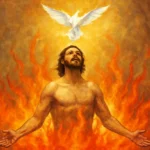
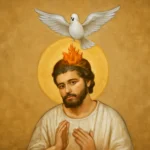
The phrase baptism with the Holy Spirit and fire appears in the New Testament as a powerful
description of a spiritual experience associated with divine empowerment, purification, and transformation.
Across Christian traditions, this language is used to speak of a deeper and more foundational work of God
in a believer’s life than the outward act of water baptism alone. In this article we explore the baptism of the Holy Spirit, the imagery of fire, and the
implications for faith communities, personal growth, and mission in the world. We will consider how
the Bible presents this experience, how various traditions understand it, and what it means for
practical Christian living today.
What does the phrase mean? Distinguishing terms and imagery
The terminology around this topic can be confusing because Scripture uses several closely related phrases
that overlap in meaning but emphasize different aspects. Here are some key terms you may encounter:
Baptism with the Holy Spirit — an act or experience in which the Spirit of God
comes to dwell in a person in a way that marks a turning point in vocation, power for witness, and
spiritual life.
Holy Spirit baptism — another way of saying the same experience, often used in
contexts that stress the Spirit’s gifting, filling, and presence rather than water ritual.
Baptism of fire — imagery drawn from Scripture (notably Matthew 3:11-12) that points
to purification, refinement, and the moment when God judges or purifies a life for service.
Fire in biblical symbolism — fire signifies purification (refining metal), illumination, zeal,
and the presence of God. It can signify both blessing and judgment, depending on the context.
Water baptism — a distinct, outward sign of repentance and identification with Christ’s death and resurrection,
often viewed as the entry point into the people of God; it is commonly distinct from, though related to,
Spirit baptism in many traditions.
Across centuries and across continents, Christians have held a spectrum of views on how these terms relate
to one another. Some traditions emphasize a two-stage experience—one experienced at conversion (the
Spirit’s indwelling) and another later moment or ongoing process (empowerment for witness and service).
Others understand Spirit-filled life as a continuous growth in daily walking with God, where
the Spirit’s influence increases over time without a sharp, discrete moment. Still others stress
a definitive, outward sign accompanying the Spirit’s arrival, such as speaking in tongues in the
first-century church. Regardless of these differences, the core biblical assertion remains that God
seeks to bring believers into a more intimate, divinely empowered relationship with Himself through the Spirit
and, in some traditions, through the refining fire of testing and mission.
Biblical foundations: where the concepts come from
John the Baptist and the coming Messiah
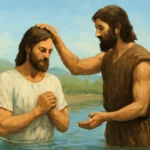
The biblical expectation begins with John the Baptist. In Luke 3:16, John declares that one
greater than himself is coming, and that he will baptize with the Holy Spirit and fire.
This statement functions on multiple levels. First, it announces a shift from a preparatory
baptism of repentance to a transformative immersion in divine life. Second, it signals that the Messiah
will bring not merely forgiveness but a new kind of power that enables obedience, proclamation, and
service. Third, the imagery of fire introduces purification: a process through which unworthy elements are
burned away, leaving a truer, more faithful follower of God.
Jesus Himself speaks of a future outpouring of the Spirit. In Matthew 3:11-12, He is described as the one
who will baptize with the Holy Spirit and with fire. This passage ties together two distinct
images: the comforting, empowering presence of the Spirit and the refining, purifying work of fire.
The imagery of the winnowing fork indicates that Christ will separate what endures from what does not,
purifying hearts ready for righteousness and purpose. The same passage also implies judgment—fire purifies
by burning away impurities and by exposing the true state of a person’s life.
Pentecost and the Spirit’s outpouring
A pivotal moment occurs in the early chapters of the Acts of the Apostles. At Pentecost (Acts 2),
the Spirit falls on the believers gathered in Jerusalem, and they begin to speak in other tongues as
the Spirit enables them. This visible and audible manifestation becomes a communal proof of the Spirit’s
presence and power for witnessing, preaching, and courageous mission. The New Testament presents this
event as the fulfillment of Jesus’ promise to send the Helper, who would empower ordinary people to become
extraordinary witnesses to the gospel.
Continued life in the Spirit: empowering and gifting
Following Pentecost, the apostolic letters teach that believers are baptized by one Spirit into one body
(1 Corinthians 12:13). This means that Spirit-led life is not only a private experience but also a corporate
reality—joined to Christ and to one another in the church. Spiritual gifts, boldness in witness, and a
growing desire for holiness are presented as fruits and expressions of this divine baptism. The presence of
fire imagery later in the New Testament, such as refining trials that strengthen faith (for example, 1 Peter 1:7; Malachi 3:2-3),
underscores the ongoing process of sanctification that accompanies the Spirit-filled life.
The meaning of fire: purification, zeal, and judgment
The symbol of fire operates on several levels in Scripture:
Purification: Fire refines character and motives, burning away impurities so that faith
and works endure (Genesis 18:25; Malachi 3:2-3; 1 Corinthians 3:12-15).
Zeal and consecration: Fire represents fervor for God and a holy dedication to His will.
It fuels courageous witness, mission, and obedience even in the face of opposition.
Judgment and accountability: Fire also signals divine judgment, especially when people resist
God’s purposes. In Matthew 3:12, the fire of judgment accompanies the Spirit’s work of purification.
Illumination and presence: Fire is a sign of divine presence (as with the bush that burned but was not consumed)
and a means to illuminate truth for the people of God (Psalm 18:28; Hebrews 12:29).
When Christians speak of the Holy Spirit being poured out “like fire,” they are describing a
dynamic life in which God’s Spirit awakens, purifies, and empowers. The Holy Spirit’s fire is not merely
punitive; it is also transformative—setting believers ablaze with love for God, devotion to truth, and zeal
for mercy toward neighbors.
Significance for the church and for individual believers
For individuals: transformation and empowerment
The baptism with the Holy Spirit signifies a turning point in which a believer receives
divine life, guidance, and power for witness. It is associated with:
Boldness to witness to Christ in difficult settings, including workplaces, schools, and public forums.
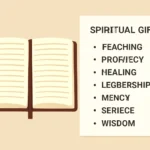
Gifts of the Spirit for building up the church—teaching, prophecy, healing, tongues, interpretation,
wisdom, knowledge, faith, and more (1 Corinthians 12:4-11).
Assurance of adoption and belonging as God’s child, received into one body with other believers (1 Corinthians 12:13).
Transformation of character through sanctification, growing in holiness, and aligning desires with God’s will.
The Spirit’s work among the gathered community fosters unity in the body, equips the church for mission, and sustains it through trials. The presence of
fire imagery reinforces the idea that the Spirit’s activity is dynamic and demanding: it seeks not merely to grant
comfort but to purify, empower, and propel God’s people into greater obedience and service.
Different theological perspectives on Spirit baptism and fire
Christians have developed a spectrum of understandings about the relationship between water baptism,
Spirit baptism, and the imagery of fire. Here are several representative viewpoints:
Pentecostal/Charismatic perspective: Spirit baptism is a distinct, post-conversion experience
that empowers believers for ministry and often involves manifestations such as speaking in tongues or prophecy.
The imagery of fire is central as a symbol of purification and zeal.
Non-Pentecostal evangelical view: Spirit baptism is closely tied to conversion and is
synonymous with regeneration and acceptance of Christ. The emphasis is on the Spirit’s indwelling at
faith, with ongoing sanctification rather than a dramatic, separate event.
Catholic and Orthodox perspectives: The Spirit’s work is received through the
sacramental life of the church. Water baptism is joined to the sacrament of confirmation (or chrismation)
in which the Spirit is strengthened for mission. Fire imagery is understood reverentially as purification
and zeal rather than a sensational sign.
Reformed and broader Protestant approach: Emphasizes the Spirit’s role in regeneration
and ongoing sanctification, with a focus on the fruits of the Spirit—love, joy, peace, patience, kindness—
as indicators of Spirit activity rather than sensational signs.
Regardless of these differences, many Christians agree that the Spirit’s work—whether described as a
single experience or a continuing process—leads to a life increasingly conformed to Christ and given to
the doing of good works by grace through faith.
A central aim of biblical teaching on Spirit baptism is the formation of a community that embodies
Christ’s love and truth. This means:
Pursuing holiness with honesty, repentance when needed, and a posture of humility before God.
Courageous witness that proclaims the gospel with plainness and mercy, not merely with clever rhetoric.
Mutual edification through gifts used for the common good, building up one another in faith.
Compassionate action toward the vulnerable, reflecting a Spirit-filled life in practical care and justice.
Gifts and discernment
The biblical record associates spiritual gifts with the Spirit’s gracious distribution. Believers are invited
to ask for these gifts and to exercise them in love. Practical steps include:
Desiring gifts that build up the church and seeking discernment to test what is truly from God (1 Thessalonians 5:19-22).
Testing prophetic words against Scripture and communal wisdom, ensuring alignment with the gospel.
Fostering unity by recognizing that diverse gifts serve a single calling and purpose.
Holiness, refinement, and daily discipleship
Fire imagery often serves as a reminder that God’s work in sanctification is ongoing. Believers are invited
to invite the Spirit into daily life—confession, prayer, Scripture reading, and obedience—to allow God to
refine motives, strengthen resolve, and deepen love for God and neighbors.
Receiving the Spirit: pathways and concerns
For many readers, the question is practical: How does one receive the Spirit or be renewed in the Spirit?
While the exact pathway can differ among traditions, several common elements appear in Scripture and in
congregational practice:
Faith in Christ: Belief in Jesus as Lord and Savior is foundational; the Spirit is given through
the instrument of faith in Him (John 7:37-39; Ephesians 1:13-14).
Prayer and longing: A sincere desire for God to dwell within and to fill with His presence is a
meaningful posture for receiving grace and guidance.
Community and laying on of hands (where practiced): In some contexts, the church’s petition
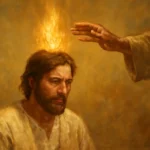
and a symbolic laying on of hands accompany the reception of the Spirit or a fresh filling (Acts 8:17; 19:6).
Holiness and obedience: The Spirit’s work is often connected with obedience to Christ, repentance
from sin, and alignment with Scripture.
Questions people often ask
Below are common questions and brief clarifications drawn from biblical teaching and historical discussion:
Is the baptism of the Holy Spirit something I must seek today? Many Christians believe
yes—a disposition of seeking God’s fullness is consistent with New Testament exhortations to be filled
with the Spirit. Others view it as a present experience of living in the Spirit rather than a one-time
event.
Can a person have the Spirit without experiencing tongues? Yes. The Spirit’s presence is
not limited to any single sign. Tongues are one possible manifestation in some contexts, but the Spirit’s
work is manifested in various gifts and character fruits that edify the church.
What about the idea of “fire” being judgment? Biblical fire carries both refining and judging
senses. In the context of Spirit baptism, fire often emphasizes purification and zeal, while in other
contexts it can symbolize accountability before God. The key is to read the passage in its larger biblical
narrative and church tradition.
Throughout church history, leaders have wrestled with how to describe and experience the Spirit’s
activity. The early apostolic witnesses emphasized the Spirit’s role in empowering mission and forming a
unified community. Over centuries, theologians have sought to articulate helpful categories for discerning
genuine Spirit-led life from sensational experiences or emotional excitement. Contemporary theologians and pastors
often encourage a biblically grounded approach: seek the Spirit with humility, test experiences by Scripture,
pursue holiness, and participate in a community that fosters accountability and love.
Ecumenical cautions and cautions against misuse
It is wise to distinguish genuine Spirit activity from counterfeits or unhealthy extremes. Spiritual experiences
should always be measured against the central claims of the gospel: the lordship of Christ, the supremacy of love,
and the transformation of lives toward Christlikeness. Communities that emphasize Spirit-powered life also
typically stress discernment, pastoral oversight, and accountability as safeguards against distortion.
The phrase baptism with the Holy Spirit and fire points to a comprehensive vision of life
in Christ: indwelling grace, empowered service, personal purification, corporate unity, and mission that
reaches across borders. Whether one emphasizes a dramatic, separate encounter or a steady, lifelong work
of the Spirit, the biblical witness invites believers into a deeper dependence on God’s Spirit—into a life
of holy courage, compassionate witness, and steadfast faith.
In sum, the sacred imagery of fire and baptism in the New Testament is not
about magical signs but about real transformation. It is about being washed, filled, and sent—drawn into
the life of the triune God and empowered to participate with Him in His redemptive work in the world.
For those who seek this reality, the invitation remains open: come to Christ, open your heart to the Spirit,
and join a community that testifies to the gospel with both word and deed.
Anointing Sermon: 5 Keys to Delivering a Spirit-Led, Powerful Message An anointing sermon is more than a well-crafted outline or a polished delivery. It is a message that carries the presence of God into the meeting, stirring faith, hope, and transformation in the hearers. In Christian ministry, many preachers yearn for that moment when the…
Anointed with Holy Spirit: What It Means and How to Walk in His Power Today Throughout biblical history, the phrase anointed with the Holy Spirit carries weighty significance. It signals a distinct moment of divine presence, empowerment, and commissioning for purpose. In the Christian tradition, the idea of being anointed by the Spirit is not…
This article offers a thorough exploration of the Bible spiritual gifts list, a guide to the gifts of the Holy Spirit described in Scripture. Whether you encounter the phrase bible spiritual gifts list, gifts of the Spirit in Scripture, or list of spiritual gifts in the Bible, the aim is the same: to illuminate how…
Baptism Holy Spirit Fire: Understanding Its Meaning and Impact Today The phrase baptism Holy Spirit Fire invites a careful, prayerful exploration of how Christians understand God’s work in a person’s life. Across history and across communities, the language of baptism, the Holy Spirit, and fire has carried rich symbolism—ranging from cleansing to empowerment, from purification…
This article explores the seven gifts of the Holy Spirit and how to recognize and practice them in everyday life. Overview of the Seven Gifts of the Holy Spirit The Christian tradition holds that there are seven gifts of the Holy Spirit that empower believers to live in closer union with God and to respond…