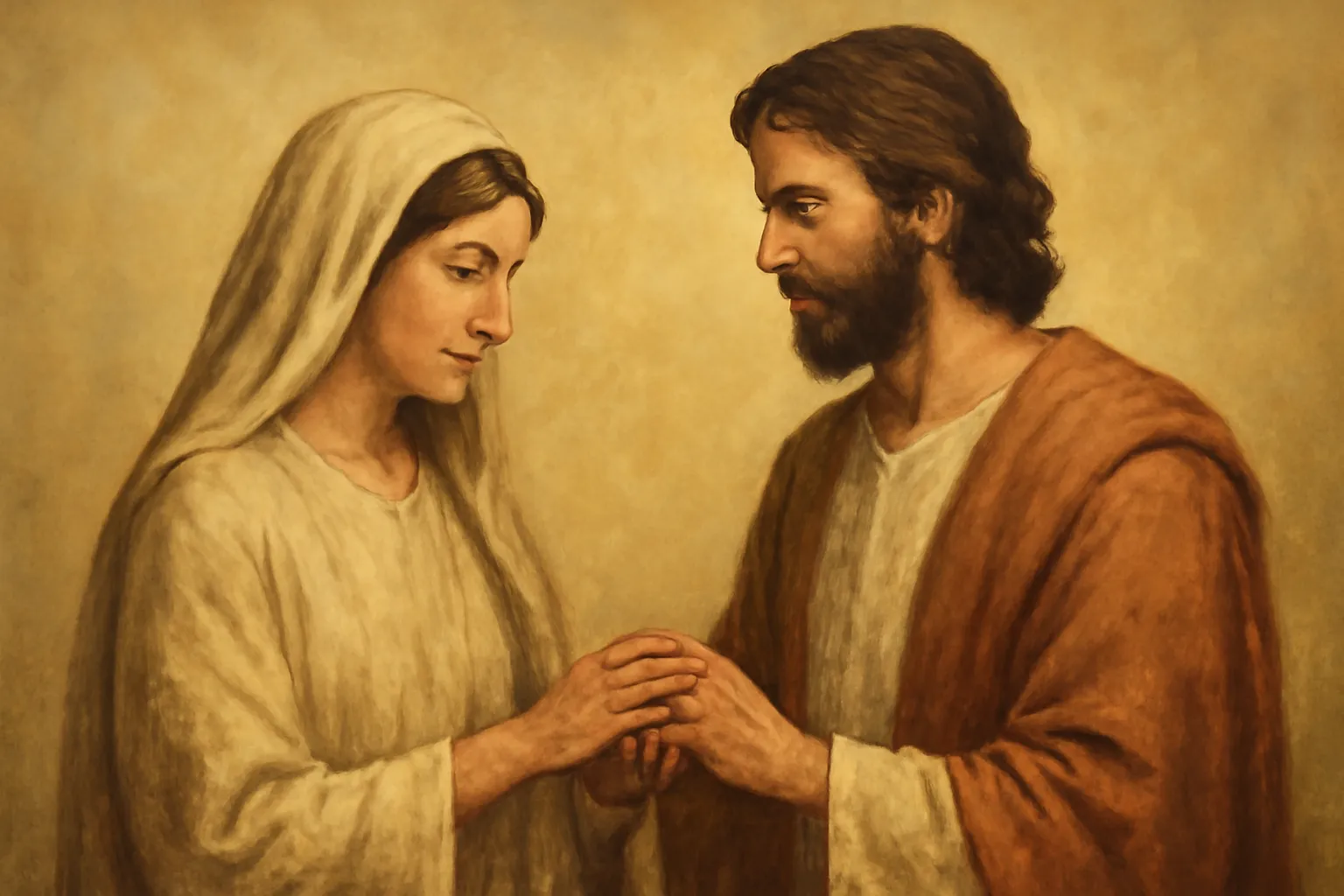
The term biblical marriage refers to a divinely ordained understanding of marriage as a sacred, lifelong covenant between two people—typically understood in Christian tradition as a union between a man and his wife. This definition is not merely a cultural construct or a social contract; it is framed by Scripture as a divine invention with purpose, rhythm, and expectations that shape how couples relate, grow, and fulfill God’s purposes in the world. In a culture that often treats marriage as a flexible or disposable arrangement, the biblical perspective emphasizes a durable bond grounded in love, fidelity, mutual respect, and spiritual transformation.
In this article, we will explore the meaning of biblical marriage, examine its scriptural foundations, and outline practical principles for couples who seek to live out a marriage defined by faithfulness, grace, and purpose. We will use variations of the phrase “biblical marriage” to capture its breadth—including biblically defined marriage, God-ordained marriage, and holy matrimony—while staying anchored in the core biblical claims about covenant, companionship, and holiness.
Meaning and Definition Variants
The phrase biblical marriage encompasses several overlapping concepts. To appreciate its breadth, it helps to articulate a few formal definitions that recur in Scripture and in biblical teaching.
Definition 1: Covenant-Based Union Between a Man and His Wife
A primary biblical definition portrays marriage as a covenant—an oath-bound, durable relationship established by God, in which two distinct persons are joined as one through lifelong commitment. This view emphasizes that marriage is not merely a contract between two individuals but a binding relationship before God, with responsibilities to one another, to offspring if God grants them, and to the wider community of faith.
Definition 2: Holy Matrimony as a Sacred Partnership
Another articulation centers on the idea of holy matrimony as a sacred partnership designed for companionship, mutual edification, and the honoring of God through shared life. In this sense, marriage is set apart from other human relationships because it reflects God’s own purposes for intimate closeness, self-giving love, and cooperative mission in the world.
Definition 3: A Divine Institution for Relationship, Procreation, and Spiritual Growth
A third way to phrase the definition highlights the divine institution nature of marriage, which serves not only the good of the couple but also the cultivation of character, the nurture of children (where God grants them), and the cultivation of a faith-oriented household that disciplines, disciplines, and disciplines—toward greater likeness to Christ.
The biblical definition of marriage rests on a robust set of passages from both the Old and New Testaments. Together, they present marriage as a creation-order pattern, a Christ-centered covenant, and a framework for holiness and practical living.
Creation and the Pattern of Genesis
Genesis 1–2: Human beings are created male and female, and the first human relationship is explained in terms of companionship and procreation. The foundational moment is when a man shall leave his father and mother and be joined to his wife, and the two become one flesh (Genesis 2:24). This “one flesh” picture communicates intimacy, unity, and mutual dependence, setting a template for future marriages.
The creation pattern emphasizes partnership, complementarity, and the social/prophetic significance of family life as a basic building block of society.
Matthew 19:4–6 and Mark 10:9 recount Jesus’ teaching that what God has joined together, people should not separate. Jesus reaffirmed the Genesis pattern, underscoring the permanence of the marital bond when God is involved.
Ephesians 5:22–33 presents a profound and debated passage on the roles within marriage: the wife’s submission to the husband and the husband’s sacrificial love toward his wife, mirroring Christ’s love for the church. The surrounding context makes clear that this is a mutual call to love, respect, and care, with leadership carrying responsibility and accountability before God.
1 Peter 3:7 adds a note on mutual honor and considerate leadership, urging husbands to honor their wives as the weaker partner and as co-heirs of the gracious gift of life, so that their prayers may not be hindered.
1 Corinthians 7 provides guidance on marriage, singleness, fidelity, and the realities of sexual life within marriage, affirming that sexual intimacy is designed for mutual fulfillment and restraint where necessary to honor God.
Key Passages and Concepts
Malachi 2:14–16 highlights the faithfulness of marriage as a covenant with God, calling God’s people to guard the covenant and to avoid treachery in marriage.
Hebrews 13:4 proclaims, “Let marriage be held in honor among all,” signaling a high view of marriage’s sacred status.
Genesis 2:24 and its repeated echo in the New Testament establish the teleology of marriage—companionship, unity, and a shared life that mirrors divine intention.
Key Biblical Terms and Concepts
To understand biblical marriage more clearly, it helps to define a few core terms and concepts that recur throughout Scripture.
Covenant: A binding, solemn agreement between God, a couple, and often the broader community, with commitments that endure beyond feelings and circumstances.
One flesh: A description of the intimate, enduring bond of unity between spouses that signifies physical, emotional, and spiritual connectedness.
Mutual submission and mutual respect: While passages like Ephesians 5 speak of roles, the overarching biblical ethic is one of mutual care, deference, and self-giving love under God.
Sanctification: Marriage is a context in which both partners can grow toward holiness, learning to reflect Christ’s love and holiness in daily life.
Fidelity and purity: Sexual exclusivity within marriage is a moral and spiritual boundary designed to protect the relationship and reflect God’s faithfulness.
Procreation and nurture: In Scripture, marriage often includes the potential for procreation and the responsibility to nurture the next generation within a faith-centered framework.
Roles and Responsibilities in Biblical Marriage
Scripture presents a vision of complementary roles within marriage, while also insisting on the equal dignity and value of each partner in the sight of God.
Complementary, Not Competing Roles
Husbands are called to love sacrificially—even as Christ loves the church—seeking the good of their wives, bearing responsibility for the family, and leading in a way that serves rather than dominates.
Wives are called to respond with respect and support, honoring their husbands as part of a mutual submission that honors God and strengthens the family. This is best understood within a framework of mutual love and partnership.
Both partners share in the duties of emotional honesty, spiritual growth, and practical stewardship—including prayer, church involvement, and care for children and relatives.
Equality in Dignity, Distinctive Roles in Function
The biblical picture emphasizes equality in the dignity of each person (created in God’s image) while acknowledging different roles within the marriage relationship. This distinction is not about inferiority or superiority but about a divinely ordered structure designed to reflect Christ’s relationship to the church.
Principles for Couples: Living a Biblical Marriage
For couples who seek to embody biblical marriage in daily life, several practical principles emerge from Scripture and tradition. Implementing these principles can help a marriage weather difficulty, deepen intimacy, and align life with God’s purposes.
Root your marriage in a shared relationship with God. Regular prayer, Bible study, and worship together create a spiritual unity that grounds the relationship in God’s truth and grace.
Prioritize covenant faithfulness. Faithfulness in words, commitments, and sexual life is foundational. Fidelity sustains trust and honors the divine covenant.
Cultivate sacrificial love. A marriage grows when both partners seek the good of the other, even at personal cost, mirroring Christ’s love for the church.
Practice mutual respect and submission. In daily decisions, seek the counsel of one another, value differing perspectives, and pursue unity over personal victory.
Communicate openly and honestly. Clear, timely, and compassionate communication helps prevent grudges, misinterpretations, and resentment.
Establish healthy boundaries. Protect the marriage from unhealthy external pressures (relationships, technology, finances, and schedules) that could erode intimacy and trust.
Foster covenantal friendship. Build a robust friendship rooted in shared values, humor, and shared purpose, so the relationship remains resilient through trials.
Commit to sexual integrity and mutual delight. Within marriage, sexuality is a good gift designed for intimacy, bonding, and mutual pleasure, guided by consent, love, and respect.
Guard the home as a place of hospitality and character formation. A home shaped by faith becomes a school of love, discipline, service, and welcome for others.
Seek accountability and wise counsel. When conflict arises, engage pastoral guidance, trusted mentors, or mature couples for counsel, accountability, and repair.
Practical Applications and Practices
Set a weekly date night and use it to reconnect, talk honestly, and pray together.
Develop a shared devotional routine, even if brief, to anchor decisions in Scripture and prayer.
Create a marriage budget and work toward financial unity, avoiding secret spending and fostering transparency.
Establish a family rhythms that prioritize spiritual disciplines, service, and healthy routines for children and guests.
Practice forgiveness and reconciliation with explicit steps: confession, repentance, and restitution, always oriented toward restoration of trust.
Common Misunderstandings and Clarifications
In discussing biblical marriage, several misunderstandings frequently arise. Clarifying these points helps readers avoid misapplication and honors the integrity of Scripture.
Marriage is not mere emotion. While love and affection are important, biblical marriage is primarily a divine covenant with commitments that endure beyond feelings.
Marriage is not optional for all people. In Scripture, marriage is the default or normative expectation for most people, though celibacy is also presented as a valid and honorable option for some (as Paul teaches in 1 Corinthians 7).
Divorce is not commanded. The biblical pattern is to honor and preserve the covenant, with biblical grounds for divorce and restrictions on remarriage that require careful discernment and pastoral care.
Cultural practices vary. The biblical definition centers on God’s design and intention, not on evolving cultural norms; congregations may differ in how they apply pastoral care to specific situations (adultery, abuse, abandonment, etc.).
Submission does not imply domination. Following the biblical model, leadership in marriage carries responsibility to love, serve, and protect, not to coerce or demean.
A biblically defined marriage is not merely a social arrangement; it is a platform for discipleship. As couples reflect Christ’s love and leadership, they become witnesses to the world of what God’s design can accomplish when lived out with grace and truth. Marriage is a workshop for character formation, a laboratory for grace, and a mission field in which families train children and neighbors in faith, hope, and love.
Discipleship Through Shared Life
Couples model the gospel shape—self-giving, forgiveness, and reconciliation—in everyday conflicts and decisions.
Marriage provides a teaching moment for children and community about God’s faithfulness and the ethics of love, patience, and service.
By prioritizing spiritual disciplines together, couples can cultivate a shared mission that extends beyond the home—toward neighbors, the church, and the wider world.
Historical and Theological Perspectives
Across Christian traditions, the core claims about biblical marriage remain consistent: marriage is a God-created union intended for companionship, mutual edification, and divine purposes. Yet interpretations can differ in emphasis—some traditions highlight complementary roles more strongly, others stress the equality of partners and the need for consent, shared leadership, and mutual accountability. Regardless of denominational nuance, the covenantal nature of marriage is a unifying element that calls both partners to a life of holiness, service, and faithfulness.
Conclusion and Practical Steps
Understanding biblical marriage as a covenantal, lifelong, God-centered union provides a framework for both personal growth and community flourishing. The definitions, foundations, and principles outlined above aim to equip couples to pursue a marriage that reflects God’s love, endures in trial, and inspires faith in others.
Starter Guide for Couples
Declare the covenant: In a simple ceremony or a private vow, reaffirm your commitment as a covenant before God and witnesses.
Establish joint spiritual goals: Choose a shared Bible study plan, prayer rhythm, and a service project that strengthens your church or community.
Learn together: Read a book on biblical marriage or study key passages as a couple, discuss how they apply to your life, and pray for guidance.
Ask for accountability: Find a trustworthy mentor couple or pastor who can provide pastoral care, correction, and encouragement.
Celebrate wins: Regularly acknowledge growth, forgiveness, and unified decisions to reinforce positive patterns.
In short, the biblical marriage definition describes a divinely instituted, lifelong covenant designed to reflect Christ’s relationship with the church, cultivate holiness, and advance God’s purposes in the home and beyond. By embracing the meaning, scriptural foundations, and practical principles outlined in this article, couples can pursue a marriage that is not only enduring but transformative—shaping individuals, families, and communities for good and for God.
Bible Terms: a practical guide to biblical terminology helps readers move beyond surface meanings and discover how language shapes theology, worship, and daily faith. This article surveys common terms used across Scripture, explains their original languages, and shows how their meanings shift in different contexts. Whether you are a student, a curious reader, or a…