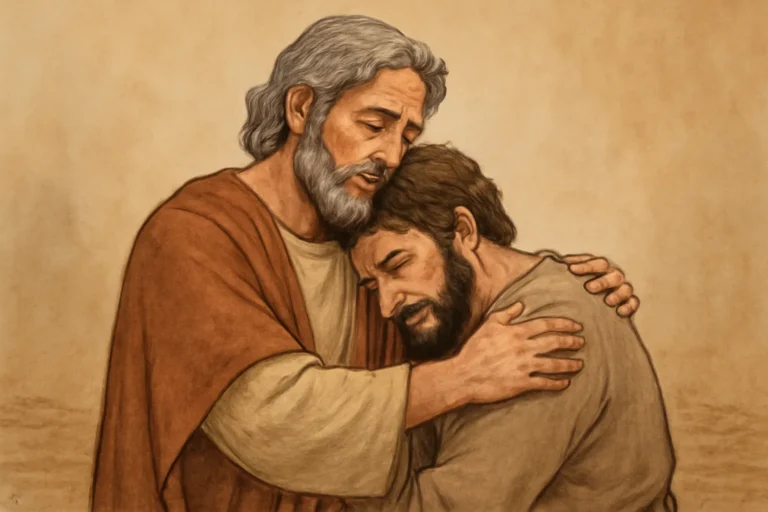
In the Christian tradition, biblical forgiveness is more than a sentiment or a cultural cliché. It is a robust, theologically rich concept rooted in the character of God and lived out in human relationships. This article explores the definition of biblical forgiveness from multiple angles: its theological foundations, its scriptural warrants, its differences from everyday notions of pardon, and its practical implications for individuals and communities. By tracing the language of Scripture and the patterns of divine mercy, we can enter a deeper understanding of God’s mercy and learn how to reflect it in daily life. The aim is to provide a careful, theologically informed reading of what forgiveness means in the biblical narrative and how it functions within faith and practice.
The biblical forgiveness definition begins with the core claim that God pardons sin, welcomes sinners, and restores relationship. In Scripture, forgiveness is not a mere feeling; it is an act of God that alters the believer’s standing before him. At its heart, forgiveness means release from guilt, cancellation of debt, and the restoration of fellowship that was damaged by transgression. The evangelical tradition often summarizes this as the movement from guilt to grace, from separation to reconciliation, and from alienation to abiding presence with the Creator.
Two foundational dimensions recur across biblical articulation: divine forgiveness from God toward humanity, and human forgiveness among people as a response to God’s mercy. These two dimensions are not merely parallel; they are interwoven in the narrative of salvation. The first demonstrates the extent of God’s mercy to a guilty people; the second calls believers to imitate that mercy in their communities. In biblical terms, then, a robust understanding of forgiveness encompasses both the judicial aspect (guilt, debt, and legal standing before God) and the relational aspect (reconciliation, restoration, and healed community).
To define biblical forgiveness succinctly, many theologians describe it as: God’s gracious canceling of guilt, cleansing of sin, and reconciliation of the sinner to himself through the person and work of Christ, resulting in a new relationship with God. This broad definition unfolds through several nuanced meanings, including pardon, atonement, justification, and cleansing, each with a distinct emphasis but united in the larger act of mercy that God offers to repentance and faith.
Key Biblical Texts on Forgiveness
Scripture provides a treasury of passages that illuminate the biblical forgiveness definition from different angles. The following verses are commonly cited to ground the doctrine of mercy, pardon, and reconciliation in the life of God and his people:
Psalm 103:12 — “as far as the east is from the west, so far has he removed our transgressions from us.”
Isaiah 55:7 — “let the wicked forsake their ways and the unrighteous their thoughts; let them return to the Lord, and he will have mercy on them, and to our God, for he will abundantly pardon.”
Jeremiah 31:34 — “for I will forgive their iniquity, and I will remember their sin no more.”
Psalm 51:1–2 — David’s plea for mercy, a model of contrition that precedes forgiveness: “Have mercy on me, O God, according to your unfailing love.”
1 John 1:9 — “If we confess our sins, he is faithful and just and will forgive us our sins and purify us from all unrighteousness.”
Matthew 6:14–15 — “For if you forgive other people when they sin against you, your heavenly Father will also forgive you. But if you do not forgive others their sins, your Father will not forgive your sins.”
Luke 23:34 — Jesus’ words from the cross: “Father, forgive them, for they do not know what they are doing.”
Ephesians 4:32 — “Be kind and compassionate to one another, forgiving one another, just as in Christ God forgave you.”
Colossians 3:13 — “bear with each other and forgive one another if any of you has a grievance against someone.”
Romans 3:23–24 — “for all have sinned and fall short of the glory of God, and all are justified freely by his grace through the redemption that came by Christ Jesus.”
These passages collectively sketch how forgiveness operates: it is offered by God as a free gift of grace; it invites repentance; it breaks the power of guilt; it leads to restored relationship; and it places a responsibility on the forgiven to extend mercy toward others.
Definitions and Semantics
The phrase “biblical forgiveness” is often distinguished from secular or psychological usage by its theological dimension. In biblical language, forgiveness implies a debt being canceled, not simply a personal decision to overlook an offense. The forgiveness definition in Scripture typically includes several key components:
Forgiveness as pardon — a release from guilt and the legal accusation that sin deserves judgment. In Jewish and Christian contexts, this is linked to God’s justice and mercy.
Forgiveness as cleansing — a purification of the conscience and a removal of moral stain, often described with imagery of washing or making clean (e.g., Psalm 51; Isaiah 1:18).
Forgiveness as reconciliation — not only are sins pardoned, but the relationship with God is restored to its intended harmony, allowing intimate communion and ongoing fellowship.
Forgiveness as transformation — the forgiven person is invited to live in newness of life, characterized by humility, gratitude, and a readiness to forgive others (as in Ephesians 4:32 and Colossians 3:13).
Justification as a related term — a legal declaration by God that a sinner is righteous by faith in Christ, not by works, which grounds ongoing forgiveness in the merit of Christ (Romans 3:24; Romans 5:1).
From a semantic standpoint, scholars distinguish between forgiveness as a past event (sins forgiven when God pardons) and ongoing forgiveness as a present posture (continual forgiveness toward others as part of Christian ethics). An accurate definition of biblical forgiveness therefore accommodates the shift from guilt to gratitude: the forgiven person is called to live in light of mercy, extending mercy to others as an inevitable outflow of having received mercy from God.
Divine Forgiveness: How God Forgives
To understand the divine forgiveness in Scripture, one must attend to both the character of God and the redemptive work of Christ. The biblical narrative presents forgiveness as rooted in God’s nature—he is gracious, merciful, slow to anger, and abounding in steadfast love. The atonement and the sacrifice of Christ are central to the biblical understanding of how forgiveness becomes available to humanity.
Unconditional Mercy vs Conditional Response
In many biblical passages, God’s mercy is described as offering forgiveness to the undeserving. Yet forgiveness is never a license for sin. A robust biblical forgiveness definition maintains that while God’s forgiveness is freely offered, it is received through faith, repentance, and trust. The paradox is resolved in the logic of grace: God provides the means for forgiveness, and humans respond with faith and obedience. In this sense, God’s forgiveness is unconditional in availability but conditional in reception.
Scripture emphasizes that God’s forgiveness does not erase the moral seriousness of sin, nor does it negate the necessity of justice. The justice of God is satisfied in the atoning work of Christ, allowing sinners to be forgiven without compromising divine holiness. This tension—God’s gracious mercy and the demand for repentance—frames the classical Christian doctrine of justification by faith and the ongoing call to sanctification.
Forgiveness in the Old Covenant vs New Covenant
The biblical forgiveness definition evolves across covenants. In the Old Testament, forgiveness is often associated with atonement rituals, sacrifices, and the mercy of God toward a covenant people. The Day of Atonement (Leviticus 16) and annual sacrifices point to the need for cleansing from sin and restoration of fellowship. In the New Testament, forgiveness centers on the person and work of Jesus Christ, whose death on the cross provides a once-for-all means of reconciliation. The New Covenant brings the promise of a life transformed by the Spirit, enabling believers to forgive others as they have been forgiven (Jeremiah 31:31–34; Hebrews 8:6–12; 10:14).
Thus, the biblical concept of forgiveness moves from ritual and ceremonial cleansing in the Old Testament to relational and spiritual transformation in the New Testament. Yet the continuity remains: forgiveness is anchored in the mercy of God, realized through faith, and manifested in a life marked by grace toward others.
Human Forgiveness and Its Role
While God takes the initiative in forgiveness, human beings are called to respond in ways that reflect divine mercy. Human forgiveness is a dynamic, multi-faceted discipline that affects heart, mind, and community life. The biblical forgiveness definition applied to interpersonal contexts involves both letting go of grievance and actively seeking reconciliation, when possible, while also pursuing justice and truth in a way that preserves dignity and safety.
Restoration of relationship is a primary goal when possible. When there is repentance and genuine change, reconciliation is the ideal outcome, though not always feasible in every case due to ongoing risk or harm.
Freedom from bitterness is a practical outcome for the hurt party, enabling spiritual and emotional healing and the restoration of peace within the community.
Accountability remains important. Forgiveness does not erase consequences; it removes guilt so that a person can move forward, often with accountability that ensures safety and growth.
Sharing mercy becomes a witness to outsiders. Churches and households that practice forgiveness model the gospel in tangible ways, inviting others to consider the God who forgives and transforms lives.
In practical terms, the biblical definition of forgiveness in human relations includes a willingness to release perceived debts, to choose not to rehearse the offense, and to seek the good of the offender and the community. It also involves setting healthy boundaries and practicing prudence where necessary. This balanced approach avoids the pitfalls of passivity (unhealthy tolerance of abuse) and sentimentalism (forgiving apart from repentance and accountability).
Consequences and Effects of Forgiveness
Forgiveness, when grasped as a biblical practice, carries significant consequences for individuals and communities. The forgiveness definition in Scripture implies a ripple effect that touches worship, ethics, and social behavior. Some of the most notable effects include:
Peace with God and with others, resulting in a more integrated spiritual life.
Healing of memories as guilt is removed and shame is addressed through divine mercy.
Liberty from bondage to resentments and cycles of retaliation, enabling a healthier emotional and relational atmosphere.
Motivation for personal growth as forgiven people become agents of mercy, modeling Christ-like character.
Strengthened community bonds when forgiveness is embedded in daily practice, leadership, and governance of the church or family.
In addition to personal change, forgiveness has a directional effect on mission and evangelism. A community known for embodying mercy provides a compelling witness to the gospel, illustrating the transformative power of God’s mercy in real-life situations. The biblical forgiveness definition thus informs not only private devotion but also public behavior and communal life.
Common Misconceptions
Understanding biblical forgiveness requires cutting through common myths and simplifications. Some prevalent misconceptions include:
Forgiveness means forgetting. In biblical terms, forgiveness does not require erasing memory or excusing all harm; rather, it means releasing the debt of sin and choosing not to dwell on the offense.
Forgiveness and trust are identical. Trust is earned and must be evaluated. Forgiveness can be offered in a way that preserves boundaries and safety while still granting mercy to the offender.
Forgiveness negates justice. The biblical model shows forgiveness and justice as compatible—God’s mercy is never a violation of justice; rather, justice is satisfied through Christ’s atonement, enabling mercy to flow without compromising holiness.
Forgiveness is optional for believers. Scripture consistently presents forgiveness as a divine imperative and a relational duty for those who have experienced God’s mercy.
Recognizing these nuances helps prevent distortions that might undermine the transformative aim of forgiveness in Scripture: restoration with God and healthy restoration in human community.
Practical Steps to Receive and Extend Forgiveness
The application of the biblical forgiveness definition in daily life involves concrete, repeatable steps. The following sequence provides a practical framework for both receiving God’s forgiveness and extending it to others:
Acknowledge the offense with honesty before God—recognize sin, its impact, and the need for mercy.
Confess and repent—express remorse to God, and, where appropriate, to others harmed by the offense.
Receive God’s forgiveness with faith in Christ and trust that the debt is canceled according to the gospel promises (see 1 John 1:9).
Offer forgiveness to others—freely extend the mercy you have received, even if the offender does not respond in kind.
Set healthy boundaries—protect yourself and others from ongoing harm while seeking reconciliation where possible.
Seek reconciliation where possible—pursue repair of relationship in a Spirit-led, wise manner, with accountability where needed.
Practice ongoing mercy—make forgiveness a habit, not a one-off event, allowing mercy to shape daily decisions and attitudes.
These steps are not a rigid formula but a faithful posture that aligns with the biblical definition of forgiveness as both receiving mercy from God and reflecting that mercy in human life. They emphasize repentance, reliance on divine grace, and the possibility of restored relationship when conditions allow.
Historical and Theological Reflections
Across church history, theologians have stressed that forgiveness is indispensable to the gospel. Ancient and contemporary writers alike have insisted that the mercy of God should produce ethical transformations in believers. The biblical forgiveness definition anchors the church’s confession, liturgy, and pastoral practices. Through creeds, sacraments, preaching, and catechesis, Christian communities have sought to cultivate a culture of forgiveness that is both gracious and just, both restorative and truthful.
Historically, debates about forgiveness have engaged questions about its scope (individual vs. corporate), its channels (confession, prayer, sacraments), and its extension (toward enemies, neighbors, and communities). The biblical framework supports a nuanced approach: personal forgiveness is essential, but it must be integrated with communal integrity and care for the vulnerable. The result is a holistic practice that honors God, serves neighbor, and advances the mission of the Church.
Forgiveness, Mercy, and the Transformation of Life
Understanding the forgiveness definition biblically leads to a broader appreciation of mercy as the motive and fuel of Christian life. Mercy, in biblical terms, is not mere sentiment but a powerful divine initiative that transforms a person’s inner life and outward behavior. The mercy of God invites imitation, which, in turn, becomes a compelling witness to the world. As believers grow in grasping the enormity of God’s forgiveness, they are empowered to extend grace, speak truth in love, and pursue justice tempered by compassion.
In the final analysis, the biblical account presents forgiveness as a gift that shapes identity. The forgiven person is not simply freed from guilt; they are adopted into God’s family and called to participate in God’s work of reconciliation. The biblical forgiveness definition thus has both vertical (God-ward) and horizontal (human-to-human) expressions, culminating in a life that bears witness to the God who forgives and loves without measure.
Living in the Light of God’s Mercy
To summarize, the biblical forgiveness definition encompasses several interrelated truths. It is the gracious release of guilt by a just and merciful God, made possible through Christ’s atoning sacrifice, received by faith, and evidenced in a transformed life that loves, forgives, and reconciles. Biblical forgiveness is not a one-time event but a lifestyle—an ongoing disposition shaped by Scripture, empowered by the Spirit, and enacted within a community of faith.
As readers reflect on forgiveness as defined by Scripture, they are invited to a deeper trust in God’s mercy, a more generous posture toward others, and a commitment to live out reconciliation where possible. By meditating on the verses provided, pondering the character of God, and prayerfully seeking discernment, believers can grow in the delicate art of forgiveness—the kind that is rooted in grace, sustained by the Spirit, and fruitful in love.
In the end, understanding the biblical forgiveness definition leads to a more faithful Christian life. It clarifies what forgiveness is (and is not), grounds it in the person of Jesus Christ, and sets the rhythm for how believers relate to God and to one another. It is, at its core, about receiving mercy and becoming a conduit of mercy—reflections of the God who forgives and a church that embodies the mercy of Christ in every relationship.
The Transformative Power of Christian Forgiveness In the Christian faith, forgiveness stands as a sacred discipline and a doorway to freedom. It is not merely a feeling but a deliberate choice rooted in the example of Christ and the mercy of God. When hurt, betrayal, or injustice presses in, quotes from Scripture can anchor us,…
The enduring question of mercy and repair The simple, piercing plea “Father forgive me for I have sinned” has echoed through churches, chapels, and kitchens where families gather for confession and renewal. It is more than a sentence; it is a doorway into a spiritual practice that invites honesty, humility, and the transforming power of…
What this article covers Forgive is a word people use often, but when we explore it through the lens of the bible, the concept carries depth, responsibility, and transformation. In everyday speech, to forgive might simply mean letting go of a grudge. In the biblical sense, however, forgiveness implies a release from guilt, a cancellation…
Bible Stories About Forgiveness — Parables, Lessons, and Real-Life Examples The Bible presents forgiveness as a defining quality of God and a transformative practice for people. Across both the Old and New Testaments, forgiveness is not merely an emotion but a path toward restoration, healing, and renewed relationships. Forgiveness appears in parables, in direct narratives,…