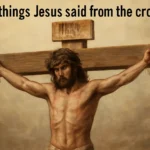
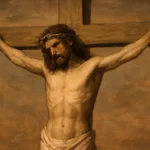
Across Christian tradition, the crucifixion of Jesus is not only a historical event but also a profound moment of meaning that has shaped faith, ethics, and imagination for two millennia. One enduring way to approach this event is through the seven sayings or seven words spoken on the cross—a compact sequence that theologians and devotional writers have explored as a map of Jesus’ priorities in pain, surrender, and victory. You may encounter variations of the phrase “7 words in cross Jesus” in contemporary discussions, but the core idea remains the same: seven distinct utterances that illuminate who Jesus was, what he endured, and what his death could mean for humanity. This article presents the seven utterances on the cross in a way that aims to be both informative and accessible, while situating them within broader themes such as forgiveness, trust, community, and salvation. It also considers how these utterances have been received across different Christian traditions and how they continue to shape worship, art, and daily life today.
The seven sayings on the cross: an outline of the cross’s spoken message
“Father, forgive them, for they know not what they do.”
The first of the seven words on the cross has often been read as the audacious mercy at the heart of Jesus’ mission. In the Gospels, this utterance appears to extend forgiveness beyond the immediate circle of Jesus’ companions, toward those who are responsible for his crucifixion. The phrase invites readers to consider forgiveness as not merely a private mood but a public and divine act that transcends retaliation. In devotional reading, it foregrounds the themes of mercy, grace, and the radical reshaping of enmity into reconciliation. This saying thus serves as a theological anchor for peacemaking in communities that face harm and betrayal.
“Truly, I say to you, today you will be with me in paradise.”
The second utterance is directed to one of the crucified partners in crime and has often been described as a note of hope and salvation offered even in the moment of death. It emphasizes the possibility of genuine conversion and trust in the midst of suffering. In many traditions this saying has been read as an assurance that grace transcends eligibility criteria, reminding believers that repentance and faith can occur in the final hours. For theologians and pastors, this brief statement about paradise invites reflection on the nature of salvation, the horizon of eternal life, and the intimate encounter between Jesus and a penitent heart.
“Woman, behold your son” and “Behold your mother.”
These paired lines bind Jesus to a moment of human care amid enormous agony. Speaking to his mother and to the beloved disciple, Jesus models compassion and responsibility for one another in community. The saying has often been interpreted as a sign of the formation of the early church as family: the new bond between Mary and the disciple becomes symbolic of the church’s fidelity to those in need. The emphasis here is on care for the vulnerable and the interdependence of faith communities, even at the point of death. The cross thus invites readers to consider how relationships are tended when resources are scarce and pain is acute.
“My God, my God, why have you forsaken me?”
The fourth utterance centers on deep, existential witness. It is often read as a moment of felt abandonment that resonates with the human experience of loneliness and the sense that even a righteous life can encounter profound distress. Theologically, this saying is a place where questions about cosmic meaning, justice, and divine closeness intersect. It also foreshadows the eventual triumph of God’s purposes through suffering. Readers frequently engage this line to explore the mystery of suffering and the way faith can still hold onto God amid doubt.
“I thirst.”
Less about a literal need and more about the fullness of Jesus’ humanity, this brief statement foregrounds the endured on the cross. Yet it also invites contemplation of thirst as a metaphor for longing—for God, truth, and justice. In preaching and poetry, this utterance is often read as a reminder that God’s savior is not distant from human pain but intimately involved with embodied life. The call to attend to thirst can translate into broader social concern for those who endure deprivation, heat, hunger, or injustice.
“It is finished.”
The penultimate utterance marks the completion of a chosen mission: obedience, sacrifice, and the accomplishment of God’s redemptive plan. In theological reflection, this phrase is a declaration of victory rather than a sigh of defeat. It signals that a long process of atonement has reached its appointed end and invites believers to consider what has been completed—the works of law, the rupture between humanity and God, or the shift toward a new covenant depending on tradition. The phrase is frequently a focal point for preaching about salvation as a finished gift and a call to gratitude and trust.
“Father, into your hands I commend my spirit.”
The final utterance expresses total trust and surrender. From a literary perspective, it stands as a hinge between life and death, a turning point from active ministry to the submission of life to God. The sense of trust, relinquishment, and hope in this line has inspired countless prayers and meditations that encourage believers to entrust their own moments of transition to the divine care. The final word invites readers to reflect on the arc of Jesus’ path—from activity to surrender—and on the faith commitment that undergirds all final moments of life.
Deeper reflections on the seven sayings
Taken together, these seven utterances present a nuanced portrait of Jesus’ cross that moves beyond a single theme. They invite readers to consider how mercy, salvation, community, abandonment, longing, completion, and trust interact in the crucifixion. Some scholars emphasize the literary framework of these sayings, noting how each line introduces a different facet of the same event. Others highlight the pastoral applications of these words for living in forgiveness, offering care to the vulnerable, and bearing witness in suffering. For lay readers, the seven words can function as a daily rhythm: forgiveness in the morning, hope in the afternoon, care in the evening, and trust at night. For scholars, they spark debates about the nature of atonement, the meaning of divine presence in suffering, and the way language can carry both lament and proclamation.
Crossing the threshold: how these utterances illuminate the meaning of Jesus’ crucifixion
When we speak of the meaning of Jesus’ crucifixion, the seven sayings provide a compact theological program. Each utterance points toward a combination of divine action and human response—mercy toward enemies, assurance of salvation, communal care, honest lament, physical humanity, mission accomplished, and faithful surrender. Some readers encounter these themes through the lens of traditional atonement models, while others approach them through the lens of ethical living and spiritual formation. Whatever interpretive frame is chosen, the core claim remains: the cross is not merely a symbol of death but a context in which God’s love is revealed in concrete words that invite radical responses of mercy, gratitude, solidarity, and faith.
Why the seven sayings matter in worship, art, and daily life
Worship and liturgy: The seven sayings appear in devotional cycles, the Stations of the Cross, and seasonal services, inviting congregations to meditate on mercy, salvation, and trust.
Art and literature: Artists and writers draw on these lines to explore themes of forgiveness, abandonment, and the hope of new life, turning a moment of agony into a source of beauty and reflection.
Spiritual formation: Individuals use the seven utterances as a framework for prayer and ethical reflection—asking questions such as: How can I practice forgiveness today? In what ways can I care for vulnerable people in my own community? How do I learn to trust God in uncertain times?
Crosses across traditions: how Catholics, Orthodox, and Protestants engage the seven sayings
Across Christian traditions, the seven sayings are valued, though they may be highlighted differently or interpreted with varying nuance. The Catholic tradition often emphasizes the liturgical and Marian contexts surrounding the crucifixion and may connect the sayings to the Passion narrative as a whole. In the Orthodox tradition, the crucifixion is viewed within the cosmic drama of salvation and the victory of Christ over death, with attention to how the cross reveals God’s love in a world of sin. Protestant communities frequently read the seven utterances as accessible points for personal devotion, sermon illustrations, and public proclamation of grace. In all these streams, the central idea remains: the cross communicates God’s steadfast love, even as it exposes the depths of human brokenness.
The seven sayings and contemporary life: ethical and practical implications
Today, the legacy of these seven words can be felt in how communities embody forgiveness, care, and resilience. For example, the call to forgive enemies resonates in restorative justice conversations and in everyday reconciliations after conflict. The assurance offered to the penitent thief invites a broader conversation about access to grace in moments of crisis or decision. The care of Mary and John points to the responsibilities we bear toward vulnerable family and friends when life becomes precarious. The cry of abandonment invites honest dialogue about doubt and spiritual struggle, while the thirst and the cry, “It is finished”, and the final surrender challenge believers to consider what it means to live with integrity, to pursue justice, and to trust beyond visible outcomes. Each saying thus remains a resource for moral imagination and communal formation in an often fragile world.
Common questions and clarifications about the seven sayings
Are these seven sayings literally spoken in every Gospel? The four canonical Gospels preserve the crucifixion narrative, but the exact collection of seven sayings is a traditional arrangement rather than a single verbatim record. The sayings appear across different Gospel accounts, and Christian readers often collect them as a thematic set for reflection.
Do all traditions treat them the same way? Not exactly. While the core content is widely recognized, emphasis varies by tradition, with differences in liturgical usage, devotional emphasis, and theological interpretation. The overarching aim—seeing God’s presence in suffering and hearing a word of grace—unites them across communities.
Why seven instead of six or eight? The number seven is often understood as symbolically complete in Jewish and Christian symbolism. It provides a coherent set that is easy to memorize, teach, and meditate on, while still leaving room for further reflection on the larger Passion narrative.
What is the practical takeaway for believers today? The practical takeaway is to imitate a pattern of response: extend to others the forgiveness offered by the cross, trust in God’s renewed life, show care for those in need, endure suffering with honesty, recognize the completion of God’s redemptive work, and live in faithful surrender to divine will.
Closing reflections: living with the cross in daily life
As readers engage with these seven utterances, they are invited not only to study a historical moment but to enter into a living conversation about mercy, justice, and hope. The cross becomes a teacher about how to respond to harm, how to sustain relationships, and how to live with a posture of trust even when questions about God and suffering remain. Whether one approaches the subject from a strictly scholarly angle, a devotional practice, or a public ethic, the seven sayings offer a language for naming pain, offering compassion, and naming the possibility of new life. In that sense, the cross remains a powerful site of meaning: a place where the deepest expressions of human need meet the deepest expressions of divine love, and where seven phrases, spoken in a moment of vulnerability, continue to shape the way millions choose to live today.
The Seven Words Said by Jesus on the Cross Across Christian history, a small corpus of words uttered by Jesus during the crucifixion has carried outsized weight for faith, devotion, art, and interpretation. Collectively known as the seven last words (or seven sayings from the cross, or seven utterances on Calvary), these phrases are not…
Introduction to the Bible Commentary Blue Letter and Its Role in Scriptural Study Blue Letter Bible is a widely used digital resource designed to aid readers in scriptural study through a rich suite of tools. When people refer to the bible commentary blue letter or the Blue Letter Bible commentary, they are typically pointing to…
Why a 2nd John Commentary Matters The Second Epistle of John occupies a unique place in the New Testament: brief in length, yet rich in theological shape and pastoral exhortation. This 2nd John commentary guide engages the letter verse by verse to illuminate its core concerns: the truth that grounds community life, the commandment to…
The Sixth Commandment in the Bible: Meaning, History, and Interpretations The phrase “the sixth commandment” is a shorthand way to refer to a key moral prohibition found in the Decalogue, the collection of Ten Commandments given in the Bible. In most English translations, this commandment is rendered as You shall not murder or sometimes You…
Across Christian tradition, the crucifixion of Jesus is not only a single moment of sorrow but also a profound moment of speech. The “seven sayings” or “utterances” attributed to Jesus from the cross have shaped theology, devotion, and ethical reflection for centuries. They reveal a God who speaks even in greatest distress, a Savior who…
Overview of 1 Corinthians 14 This article offers a thorough verse-by-verse explanation and practical insights on 1 Corinthians 14. In Paul’s letter to the church in Corinth, chapter 14 stands as a focused response to how spiritual gifts should operate when the Christian community gathers for worship. The central aims are edification (building up others…