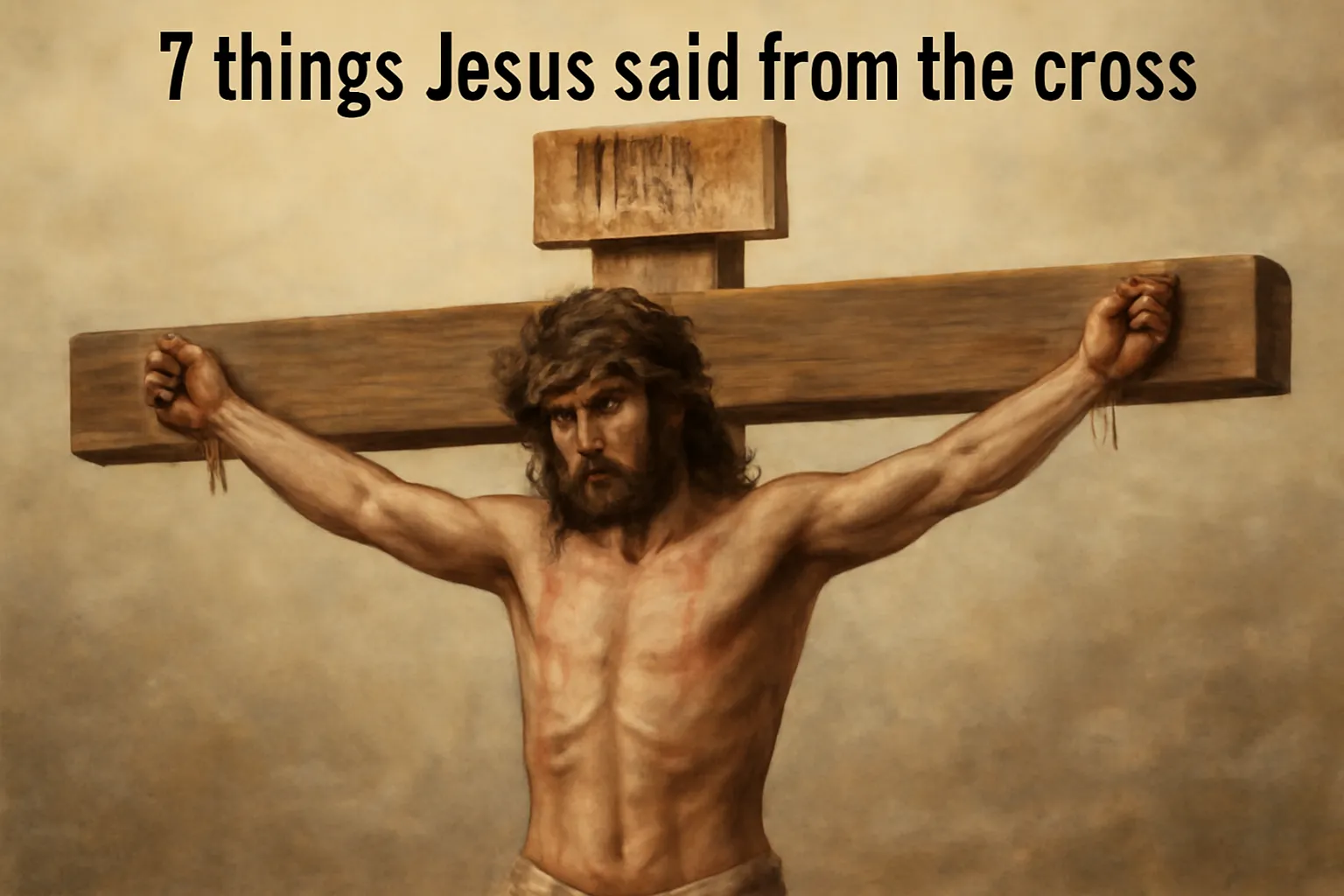
Across Christian tradition, the crucifixion of Jesus is not only a single moment of sorrow but also a profound moment of speech. The “seven sayings” or “utterances” attributed to Jesus from the cross have shaped theology, devotion, and ethical reflection for centuries. They reveal a God who speaks even in greatest distress, a Savior who acts with mercy, and a community that begins to take shape in the wake of sacrifice. It is worth noting that different Gospel accounts record slightly different details, and some scholars count eight phrases if one treats the two Mary-related statements as distinct. For the purposes of this article, we will present seven distinct utterances, understanding that one of them is a paired moment involving two closely connected declarations about care for others. Each section that follows follows a consistent pattern: Meaning, Context, and Lessons, with emphasis on the most influential ideas connected to each saying. Throughout, key words and phrases are bolded to highlight the central themes you can carry into study, worship, or discussion.
“Father, forgive them, for they do not know what they are doing.” (Luke 23:34). This opening utterance sets a dramatic tone for the entire crucifixion narrative. It presents forgiveness not as a reward for merit but as a divine posture extended even to those who commit violence. The scene is crowded with spectators, soldiers, and onlookers who misunderstand or disregard the gravity of the moment, yet Jesus responds with a mercy that transcends the immediate consequences of human wrongdoing. In the Gospels, forgiveness here is not a casual pardon but an extraordinary act rooted in divine compassion and long-suffering toward ignorance and complicity alike.
Meaning
Mercy over justice. The request and act reveal a God who seeks to absorb guilt rather than escalate retribution.
Ignorance as a factor in guilt. The phrase recognizes that some wrongdoing stems from ignorance or lack of awareness about consequences.
Model for followers. Jesus demonstrates a posture that followers are invited to imitate—responding to hostility with forgiveness and grace.
Context
The phrase is spoken at the outset of the crucifixion story, as Jesus is surrounded by Roman soldiers and a crowed that scorns him. Luke emphasizes that the offering of forgiveness parallels Jesus’ mission to “seek and save the lost” (Luke 19:10) and to inaugurate a new realm marked by mercy. Some theologians see this moment as a reframing of justice in light of suffering, where God works through vulnerability to transform enemy relationships and human guilt into opportunity for reconciliation.
Lessons
In moments of personal injury, respond with compassion rather than retaliation.
True forgiveness often begins before recognition of merit and before punishment is administered.
Communal healing can start in the most unlikely places, even at the cross where violence occurs.
The Second Saying: Truly, I Tell You, Today You Will Be With Me in Paradise
“Truly I tell you, today you will be with me in paradise.” (Luke 23:43). This statement is spoken to the repentant thief who recognizes Jesus’ innocence, faith, and authority. In a moment of extreme earthly judgment, Jesus offers a present assurance of eternal companionship with God. The promise is not contingent on long work or ceremonial status; it is an act of grace extended to a soul that expresses faith amid fear and despair. The parole of grace announced here has exerted profound influence on Christian understandings of salvation, judgment, and the immediacy of God’s mercy.
Salvation by grace through faith. The thief’s turning to Jesus, even in extremis, is enough to secure a future with God.
Access to paradise in the midst of suffering. The promise underscores that eternal life is not earned by perfect performance but received through trust in Christ even at the final hour.
Inclusion beyond social bounds. The dialogue shows that repentance and mercy reach across social status and circumstances, extending to those deemed outsiders.
Context
This word comes from the moment when Jesus is being crucified between two criminals. Luke emphasizes Jesus’ compassion and inclusivity even in his own pain. The phrase is often cited to reassure believers that God’s grace continues to operate in life’s most difficult chapters and that the door to salvation does not close at the moment of death but opens with faith in Christ.
Lessons
Trust in Jesus can be enacted in the final moments and still yield eternal consequences.
Hope in God’s mercy remains available to those who recognize their need, regardless of their past or present status.
The church is called to model hospitality toward those who have wandered away or are marginalized.
The Third Saying: Behold Your Son, Behold Your Mother
“Woman, behold your son” and “Behold, your mother” (John 19:26-27). These two utterances occur together in the Gospel of John and are often treated as a paired moment that reveals Jesus’ concern for kinship, care, and the formation of a new community. In the cross scene, Jesus entrusts Mary to the beloved disciple and, conversely, entrusts the disciple to Mary, creating a new familial bond that extends beyond biological ties. The surrounding context highlights a shift from bloodlines to a spiritual family formed through discipleship and mutual care.
Meaning
Formation of a new community of care. The cross becomes a place where relationships are redefined in terms of faithfulness and responsibility to one another in Jesus’ name.
Reimagining family beyond biology. The church emerges as a family bound by commitment to Christ and to one another, not solely by blood.
Mary and the beloved disciple as a model of hospitality. The exchange invites the wider community to welcome and support vulnerable members.
Context
John’s Gospel places Mary at the foot of the cross and highlights Jesus’ word of care to a dear disciple. The moment underscores Jesus’ authority and care even in death, extending to those left behind. It is often understood as the moment when Jesus commissions the community to embody his love in concrete acts—caring for one another as a family under God. The paired statements are a reminder that the crucifixion births a new social order grounded in love and responsibility.
Lessons
Discipleship includes practical acts of care for vulnerable people in our communities.
The church’s mission is to embody hospitality, welcoming others into a shared life in Christ.
Death can become a moment of structural-missional clarity: who we stand with, and who we care for, matters deeply.
The Fourth Saying: My God, My God, Why Have You Forsaken Me?
“My God, my God, why have you forsaken me?” (Matthew 27:46; Mark 15:34). This cry captures the depth of Jesus’ human experience on the cross. It is a quotation from Psalm 22, inviting readers to listen to the broader psalm’s lament and trust. The cry expresses a feeling of abandonment in the crucifixion, a moment when Jesus bears not only physical pain but the weight of humanity’s estrangement from God. Theologically, it is often interpreted as Christ bearing the loneliness and disorientation that accompany deep suffering, so that humanity might be reconciled to God. The cry is not a final denial of faith but a profound articulation of trust in the midst of pain, a doorway into a more complete understanding of salvation’s mystery.
solidarity with human suffering. Jesus embodies the deepest experience of loneliness and abandonment so that humans might be drawn into relationship with God.
Identifying with the psalms and the faithful who cry out. The quotation connects Jesus with a long biblical tradition of lament and faith under trial.
Prophetic fulfillment and cosmic scope. The cry points to the crucifixion as part of God’s salvific drama, not merely a historical event.
Context
Found in the synoptic gospels, this statement aligns Jesus with the language of the psalms, inviting readers to hear not only the immediate agony but the larger story of trust amid distress. The cross is interpreted by many theologians as the moment where divine justice and mercy intersect in a paradox: Jesus endures separation so that others might experience reconciliation with God. The phrase has shaped many prayers and songs that acknowledge pain while maintaining faith in God’s steadfastness.
Lessons
Expressing anguish can be a legitimate form of prayer and a doorway to deeper trust.
Faith does not require the absence of questions; it can coexist with honest grappling about suffering.
In community life, lament can be a pathway to solidarity and renewed devotion.
The Fifth Saying: I Thirst
“I thirst.” (John 19:28). Simple yet intensely human, this utterance reveals Jesus’ physical agony in a brutally explicit way. It underscores the reality of the crucifixion’s suffering—so often depicted abstractly—that Jesus experienced severe thirst as part of the sacrifice. The phrase has also invited symbolic readings: thirst as longing for righteousness, for companionship, for the Father’s presence, or for the fulfillment of God’s promised kingdom. The realism of the phrase invites readers to pause and reflect on the bodily costs of salvation and the compassionate witness of a suffering Savior.
Meaning
Honest articulation of pain and need. The cry reminds readers that Jesus endured real, tangible suffering.
Connection between physical and spiritual hunger. Thirst can symbolize longing for God’s presence, justice, or healing in a broken world.
Compassion in action available to believers. The fact that someone offers a drink later in the scene demonstrates the practical care that follows words of concern.
Context
In the Gospel of John, this cry occurs toward the end of Jesus’ life on the cross. A hyssop-soaked sponge is offered later, connecting to the Roman method of giving some relief to the dying. The physical details surrounding this moment highlight the humanity of Jesus as well as the gravity of the crucifixion. The emotional resonance of thirst—both bodily and spiritual—helps believers understand that Jesus shares in every aspect of human vulnerability.
Lessons
Acknowledging longing can be a doorway to greater dependence on God.
Compassion in action can meet real needs precisely at the point of greatest vulnerability.
Vulnerability can become a school of trust for the people who witness it.
The Sixth Saying: It Is Finished
“It is finished.” (John 19:30). This climactic declaration signals the completion of Jesus’ salvific mission—currents of obedience, fulfillment of Scripture, and the removal of the barrier between God and humanity. The phrase is often understood as the moment when the work of atonement is accomplished through Jesus’ self-giving sacrifice. Yet it also invites ongoing reflection: finished does not mean the end of God’s work in the world, but the completion of a decisive phase in God’s saving plan. The word carries both triumph and reverence, a sober recognition that salvation is accomplished and a call to live in light of that reality.
Completion of the salvific work. The cross achieves what was necessary to reconcile humanity with God.
Fulfillment of Scripture. The cry to bring about God’s redemptive purposes is connected to biblical promises.
Invitation to live in light of grace. Believers are invited to respond to the finished work with gratitude, worship, and mission.
Context
John 19 emphasizes the intentional completion of Jesus’ mission. While some readers focus on the victory implied by a finished work, others notice the ongoing, future dimensions of salvation—resurrection, transformation, and the ongoing life of the church. The phrase is a hinge: it marks the shift from the crucifixion itself to the far-reaching implications for creation, community, and conscience.
Salvation is a completed work that invites faithful response, not a path that remains perpetually open-ended by design.
Gratitude, worship, and mission flow from a deep appreciation of what has been accomplished on the cross.
Understanding “finished” can deepen hope in the face of present suffering and future uncertainties.
The Seventh Saying: Father, into Your Hands I Commit My Spirit
“Father, into your hands I commit my spirit” (Luke 23:46). This final declaration expresses absolute trust and surrender. It is a deliberate act of entrusting life and death into the Father’s care. In the language of Scripture, this is a model of faithful surrender and confidence in God’s sovereignty even at the moment of death. The phrase also links Jesus’ last breath to the Psalms, inviting readers to hear faithfulness shaped by prayer and dependence on God’s protection and provision.
Meaning
Absolute trust in God’s care. Jesus names God as the reliable source of life, even at death.
Surrender as the final act of obedience. The cross is not a random tragedy, but a deliberate act of will aligned with God’s purposes.
Hope in God’s steadfastness beyond the grave. The cry points to a faith that transcends earthly limits and anticipates eternal life.
Context
Luke presents this closing act of trust within a narrative that emphasizes prayer, mercy, and the hope of the kingdom. The words align Jesus’ death with the example of a righteous person who places ultimate confidence in God. For early Christian communities, this utterance supplied both an ethical and spiritual posture—die well, entrust yourself to God, and live in the light of God’s fidelity.
In moments of danger or loss, reaffirm your trust in God’s loving governance.
Prayerful surrender can provide profound peace amid endings and transitions.
The crucifixion, viewed through this lens, invites believers to cultivate a daily practice of faith that remains loyal to God in all circumstances.
Final reflections. The seven sayings from the cross—whether counted as eight in some traditions or interpreted through paired statements about care and kinship—offer a multi-faceted portrait of Jesus’ last hours. They invite readers to contemplate forgiveness, salvation, relational responsibility, human lament, embodied longing, completed mission, and surrender. Taken together, they suggest a Christ who is at once righteous judge, merciful savior, profound friend, and faithful Lord. In study and prayer, these utterances can shape how individuals navigate suffering, how communities practice mercy, and how faith can sustain hope when life feels most fragile. For pastors, teachers, and lay readers alike, the cross remains a potent classroom: a place where meaning is formed, context is examined, and daily lessons for living out the gospel are discovered, one utterance at a time.
Overview of 1 Corinthians 14 This article offers a thorough verse-by-verse explanation and practical insights on 1 Corinthians 14. In Paul’s letter to the church in Corinth, chapter 14 stands as a focused response to how spiritual gifts should operate when the Christian community gathers for worship. The central aims are edification (building up others…
Explaining Romans 8:18: Meaning, Context, and Key Takeaways When Christians study the Bible, a single verse can open up a wide window into a larger story. Romans 8:18 is one of those verses that helps readers connect personal pain with a future hope that is cosmic in scope. In this article, we will explore what…
The Seven Words Said by Jesus on the Cross Across Christian history, a small corpus of words uttered by Jesus during the crucifixion has carried outsized weight for faith, devotion, art, and interpretation. Collectively known as the seven last words (or seven sayings from the cross, or seven utterances on Calvary), these phrases are not…
Introduction to the Bible Commentary Blue Letter and Its Role in Scriptural Study Blue Letter Bible is a widely used digital resource designed to aid readers in scriptural study through a rich suite of tools. When people refer to the bible commentary blue letter or the Blue Letter Bible commentary, they are typically pointing to…
Overview of the Acts 15 Jerusalem Council: History, Debates, and Significance The gathering described in Acts 15—often called the Jerusalem Council—stands as a pivotal moment in early Christian history. It marks a deliberate resolution to a question that could have fractured the early church: whether Gentile converts must adopt the full Jewish Law, including circumcision,…
The Sixth Commandment in the Bible: Meaning, History, and Interpretations The phrase “the sixth commandment” is a shorthand way to refer to a key moral prohibition found in the Decalogue, the collection of Ten Commandments given in the Bible. In most English translations, this commandment is rendered as You shall not murder or sometimes You…