The topic of Christ’s last seven words, or the seven sayings on the cross, has long captured the imagination of theologians, pastors, artists, and lay readers. These sayings are not merely literary footnotes to the Passion narratives; they shape Christian understandings of mercy, salvation, kinship, suffering, victory, and surrender. In this article, we explore the collection often called the “Seven Last Words” of Jesus: what each utterance communicates, how each is situated in its Gospel context, and why these phrases have remained central to Christian devotion and interpretation. We will use the phrasing found in common English translations while noting the original language cues and the variety of ways scholars and traditions present these utterances. The purpose is educational: to illuminate the themes embedded in the cross-talk of Jesus, to show how these phrases contribute to a larger narrative of redemption, and to suggest ways readers can engage with them in worship, study, and reflection.
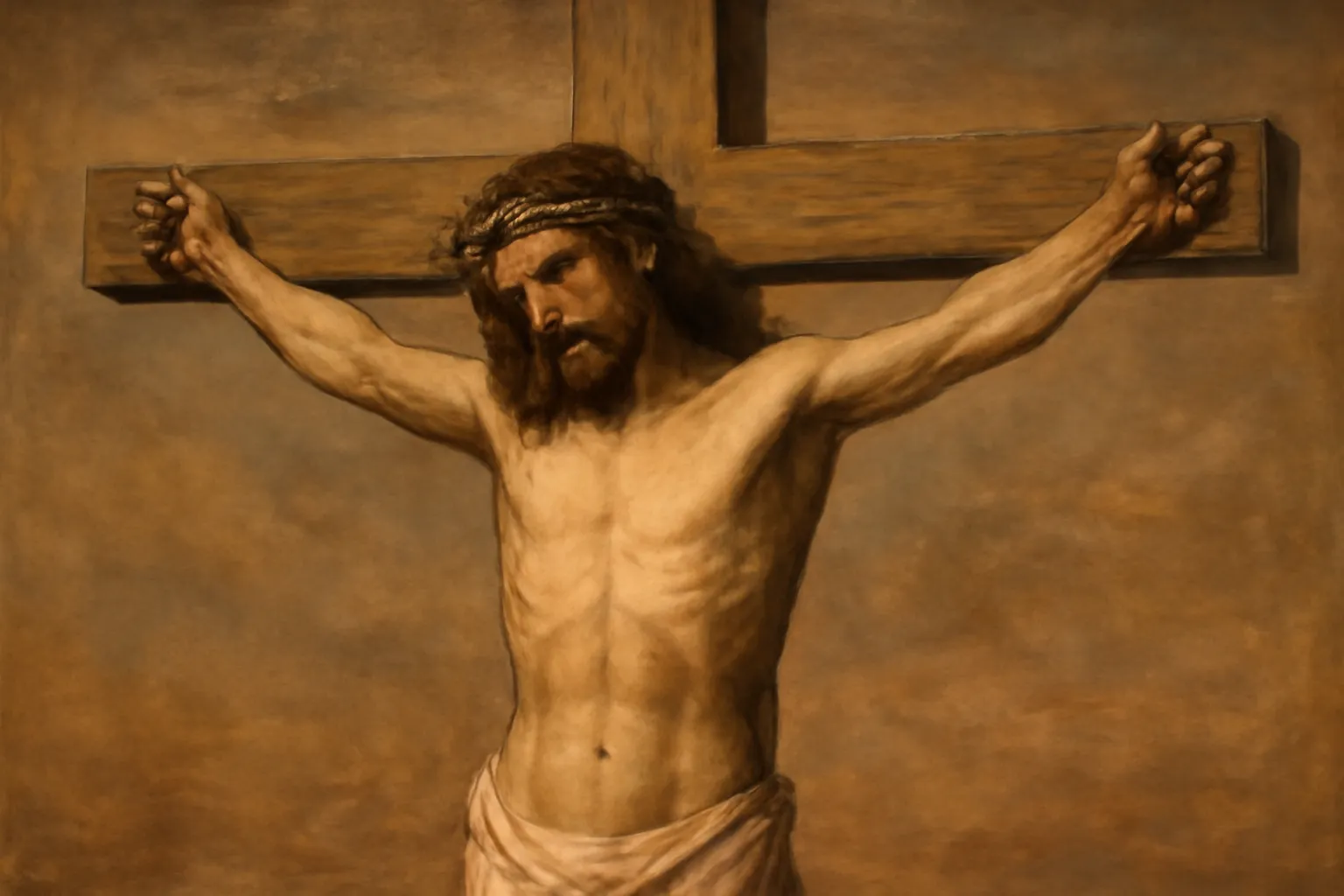
In Christian tradition the cross becomes a place where words carry weight as signs. Each of the seven sayings attributed to Christ across the Gospel accounts provides a distinct lens on the purpose and meaning of his death. Taken together, they present a portrait of Jesus’s mission fulfilled, even under the pressure of immense physical suffering, and they invite readers to consider mercy, salvation, care, longing, sustenance, completion, and trust. The arrangement below follows the common devotional ordering: the sayings are drawn from Luke, John, and Matthew/Mark, with each saying anchored in a particular scene—whether speaking to the crowd, addressing a thief, caring for Mary and the beloved disciple, or expressing a cry of dereliction and a final act of entrusting his spirit to the Father. As you read, notice how the tone shifts from mercy and grace to intimate fellowship, to the expression of pain, to victory, and finally to faithful surrender.
Throughout this article, the phrases themselves are highlighted to mark their impact. In scholarly and devotional usage, different translations render the same moment with slight nuance, yet the essential meaning remains consistently rich. We will refer to the cited phrases in bold to emphasize their central role in the cross’s message.
The First Saying: Jesus Prays for Forgiveness
Context and textual placement
In the Gospel of Luke, the earliest of the Passion accounts, Jesus speaks a prayer that reframes the cross as a place of mercy rather than vengeance. The first of the seven utterances is, in its canonical English form, “Father, forgive them, for they know not what they do.” This statement occurs as an act of intercession; Jesus prays for those who are in the act of crucifying him and for humanity in general who blamelessly or unknowingly participates in sin. The verb tense and pronoun usage emphasize a present mercy extended in the moment of betrayal and violence. The Greek phrase is often discussed by scholars for its syntactic emphasis on forgiveness offered to perpetrators, rather than a theoretical forgiveness imagined after the fact.
The significance of this saying stretches beyond the immediate scene. It frames the cross as an arena where mercy is actively bestowed, and it invites readers to consider the radical and costly nature of forgiveness. For many Christians, this opening utterance sets the theological tone: forgiveness is not earned by the forgiven; it is extended as grace by the one who suffers unjustly. It also foreshadows the salvific logic of Christian faith, in which reconciliation is a gift offered to sinners at great personal cost.
Texts and translations vary slightly in the precise wording—illustrating how the same moment can carry different sensitivities in English renderings—but the core message remains clear: forgiveness is extended to those responsible for the crucifixion, and forgiveness becomes a model for how Christ’s followers are called to relate to others. In a practical sense, this first saying has shaped Christian prayer, preaching, and ethics—urging believers to cultivate mercy toward enemies and to recognize one’s own dependence on divine grace.
The Second Saying: Promised Paradise to a Penitent On the Cross
Context and textual placement
The second saying appears in Luke’s account, where Jesus speaks to one of the two criminals crucified beside him. The line commonly rendered is “Truly I tell you, today you will be with me in paradise.” This promise is remarkable for its immediacy: even in a moment of execution, Jesus assures the penitent thief of a future together in the presence of God. The two words “today” and “paradise” carry theological weight: they indicate that salvific grace operates across time and space, crossing the barrier of death in order to give access to companionship with God in the final hour of life—and beyond it.
Scholarly discussion often highlights two themes in this saying. First, it reinforces the notion that salvation is by grace through faith, not by works or earned merit, since the penitent thief does not demonstrate formal righteousness or temple-going fidelity in that moment. Second, it introduces the idea that the realm of God’s justice and mercy is not limited by human constraints—the thief is granted entrance into the eschatological reality (paradise) at the moment of faith. The practical upshot for believers has been to emphasize repentance, humility, and trust in Christ’s sufficiency as the path to life with God even at the threshold of death.
As with the first saying, different translations render the key terms with minor variation: some say “you will be with me today in paradise,” others “today you will be with me in the kingdom” or similar. The essential thought remains: a dying person’s faith opens the door to eternal life, illustrating the breadth of grace and the immediacy of God’s mercy for those who turn to Christ in the final hour.
The Third Saying: Care for Mary and the Beloved Disciple
John’s Gospel and social redefinition of family
The Gospel of John presents the cross as a moment of profound relational care. Jesus addresses his mother, traditionally identified as Mary, and then gives to her the beloved disciple, traditionally understood as John the apostle: “Woman, behold your son” and “Behold your mother.” These two phrases are often presented in close succession in devotional readings and illuminate a redefinition of family at the heart of the church. In the act of entrusting Mary to the disciple, Jesus models a new, spiritual kinship that transcends biological ties. The cross, rather than dissolving families, becomes a place where the bonds of faith create new households in which love, responsibility, and mutual care are prioritized under the leadership of Jesus.
This saying is also historically meaningful because Mary remained a central figure in early Christian memory and devotion, and the church quickly embraced a sense of Mary’s presence within the wider community of faith. In John’s account, the cross becomes a scene where Jesus ensures that his mother is provided for, even as he gives the Church a new familial structure—one built on trust in the Father and mutual fidelity among believers. The practical takeaway for readers is a call to responsibility toward vulnerable family members and to become part of a family of faith that transcends conventional kinship, embodying care in tangible ways.
Literary scholars often note the tenderness embedded in this moment, as well as the ethical dimension: the cross becomes not only an instrument of suffering but a site where Jesus demonstrates love in practical, relational terms. The faithful are invited to reflect on how they support, honor, and sustain those entrusted to their care, especially in times of trial and distress.
The Fourth Saying: The Cry of Dereliction — “My God, My God, Why Have You Forsaken Me?”
Psalm imagery and interpretive horizons
In the synoptic gospels, Matthew and Mark present Jesus’s fourth utterance as a cry of abandonment: “My God, my God, why have you forsaken me?” This poignant line echoes Psalm 22 in its opening cry and resonates with a deep sense of distance from God. Exegetes debate the implications: does this cry reflect Jesus’s encounter with sin and separation as part of bearing humanity’s brokenness, or is it a faithful liturgical recitation that points to the psalm’s hopeful conclusion? The standard view is that Jesus experiences the depth of human abandonment in one sense, yet remains faithful to trust in God, quoting the opening line of the psalm as a way of aligning his suffering with Scripture and inviting readers to consider mercy, justice, and God’s faithfulness in the midst of pain.
For readers of the Gospels, this saying is a pivot point: it acknowledges the reality of intense spiritual and emotional suffering while opening the door for contemplation of redemptive purposes accomplished through Jesus’s crucifixion. It is also a reminder that the cross is not a mute event but a deeply meaningful moment that draws readers into the lament and the longing of the people of God across history. The image of Jesus, the Son of God, crying out in distress, invites a posture of empathy and faith that does not shrink away from the deepest questions about God’s seemingly hidden presence in suffering.
From a devotional standpoint, this saying has spurred reflections on the mystery of divine presence in human sorrow, on the reality that God can bear human pain with us, and on the hope that the psalms of lament can give voice to the faithful in times of despair. It also connects to larger biblical motifs about trust, the interpretation of suffering, and the belief that ultimate redemption emerges through faithful endurance.
The Fifth Saying: “I Thirst”
Physical thirst, metaphors, and symbolic resonance
The fifth of the seven last words appears in the Gospel of John: “I thirst.” This stark, sensory statement is a reminder of Jesus’s fully embodied humanity. The cross inflicts not only spiritual weight but brutal physical suffering; Jesus’s thirst underscores the tangible realities of crucifixion and anchors the scene in the body’s frailty. The moment is brief, yet its implications are wide-ranging: thirst is a basic human need, and Jesus’s awareness of his own distress becomes a bridge to readers who must confront their own longing for sustenance—whether physical, emotional, or spiritual.
Scholars note that this saying can be read in light of biblical psalms such as Psalm 69, which includes lines about thirst and desolation that are later seen as prophetic pointers. The idea of thirst also leads to the symbolism of water and life in Christian liturgy, where Jesus’s words on the cross intersect with broader biblical motifs about living water and fulfillment of God’s promises. In sermons and meditations, “I thirst” is often used to invite believers to recognize their own thirst for depth, meaning, and a reconciled relationship with God, while recognizing Jesus’s willingness to suffer to meet those deep needs.
The Sixth Saying: “It Is Finished”
Completion, fulfillment, and the Greek term tetelestai
John’s account presents the climactic declaration: “It is finished.” The original Greek term tetelestai carries the sense of completion, fulfillment, and payment in full. The sentence signals that Jesus’s mission has reached its intended culmination: the work of salvation, propitiation, and the revelation of God’s mercy to the world has been accomplished according to the divine plan. The expression is not a lament of defeat but a declaration of completion and triumph—though experienced within the paradox of crucifixion. Readers encounter a paradox: the cross is a scene of apparent defeat and pain, yet the words announce victory and redemptive purpose accomplished.
In theologian and preacher circles, tetelestai is often emphasized to illustrate the sufficiency of Jesus’s redemptive work. Some writers stress the aspect of sacrifice fulfilled, others stress the idea of debt-paid in full, and still others highlight the sense that the entire mission—from incarnation to crucifixion—has now reached its intended telos. The phrase invites believers to meditate on gratitude for grace and to recognize that Jesus’s work on the cross is complete, leaving no additional sacrifice required for salvation. This understanding has informed doctrinal statements, hymnody, and congregational prayers across Christian traditions.
The Seventh Saying: “Father, Into Your Hands I Commit My Spirit”
The final utterance in Luke’s Gospel captures the posture of trust in the Father: “Father, into your hands I commend my spirit.” This line marks the last act of Jesus’s earthly mission as he surrenders his life into the Father’s care. The language emphasizes firm reliance on God’s sovereignty and faithfulness, even in the moment of death. The act of entrusting one’s spirit to God resonates with Jewish and Christian understandings of what it means to live and die in faith, and it echoes the language of prayer and surrender found throughout Jesus’s ministry.
From a pastoral viewpoint, this seventh saying invites believers to consider their own relationship with God in life and in death. It offers a model of trust that can be lived out in daily decisions, and it resonates with the broader biblical call to devote one’s whole life to God. The words also close the circle of the cross’s themes: mercy, salvation, care for others, lament, human longing, completion, and, finally, trust in God’s overarching plan. In liturgical and devotional settings, the seventh utterance is often used to reflect on surrender, faith, and the hope of eternal life with God.
Textual Background and Scholarly Reflections
Where these sayings appear in the biblical texts
The seven phrases are distributed across the canonical Gospels in a way that reflects the shape of each Gospel’s Passion narrative. The first and second sayings appear in Luke’s account, with the first being a prayer for forgiveness and the second offering a promise of paradise to a penitent thief. The third and seventh sayings come from John and Luke, respectively, with John providing the Mary-and-disciple exchange and Luke providing the final trustful charge. The fourth, which cries out the opening line of Psalm 22, appears in Matthew and Mark, the fifth is found in John, the sixth in John’s account, and the seventh in Luke. This distribution is why modern readers often encounter the seven sayings in a devotional sequence rather than as a single, continuous textual unit from one Gospel.
To give a quick reference map (noting the most common verse citations):
First Saying: Luke 23:34 — Father, forgive them, for they know not what they do.
Second Saying: Luke 23:43 — Truly I tell you, today you will be with me in paradise.
Third Saying: John 19:26-27 — Woman, behold your son; Behold your mother.
Fourth Saying: Matthew 27:46 (and a parallel in Mark 15:34) — My God, my God, why have you forsaken me?
Fifth Saying: John 19:28 — I thirst.
Sixth Saying: John 19:30 — It is finished.
Seventh Saying: Luke 23:46 — Father, into your hands I commend my spirit.
Variant Readings, Languages, and Interpretive Nuances
Original languages and translation notes
Readers of the New Testament encounter these sayings in Greek (the New Testament language), with corresponding Aramaic phrases glimpsed in the Gospel accounts (for instance, the cry of dereliction in aramaic-sounding form in Matthew/Mark, often discussed as Eli, Eli, lama sabachthani). The Latin and later vernacular translations have added further shades of meaning in English and other languages. A few important points about semantic breadth include:
“Paradise” in Luke 23:43 carries connotations of the garden of Eden and the future restoration of God’s presence, not merely a mood of happiness. It signals entry into the eschatological fellowship with God that Jesus promises to the penitent thief.
“Tetelestai” (It is finished) in John’s Gospel has a strong sense of a completed, paid-in-full work. This term was used in ancient business and sacrificial contexts to indicate full settlement and fulfillment of obligations.
The cry of abandonment (My God, my God) is often discussed in relation to the mystery of the Incarnation—how Jesus, who is God in the Christian understanding, experiences a profound sense of separation in the crucifixion. Debates continue about how to interpret this within the Trinity and the broader Christology, including readings that emphasize solidarity with human suffering, as well as readings that situate the cry within a Scriptural pattern (e.g., Psalm 22).
Texts differ slightly in wording across the Gospel accounts (for example, the exact phrasing of forgiveness or the precise address when entrusting Mary to John). Nonetheless, the overarching themes—mercy, salvation, care, lament, thirst, completion, and trust—remain clearly present across the various languages and traditions.
Devotional and Theological Significance
How readers have used the seven last words in worship and study
Over centuries, Christians have used these utterances as a framework for meditation, preaching, and liturgy. Each saying serves as a focal point for contemplating different dimensions of the cross and its meaning for life. Here are some practical and theological implications drawn from the seven sayings:
Mercy and forgiveness. The first saying invites believers to imitate Christ’s mercy, praying for forgiveness even for those who inflict harm. It questions humanjudgment and calls for radical grace in daily life.
Salvation by grace through faith. The second saying highlights the universality of grace—salvation is not earned by good works at a moment of death, but received through faith in Christ even at the last moment of life.
Care and community. The third saying shows Jesus modeling concern for family and community. It invites the church to consider how faith forms new relationships and responsibility for vulnerable members.
Human suffering and divine solidarity. The fourth saying acknowledges the depth of Jesus’s experience on the cross and invites believers to wrestle with the mystery of suffering within God’s providence.
Human longing and spiritual thirst. The fifth saying grounds spiritual life in real bodily needs while pointing toward deeper longings for God and meaning beyond material sustenance.
Fulfillment and completion. The sixth saying provides assurance that God’s redemptive plan is accomplished in Christ, which has informed Christian hope, worship, and mission.
Trustful surrender. The final saying models a faithful, confident surrender to the Father, shaping prayers that place life, death, and eternity in God’s hands.
From stained glass to sermons, from meditations to music
Across Christian traditions, the seven sayings have inspired a rich array of devotional forms. In liturgical calendars, paintings, poetry, hymns, and musical settings, these phrases are used to enter into the mystery of the cross. Some churches present the Seven Last Words as a meditation service on Good Friday, guiding congregants through each utterance with a short reading, a reflection, and a moment of silence. Artists have depicted the cross with speech bubbles containing the seven phrases, while composers have created musical settings—from plainsong to modern choral works—centered on the cadence of the sayings. The enduring appeal lies in the way the phrases invite empathy—to imagine Christ’s agony, to reflect on human pain, and to respond with compassion, faith, and hope.
In catechetical or Bible study contexts, the seven words provide entry points for discussing key Christian doctrines: forgiveness, grace, reconciliation, atonement, the nature of salvation, the incarnation, and the resurrection hope. They also offer a lens through which to consider ethical living—how one should respond to pain, injustice, and human need, and how communities can embody care for the vulnerable as part of a faithful witness to the gospel.
Variations and Variants: How the Seven Sayings Are Framed Across Traditions
Different traditions, different emphases
While the list above reflects a common devotional arrangement, some traditions arrange or emphasize the sayings differently, especially in ecumenical contexts or in non-English translations. Some Western Catholic and Anglican lectionaries might place greater emphasis on the penitential and salvific dimensions of the cross, while many Protestant devotional guides might highlight the personal faith aspects, the immediacy of grace, and the assurance of salvation. Eastern Christian traditions sometimes incorporate the sayings into longer liturgies or into the broader contemplation of the Passion narrative, integrating them with rites, iconography, and liturgical readings that accompany Holy Week observances. The differences in emphasis do not negate the central content but rather reveal the diversity of interpretive approaches to the same biblical text.
Readers should feel encouraged to explore multiple translations and commentaries to gain a fuller sense of how the seven sayings have been understood in different centuries and cultures. Studying cross-references among Luke, John, Matthew, and Mark can deepen understanding of how each Gospel writer shapes the narrative and theology through these phrases. In addition, consulting biblical dictionaries and scholarly essays on the Passion narratives can illuminate the linguistic, historical, and cultural contexts that give life to these ancient utterances.
Practical Ways to Engage with the Seven Sayings Today
Suggestions for personal study and group reflection
If you wish to incorporate the seven last words into personal devotion or a group study, here are some practical approaches:
Read each saying in its biblical context. Start with Luke 23 for the first two sayings, then move to John 19 for the third, fifth, and sixth sayings, and finally to Matthew/Mark for the fourth and Luke for the seventh.
Reflect on the phrase’s meaning for your life. For example, what does forgiveness look like in your relationships? How would you respond if you were faced with a context of real suffering?
Use guided meditations. For each saying, write a short prayer or a poem that captures the sentiment of the words and invites God’s work in your heart.
In a group setting, invite different members to share how a particular saying resonates with their experiences, while listening with humility and curiosity.
Integrate the sayings into a weekly devotional during Lent or Holy Week, pairing each saying with a Bible verse, a brief sermon note, and a contemplative practice (e.g., silence, kneeling, or a symbolic act of care for someone in need).
The Christ last words, known in popular devotion as the Seven Last Words, offer a mosaic of meanings about the cross. They invite believers to contemplate mercy that forgives, grace that saves, care that binds communities, lament that acknowledges human vulnerability, longing that points toward fulfillment, triumph that proclaims completion, and trust that sustains life in God’s hands. These sayings are more than historical artifacts; they continue to shape how Christians understand God’s love, how they respond to suffering, and how they live out faith in daily life. By considering the seven utterances in their textual, historical, and devotional contexts, readers gain a richer appreciation for the cross and for the God who meets humanity in its deepest need with mercy, salvation, and steadfast faith.
If you’d like to explore further, you can consult study resources that offer commentaries on the Passion narratives, cross-reference tools that trace the sayings across the Gospels, and devotional guides that present the seven words as a pathway for prayer, reflection, and worship. Whether you approach them as a historical literary construct, a theological statement, or a source of spiritual discipline, the last words of Christ offer a compelling invitation to deeper faith and lasting transformation.
In English Bible translations, phrases like “All things are possible” appear frequently to describe the scope of God’s power and the potential of faith. This article surveys the biblical threads around the idea that with God, limits bend, obstacles recede, and possibilities open in surprising ways. It brings together key verses, their historical and linguistic…
Best Bible Verses About Jesus: Uplifting Passages for Faith and Hope Across the Gospels and the letters that followed, the figure of Jesus stands at the center of Christian hope, love, and purpose. The verses that speak about Him are not just doctrinal statements; they are living words that shape daily life, renew courage in…
The Call to a Daily Walk with Jesus For many believers, the phrase “walking with Jesus” is far more than a metaphor. It is a daily invitation to align every thought, choice, and action with the example and teachings of Christ. The Bible speaks to this journey in many voices—poetic promises, practical imperatives, and vivid…
Christ and Christ: Meaning and Distinction in Christian Theology In Christian thought, the words Christ and Christology sit at the center of how believers understand who Jesus is and what God has accomplished through him. The term Christ is not a first name but a title—originating in the language of the ancient Near East and…
In this article, we explore how bible verse worship Jesus can be a meaningful practice for individuals and communities. We will look at what it means to worship through Scripture, point to specific verses that invite praise and adoration for Jesus, and offer practical ways to incorporate these verses into daily and corporate worship. The…