Overview of the Acts 15 Jerusalem Council: History, Debates, and Significance
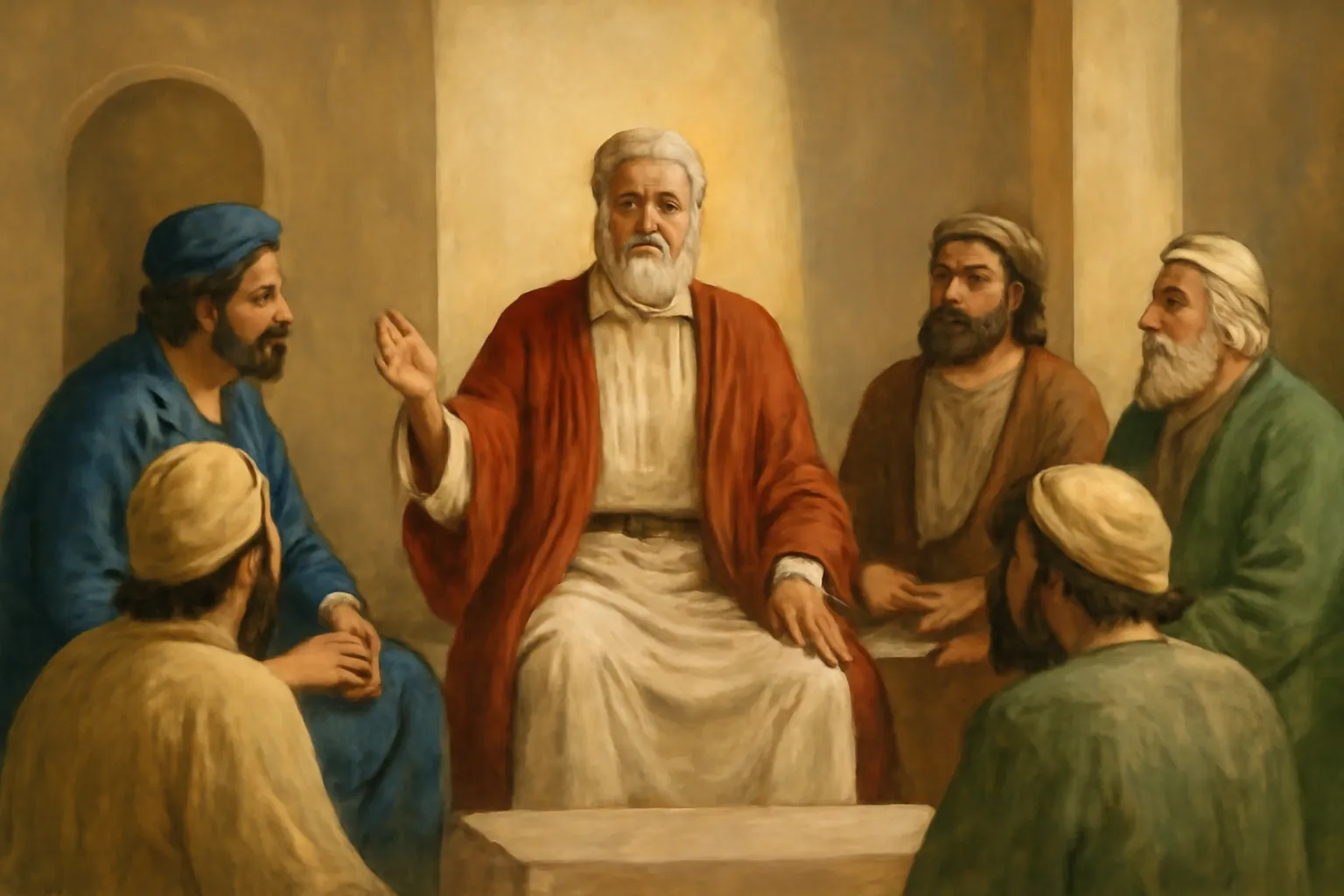
The gathering described in Acts 15—often called the Jerusalem Council—stands as a pivotal moment in early Christian history. It marks a deliberate resolution to a question that could have fractured the early church: whether Gentile converts must adopt the full Jewish Law, including circumcision, to be fully part of the people of God. This council did not merely settle a local dispute; it articulated a template for how the church would handle theological disagreement, how it would welcome non‑Jewish believers, and how it would balance continuity with God’s promises to Israel against the new mission to the nations. In this article, we will survey the history, reconstruct the debates, and explore the significance of this event for the subsequent shape of Christianity and the trajectory of Christian mission.
Historical Context: Why the Jerusalem Council Emerged
To understand the emergence of the Acts 15 Jerusalem Council, one must situate the event within the broader Greco-Roman world and the early Christian movement’s rapid expansion. The church began as a movement anchored in Jewish expectation, but as Paul and Barnabas and later other missionaries spread the gospel among Gentiles, a central issue arose: could Gentiles enter the people of God without adopting the entire Covenant framework that governed Jewish life?
In many respects, the situation in the early chapters of the Book of Acts reflects a living negotiation between two identities: the continuity of God’s redemptive plan with Israel and the fresh, boundary-crossing mission to non‑Jews. The formal complaint or concern that prompted the council came from those who argued that Gentile believers should observe some aspect of the Mosaic Law as a prerequisite for full fellowship. The gospel message, which foregrounded faith in Christ and the gift of the Spirit, seemed to diverge from a strict insistence on ceremonial laws and ritual obligations.
In this context, the Jerusalem church—led by the apostles and elders—acted as the custodians of doctrinal clarity and ecclesial unity. The issue at stake was not merely procedural but deeply theologic: did God’s plan unfold through a covenantal people defined by legal observance, or does the Covenant reach users through faith in Jesus Christ and the empowerment of the Holy Spirit? The answer would carry implications for how churches connected across cultural boundaries and how they understood the mission to the world.
Key Figures and the Flow of the Acts 15 Narrative
The account centers on a few central figures whose trials of argument and testimony helped shape the outcome. The primary actors include the apostle Peter, the missionary pair Paul and Barnabas, and the younger leader James, often described as James the brother of Jesus and head of the Jerusalem church during this period. The narrative also includes several other voices, including those who recounted the experiences of Gentile conversions, the reception of the gospel beyond the Jewish world, and the way these experiences behaved under the pressure of theological debate.
The Acts 15 record intertwines a series of testimonies, scriptural reflections, and a final decision—the kind of decision that would be ratified by the whole apostolic circle and become a precedent for future church governance. It is important to notice that this council preferred to ground its conclusion in the work of God among the Gentiles and the observable fruit of faith, rather than in a purely human consensus about ritual law. This pattern—testimony, exegesis, and a binding decree—became a recurring template for how the early church would resolve conflicts.
The Debates at the Jerusalem Council: What Was at Stake?
The debates at the Acts 15 gathering can be summarized around a central question: should Gentile believers be required to adopt the Mosaic law, especially circumcision, to become full participants in the community of Jesus? The debate involved at least two tracks: a fidelity to the Judaic legal framework and a witness to the gospel to Gentiles as a matter of grace and faith.
The Circumcision Question: Is It Necessary for Gentile Believers?
One of the most controversial proposed conditionals was the requirement of circumcision for Gentile converts. The concern behind this proposal was that without certain ritual markers, the church might seem to dissolve into many practice groups and risk social and religious fragmentation. However, the speech and testimony that followed argued that faith in Christ, and the outworking of grace through the Spirit, created a new relationship with God that did not hinge on adherence to all ceremonial obligations.
The Place of Mosaic Law in the New Covenant
A second facet of the debate revolved around the status of the Mosaic covenant in the wake of Christ’s death and resurrection. If Jesus fulfilled the Law, did Gentiles need to keep it in its ceremonial and ritual form? The early church wrestled with whether the old divides between Jew and Gentile could be bridged by a new, inclusive understanding of salvation. The tone of the debate leaned toward a read of the gospel in which the law’s ceremonial aspects did not unmark Gentiles from full inclusion in the church. The result would be a decision that preserved certain prohibitions as a sign of respect for the newly formed community’s mission while removing the legal barrier to entry for Gentiles.
Testimonies and Scriptural Reasoning
The council’s process featured testimonies from Paul and Barnabas regarding their missionary work among non‑Jews, including conversions and the reception of the gospel by Gentiles without formal circumcision. Peter’s intervening speech highlighted the way God’s Spirit had already been poured out on Gentile believers, reinforcing that God did not discriminate in granting salvation. The text emphasizes that the argument was not merely theoretical; it drew on concrete signs and proof that God was at work among people beyond the Jewish community.
The Role of James and the Final Resolution
James, often presenting a pastoral and practical lens, offered the final resolution. He did not simply dispense a ruling; he provided a decree that balanced welcome with moral stipulations. The suggestion was that Gentile believers should abstain from certain practices associated with idolatry and from particular sensualities, not to secure salvation, but to promote harmony and unity in the diverse church. This approach—prioritizing unity while maintaining some bounds—demonstrates a key feature of the council’s discernment: it sought to remove the primary barrier to fellowship while preserving a set of norms that would help the church flourish in a diverse cultural landscape.
The Decree: Contents, Wording, and Implications
The formal outcome of the Jerusalem council was a decree communicated to Gentile communities. The decree spoke to the essential policy change: Gentiles did not need to be circumcised or to observe the entire Mosaic Law to be saved. However, the decree also provided specific moral guidelines intended to minimize friction with Jewish Christians and to promote a shared witness in a split cultural field.
Contents of the Decree
Gentile believers are not required to be circumcised or to observe the entire Mosaic law.
They should abstain from food sacrificed to idols, from blood, from things strangled, and from sexual immorality.
The decree should be communicated to the churches and be used as a standard for fellowship and mission in Gentile-Christian communities.
The wording of this decree, while concise, carries a robust theological message: the gospel stands as the liberating power of God for all nations, and the church must be prepared to welcome Gentiles without imposing the entire Jewish ceremonial system. Yet, the decree’s moral cautions reveal a practical concern for communal harmony and a sign of respect for those Jewish believers who still navigated the boundaries between tradition and grace.
Immediate Outcomes: How the Council’s Decision Shaped the Early Church
The immediate consequence of the Acts 15 decision was to release Gentile believers from an unnecessary barrier to entry, enabling the Christian movement to grow in breadth and reach. This shift facilitated the church’s missionary expansion beyond the borders of Israel and into the Gentile world with greater confidence about what constitutes membership in the people of God. The council’s resolution became a foundational precedent for addressing later questions about how to handle disputes that traverse cultural, ethnic, and religious boundaries.
The Acts 15 decision also safeguarded the unity of the church by emphasizing the role of the apostles and elders in leading the community—and by recognizing the Spirit’s work in Gentile communities as a legitimate and authoritative sign that the church should heed. The outcome reinforced a sense of shared authority among leaders and a collaborative approach to problem-solving that could adapt to new circumstances without sacrificing core identity.
Significance for Early Christianity and Beyond
The long‑term significance of the Jerusalem Council cannot be overemphasized. It shaped how the early Christian movement defined its identity in a multiethnic world and helped determine the trajectory of mission, worship, and community life in the centuries that followed. Several key themes emerge when assessing the council’s impact.
The Gentile Inclusion and the Mission to the Nations
One of the most consequential effects of the Acts 15 decision was the formal opening of the church to Gentiles without requiring adherence to all Jewish ceremonial laws. This expanded the scope of the church beyond its Jewish roots and laid groundwork for a universal mission. The council’s outcome can be described as a turning point in the translation of a faith rooted in a single people to a faith that addressed all nations and peoples.
Ecclesiology: Leadership, Authority, and Unity
The process itself—apostles, elders, and stakeholders compiling testimonies, Scripture, and discernment—illustrates an early model of ecclesial governance. The way decisions were made, communicated, and implemented demonstrated a strong emphasis on communal discernment and unity. This approach influenced how later church councils and synods would address disputes and establish normative practices for church life across diverse communities.
Theological Tone: Faith, Not Law, As the Ground of Salvation
The acts surrounding the debate underscore a critical theological principle: salvation remains by faith in Christ and the Spirit’s work, not by the observance of ceremonial requirements. The Acts 15 Jerusalem Council thus contributed to a durable theology that emphasizes grace and trust in the gospel as the basis for inclusion into God’s people.
Interpretive Variations: How Scholars Read Acts 15 and Its Aftermath
Across centuries, theologians and historians have offered a range of interpretations about the Jerusalem Council and what it means for the church today. These variations reflect differences in how scholars weigh the text, the historical context, and the broader trajectory of Christian tradition.
Historical-Critical Readings
Some scholars emphasize the political and social dynamics of the first‑century church, arguing that the decree responded to real tensions between different Jewish and Gentile factions. They stress that the council’s decision may reflect pragmatic compromise as much as it does theological conviction.
Theological Readings
Other readers focus on the doctrinal implications of the council’s outcome. They highlight how the conclusion reinforced the doctrine of justification by faith, the role of the Spirit in the validation of Gentile faith, and the transition from Covenant-centered identity to a Christ-centered universality.
Ecclesiological Readings
Some interpreters see the Jerusalem Council as a parable for church governance—an early demonstration of how communities navigate conflict, listen to diverse voices, and make binding decisions that shape the life of the church for generations. These readings often emphasize the balance between authority and conciliar accountability.
There are also discussions about how different manuscripts and textual variants affect the portrayal of the council’s proceedings. While the core decision remains stable across sources, scholars sometimes explore how the phrasing and emphasis may reflect the concerns of early Christian communities or the editors who compiled the narrative.
The Jerusalem Council in the Larger Canon and in Later Church History
The semantics and implications of the events in Acts 15 echoed through the broader Christian story. The council’s decision provided a template for how future councils would handle matters of law, grace, and mission. The emphasis on Gentile inclusion, tempered by practical moral guidelines, influenced the way later Christian communities would navigate questions of cultural sensitivity and religious identity as the church expanded into Europe, Asia, Africa, and beyond.
In addition, the council’s approach has been cited in discussions about how the church engages with society around it. The balance between preserving doctrinal clarity and allowing for diverse expressions of faith, worship, and practice is a recurring theme in church history, and the Acts 15 narrative offers a concrete example of how such balance can be pursued in a way that fosters unity rather than division.
Common Misunderstandings about the Acts 15 Gathering
Misunderstanding: The council imposed circumcision on Gentile converts. Reality: The decree explicitly stated that Gentiles did not need to be circumcised to be saved.
Misunderstanding: The decision ended all discussions about the Mosaic Law. Reality: The decision allowed freedom from circumcision while inviting Gentiles to abstain from some practices linked to idolatry and social tensions.
Misunderstanding: The narrative is solely a controversy with a single solution. Reality: The account shows a multi-voice deliberation process, including testimonies, scriptural reflection, and pastoral wisdom from James.
Glossary: Key Terms and Phrases Related to the Acts 15 Jerusalem Council
Jerusalem Council — the gathering described in Acts 15 to settle the issue of Gentile inclusion and Mosaic observance.
Acts 15 — the chapter in the New Testament that documents the proceedings and outcome of the council.
Gentile believers — non‑Jewish converts to the Christian faith who are included in the church on the basis of faith in Christ.
Circumcision — a central ceremonial act under scrutiny in the debate about whether it was required for Gentiles to become Christians.
Mosaic Law — the body of legal and ceremonial commands given in the Hebrew Scriptures, central to the Old Covenant and a point of discussion in the council’s deliberations.
Decree — the formal decision published by the council outlining the policy toward Gentile believers.
Philadelphia ethos of unity — a concept referring to how the early church sought to maintain unity amid cultural and theological diversity.
The Enduring Legacy of the Acts 15 Jerusalem Council
The Acts 15 Jerusalem Council remains a watershed moment in the story of the church. It demonstrates how a diverse, growing movement can confront a difficult doctrinal and practical question with humility, careful exegesis, and pastoral wisdom. By affirming that Gentiles could enter the faith without submitting to the entire Mosaic Law, the council opened pathways for cross-cultural mission and enriched the church’s identity as a global, inclusive body rooted in faith in Christ and the Spirit’s renewing work.
For readers and students today, the tale of the Acts 15 gathering offers both a historical account and a living model. It shows that doctrinal unity does not require the erasure of cultural differences; instead, it invites the church to discern how to maintain fidelity to the gospel while welcoming diverse expressions of faith and practice. The legacy of this early conference—often called the Jerusalem council of Acts 15—continues to inform contemporary discussions about mission, ecclesial authority, and the boundaries of fellowship in a complex, plural world.
In the final assessment, the acts surrounding the Acts 15 Jerusalem Council illustrate a fundamental truth about the Christian movement: the gospel’s reach extends beyond any single people group, and the church’s task is to bear witness to that universality with wisdom, charity, and a shared commitment to the gospel’s transformative power.
Why a 2nd John Commentary Matters The Second Epistle of John occupies a unique place in the New Testament: brief in length, yet rich in theological shape and pastoral exhortation. This 2nd John commentary guide engages the letter verse by verse to illuminate its core concerns: the truth that grounds community life, the commandment to…
The Seven Words Said by Jesus on the Cross Across Christian history, a small corpus of words uttered by Jesus during the crucifixion has carried outsized weight for faith, devotion, art, and interpretation. Collectively known as the seven last words (or seven sayings from the cross, or seven utterances on Calvary), these phrases are not…
Overview of 1 Corinthians 14 This article offers a thorough verse-by-verse explanation and practical insights on 1 Corinthians 14. In Paul’s letter to the church in Corinth, chapter 14 stands as a focused response to how spiritual gifts should operate when the Christian community gathers for worship. The central aims are edification (building up others…
In this article, we embark on a detailed journey to explain John 1:17, exploring its meaning, its context, and its significance for readers today. We will consider the verse in the flow of the Gospel of John, its key terms, how various Bible translations render it, and how its message relates to the larger story…
Explaining Romans 8:18: Meaning, Context, and Key Takeaways When Christians study the Bible, a single verse can open up a wide window into a larger story. Romans 8:18 is one of those verses that helps readers connect personal pain with a future hope that is cosmic in scope. In this article, we will explore what…
Across Christian tradition, the crucifixion of Jesus is not only a single moment of sorrow but also a profound moment of speech. The “seven sayings” or “utterances” attributed to Jesus from the cross have shaped theology, devotion, and ethical reflection for centuries. They reveal a God who speaks even in greatest distress, a Savior who…