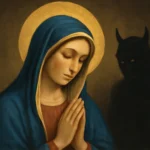
Faith of Angels: Belief, Guidance, and Mythology Explained
Across cultures and centuries, human beings have imagined a world where celestial messengers, guardians, and beings of radiant power conduct affairs beyond ordinary sight. The phrase belief in angels—whether called angels, mal’akhim, devas, or other names—has shaped moral codes, rituals, and stories. In this article we explore the faith of angels in its many forms: how people come to trust or revere these beings, the ways they guide human lives, and the rich tapestry of myth and theology that surrounds them. We will use variations of the term faith of angels to broaden the discussion: angelic faith, belief in angels, the faith of celestial beings, and the trust of heavenly hosts, among others.
This article does not aim to settle doctrinal disputes; instead, it surveys the landscape—historical, theological, literary, and cultural—to help readers understand why the idea of non-human guideposts remains compelling. Whether you approach this topic from a scholarly, devotional, or literary angle, you will find that faith in angelic beings is as much about human longing as it is about a purported other order of reality.
Defining the Core Concepts: Faith, Belief, and Guidance
Before diving into the many traditions, it helps to clarify some terms. In discussions of the belief in angels, three notions repeatedly surface:
Belief or faith in the existence of angelic beings—whether understood as literal sentient beings, symbolic manifestations, or archetypal forces.
Guidance or instruction—the sense that angelic beings offer direction, warnings, comfort, or revelation to humans in moments of doubt, crisis, or decision.
Mythology or mythic narrative—storytelling traditions that explain how heavenly messengers interact with the human order, often encoding ethical ideals, social norms, and cosmological boundaries.
In many traditions, angelic guidance is mediated through sacred texts, prophetic experiences, and ritual practices. In others, it is embedded in folklore, art, and everyday speech—where a person might say, “an angelic messenger appeared in a dream” or “I felt the presence of a guardian.” The result is a spectrum: from the concrete and text-based to the symbolic and poetic.
Historical Roots: From Antiquity to Early Modern Thought
The belief in celestial messengers has deep roots in the ancient world. In Mesopotamian and Jewish antiquity, beings that bear messages or act as mediators were a common motif. Gradually, through the influence of monotheistic frameworks, these figures were reorganized as subordinate but powerful agents of a single divine will. In the Greco‑Roman milieu, organ-like hierarchies of spiritual beings were recast in the language of angels and archangels, and in medieval Europe these beings became central to devotional life, art, and scholastic speculation.
Across these shifts, one constant remained: the idea that there is a realm beyond ordinary sight where trustworthy beings serve the purposes of a higher order. In many traditions, this faith of angels is inseparable from the belief in a benevolent order of creation that upholds justice, mercy, and guidance for humankind.
Not every culture has the same ontological commitments about angelic beings, yet a broad pattern emerges: when people imagine a divine emissary, they are imagining an encounter that can alter the course of a life, a community, or even a civilization. The following sections explore how different religious and mythological frameworks articulate this encounter.
Angelic Beings in Major Religious Traditions
Judaism and Early Christian Contexts: The Jewish Roots of Angelic Faith
In Jewish tradition, the word for angel, mal’akh, is often translated as “messenger.” Angels appear as emissaries of God, delivering messages, providing protection, and sometimes executing divine judgment. In the Hebrew Bible, features of angelic mediation are clear in accounts of Abraham, Jacob, and Moses, where a call or a dream reveals a path forward or a warning about danger.
The faith in angels in this context is not merely belief in a being with wings; it is an acknowledgment that God communicates through secondary agents and respects the moral integrity of human beings enough to speak or act through them. In Jewish thought, angels do not replace God; they reflect God’s will, and their status is always subordinate to the divine. This angelic hierarchy—from throngs of heavenly hosts to named figures like Michael or Gabriel in later tradition—offers a template for how celestial guidance can be both personal and cosmic.
The idea of angelic guardians at times appears in rabbinic literature as protectors who accompany individuals or communities.
Angels can also function as moral exhorters, reminding humans of ethical duties and covenantal obligations.
In commentaries, the faith in angels often intersects with the belief in prophetic inspiration, since messengers can prepare the way for revelation or deeper understanding.
Christian Angelology and the New Testament
In the Christian world, the narrative of angelic beings expands with the New Testament. The annunciation to Mary by the archangel Gabriel is a quintessential moment of divine revelation, while the visitation to the shepherds with “glory to God in the highest” shows how messengers announce extraordinary events that reshape history.
Christian art and liturgy have often highlighted the distinct roles of angels as messengers of God and as participants in cosmic worship—cherubim and seraphim are frequent symbols of the heavenly realm. Yet even within the Christian tradition, angels are not deified; they are servants of the divine will who exist to illuminate, protect, and guide human beings toward the purposes God desires.
In Catholic, Orthodox, and many Protestant frameworks, the idea of personal guardian angels persists as a devotional belief that certain beings watch over individuals.
Throughout medieval and early modern debates, theologians debated the exact nature of angelic authority and the extent of their influence in history and individual lives, clarifying that angels do not override human freedom but can cooperate with it.
Theology often distinguishes between celestial guidance (offers of wisdom or warnings) and miraculous signs that accompany pivotal moments in faith communities.
Islamic Angels: Light, Will, and Devotion
In Islam, angels (Arabic: malā’ika) are created from light and obey the will of God without having free will of their own. They exist to carry out divine commands, record deeds, and sustain creation. Gabriel (Jibril) is revered as the archangel who delivered the Qur’an to the Prophet Muhammad, while other angels like Michael (Mikā’īl), Izraʿīl (the Angel of Death), and Israfil (the Angel with the trumpet) participate in a cosmic order that maintains balance, justice, and accountability.
Islamic theology emphasizes that angels do not possess free will in the human sense; their obedience and purity render them dependable agents of God. A common thread in Muslim thought about the angelic realm is that angels are humble servants who support prophets, protect believers, and announce divine mercy.
In Qur’anic narratives, angels communicate divine messages, protect communities, and record deeds for judgment in the afterlife.
Believers are reminded of the presence of angels in daily life, including worship practices where angels accompany remembrance and supplication.
In some traditions, the idea of a guardian among the angels expands to include personal devotion and ethical conduct aligned with divine law.
Other Traditions and Mythologies
Beyond Judaism, Christianity, and Islam, various cultures imagine heavenly or semi-divine beings who serve as guides or watchers. In Zoroastrian thought, for example, there are beings that guard truth and protect the cosmic order, shaping a form of angel-like guardianship within a dualistic cosmos. In Hindu and Buddhist traditions, devas and bodhisattvas often fulfill roles that resonate with the idea of messengers or protectors, though their metaphysical status differs from the Abrahamic angelologies.
Myths featuring moral exemplars, intercession, or miraculous deliverance also function as a kind of mythic language that communicates ethical ideals. In some folk beliefs, people speak of local spirits or ancestral guardians who deliver protection or warnings—an example of how the broader concept of faith in celestial messengers can adapt to diverse cultural landscapes.
Angelic Guidance: How the Faith of Angels Shapes Personal and Communal Life
A core aspect of angelic guidance is its function as a navigational tool for moral and existential decision-making. People report experiences ranging from lucid dreams and prophetic impressions to subtle feelings of reassurance. Whether interpreted as literal encounters or allegorical cues, such experiences often shape how communities orient themselves toward compassion, justice, and service.
Discernment of life choices—where a sense of being directed toward a particular path is understood as coming from a divine whisper or a guardian presence.
Protection in perilous situations—transforming fear into courage by invoking a protective, unseen presence.
Warning signs in crisis—prompting people to alter plans, avoid danger, or seek guidance from trusted mentors.
Intercession through prayer—belief that angelic beings can carry prayers to the divine or help humans articulate heartfelt petitions.
The experience of guidance is often filtered through cultural expectations. In some communities, the idea of angelic whispers is integrated with devotional practices, liturgy, and ritual invocations. In others, it appears as a literary or artistic motif that teaches ethical behavior—an example of how the faith of angels translates into daily life as a moral grammar.
Roles of Angelic Beings: Messengers, Guardians, and Mediators
Across traditions, there are recurrent roles that many readers would recognize as archetypal functions of the angelic realm. These roles help explain why communities foster a faith in angels that endures through generations.
Messengers who convey divine will, such as delivering revelations or announcing pivotal events.
Guardians who accompany individuals or groups, offering protection and moral support.
Intercessors who advocate on behalf of humanity in the divine presence, sometimes described as presenting prayers or needs to higher powers.
Executors of justice in some narratives, where angelic beings enforce or illustrate cosmic order, balance, and mercy.
These roles are not necessarily mutually exclusive. In many stories and doctrines, angels fulfill several functions at once, moving between whispered guidance and visible intervention. The idea of celestial mediation remains a central feature of the belief in angels across time and space.
Mythology, Symbolism, and Human Experience: How the Faith of Angels Became a Cultural Phenomenon
The concept of angelic beings touches on a fundamental human concern: how to interpret the unknown. Angels serve as symbolic interpreters of mystery, offering a language to express awe, fear, mercy, and hope. In literature and visual arts, the faith in angels has yielded some of the most enduring images: wings, halos, and the luminous figure of a divine emissary acting as the bridge between heaven and earth.
Moreover, the mythic imagination surrounding this topic often encodes communal values. Stories about angels frequently foreground virtues such as humility, obedience, courage, and compassion. They remind communities that trust in a higher order can accompany human freedom and responsibility, rather than replace them.
In more secular contexts, the same motifs are repurposed as archetypes for guidance and moral intuition. The idea that “a friendly force watches over us” can be a comforting metaphor for resilience, solidarity, and the belief that individuals are part of a larger, meaningful story.
Artistic representations—paintings, music, cinema, and sculpture that portray angels as guides or protectors.
Literary motifs—narratives where a celestial message overturns despair and reorients a character toward virtue.
Popular culture—films and television series that depict friendly angels as allies in the struggle to do good.
Practical Impacts: How Belief in Angels Shapes Lived Experience
The belief in angels often translates into concrete habits and dispositions. People who hold to angelic faith may engage in practices that cultivate attentiveness, compassion, and communal responsibility. The following points illustrate some practical expressions of the faith in angelic beings in daily life.
Prayer and reflection focused on guidance, protection, and mercy; rituals may include petitions for insight or comfort in difficult times.
Service and charity inspired by the idea that benevolent beings watch over others and encourage acts of kindness.
Ethical discernment—a heightened sensitivity to choices that affect vulnerable people, echoing the sense of a moral order upheld by higher powers.
Mindful remembrance of the fragility of life, balanced by trust in a benevolent order, which can nurture resilience.
These practical expressions do not require a uniform doctrinal stance; they emerge from the broader human impulse to seek meaning, guidance, and protection in times of uncertainty. In this sense, the trust in guardians or messengers can be seen as a framework for ethical living rather than a purely doctrinal claim.
Sacred Texts and Teachings: Where the Faith of Angels Finds Its Voice
Across traditions, the claim that angelic beings communicate with humans or reveal divine intent is anchored in sacred writings, liturgical practices, and doctrinal debates. Different communities interpret these sources with varying degrees of literalness and metaphorical nuance.
Biblical narratives—incidents of angelic appearances and messages that pivot crucial moments in history.
Qur’anic accounts—angelic announcements, record-keeping, and the care of faithful believers.
Secondary literature—commentaries, hagiographies, and sermons that expand on angelic roles and ethics.
Ritual and devotion—prayers and liturgies that recognize angelic mediation or seek divine grace through intercession.
Critical Perspectives: Skepticism, Symbolism, and Philosophical Reflection
Not all scholars and readers accept the literal existence of angelic beings. A robust exploration of the faith of angels must acknowledge critical perspectives that view angels as symbolic representations of inner virtues, social ideals, or psychological processes. In many modern contexts, the debate centers on two questions: Do angels exist as separate beings? and If they do, what is their nature and purpose?
In many philosophical and theological discussions, angelic figures are used as tools to discuss broader concerns about revelation, freedom, and moral order. For some, the stories of angels function as ethical narratives, inviting readers to reflect on empathy, responsibility, and care for others. For others, the figures serve as cultural artifacts that illuminate how people imagine and respond to transcendent questions.
Regardless of the stance toward literal existence, the angelic motif remains a powerful way to talk about guidance, protection, and the search for meaning in life’s most challenging moments.
Language and Semantics: Varying Ways to Talk About Faith in Angels
Because the subject touches on belief, experience, and narrative, different terms circulate in different communities. The semantic breadth of the topic is why authors often use multiple phrases to describe similar phenomena. Some of the common variants include:
Angel faith or angelic faith—emphasizing trust in heavenly messengers.
Belief in angels—a straightforward formulation that foregrounds epistemology: what is believed and why.
Framing by guardians—emphasizing protective functions.
Celestial mediation—highlighting the intermediary role of angels between the divine and human orders.
Messengers of God—a descriptor that foregrounds a functional role rather than a metaphysical claim.
Heavenly hosts—a more expansive, poetic phrase that situates angels within a cosmic choir or council.
Using this array of terms helps readers recognize that the faith in angels is not a monolith. Instead, it is a rich discourse that adapts to language, culture, and historical circumstance.
Contemporary Interpretations: Angels in Modern Times
In recent centuries, the notion of angelic messengers has migrated into popular culture as well as academic inquiry. Contemporary readers encounter angels in a wide array of genres: novels and poetry that recast old motifs, films that explore moral dilemmas through guardian figures, and scholarly articles that examine how beliefs in angelic beings shape communities’ sense of justice and hope.
Literary reinterpretations that humanize or de-mystify angels while preserving their essential function as moral catalysts.
Documentaries and interviews that discuss personal experiences of guidance, protection, or revelation in secular and faith-based contexts alike.
Interfaith dialogues that compare how different traditions conceive the angelic realm and its ethical implications.
The result is a dynamic conversation about how the concept of angelic guidance continues to resonate in a pluralistic world, offering consolation as well as critical tools for contemplating human vulnerability and resilience.
The Enduring Allure of the Faith in Angels
The faith of angels—in its myriad forms—offers more than a catalog of beings with wings. It is a language for expressing reverence in the face of the unknown, a guide for ethical action, and a repository of stories that help communities navigate fear, hope, and mercy. Whether construed as literal beings who intervene in human history or as symbolic figures that illuminate inner life, the idea of angelic guidance remains a powerful, enduring motif across time and culture.
By examining the belief in angels through historical, theological, literary, and cultural lenses, readers can appreciate how this theme continues to shape personal identity, communal life, and our shared imagination about what lies beyond the ordinary.
Introduction to Angel Visits: What They Are and Why They Matter Throughout human history, people have reported moments when a miraculous presence seems to bridge the ordinary world and something larger, more luminous. In many traditions, these moments are described as angel visits, a term that evokes encounters with divine messengers, heavenly messengers, or celestial…
Why an angelic pool captivates the imagination An angel pool—or its closely related terms like angelic pool, angel-themed pool, and seraphic pool—is more than a backyard water feature. It is a design philosophy that blends graceful form, tranquil lighting, and thoughtful engineering to create a space that feels both celestial and practical. Whether you are…