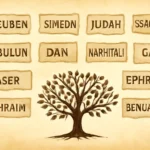
The biblical record presents God’s love for Israel as more than sentiment; it is a covenant love that reaches into the past, shapes the present, and points toward
a future fulfillment. From the opening narratives in Genesis to the prophetic writings of the
prophets, and into the pages of the New Testament, the motif of God’s steadfast love
for the people of Israel is woven into the fabric of salvation history. This article surveys
key biblical insights on this subject, tracing how divine love is expressed
through promises, obligations, discipline, restoration, and hope for the remnant and for
the nations that join themselves to Israel by faith.
Our aim is not merely to catalog verses but to understand how God’s love for Israel
functions as a living, active force in history. Theologies that center on love without
covenant obligation, or on covenant without personal affection, miss the biblical vision.
Here we will examine how the covenant love is expressed, tested, renewed, and ultimately
extended toward a comprehensively faithful creation. Throughout, we will use variations of the
phrase God’s love for Israel to highlight semantic breadth—because the same
divine motive appears as God’s steadfast love, the Lord’s love, and God’s mercy toward His people.
The Covenant Foundations: Abrahamic, Mosaic, and Davidic Promises
The story of God’s love for Israel begins with a chain of divine
covenants that bind God to a people and a land. These promises are not merely contracts;
they shape national identity, divine priority, and end-time expectations. Three primary
strands anchor the biblical portrayal: the Abrahamic Covenant, the Mosaic Covenant, and the
Davidic Covenant. Each strand reveals another facet of the Lord’s steadfast love
and its implications for Israel and, by extension, the world.
Abrahamic Covenant: Seed, Land, and Blessing
In the Abrahamic Covenant, God calls Abraham and promises that
his offspring will become a great nation, receive a land, and be a blessing to all
nations. This triadic structure—offspring, land, and blessing—embodies the inward motive of God’s love for Israel as a
people chosen to reflect the divine goodness to the world. The covenant’s lasting character
lies in its unilateral grace and the assurance that God’s covenantal fidelity is not dependent
on human perfection but on the reliability of the One who calls.
Promise of offspring: A people through whom blessing will come.
Land grant: A tangible inheritance in which the relationship with Yahweh thrives.
Universal blessing: The nations will be invited to participate in the covenant through trust in the God of Israel.
Mosaic Covenant: Law, Relationship, and Presence
The Mosaic Covenant deepens the expression of God’s love for Israel by
establishing a formal framework for relationship. The law, the sacrificial system, and the
tabernacle (and later the temple) become avenues through which Israel experiences divine proximity.
The idea of steadfast love (chesed) is operational in commands, blessings, and the
discipline that follows disobedience. To love a people is to guide them toward holiness, to
correct when they stray, and to invite them back into intimate fellowship.
Law as relational pedagogy: The commandments teach Israel how to live in fidelity to God.
Sacrificial system: A continuous expression of repentance, mercy, and reconciliation.
Tabernacle/Temple presence: A visible sign of God’s loving nearness to His people.
Davidic Covenant: An Everlasting Throne and Covenant Loyalty
The Davidic Covenant centers on the establishment of an enduring throne and a royal line
through which God’s promises will be mediated. This strand of the covenant illuminates not only political
expectations but also the spiritual dimension of God’s fidelity to Israel. The language of
an eternal throne signals that God’s love for Israel is not episodic but anchored in a
long-range plan for governance, justice, and reconciliation for the people and, ultimately, the world.
Eternal throne: A lineage through which God’s ruling wisdom is expressed.
Messianic expectation: The Davidic line becomes the conduit through which salvation
enters history.
Continuity of love: Even if the people stumble, God’s loyal love remains the governing principle.
Expressions of God’s Love in the Torah and the Writings
The Hebrew Scriptures portray God’s love for Israel in vivid, tangible terms.
The repeated refrain is that love is not passive; it acts with mercy, discipline, protection, and
steadfast loyalty. In the Torah and the writings, God’s love is revealed as a dynamic
force that shapes history, fosters identity, and invites response.
Key Images of Divine Love
Compassion and mercy: The character of God is described as merciful and gracious, slow to anger, and abounding in steadfast love.
Protection and guidance: The Almighty shepherds and sustains Israel through every season of life.
Patience and correction: Love disciplines when necessary to restore and renew.
Presence: God’s dwelling with His people manifests the intimate care that defines divine love.
Important Phrases and Their Implications
The biblical vocabulary of love carries weight. Phrases like chesed (loving-kindness/steadfast love), rachamim (mercy), and emet (truth/faithfulness) together illuminate the shape of God’s love for Israel. When the biblical authors speak of God’s love, they are
describing a covenant reality that binds God to His people beyond mere sentiment; it binds Him through
action, commitment, and a call to faithfulness.
The Prophets: God’s Steadfast Love and the Call to Repentance
The prophetic books offer a robust account of God’s love for Israel that refuses to be
reduced to sentimental language. The prophets insist that divine love is not indulgence but
instruction, not mere approval but exhortation toward holiness and justice. Israel’s history—marked by
cycles of faithfulness and infidelity—becomes the setting in which the fidelity of God’s love
is most clearly displayed: faithful even when faith is lacking, patient in the face of repeated rebellion,
and hopeful in the promise of restoration.
Hosea and the Language of Romantic Faithfulness
The book of Hosea offers a striking portrait of God’s love for Israel using a marital
metaphor. God’s love is described as undiminished by Israel’s unfaithfulness, yet it includes calls to
repentance. The imagery communicates that divine love seeks renewal, fidelity, and intimate union with
God, even when Israel composes itself away from the covenant. This portrayal emphasizes that God’s love for Israel remains active and transformative, not merely declarative.
Jeremiah, Ezekiel, and the Promise of a New Covenant
The prophets move toward a future moment when God’s love for Israel would bring about
a renewed heart and a new relational framework. In Jeremiah 31 and Ezekiel 36–37, the language of remembrance and transformation signals that the love of God is not exhausted
by past failures but regenerates the people for a life aligned with the divine will. The idea of a new
covenant—rooted in God’s loyal love for Israel—becomes a cornerstone for how
believers understand the ongoing relationship between God and His people.
New Testament Perspectives: Continuity of Love and the Inclusion of the Nations
The New Testament continues the thread of God’s love for Israel while expanding the
horizon to include the Gentiles who join the people of God through faith in Messiah. Jesus’ ministry is
explicitly connected to Israel’s promises and identity. The apostolic witness testifies that the love
of God remains faithful to His ancient purposes while creating a new, inclusive people drawn from all
nations. In this sense, the covenant love remains the center of the gospel: God loves His
people, keeps His promises, and invites others to share in the intimate relationship He has with Israel.
Jesus is presented in the Gospels as the culmination of Israel’s story—fulfilling the law and the
prophets, revealing the Father’s love in a new and personal way, and inviting all who trust Him into
a life shaped by divine love. The love of God for Israel is not replaced but expanded
as the gospel moves outward to the nations. This expansion is often described in terms of a redefined
people of God who include both ethnic Israel and Gentile believers who share in the promises by faith.
Paul and the Unity of the One People
The apostle Paul argues that the love of God for Israel continues in the ongoing story of salvation. He
insists that the gifts and calling of God are irrevocable, reminding readers that the same divine love
that sustained Israel in the old covenant remains operative in the new covenant. Paul’s teaching highlights
how the inclusion of the Gentiles is consistent with God’s plan for Israel, producing a single, reconciled
people in which the love of God for His covenant people is fulfilled through faith in Christ.
Restoration, Remnant, and the Eschatological Vision of God’s Love
A recurrent theme in the biblical portrait is the remnant—a faithful subset of Israel
toward whom divine love remains steadfast, even when the nation experiences judgment. The remnant
represents hope, continuity, and the future restoration that God promises. The eventual outcome is
a renewed people who embody justice, mercy, and fidelity to the divine covenant. This eschatological
vision is framed not as a withdrawal of love but as a purifying act that prepares Israel for the age to
come.
Restoration as a Manifestation of Divine Love
The promise of restoration is frequently framed as a demonstration of God’s steadfast love.
It is not merely a political recovery but a spiritual renewal in which hearts are changed, the law is
written on the heart, and the people live in covenant fidelity. In this sense, God’s love for Israel
becomes the engine of transformation, drawing individuals and communities back into a life oriented
toward their divine Creator.
Future Fulfillment and the Unity of Promise
The biblical expectation is that the promises to Israel will be fulfilled in ways that honor the
integrity of the covenant. This includes the restoration of the land, the rebuilding of worship, and
the ultimate realization of peace and justice under God’s rule. The love of God for Israel is thus
a covenantal anchor that guarantees continuity, even through cycles of punishment and
exile, toward a future where all nations recognize the sovereignty of the God of Israel.
Theology in Practice: How Believers Should Respond to God’s Love for Israel
How should readers today respond to the biblical witness about God’s love for Israel?
There are several practical dimensions that flow from a robust understanding of covenant faithfulness:
Recognition and respect for the biblical heritage of Israel as the root and foundation of the faith.
Justice and care for the land and people, reflecting God’s heart for a just society where the vulnerable are protected.
Encouragement of reconciliation and mutual understanding between Jewish and Christian communities, rooted in shared roots.
Hopeful eschatology that looks for the fulfillment of God’s promises in a way that honors the integrity of the covenant.
Witness to the nations that God’s love for Israel is not exclusive but invites all peoples into the blessing of the covenant through faith in the Messiah.
The ethical implications of the covenantal love include commitments to truth, mercy, and justice. Believers
are called to reflect God’s love in how they treat the vulnerable, how they steward resources, and how they
pursue peace. The story of Israel is, in this sense, a tutor for the broader human race—an invitation
to imitate divine love by practicing kindness, integrity, and fidelity to one’s commitments.
Common Questions and Clarifications about God’s Love for Israel
This section offers concise clarifications that often arise in conversations about covenant faithfulness,
the status of Israel in redemptive history, and the relationship between Israel and the church.
Is God’s love for Israel exclusive?
No. While the biblical narrative centers on Israel as the unique people with whom God established covenants,
the love of God extends beyond ethnic Israel through faith in Messiah. The inclusion of Gentiles in the
people of God does not nullify the integrity of God’s love for Israel; rather, it fulfills the scriptures’
predictions about nations streaming to the God of Israel and joining the covenant community.
Does divine love mean blanket political approval of every historical action?
Not necessarily. Love in the biblical sense includes both mercy and discipline. The prophets repeatedly remind
readers that God disciplines the people He loves, with the goal of repentance and restoration. The evaluation
of historical actions must be guided by the broader aim of justice, righteousness, and fidelity to the
covenant.
What is the role of the land promise in modern theology?
The land promise remains central to the continuity of Israel’s identity within Scripture. In the biblical
narrative, land is tied to blessing, presence, and identity. The question of how this promise is realized
in contemporary contexts is complex and debated among scholars and faith communities. Many affirm the land’s
significance in a future, restorative fulfillment while emphasizing the present spiritual inheritance in
Christ and the call to justice, peace, and flourishing for all inhabitants of the land.
The Enduring Reality of God’s Covenant Love for Israel
Across generations, God’s love for Israel remains a robust, shaping force in biblical
theology. It is the love that initiates grace, sustains history, disciplines when necessary, and
promises a restored future. The covenantal framework—encompassing the Abrahamic, Mosaic, and Davidic strands—
reveals a divine commitment to a people and to a land, a commitment fulfilled and extended through the person
and work of Jesus Christ. In the light of this love, believers are invited to participate in a people called
to bear witness to the gracious God who keeps His promises, designs a future of restoration, and invites all
nations to share in the blessing of knowing the living God.
In your study or teaching, you may wish to reflect on how the biblical concept of God’s steadfast love
for Israel becomes a lens through which to view salvation history itself. The covenant is not an old
artifact but a living invitation to trust the One who holds history in His hands. By engaging with the rich
biblical witnesses—from the patriarchs to the prophets to the apostles—we encounter a profound truth: God’s love for Israel is foundational to understanding God’s love for all creation, and it remains
the compass by which Christians evaluate promises, justice, and the hope of restoration in a world that longs for
peace.
Foundations in Scripture: The Promise and Its Immediate Context The phrase often summarized as “God will bless those who bless Israel” sits at the intersection of biblical promises, prophetic expectation, and modern religious identity. To understand why this idea has endured, it helps to look at the foundational passages that many readers associate with it….