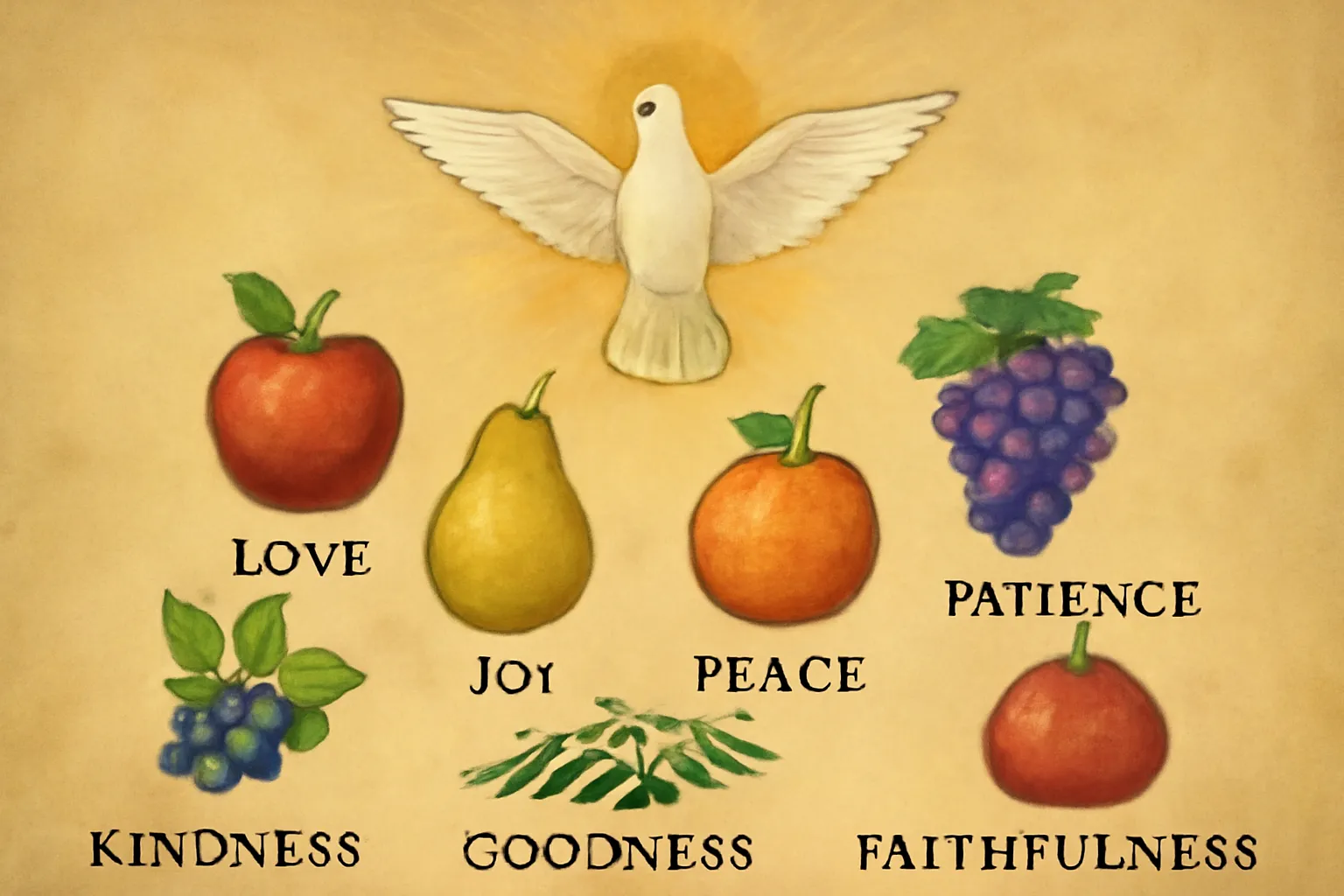
The fruits of the Holy Spirit are a core part of Catholic spirituality. In everyday language, people often say fruits holy spirit catholic, Holy Spirit’s fruits, or fruits of the Spirit in Catholicism to describe the signs of grace that blossom when the Holy Spirit dwells within a believer. This article offers a practical guide to understanding and living the nine fruits of the Holy Spirit in a Catholic context. By exploring their meanings, scriptural roots, and concrete applications, readers can cultivate a more integrated, Christ-centered life that witnesses to the Gospel in family life, work, and parish community.
Understanding the Fruits of the Holy Spirit in Catholicism
In Catholic teaching, the fruits of the Holy Spirit are the outward signs or effects that appear in a person who cooperates with grace. They are not merely natural virtues or happy emotions; rather, they are supernatural characteristics that reflect the action of the Holy Spirit within a soul animated by grace and directed toward the love of God and neighbor. The list most often cited derives from Galatians 5:22-23, where St. Paul enumerates the fruits as love (charity), joy, peace, patience, kindness, generosity (often rendered as goodness), faithfulness, gentleness, and self-control.
In Catholic life, these nine fruits are understood not as isolated traits but as a coherent, interconnected fruiting of the Spirit. They operate in harmony with one another, each supporting and amplifying the others. The Catholic view emphasizes that the fruits are growth outcomes that come from ongoing conversion, prayer, the reception of the sacraments, and a disciplined Christian life. They are not earned by human effort alone; rather, they are nurtured by invoking the Holy Spirit, cooperating with grace, and remaining open to God’s transformative work.
The Nine Fruits of the Holy Spirit
Love (Charity)
Love, or charity, is the primary and most foundational fruit. It refers to a self-giving love that seeks the good of others for their own sake, mirroring the love Christ showed on the Cross. In Catholic life, charity is not merely a feeling; it is a decision to act for the salvation and well-being of others. Practical expressions include acts of service, forgiveness, sacrifice in daily life, and a willingness to place others’ needs before one’s own convenience. In parish life, charity flows through hospitality, care for the poor, and patient, compassionate presence to those who suffer.
Joy
Joy is a deep, abiding gladness rooted in the faith, not dependent on favorable circumstances. It arises from the conviction that God is faithful, that Jesus is risen, and that the Holy Spirit works through ordinary and extraordinary events alike. Joy sustains hope during trials, fosters resilience in family life, and invites others to share in the goodness of God’s plan. Catholics often express joy in liturgy, prayer, and the witness of Christian virtue, even when suffering is present in daily life.
Peace
Peace in this biblical sense means inner harmony that comes from trust in God and reconciliation with others. It includes the peace that Christians cultivate within their own hearts, in relationships, and in communities marked by conflict. A Catholic understanding of peace also extends to social peace—peacemaking in families, neighborhoods, and workplaces, and advocacy for justice that reduces oppression and violence.
Patience
Patience, or long-suffering, is the ability to endure delays, difficulties, and disappointments with calm perseverance. It involves listening before judging, bearing with others’ weaknesses, and giving grace in moments of frustration. In practical terms, patience helps parents guide children, employees collaborate with colleagues, and parish leaders shepherd a diverse community with varying priorities.
Kindness
Kindness expresses a gentle, considerate, and benevolent disposition toward others. It is a concrete habit of treating people with respect, offering encouragement, and extending help without seeking recognition. Catholic life witnesses kindness in the ordinary affairs of daily routine—visiting the sick, comforting the bereaved, or sharing a meal with someone lonely.
Goodness (Confidence in the moral good)
Goodness refers to living and promoting what is truly good, shaping actions by a well-formed conscience. It includes integrity, honesty, and a readiness to stand up for justice, the dignity of every person, and truth. In Catholic practice, goodness manifests in ethical decisions at work, in school, and in public life, and it is nourished by the virtue of prudence and a disciplined prayer life.
Faithfulness
Faithfulness is trustworthiness and steadfast fidelity to God, to one’s commitments, and to others. It includes reliability in fulfilling duties, fidelity in prayer and worship, and the perseverance to remain true to the Gospel amid challenges. In the home, faithfulness strengthens marriage and family life; in the Church, it sustains the faithful through times of trial and change.
Gentleness
Gentleness is a demeanor of meekness and courtesy that does not seek to dominate but to heal and reconcile. It enables persuasive, nonviolent communication, honors the dignity of others, and diffuses conflict with patience. In pastoral ministry, gentleness helps priests, catechists, and lay leaders incarnate the mercy of Christ in encounters with diverse people.
Self-control (Modesty and Temperance)
Self-control encompasses mastery over desires and impulses, directing energies toward what is good, true, and beautiful. It includes prudence in speech, chastity in relationships, and temperance in consumption of goods and media. In Catholic life, the fruit of self-control supports a holistic asceticism that harmonizes body, mind, and spirit, enabling a freer response to God’s will.
The Fruits in Scripture and Catholic Tradition
The scriptural foundation for the fruits of the Holy Spirit is Paul’s Letter to the Galatians, where the nine fruits are listed as indicators of fullness of grace. Catholic commentary emphasizes that these are not a human checklist but a divine harvest that ripens as the believer cooperates with Christ in daily conversion. Early Church Fathers and Catholic theologians elaborated the Fruits as a response to the Gifts of the Holy Spirit. While the Gifts (wisdom, understanding, counsel, fortitude, knowledge, piety, fear of the Lord) enable growth in virtue, the Fruits reveal how that growth appears in concrete conduct and relationships.
Through the centuries, Catholic catechesis has connected the Fruits to the life of Christ, the sacramental economy of grace, and the mission of the Church. In baptism, confirmation, and ongoing formation, believers are invited to cooperate with grace so that the interior life becomes visible in compassion, justice, and holiness. The Fathers often stressed that the Fruits are not moral achievements apart from grace; they are the evidence of a transformed heart that breathes in union with the Spirit.
Practically, Catholics distinguish fruits of the Holy Spirit from virtues that are cultivated through practice and habit. The nine fruits are more holistic indicators of grace at work, while virtues such as prudence, justice, fortitude, and temperance are the cardinal and theological virtues that undergird the larger Fruit harvest. In Catholic pedagogy, both are essential: the virtues form the stable disposition, and the Fruits manifest that disposition in action across life’s circumstances.
How to Cultivate the Fruits in Daily Life
Growing the feminine or masculine fruits of the Spirit is not a one-time decision but a lifelong journey. Catholic spirituality offers a number of practical pathways to foster these graces in everyday circumstances:
Prayer and daily examen: Start and end each day with brief prayer, asking the Holy Spirit to cultivate love, joy, and peace in you. A simple daily examen helps you notice where you acted with patience or faced difficulties and how you can respond more fruitfully tomorrow.
Participation in the sacraments: Regular reception of the Eucharist and frequent confession are powerful means by which grace enters the soul, enabling the Fruits to mature. The sacraments form and sustain a life rooted in Christ.
Scripture and catechesis: Reading the Word and faithful catechesis deepen understanding of God’s will. The narrative of Jesus’ mercy, forgiveness, and service provides templates for living the Fruits in families, workplaces, and communities.
Spiritual disciplines: Fasting, almsgiving, and acts of service build self-control, kindness, and generosity. They make the interior life visible to others and strengthen the social dimension of holiness.
Spiritual direction or accountability partnerships: Guidance from a priest, spiritual director, or trusted lay mentor helps discern how the Fruits are developing in one’s unique circumstances and gifts.
Charitable presence: Volunteering, pastoral care, and outreach to the vulnerable offer concrete opportunities to practice charity, gentleness, and peace in real-world contexts.
In practice, a Catholic who desires to nurture the fruits of the Spirit might adopt a simple daily rhythm: begin with prayer, read a short passage of Scripture, perform a specific act of charity, and reflect at night on how love, joy, and peace were evident. Over time, these small choices become habitual, and the Fruits become a reliable way of assessing spiritual growth.
Fruits in Family, Parish, and Social Life
Living out the fruits of the Holy Spirit has implications beyond personal sanctification. In Catholic communities, the Fruits influence how families raise children, how couples support one another, how parishes coordinate ministries, and how Catholics engage with the wider world.
Family life: Charity guides parenting with patience, gentleness, and generosity. Joy maintains a hopeful atmosphere; peace reduces conflict; self-control helps children learn discipline; faithfulness models reliability in marriage and parenting.
Parish and liturgical life: Gentleness and kindness shape catechesis and outreach to newcomers; joy and peace enliven vibrant worship; patience helps ministries coordinate across volunteers and staff; charity motivates outreach to the poor and marginalized.
Community service and social justice: The Fruits motivate Catholics to pursue justice, human dignity, and the common good. When the Spirit bears fruit, advocacy becomes compassionate rather than combative, and advocacy is grounded in truth and mercy.
Pastoral leaders often reflect on how to foster a culture that recognizes the Fruits in concrete service: hospitable welcome for visitors, compassionate care for the sick, and wise governance that respects the dignity of every person. The fruits of the Spirit thus become a communal grammar for Christian living in a pluralistic society.
Common Misconceptions and Clarifications
Several misconceptions can cloud understanding of the fruits of the Holy Spirit in Catholic teaching. Clarifying these helps ensure a healthier, more accurate practice of the spiritual life.
Fruits are not natural temperament. They are supernatural signs that arise through grace, even if a person’s natural personality supports or hinders their growth.
The Fruits are not a moral checklist. They are indicators of living in communion with the Spirit; focusing on «doing» the Fruits apart from grace can become legalistic. The aim is conversion and relationship with God.
Gifts vs. Fruits: In Catholic theology, the Gifts of the Holy Spirit enable us to grow in virtue and to discern God’s will, while the Fruits are the visible outcomes of grace working through those gifts in daily life.
Fruits do not replace the Cross. Suffering and trial can be the context in which the Spirit bears fruit in deeper ways, not as a sign that God has abandoned us but as an invitation to deeper trust.
Frequently Asked Questions about the Fruits Holy Spirit Catholic
Are the nine fruits the only fruits of the Holy Spirit?
Traditionally, the Galatian list is treated as the canonical set of nine fruits. Some theologians discuss broader family traits of grace that may appear in believers. However, the standard Catholic teaching emphasizes these nine as primary indicators of Spirit-filled life.
Can someone have all nine fruits at once?
Yes, the fruits grow in varying measure across a lifetime and across different circumstances. A mature Christian aims to cultivate all nine, with the Holy Spirit shaping one’s heart in a balanced, integrated way.
How do I know if I am bearing these fruits?
Fruits are observable in actions and dispositions: acts of charity and forgiveness, joyful resilience, peaceful resolutions to conflict, patient endurance, kindness toward strangers, a steadfast faith, gentle speech, and self-control. A trustworthy gauge is the way you respond to crises and relationships—do you notice more mercy, truth-telling, and generosity?
What is the role of confession and the sacraments in bearing the Fruits?
The sacraments, especially the Eucharist and Reconciliation, supply grace that nourishes the interior life, strengthens virtues, and supports the growth of the Fruits. Regular reception helps develop a more faithful and fruitful Christian witness.
A Final Look at a Practical Catholic Approach to the Fruits
To integrate the fruits of the Holy Spirit into everyday life, consider a practical, sustainable plan that can be adopted by individuals, families, and small faith communities. Begin with self-assessment: which of the nine fruits come most naturally to you? In which areas do you feel called to growth? Then, craft a plan that includes:
One concrete action per week tied to a specific fruit (for example, an act of kindness on Tuesday, a prayer for peace on Friday).
Regular communal reflection in families or groups on how the Fruits are appearing in daily life, with mutual encouragement and accountability.
Scriptural meditations focusing on Galatians 5:22-23 and related passages to anchor growth in Scripture.
Mentorship or spiritual direction to receive guidance on how to discern the Spirit’s promptings in real-life situations.
Over time, a Catholic who embraces this practical path finds that the fruits of the Holy Spirit are not abstract ideals but living realities. Charity becomes visible in acts of service; joy grows in prayer and perseverance; peace informs decisions and relationships; patience becomes the quiet endurance that sustains families and communities; kindness, goodness, and gentleness soften interactions; faithfulness strengthens commitments; and self-control becomes a liberating discipline that enables true freedom in Christ.
In Catholic spirituality, the fruits of the Holy Spirit offer more than a static list of virtues. They provide a practical grammar for Christian life—a way to translate belief into behavior, worship into witness, and grace into mission. By continually seeking the Holy Spirit, growing through the sacraments, abiding in the Word, and serving others with compassion, Catholics can cultivate a life marked by the nine fruits: charity, joy, peace, patience, kindness, goodness, faithfulness, gentleness, and self-control. The fruits remind believers that authentic holiness unfolds within the rhythms of daily life, in ordinary encounters, and in love poured out for the world.
As you embark on this path, remember that you are not alone. The Holy Spirit is at work in you and through the faith community around you. The Church invites you to persevere in grace, to incarnate the Gospel through your relationships, and to bear witness to the transformative power of God’s love. When we measure our lives by the presence of these fruits, we discover that Catholicism is not merely a set of beliefs but a vibrant way of living as daughters and sons of the Father, guided by the Spirit, and united in the Church.