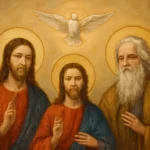
God, the Holy Spirit, and Jesus Are One: Trinity Explained
The doctrine commonly called the Trinity is one of the most central and also one of the most challenging ideas in Christian faith. It speaks of God as a single divine reality who reveals Himself in three distinct, yet inseparable, ways. In popular terms, Christians affirm that the Father, the Son, and the Holy Spirit are not three separate gods but one God who acts in three revealing modes and three personal relationships. This article seeks to explain what that means, how it is biblically grounded, how it developed historically, and what implications it has for belief, worship, and daily living. The goal is to offer a clear, balanced, and biblically informed overview rather than a simplistic slogan.
Foundations: What the Trinity Aims to Communicate
At its core, the doctrine affirms three commitments that can sound paradoxical if thought about in isolation, but are held together by the concept of unity in essence and plurality in person:
One indivisible God: There is only one true divine being, the Creator of all things, the eternal King who alone is worthy of worship.
Three personal centers of relation: Within the one Godhead, there are three persons—the Father, the Son, and the Holy Spirit—who relate to one another in perfect love and unity.
Co-equality and co-eternity: The Father, the Son, and the Holy Spirit are equal in nature and divine glory, and they have always existed together for all eternity.
In the pages that follow, we will unfold these ideas with careful attention to Scripture, tradition, and thoughtful reflection on what it means for a believer to relate to God as Father, Son, and Spirit—without treating the doctrine as a barrier to faith, but as a compass for worship and mission.
Foundations in Scripture
Many readers want to know where the Trinity is taught in the Bible. While the word “Trinity” itself does not appear in a single verse, there are key passages that Christians read as pointing to the triune nature of God and the distinct roles of the Father, Son, and Spirit. Three broad strands of biblical witness are commonly cited:
One God in three persons: The Bible consistently presents the Father, the Son, and the Spirit as God, yet distinct from one another in personal identity. For instance, in the Gospel of Matthew there is a clear commission to baptize with reference to all three: “Go therefore and make disciples of all nations, baptizing them in the name of the Father and of the Son and of the Holy Spirit” (Matthew 28:19).
Distinct roles and relationships: The Father, Son, and Spirit are described with different actions and titles that highlight their personal distinctness and their shared work in creation, redemption, and ongoing life with believers. The Gospel of John portrays the Son as the Word who became flesh, the Father as the one who sends the Son, and the Spirit as the Spirit of truth who proceeds from the Father (and in many Christian traditions from the Son) to guide, teach, and empower the church.
Divine equality and unity: Scripture often embodies a rhythm of unity within diversity. For example, passages that speak of the Son’s preexistence and divine participation in creation, alongside explicit attributes of God that belong to the Spirit, are read as affirming a shared divine nature that remains distinct in personal way.
Key scriptural anchors frequently cited by theologians include:
Genesis 1:1–2, which begins with God creating the heavens and the earth, an act attributed to the supreme divine agent.
John 1:1–14, which identifies the Word (the Son) with God and describes the Word becoming flesh in Jesus, indicating both unity with God and personal distinctness.
John 14–16, where Jesus speaks of the Father sending the Helper, the Holy Spirit, who will teach, guide, and convict the world concerning sin and righteousness.
Romans 8:9–11 and 1 Corinthians 12–14, which discuss the Spirit’s work within believers and the Spirit’s role alongside other persons in the life of the church.
2 Corinthians 13:14 and Colossians 1:15–20, which speak of the triune fullness of God and the supremacy of Christ in creation and reconciliation.
In addition to explicit statements, many theologians point to the early church’s reading of Scripture as a whole—especially passages about creation, redemption, and the Spirit’s activity in bringing life and transformation—as a cumulative witness to the triune reality of God.
Historical Development: From Debate to Doctrine
The language of “one God in three persons” did not appear fully formed in the earliest Christian communities, but by the fourth century, the church had formed a robust, carefully articulated understanding. Here is a concise sketch of the historical trajectory:
Early apostolic church: Christians reflected on the apostolic witness to Jesus as Lord and to the Spirit’s presence in the church, often praying to God as Father, through the Son, by the Spirit.
Reacting to heresies: As false teachings arose—such as modalism (the idea that Father, Son, and Spirit are merely different modes of one person) or subordinationism (the Son or the Spirit viewed as lesser than the Father)—the church sought to preserve the integrity of biblical language about divine equality and eternal distinctness.
Nicene and Constantinopolitan formulations: The Council of Nicaea (325 CE) affirmed that the Son is of the same essence as the Father (homoousios) in opposition to Arian views that denied full divinity to the Son. The later Council of Constantinople (381 CE) expanded treatment of the Spirit’s divinity and personal distinctness, resulting in a more fully formed doctrine of the Trinity as one God in three persons.
Classic articulations: The creed tradition, such as the Nicene-Constantinopolitan Creed, became a concise, orthodox summary of the Trinity that many Christian traditions still recite in worship and doctrine today, helping to guard against distortions while inviting believers into the mystery.
Throughout these centuries, the Bible remained the primary source for the church’s understanding, while tradition, reason, and experience helped the church articulate the doctrine in a way that could be confessed by all believers. The result is a framework in which believers affirm the same God who created, saves, and sustains the world is a single divine reality that reveals Himself in three personal modes of being and activity: the Father, the Son, and the Holy Spirit.
Models and Concepts: How theologians explain the Trinity
Because the Trinity involves a mystery beyond full human comprehension, theologians have proposed several models or metaphors to help believers think clearly about the relationship among the Father, the Son, and the Holy Spirit. Each model has strengths and limitations, and none is exhaustive. Here are some commonly discussed approaches:
Three Persons, One Essence
The core assertion is that the Father, the Son, and the Holy Spirit are not three separate gods but one divine essence. They are equally God in being, co-eternal, and co-equal in glory. The distinctions among them are personal and relational rather than ontological divisions within God.
Perichoresis and Mutual Indwelling
Some writers use the term perichoresis (often translated as mutual indwelling) to describe how the three persons eternally relate to one another without confusion or division. In this view, each person fully relates to and dwells within the others, yet each remains fully distinct.
Economic Trinity vs. immanent Trinity
The economic Trinity describes God’s interactions in the world—how Father, Son, and Spirit work in creation, redemption, and sanctification. The immanent Trinity speaks of God’s inner life apart from creation. The two fit together so that God’s actions toward us reveal His essential nature, without reducing the Trinity merely to what God does for us.
Common analogies—such as water existing as ice, liquid, and steam; or a person being both father and son—can illustrate aspects of unity and diversity but risk oversimplifying or misrepresenting the true nature of the Trinity. The church cautions against overreliance on any single analogy, recognizing that God’s inner life surpasses human categories.
Who Is God? Distinguishing the Father, the Son, and the Spirit
Although Christians confess one God, they also speak of three distinct persons within the Godhead. Here is a brief portrait of each, emphasizing their roles and relationships within the Trinity and in relation to creation and salvation:
The Father: Often described as the source or origin within the Godhead, the Father is depicted as the one who initiates creation, who plans salvation, and who receives worship. In Christian liturgy and prayer, believers frequently address the Father through the Son and by the Spirit, reflecting the relational character of the divine life.
The Son: Jesus Christ, the eternal Word who became incarnate, is central to God’s redemptive mission. The Son fulfills the Father’s saving purposes, reveals the Father to humanity, and mediates reconciliation between God and people. The Son’s life, death, resurrection, and exaltation are the climactic acts of God’s self-revelation in history.
The Holy Spirit: The Spirit is the agent of God’s presence and power in the world and in believers. The Spirit convicts, regenerates, indwells, guides, teaches, empowers for service, and produces transformation. The Spirit’s work is ongoing, sustaining the church and applying the work of Christ to individuals and communities.
In discussing these distinctions, it is important to emphasize the unity that holds the three together. The Father is not the Son, the Son is not the Spirit, and the Spirit is not the Father in the sense of being a mere other mode of God. Rather, the Father, the Son, and the Holy Spirit are eternally related persons within the same divine being, sharing the same divine essence and will. This precise balance between unity and distinction has been a defining feature of orthodox Christian faith for centuries.
What the Trinity Means for Worship, Faith, and Daily Life
Understanding that God is one and three persons has practical significance for how Christians worship, pray, and live out their faith. Here are some key implications:
Worship to the Triune God: Christian worship frequently addresses God the Father through the Son and by the Spirit. The Father’s purposes are exalted in Christ, and the Spirit invites and enables believers to respond in praise, gratitude, and obedience.
Prayer: Prayer is directed to the Father, through the Son, and in the Spirit. The New Testament pattern models prayer accessed by the Spirit and grounded in Christ’s mediatorial work.
Salvation and Adoption: The Father’s plan of salvation is accomplished in the obedience and sacrifice of the Son, and the Spirit applies this salvation to our hearts, producing faith, repentance, and new life.
Unity in the Body: The Spirit’s work in believers fosters unity within the church, knitting diverse people into one body that shares in the life and love of the triune God.
Mission and Empowerment: The Spirit equips and empowers Christians for witness and service, enabling them to bear witness to the life of God that is lived in and through them by grace.
For many believers, embracing the Trinity helps answer fundamental questions about God’s nature and how God relates to the world. It guards against the idea that God is distant or impersonal, and it invites believers into a dynamic relationship with a God who is fully present, holy, loving, and active in history and in their personal lives.
Common Questions and Clarifications
In any discussion about the Trinity, questions naturally arise. Here are some of the most common concerns, addressed succinctly:
Is Jesus equal to God? Yes. In orthodox Christian teaching, the Son is fully God—co-equal with the Father in essence and glory. The Scriptures consistently affirm the divine status and preexistence of the Son, while also describing His distinct personhood and His work of redemption.
Is the Holy Spirit a force or a person? The Spirit is described as a person, not a mere force. The Spirit speaks, teaches, intercedes, and yields personal actions in the life of believers and the church, indicating a personal being within the one Godhead.
How can there be three and one at the same time? The doctrine resolves this through the language of one essence (God’s unified being) and three persons (distinct centers of personal life). It is a mystery that preserves both unity and plurality without reducing one to the other.
Why is the Trinity important for doctrine today? The Trinity shapes when and how Christians speak about creation, salvation, and the church’s mission. It provides a framework for understanding revelation, the person of Jesus, and the Spirit’s ongoing presence as the life-giving power in the church and in believers.
Practical Reflections: How Believers Live This Reality
In daily life, the truth of the Triune God can shape spiritual practice in several meaningful ways. The following reflections are offered to help readers translate doctrine into devotion and behavior:
Prayer life: Cultivate a habit of relating to the Father through the Son and by the Spirit. The Son serves as the mediator who makes access to the Father possible, and the Spirit assists and empowers in prayer.
Scripture engagement: Read the Bible with an eye for the interconnected acts of the Father, Son, and Spirit. Notice how each person’s work appears in creation, redemption, and renewal.
Ethical living: The Spirit’s work in believers produces transformation—love, peace, patience, and justice. Living in harmony with these fruits reflects the Spirit’s presence at work within the community of faith.
Church life: The triune God calls diverse people into unity. The Spirit sustains the church as a diverse family united by the cross, the gospel, and shared mission to serve the world.
Hope for the world: Belief in the Father’s plan, the Son’s victory, and the Spirit’s presence inspires confidence in God’s redemptive future and in the church’s vocation in the world.
Glossary of Key Terms
The following quick references can help readers navigate the language commonly used when discussing the Trinity. Bold terms are often emphasized in theological discussions for clarity:
Trinity: The doctrine that one God exists as three co-equal, co-eternal persons in one divine essence.
Hypostasis (or “person”): The individual center of existence within the Godhead—the Father, the Son, or the Holy Spirit.
Ousia (often translated as “essence”): The shared divine nature that makes God truly God in the fullest sense.
Consubstantial: Of the same essence; used to express the unity of the Son with the Father in the Trinitarian framework.
Economic Trinity: The way the three persons are involved in creation and salvation in history—without implying any difference in their essential nature.
Immanent Trinity: The inner life of God as it exists independently of creation, focusing on the eternal relationship among the Father, Son, and Spirit.
Concluding Reflections
The teaching that God, the Holy Spirit, and Jesus are one is not meant to confuse or overwhelm but to illumine the reality of God’s self-disclosure in the world. Christians do not worship three gods; they worship the one true God who reveals Himself in three persons. This mystery invites humility, worship, and grateful awe. It also anchors a robust hope: a God who created all things, who entered the human condition in Jesus, and who continues to live and work among His people by the Spirit’s power is a God who remains present, reliable, and gracious in every season of life.
As you explore these truths, you may find it helpful to read the biblical passages cited here side by side with a trusted theological resource or a community of believers who can discuss how this doctrine shapes faith, worship, and daily practice. The Trinity is not only a doctrine to be believed; it is a reality to be cherished and a pattern to be lived, as believers are drawn into deeper communion with the Father, through the Son, by the Spirit, for the good of the world and the glory of God.
Understanding the Trinity: A Guide to God in Three Persons in One Essence The phrase “God 3 in 1” is a shorthand that many people use to describe a central confession of historic Christian faith: the Trinity. This doctrine holds that there is one God who exists as three distinct Persons — the Father, the…