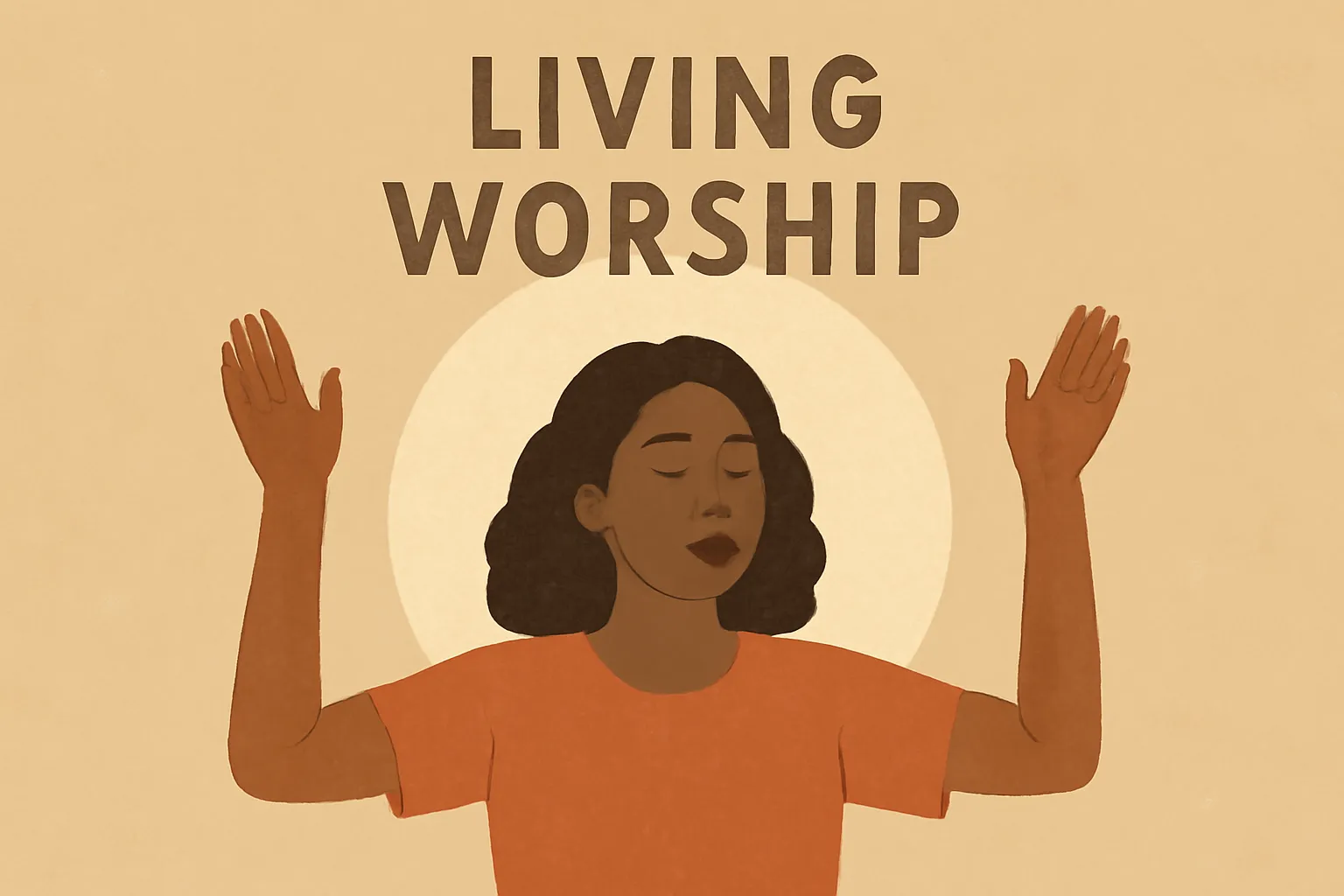
In many traditions, worship is thought of as a weekly gathering, a set of prayers, or a specific ritual performed at designated times. Yet the trajectory of faithful living points toward something broader and deeper: living worship as a continuous posture of openness, attentiveness, and reverence woven into daily life. This article invites you to explore how devotion can become everyday practice, how presence can become a habitual companion, and how ordinary moments can carry extraordinary meaning when approached with intention.
Living worship is not about abandoning tradition or reducing sacredness to mere routine. It is about translating sacred meaning into ordinary rhythm: waking with gratitude, eating with mindfulness, working with integrity, speaking with kindness, resting with trust, and noticing awe in the small details of the day. Whether you identify with a religious tradition, a spiritual practice, or a secular sense of moral beauty, the core idea remains the same: devotion that is embodied, present, and generous.
What is Living Worship?
Defining the concept
Living worship can be understood as a lifestyle of reverence manifested through actions, choices, and attitudes rather than confined to a single ritual or liturgy. It is the idea that every breath, every encounter, and every task can become an expression of the sacred when approached with intention. In this sense, worship is not merely something you do on Sunday; it is something you become in the minute-to-minute flow of life.
Across cultures, the notion of worship in daily life appears in varied forms: a quiet moment of breath prayer at the kitchen sink, a mindful pause before beginning a meal, a deliberate act of service toward a neighbor, or a creative act that reflects gratitude and wonder. When we practice living worship, we cultivate a reliable attention to the beauty and brokenness of existence, and we orient our energies toward what nourishes life and community.
Variations of living worship across contexts
Living worship shows up in diverse vocabularies:
Incarnational worship: God or the sacred is perceived through tangible acts—cooking for someone, mending clothes, offering a listening ear. The sacred becomes visible in practical service.
Contemplative presence: Stillness, breath, and attention serve as conduits for connection with the inner life and the wider cosmos.
Ethical devotion: Justice-minded action, care for the vulnerable, and stewardship of creation become expressions of devotion.
Creativity as prayer: Artistic work, writing, music, or craft becomes a language of worship that names the sacred in form.
Everyday sacrament: The ordinary—food, work, rest—becomes sacramental through awareness and gratitude.
Community-centered worship: Shared acts of hospitality, mercy, and solidarity build a living temple of love and belonging.
While each path has its own vocabulary, the thread uniting them is a shift from ritual as performance to worship as relationship—a continuous dialogue with the good, the true, and the beautiful that animates daily life.
Principles of Everyday Devotion
To cultivate a steady practice of living worship, it helps to anchor your life around a few guiding principles. These principles function like map coordinates, helping you navigate distractions, fatigue, and competing priorities while staying anchored in devotion.
Presence over performance
The heartbeat of living worship is presence. It is not primarily about how polished your prayers sound or how perfect your rituals appear; it is about showing up fully to what is happening right now. When you prioritize presence, your interactions, tasks, and even difficult emotions become opportunities for connection with the sacred.
Attentiveness to the ordinary
Attention to the ordinary reveals the extraordinary embedded in daily life. Acknowledge the small acts—breathing, walking, listening—as spaces where meaning can be discovered. This shift reframes scarcity and burnout into abundance and gratitude.
Graceful rhythm over rushed intensity
A sustainable practice of living worship invites a steady rhythm rather than bursts of aspiration followed by burnout. It is about long-term cultivation—gentle, repeatable, and adaptable to the seasons of life.
Embodied spirituality
Worship becomes embodiment when it engages the senses, body, and emotions. This means not only mental assent but also posture, breath, movement, and touch as channels through which the sacred is encountered and expressed.
Generosity as the natural fruit
A generous life—in time, attention, resources, and mercy—often signals that living worship is taking root. When generosity flows, it points back to the belief that one’s life is not solely for private comfort but for the flourishing of others.
Communal imagination and accountability
Living worship thrives in community where people share practices, encourage one another, and hold each other accountable to lived values. Shared rhythms—weekly meals, group reflections, or collaborative service projects—multiply the impact of personal devotion.
Practices for Cultivating Presence in Daily Life
Below are practical practices categorized to fit into different days and contexts. The goal is to build a repertoire of habits that can be woven into your routines without requiring heroic effort every day.
Morning rituals that set the tone
Start the day with a short sequence that centers attention and intention. Consider one or more of these options:
Begin with a breath prayer—inhale with the sense of gratitude, exhale with release of tension.
Read a brief verse, parable, or guiding line, then spend a moment listening for any inward nudge for the day.
Pair movement with intention—stretching, slow yoga, or a short walk while naming one person or cause you wish to bless today.
Midday micro-worship
The middle of the day can be a powerful checkpoint. Use brief practices that reconnect you to the sacred without derailing momentum:
Pause for 60 seconds of sensory awareness—notice sounds, sights, textures, and temperatures; then offer a quick thank-you.
Engage in a silence break—no voices, no screens, just stillness, maybe with a whispered gratitude.
Offer a quick act of service—hold a door, help a colleague, or text a word of encouragement to a friend.
Evening reflection and rest
Evening is an ideal time to weave what happened into a coherent narrative of devotion. Consider the following:
Review the day with a graceful inventory—what went well, what was hard, what next step could you take?
Practice steadfast gratitude for both ordinary and meaningful moments.
Close with a small ritual—lighting a candle, placing a symbolic object on a shelf, or writing a brief blessing for tomorrow.
Practices for embodiment in everyday tasks
You don’t need a separate hour to live out worship. Let devotion permeate routine acts:
Kitchen as chapel: cook with intention, savoring textures, and offering warmth to others.
Workspace as sanctuary: organize cleanly, communicate with respect, and take intentional breaks to reset.
Rest as spiritual discipline: honor rest, resist guilt about quiet moments, and allow restoration to become a form of worship.
Worship in Relationships and Community
Living worship extends beyond the self into relationships, families, neighbors, and communities. When devotion becomes communal, it gains momentum, accountability, and shared meaning.
In families and households
Household worship can be practiced through daily rituals, shared meals, and mutual care. Examples include:
Weekly family time centered on listening and storytelling, where each member shares something they learned about love, courage, or mercy.
Rituals of care for one another—making meals for someone who is ill, helping with chores without being asked, or offering a comforting presence during tough days.
Intergenerational rites that pass on values, traditions, and stories that shape a sense of belonging and purpose.
In workplaces and public life
A culture of living worship in work and public spaces emphasizes integrity, generosity, and service. Practical expressions include:
Leading with listening—seeking first to understand others’ needs before offering solutions.
Stewarding energy—avoiding burnout through fair work distribution, boundaries, and humane expectations.
Practicing honored speech—speaking truth with kindness, offering constructive feedback, and celebrating others’ gifts.
In communities of care
Communities that center living worship often develop shared practices such as group meals, collaborative service projects, and rituals of lament and hope. These practices cultivate belonging, resilience, and a sense of shared vocation.
Common Misunderstandings About Living Worship
If you are new to the idea of living worship, you may encounter some misconceptions. Clearing these away helps keep the focus on practice rather than performance.
Misconception: Living worship means abandoning traditional worship or ritual. Clarification: It often complements ritual, deepening its resonance by translating it into daily action.
Misconception: It requires perfect mindfulness at all times. Clarification: It invites regular return after distractions, with compassion for imperfection.
Misconception: It is only for people with strong religious beliefs. Clarification: It can be practiced by anyone seeking meaning, dignity, and a humane life oriented toward others.
Misconception: It’s a private matter. Clarification: It often thrives in community through shared rhythms and accountable relationships.
Practical Tools and Resources for Living Worship
Below are practical tools you can use to cultivate living worship without needing specialized settings or times. These resources are designed to be adaptable to different contexts and levels of commitment.
Journaling prompts: One-line gratitude, one learning, one act of service you performed today.
Simple liturgy: A short, repeatable sequence of lines you say or think each morning and evening to anchor your day.
Pause-and-pray moments: A minute or two at set times (e.g., mid-morning, mid-afternoon) to breathe, observe, and bless the day.
Sacramental reminders: Objects or images that symbolize the sacred for you—keep them where you work or rest to cue a worshipful stance.
Service rituals: A monthly plan to serve someone else—meal delivery, volunteering, or offering practical help to neighbors.
Daily rhythm templates
If you’d like a concrete framework, consider adapting the following templates to your context:
Morning alignment: Breath prayer + intention + small act of kindness toward one person you’ll encounter soon.
Midday re-centering: 60 seconds of sensory acknowledgment + a single grateful sentence.
Evening consolidation: Quick reflection, a blessing for tomorrow, and a moment of release before sleep.
Measuring Growth and Adjusting Course
Like any discipline, living worship benefits from gentle evaluation. Rather than metrics that shame, seek indicators that reveal growing texture in your spiritual life and relationships.
Consistency: Are you repeating small acts of devotion with increasing regularity, even on hard days?
Depth: Do ordinary moments feel more meaningful, or do you detect more capacity for tenderness and patience?
Freedom: Do you notice fewer compulsions to perform, and more willingness to simply be present?
Impact: Are your relationships marked by greater mercy, honest communication, and shared joy?
Resilience: Do you bounce back from disappointment with a posture of grace rather than cynicism?
A practical approach is to pick one or two indicators and track them for 30 days. At the end of the period, reflect on what supported growth and what barriers remained. Then adjust your practices accordingly, staying attentive to the evolving seasons of life.
Overcoming Barriers to Living Worship
Real-world life poses obstacles to any discipline. Here are common barriers and strategies to overcome them without abandoning the practice of everyday devotion.
Time pressure: Start with micro-practices; even one-minute moments repeatedly can accumulate.
Distraction: Create predictable cues (a cue card, a reminder on the phone) to re-enter a worshipful frame after interruptions.
Burnout: Prioritize sustainable rhythms; grace your own limitations; rotate practices to protect vitality.
Skepticism: Allow curiosity to guide you; you don’t need perfect beliefs to pursue meaningful presence and service.
Social tension: Name your values respectfully, listen deeply, and seek common ground in acts of service that honor others’ dignity.
Integrating Technology and Digital Life with Living Worship
In a world saturated with screens, it is possible to cultivate a digitally aware form of living worship that uses technology without becoming enslaved to it.
Mindful media use: Curate feeds and notifications to minimize fragmentation; use digital pauses as opportunities for reflection.
Digital reminders: Use calendar prompts for brief moments of gratitude, breath, or a note of encouragement to a friend.
Online communities: Join or form digital groups that share practical devotion, accountability, and mutual support.
The intention with technology is not to banish it but to orient it toward service, connection, and presence rather than distraction or burnout.
Historical and Contemporary Perspectives on Living Worship
Across history, many spiritual traditions have highlighted the idea that devotion is not limited to a special room or time period. You can see echoes of this in contemplative monastic practices, in the communal rhythms of liturgical churches, and in the lived wisdom of sages, prophets, and ordinary people who refused to separate faith from daily action.
Monastic hospitality: Monastic communities model how daily tasks can become acts of worship through intention, rhythm, and care for guests.
Ignatian discernment: The practice of noticing how choices align with one’s deepest values helps integrate prayer with decision-making in daily life.
Contemplative prayer in action: Many modern expressions of living worship emphasize interior stillness paired with outward compassion.
Secular ethics and virtue ethics: Even outside religious language, people can cultivate a virtue-based life that honors others and the world.
These perspectives remind us that living worship is not a bounded category but a broad invitation to make the sacred visible where you actually live and work.
Examples and Case Studies of Living Worship in Practice
Consider a few illustrative scenarios that demonstrate how living worship can unfold in everyday settings. These vignettes are intended to spark ideas and offer practical inspiration.
In a kitchen: A person cooks with full attention, naming each ingredient as a gift, inviting family members to share the meal as a moment of communal blessing.
In a workplace: A manager recognizes team members’ strengths, invites shared decision-making, and channels praise toward collaborative achievement rather than personal credit.
In a neighborhood: A resident adapts a home to be a welcoming space for neighbors, offering warmth, listening, and tangible help to those in need.
In moments of conflict: A person practices pause, empathy, and honest speech, seeking to heal rather than to win, thereby transforming tension into growth.
A Living, Ongoing Practice
Living worship is a discipline that grows through repetition, reflection, and reformulation. It invites you to carry a sense of the sacred across all domains—morning, work, family, and public life—until devotion becomes a natural and integrated dimension of who you are. The goal is not to perform better but to become more fully the kind of person who helps others flourish, who contributes to healing, and who remains teachable before mystery.
If you are just beginning, start small: identify one ordinary activity that you can approach with renewed reverence tomorrow. If you are deeper in the practice, you can begin to mentor others, sharing what has helped you cultivate presence and devotion. In both cases, the invitation remains: let everyday moments be your altar, let humble acts be your prayers, and let your life itself be a continuous offering of love.