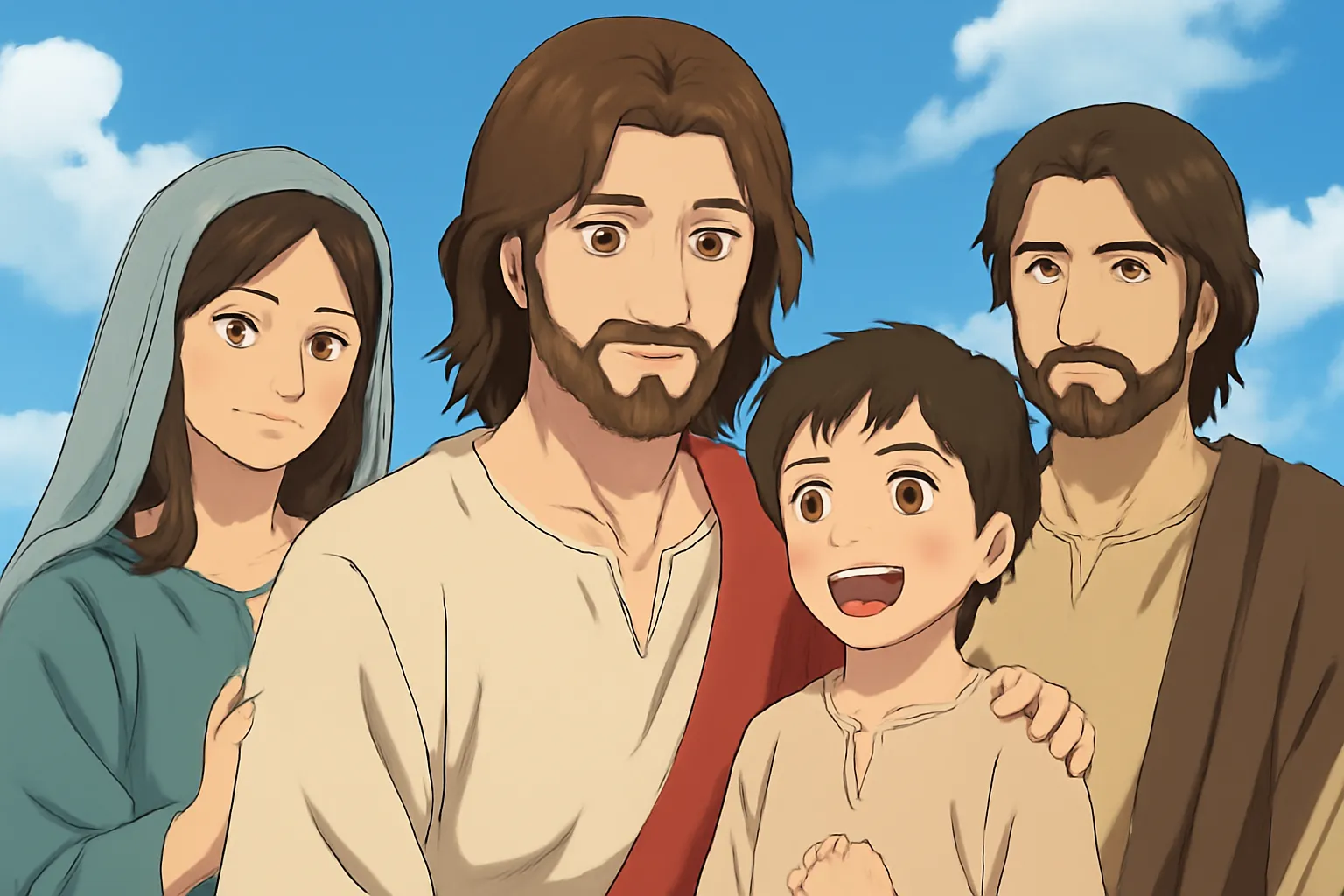
New Testament Anime: The Ultimate Guide to Bible-Inspired Anime Series and Their Messages is a deep dive into how the life, teachings, and early Christian narrative can be reimagined through the visual language, pacing, and moral questions of anime. This guide explores what it means to create or encounter new testament-inspired anime, how such works convey core NT messages, and how fans and creators can navigate the delicate balance between reverence, storytelling, and artistic invention. Whether you’re an educator, a reader, a writer, or an animator, this article offers a thorough map of concepts, themes, and approaches that can illuminate the possibilities and responsibilities of Bible-inspired anime projects.
In broad terms, new testament anime refers to animated works—whether episodic series, films, or shorts—that foreground stories, teachings, or ethical questions connected to the New Testament or its pervasive messages. Because anime as a medium thrives on character-driven drama, world-building, and moral conflict, it offers a distinctive lens for exploring Jesus’ teachings, the actions of the apostles, the formation of early Christian communities, and the themes of forgiveness, mercy, redemption, and hope in a setting that resonates with contemporary audiences.
It is important to note from the outset that there are relatively few direct adaptations of NT narratives in mainstream anime. The medium’s history is rich with myth, fantasy, science fiction, and secular drama, and many projects that touch on Christian imagery or NT-like ethics approach the source material through metaphor, homages, or cross-cultural reinterpretation. This guide uses the term NT-inspired anime to describe two kinds of work: (1) faithful or semi-faithful retellings or reimaginings of NT stories, and (2) works that embed NT-style parables, character arcs, and ethical questions into a broader narrative universe. Both approaches aim to illuminate the moral frontier of the NT while honoring the unique voice of anime as a storytelling form.
Why New Testament Themes Resonate with Anime Audiences
There are several reasons why the message-driven core of the New Testament translates powerfully into anime storytelling. The following points outline why these themes persist across cultures and genres:
Universal ethics — Teachings about love, mercy, and justice appeal to viewers regardless of background, and anime’s wide range of genres allows these themes to be explored in action, romance, mystery, or cosmic fantasy.
Character-centered growth — The NT emphasizes transformation: from doubt to faith, from fear to courage, from retaliation to forgiveness. Anime’s emphasis on成长 (growth) fits this arc beautifully.
Redemption arcs — Stories of failure, repentance, and new purpose mirror many anime protagonists’ journeys, enabling NT messages to emerge through character development rather than sermonizing.
Minor characters, major implications — The NT often highlights people on the margins. In anime, underrepresented or flawed characters can discover meaning through acts of compassion or courageous stands, echoing NT ethics.
Parables as storytelling tools — The NT’s parabolic method invites reinterpretation in modern or fantastical settings, a natural fit for anime’s symbolic visuals and clever conceits.
For educators and fans, these resonances offer a path to engaging discussions about faith, history, and ethics through a medium that invites imagination and empathy.
Core Messages Found in NT-Inspired Anime
Across NT-inspired anime, several core messages recur. Bolded here are the themes you’re most likely to encounter when exploring New Testament-inspired content in anime form:
Love as a transformative force that heals divisions, mends wounds, and bridges different communities.
Forgiveness as a choice that breaks cycles of vengeance and creates space for renewal.
Mercy in moments of weakness and power disparities, recognizing worth in the overlooked and vulnerable.
Redemption as a central arc, where flawed individuals discover purpose and repair broken relationships.
Faith as trust in a larger purpose, often tested under pressure by doubt, risk, or persecution.
Hope in the midst of suffering, offering a forward-looking vision that sustains characters and communities.
Sacrifice as a defining act that reflects ethical commitments over personal gain.
Kingdom ethics—principles about justice, mercy, and humility that challenge readers to reimagine power and leadership.
Discipleship as formation through learning from mentors, staying true to a mission, and serving others.
Mission as a call beyond self-interest, encouraging protagonists to travel, mentor, and advocate for the marginalized.
Resurrection and renewal as motifs signaling new life, resilience, and the possibility of transforming communities through renewed purpose.
Because anime often conveys meaning through imagery, pacing, and subtext, these messages are frequently expressed not only in dialogue but also in how scenes are framed, how power dynamics shift, and how communities respond to crisis. In NT-inspired anime, the moral center is less about preaching a set of rules and more about inviting viewers to reflect on how they would act when confronted with moral, spiritual, or social challenges.
Narrative Techniques in NT Anime Adaptations
Creators working in the new testament anime space employ a suite of techniques to translate ancient stories into modern or fantastical contexts. Here are several approaches you’re likely to encounter:
Modern retellings with timeless issues
One approach places NT themes inside contemporary life—the struggles of identity, family, and community are reframed as ethical tests, with parables embedded in workplace dramas, school life, or urban adventures. This method preserves the NT’s moral core while making it accessible to a modern audience.
Allegory and parable in a fantasy world
Parables translate well into fantasy, where metaphysical questions can be explored through magical environments, mythic quests, or cosmic politics. Allegorical NT narratives can dramatize concepts such as mercy and judgment without literal biblical retellings, inviting viewers to interpret symbolism and meaning.
Ensemble casts and apostolic dynamics
To reflect the NT’s emphasis on community and mission, some works use ensemble casts to mirror the diverse roles of the early Christian communities. Characters serve as analogues to apostles or disciples, each contributing a different strength to a shared purpose. This format fosters themes of teamwork, leadership, and shared responsibility.
Character-centered arcs and checkpoints
NT-inspired anime often uses arcs that map onto biblical journeys: calling, testing, transformation, and commissioning. The narrative tempo may mimic the teaching style of sermons or epistles—moments of concise, punchy insight interwoven with longer sequences of growth and trial.
Ethical dilemmas and moral ambiguity
Rather than presenting a single correct choice, NT anime frequently places characters before tough choices that reveal motives, biases, and the consequences of action. This ambiguity mirrors biblical narratives that invite readers to wrestle with difficult questions and arrive at thoughtful conclusions.
Real-World Context: Case Studies and What They Tell Us
Direct, canonical New Testament adaptations in mainstream anime are not common, and the landscape includes a mix of respectful explorations, symbolic reverberations, and occasional playful reinterpretations. Consider these contextual notes to understand how NT-inspired anime operates in the real world:
Respectful engagement involves careful attention to scripture, sensitivity toward different faith communities, and a commitment to avoiding trivialization of sacred content.
Educational value emerges when series offer historical or ethical insight, prompting viewers to research NT contexts, understand historical settings, and compare interpretive angles with scholarly perspectives.
Creative freedom vs. sacred boundaries is a common tension. Creators must balance artistic expression with reverence for the source material and the beliefs of diverse audiences.
Audience diversity means NT-inspired anime can appeal to both longtime believers and curious non-believers, using universal themes to invite dialogue rather than convert or alienate.
Cross-cultural dialogue is highlighted by anime’s global reach. NT messages can be reframed through Japanese storytelling conventions, resulting in fresh insights that resonate across cultures.
When evaluating any NT-inspired project, consider how it handles these factors: accuracy of core themes, the depth of character development, the clarity of the moral questions raised, and the degree to which the work invites thoughtful reflection rather than mere spectacle.
Creative Pitches: Conceptual NT-Inspired Series
Below are concept pitches for new testament anime that illustrate how NT themes might be adapted across genres. These are hypothetical ideas designed to spark imagination and discussion; they are not presented as existing titles.
The Parable Road — A modern drama about a group of travelers who discover a set of ancient parables inscribed in a mysterious city gate. Each parable unfolds as a self-contained episode, guiding the group to confront personal biases and practice radical empathy in a fractured society. The series blends road-trip aesthetics with episodic moral puzzles and ends with a community-wide reckoning that echoes unity and reconciliation.
Kingdom of Echoes — A fantasy epic set in a kingdom under siege by fear and injustice. Protagonists seek to embody the ethical teachings of the Sermon on the Mount while confronting a ruling class that profits from division. The narrative uses symbols, visions, and mythic creatures to explore courage, mercy, and nonviolent resistance, culminating in a reimagined social order rooted in collective care.
Letters to a City — An introspective drama inspired by the Epistles (Paul and others). A mentor-figure compiles letters to multiple communities, teaching letters as living documents that address real-life issues: community identity, conflict resolution, generosity, and moral integrity. The show follows a troupe of messengers who carry these letters into embattled neighborhoods, adapting counsel to local needs while preserving core gospel ethics.
Fishermen of Dawn — An ensemble show about a group of fishermen who encounter a mysterious traveler who challenges them to see their ordinary work as service to a greater purpose. The series uses maritime metaphors and slow-burn character arcs to explore vocation, doubt, and the call to witness in everyday life.
Acts of Courage — A high-stakes political thriller set in a fictional city-state that echoes early church dynamics: clandestine gatherings, shared resources, and a mission to care for the marginalized. The narrative highlights leadership, collaboration, and the power of small acts to inspire large-scale change, with a strong emphasis on community resilience.
Miracles in the Margins — A magical realism story in which seemingly ordinary people discover extraordinary acts of compassion that ripple through neighborhoods. The plot centers around miracles as signs of a larger, divine-human partnership working through ordinary life, emphasizing humility, gratitude, and social healing.
Each pitch foregrounds a different facet of NT teaching—parabolic wisdom, communal justice, epistolary guidance, vocational purpose, and the normalization of compassion—while leveraging anime’s strengths: expressive character design, dynamic action, and immersive world-building. If you’re a creator, these concepts can serve as starting points for collaborative storytelling exercises with theologians, educators, and fans to refine tone, audience, and message.
Ethical Considerations and Cultural Sensitivity
Producing or consuming NT-inspired anime requires mindful handling of sacred material. Consider these guiding principles to foster respectful and meaningful engagement:
Respect for beliefs — Acknowledge the diversity of Christian traditions and the sacred status the NT holds for many readers. Intent matters: aim for reverent storytelling that invites dialogue rather than sensationalism.
Accuracy without dogma — Ground the portrayal in plausible interpretations of NT themes while remaining open to diverse understandings. Distinguish between historical context and contemporary application.
Contextualization — Adapt NT messages to local cultures with sensitivity to cultural norms, language, and values. Avoid reducing complex beliefs to simplistic labels or caricatures.
Ethical portrayal of sacred figures — Treat central figures with care, avoiding trivialization or exploitation for humor or shock value. When depicting miracles or divine action, emphasize responsibility, awe, and humility rather than spectacle alone.
Audience safety and accessibility — Provide clear content guidance, consider age appropriateness, and offer resources for viewers who want to learn more about NT background, historical context, or theological conversation.
Creators, educators, and publishers should also consider partnering with theologians, historians, religious educators, and community leaders to review scripts, visuals, and framing. This collaborative approach helps ensure that the final work respects both artistic expression and the sacred source material.
Practical Guide: How to Create or Find NT-Inspired Anime
Whether you’re a creator planning a project or a consumer seeking thoughtful NT-inspired anime, here are practical steps to pursue and resources to consider. The focus is on quality, ethics, and meaningful engagement rather than sensationalism.
For creators: steps to develop NT-inspired anime thoughtfully
Define the scope — Decide whether your work will be a direct, semi-direct, or thematically inspired adaptation. Clarify which NT elements you will emphasize (parables, miracles, teachings, or early church life).
Establish a guiding ethic — Articulate a mission statement that centers compassion, truth-seeking, and inclusive storytelling. Ensure the project seeks to elevate conversation rather than caricature.
Consult experts — Engage scholars, clergy, and educators early in development to verify context, symbolism, and potential sensitivities. Create an advisory panel if possible.
Develop characters with depth — Build protagonists and supporting cast with clear motivations, flaws, and growth arcs that reflect NT themes without reducing complex beliefs to stereotypes.
Craft the world with care — Invest in world-building that respects historical contexts while allowing imaginative exploration. Choose visuals, motifs, and sound design that support the ethical mood rather than distract from it.
Plan for dialogue and pacing — Use parables and epistolary voices to convey wisdom, but integrate character-driven scenes that reveal how people live out those teachings in everyday life.
Incorporate educational resources — Include a companion guide, discussion questions, or classroom-ready materials that help viewers analyze themes and context beyond the screen.
For fans and educators: how to encounter NT-inspired anime responsibly
Look for context — Seek out works that provide context, producer notes, or expert commentary. Context helps viewers discern intent and interpret symbolism with care.
Engage in discussion — Use guided questions to discuss what the NT teachings mean in contemporary life, how characters model or miss ethical commitments, and what can be learned from the portrayal.
Balance media with primary sources — Encourage readers or students to consult biblical texts or scholarly resources to deepen understanding and avoid relying on a single interpretation.
Consider audience impact — Evaluate content for age appropriateness, accessibility, and the potential for misinterpretation, especially when sacred figures or events are dramatized.
Conclusion: The Value of Bible-Inspired Anime
“New Testament anime” as a field represents a cross-cultural, cross-genre effort to translate ancient wisdom into modern storytelling form. By blending the ethical core of NT narratives with anime’s kinetic energy, character-driven focus, and expansive imaginative scope, such works can offer new ways to engage with the NT’s essential questions: What does it mean to love your neighbor?How can forgiveness alter a broken community?What is the nature of true leadership?How do we respond when confronted with power, pain, and possibility? The ultimate goal is not to replace study or reverence, but to expand access to the NT’s messages through a medium that invites curiosity, discussion, and empathy across generations and cultures.
As the field develops, NT-inspired anime could become a fruitful space for educators, theologians, writers, and animators to collaborate on stories that challenge, comfort, and illuminate. Whether you are exploring classic NT themes, imagining modern settings for parables, or crafting ambitious epics about early Christian communities, the potential is vast. By foregrounding ethics, compassion, and shared humanity, new testament anime can offer not only entertainment but enduring lessons about what it means to live with purpose in a complex world.