Bible Book Categories: A Guide to the Bible’s Structure
The Bible is a library of sixty-six books (in most Protestant traditions) or more in Catholic and Orthodox canons. Beyond its individual narratives, poems, laws, and letters, the Bible is organized into distinct for categories or sections that reflect how its stories and teachings developed over time. Understanding these groupings helps readers grasp how the different parts relate to one another, how they were chosen for inclusion, and how literary genres shape meaning. In this guide, we explore the major categories, the rationale behind them, and how they function in both Jewish and Christian traditions. We will use variations of the term “bible book categories” to demonstrate breadth while staying focused on the same core idea: the Bible’s structure is a deliberate framework for reading and interpretation.
The Old Testament / Hebrew Bible: Major Groupings
Pentateuch / Torah (Law)
The first major division in many traditions is the Pentateuch, also known as the Torah or the Law. This section lays the foundation for the biblical narrative and theological themes that echo throughout the rest of the books. It covers creation, the patriarchs, liberation from Egypt, the giving of the Law at Sinai, and the journey toward the land promised to the people of Israel. The material here is foundational, setting patterns of covenant, obedience, and divine faithfulness that echo in later writings.
Genesis — creation, early humanity, the stories of the patriarchs (Abraham, Isaac, Jacob), and the formation of a people.
Exodus — liberation from Egypt, the giving of the Mosaic Law, and the building of the tabernacle.
Leviticus — priestly laws, holiness codes, ritual practices, and the concept of clean and unclean.
Numbers — wanderings in the wilderness, census data, and a continuing story of obedience and discipline.
Deuteronomy — a retelling and restatement of the Law as the generation moves toward entering the promised land, framed by Moses’ farewell speeches.
Readers often focus on the covenant motif, the repeated call to remember, and the structure of law and instruction that informs later wisdom and prophetic literature. The Pentateuch also introduces key theological threads, such as the nature of God, creation’s purpose, and the responsibilities of God’s people in worship and social justice.
Historical Books
Following the Law, the Historical Books trace the rise and fall of kingdoms, the leadership of judges and kings, and the return from exile in some traditions. These narratives are not merely chronicles; they illuminate questions about leadership, fidelity, national identity, and God’s involvement in public life. In various canons, the historical material may sit slightly differently, but the core stories remain a bridge between the Law and the prophetic or wisdom material that follows.
Joshua — the conquest and allotment of the land under Joshua’s leadership.
Judges — cycles of apostasy, oppression, repentance, and deliverance through a series of judges.
Ruth — a short narrative of loyalty, lineage, and providence within the time of the judges.
1 & 2 Samuel — the rise of Israel’s monarchy, including Samuel, Saul, and David.
1 & 2 Kings — the history of the royal line, the division of the kingdom, and the exile period.
1 & 2 Chronicles — a complementary history focusing on the southern kingdom and the temple, with a broader perspective on worship and virtue.
Ezra & Nehemiah — the return from exile, reconstruction of the temple and walls, and religious reform.
Esther — a narrative set in exile that explores identity, courage, and providence in the Persian context.
These books collectively tell how Israel’s people navigated faithfulness, political power, and divine promises in changing circumstances. They often highlight themes of trust in God amid external pressures and internal strife, as well as the consequences of obedience or disobedience to the covenant.
Wisdom Literature and Poetry
The Wisdom collection, sometimes grouped with a broader ‘Writings’ category, spans poetry, proverbs, reflective essays, and philosophical questions about life, suffering, and righteousness. This section uses a variety of literary forms to address how life should be lived and understood in relation to God and community. In some canons, certain books of poetry and wisdom are also categorized under the broader umbrella of Poetry or placed within the Writings as a whole.
Psalms — a diverse anthology of prayers, songs, and laments representing many voices and occasions.
Proverbs — short, practical maxims about living wisely and ethically.
Job — a poetic exploration of suffering, integrity, and divine sovereignty.
Ecclesiastes — reflections on meaning, time, and the limits of human striving.
Song of Songs — love poetry with layers of interpretation, from the literal to metaphoric readings about divine love.
Lamentations — a collection of mournful poems expressing grief over the destruction of Jerusalem.
Some traditions also treat Wisdom of Solomon and Sirach (Ecclesiasticus) as part of the wisdom corpus, often grouped with the Apocrypha in Catholic and Orthodox canons. The central thread in wisdom literature is how to live well, seek understanding, and fear God in daily life. These books invite readers to contemplate the moral and existential questions that do not always yield simple answers, yet they offer enduring principles for ethical conduct and faithfulness.
Prophetic Literature
The prophetic collection in the Hebrew Bible is traditionally divided into major and minor prophets (by length, not importance). This section presents God’s messages through appointed messengers who call people to repentance, warn of consequences for idolatry, and point toward hope in future restoration. The prophets may speak to their own historical circumstances, yet their messages carry forward to broader theological themes, including justice, mercy, and the coming kingdom of God.
Major Prophets — Isaiah, Jeremiah, Lamentations, Ezekiel, and Daniel (note: in some traditions Daniel is placed with the writings or the apocalyptic literature rather than with the prophets).
Minor Prophets — the Twelve: Hosea, Joel, Amos, Obadiah, Jonah, Micah, Nahum, Habakkuk, Zephaniah, Haggai, Zechariah, Malachi.
The prophetic books engage with big questions: who is God? what is justice? how should the community respond to oppression, sin, and suffering? They also cast a forward-looking vision of restoration and renewal that Christians often interpret in light of the coming Messiah and the establishment of God’s kingdom. When reading the prophets, readers will encounter a mix of oracles, narrative frames, symbolic visions, and historical context that together illuminate the moral and spiritual stakes of faithfulness.
Deuterocanonical / Apocryphal Books
In Catholic and Orthodox Christian traditions, a set of extra books is included between the Old and New Testaments or within the Old Testament section. These works are commonly referred to as Deuterocanonical (Catholic) or Apocryphal (a broader term used in Protestant contexts). They are not part of the Hebrew Bible in most traditions but were highly influential in early Christian thought and Jewish literature. Protestant canons typically exclude these books or place them in a separate section called the Apocrypha.
Tobit
Judith
1 & 2 Maccabees
Wisdom of Solomon
Sirach (Ecclesiasticus)
Baruch
additions to Daniel and Esther (such as the Prayer of Azariah, Susanna, Bel and the Dragon)
These writings cover a range of genres, including history, wisdom, poetry, and devotional literature. They illuminate the religious imagination of communities that lived in the intertestamental period and highlight themes like piety, wisdom, faithfulness in adversity, and the hope of divine aid in difficult times. When reading these in Catholic or Orthodox editions, you will see them integrated into a broader Old Testament sequence; in Protestant editions, you may find a separate Apocrypha section or footnotes about their canonical status.
The New Testament: Core Divisions
The Gospels (the Good News narratives)
The Gospels tell the story of Jesus of Nazareth from four distinct vantage points and are foundational for Christian faith. Each Gospel writer emphasizes different aspects of Jesus’ life, teachings, death, and resurrection, inviting readers to explore the meaning of Jesus’ words and actions in light of God’s overarching plan of salvation.
Matthew — emphasizes Jesus as the fulfillment of Israelite prophecy, presenting him as a new teacher and king who interprets the Law.
Mark — the earliest Gospel, fast-paced and action-driven, highlighting Jesus’ authority and suffering service.
Luke — emphasizes compassion, inclusion, and prayer, with careful attention to marginalized people and historical context.
John — the most theologically reflective, stressing the divinity of Jesus and the meaning of faith, life, and eternal hope.
Together, the four Gospels provide complementary portraits of Jesus’ identity and mission, inviting readers to encounter the central message of Christianity from multiple angles rather than relying on a single narrative thread.
Acts of the Apostles
Acts describes the early church’s formation, the spread of the gospel, and the missionary journeys of the apostles, especially Peter and Paul. It offers a bridge between the Gospel accounts and the later letters, showing how the gospel moved from a Jewish milieu to a broader Gentile world, how communities organized themselves, and how the Holy Spirit guided decisive moments in the life of the church.
Epistles (Letters)
The Epistles are letters written to early Christian communities or individuals, addressing theology, ethics, church practice, and day-to-day living. They fall into two broad groups: Pauline Epistles (attributed to the Apostle Paul) and General Epistles (also called Catholic Epistles) written by other leaders.
Pauline Epistles — Romans, 1-2 Corinthians, Galatians, Ephesians, Philippians, Colossians, 1-2 Thessalonians, 1-2 Timothy, Titus, Philemon. (Some canons also include Hebrews among the Pauline corpus, though authorship is debated.)
General Epistles — James, 1-2 Peter, 1-3 John, Jude. These letters address broad concerns across diverse Christian communities, such as faith in action, perseverance under pressure, moral exhortation, and the dangers of false teaching.
The epistles are practical in tone, bridging robust theology with concrete guidance for churches and households. They also reveal the formation of early Christian identity, the interpretation of Jesus’ death and resurrection, and the ethics of community life in the power of the Spirit.
The Apocalypse (Revelation)
Revelation is a highly symbolic and visionary document often labeled with the term apocalyptic literature. It presents a cosmic drama in which God’s ultimate victory over evil is assured, calling readers to faithfulness amid trials and to hope for a future restoration. The imagery—stars, seals, trumpets, bowls, beasts, and the heavenly throne—speaks with metaphor about cosmic conflict, judgment, and the triumph of righteousness. While it can be challenging, many readers find in Revelation a profound assurance of God’s sovereignty and a vision of ultimate peace.
How Bible Can Be Read in Categories
Genre vs. Canonical Groupings
Readers often approach the Bible by focusing either on the genres (law, history, poetry, prophecy, gospel, letter, apocalypse) or the canonical groupings (Pentateuch, Historical Books, Wisdom, Prophets, Gospels, Epistles, Apocalypse). Both angles illuminate meaning. A genre-based reading helps you recognize literary techniques and theological aims, while the canonical framework highlights the overarching arc from creation through covenant to new creation. In practice, many readers move back and forth, reading a law code alongside narratives that illustrate how people wrestled with obedience, or interpreting prophetic or apocalyptic sections in light of gospel realities.
Interconnections and Thematic Arcs
One of the strengths of the Bible’s structure is the way themes recur and reappear in different forms. For example, the covenant motif that runs through the Pentateuch echoes in the prophetic calls for fidelity, echoes in the Psalms’ prayers for God’s deliverance, and culminates in the New Testament’s explanation of salvation in Christ. The movement from exile and return in the Old Testament parallels themes of exile from sin and the promise of restoration in the New Testament. By recognizing these threadlines, readers can trace how authors respond to similar questions in different historical and literary settings.
Common Points and Caveats
Books that Don’t Fit Neatly into One Box
Some biblical books resist simple categorization. For instance, Daniel contains both historical narrative and apocalyptic visions, so scholars may place it among the Prophets in some traditions and among the Writings or Apocalyptic literature in others. Likewise, Esther blends historical story with themes about providence and communal identity, placing it within the historical narratives in most canons while inviting reflection on divine sovereignty. This fluidity shows that the Bible often works in a cross-genre way, inviting readers to engage with multiple layers of meaning.
Order and Canonicity Vary by Tradition
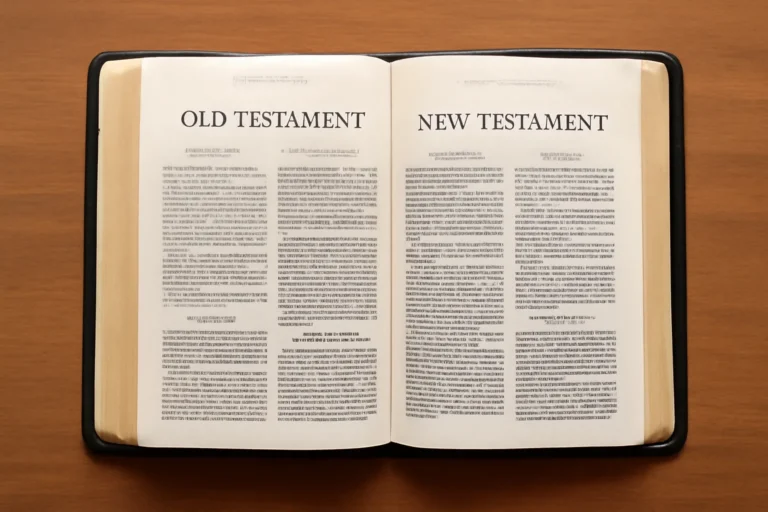
The arrangement and even the inclusion of certain books differ among Jewish, Catholic, Orthodox, and Protestant traditions. The Jewish Tanakh orders books as Law, Former Prophets, Latter Prophets, and Writings, with a distinct sense of how content is grouped. Catholic and Orthodox Bibles incorporate the Deuterocanonical books and arrange sections differently, often placing historical and wisdom works in unique sequences. Protestant Bibles typically present the Old Testament in a way that emphasizes the Pentateuch, historical books, poetry/wisdom, and prophets, followed by the New Testament’s Gospels, Acts, Epistles, and Revelation. Being aware of these variations helps prevent misreading the text as a fixed “one-size-fits-all” ordering and invites curiosity about how communities have read the scriptures across time and culture.
Cross-Denominational Variations and Theological Considerations
Jewish, Catholic, Orthodox, and Protestant Perspectives
Each tradition brings a slightly different lens to the same corpus. The Hebrew Bible (Tanakh) emphasizes the arrangement and numbering of the books according to rabbinic tradition and historical development. The Catholic and Orthodox Old Testaments include a broader set of Deuterocanonical books, reflecting early Christian usage and the Septuagint’s influence. The Protestant canon, shaped by the Reformation and the Hebrew textual tradition, generally dispenses with the Deuterocanonical books or relegates them to separate apocryphal sections. These differences matter less for some reading goals and more for others, such as liturgy, doctrine, or academic study, but they all share a common aspiration: to understand God’s revelation through scriptural texts that were read, memorized, debated, and cherished by communities across centuries.
Practical Reading Plans and Study Tips
Balanced, Cross-Sectional Reading Plan
One helpful approach is to read across categories in parallel, which reveals how law, history, poetry, and prophecy interweave. Consider the following approach over several months:
Read a Pentateuch portion (Genesis–Deuteronomy) alongside a historical narrative (for example, Joshua and Judges) to observe how early covenant ethics meet real-world leadership and settlement.
Study a Wisdom/Poetry selection (Psalms, Proverbs, Job) with a corresponding prophetic book (Isaiah or Jeremiah) to pair questions about the meaning of suffering, worship, and justice with visions of restoration.
Move through one Gospel plus a Pauline Epistle to connect Jesus’ life and teachings with early Christian interpretation and application for churches today.
Conclude with Revelation or other apocalyptic segments to consider the arc of divine victory and its implications for faithfulness in present days.
Thematic Studies for Group Readers
If you are organizing a group study, you might structure sessions around themes such as covenant and covenant-breaking, deliverance and exile, wisdom for everyday life, prophetic hopefuls, or Jesus and the early church. Assign one book from each major category per theme to show how different genres address similar concerns from distinct angles. For example, a theme of “restoration” could pair Deuteronomy with Isaiah, Lamentations with Ezra-Nehemiah, and Romans with Revelation to illuminate how hope is framed before and after the coming of Christ.
The Bible’s Structural Map
Understanding the Bible through its book categories—from the Pentateuch (Law) to the Gospels and Epistles, through to the Apocalypse—helps readers recognize how ancient authors organized meaning and how communities over time have interpreted God’s revelation. The canonical divisions are more than mere labels; they reflect the evolving relationship between God and humanity, the development of worship and community life, and the ongoing story of salvation that runs from creation to new creation. Whether you approach the Bible in the Jewish or Christian tradition, with a focus on genre, theme, or historical context, the structure provides a framework for deeper understanding, personal reflection, and communal study.
Ultimately, the various Bible book categories work together to present a unified narrative: a good and holy God who calls a people to live in faithful relationship, who speaks through law and wisdom, who sends prophets to call for repentance, who fulfills promises in the life of Jesus, and who invites all nations into a hopeful future. By knowing the major divisions and how they relate to one another, readers can approach the Bible with clarity, confidence, and a sense of discovery as they explore its vast and diverse witness.
Overview: Bible Parts and Their Significance The Bible is a curated collection of sacred writings that together form a shared story, wisdom, law, and faith for millions of people. When we speak of the Bible parts, we refer to the two major sections most traditions recognize as the Old Testament (often called the Hebrew Bible…