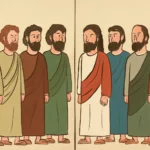
Across the New Testament, the Twelve Apostles formed the inner circle charged with spreading Jesus’s message. Their backgrounds, temperaments, and moments of calling created a living mosaic of early Christian leadership. This article profiles each of the twelve, highlighting their distinctive characteristics, their roles in the mission, and the biblical insights these traits offer for readers today. The goal is not only to name them but to understand how their personalities and experiences shaped the early church and its witness to the world.
The apostolic group emerged from a diverse set of livelihoods, regions, and cultural backgrounds. Some were fishermen and tax collectors; others came from zealous backgrounds or from regions outside Judea. What unites them is their call to follow Jesus, to become witnesses, and to participate in the spread of the gospel after Jesus’s death and resurrection. Each apostle contributed a unique emphasis to the apostolic witness—some highlight leadership and bold proclamation, others emphasize fidelity and compassion, and a few embody the tension between doubt and faith that characterizes the human response to divine invitation. The profiles below treat them not merely as names but as archetypes of the early church’s strengths, limitations, and growth under divine grace.
Peter (Simon Peter) — Leadership, Boldness, and Human Frailty
Peter (Simon Peter)
Profile: A fisherman from Galilee who becomes the most prominent leader among the Twelve. He is often called Cephas (Aramaic for “rock”) and is identified by Jesus as foundational to the church’s future.
Core traits: Impulsive courage, fierce loyalty, and a capacity for dramatic failure, followed by repentance. Peter’s emotional arc—faith, fear, restoration—offers a vivid portrait of grace and growth.
Role in the ministry: Primary spokesperson in several key moments; a focal point in Acts as the early church’s leader and organizer. He preaches passionately at Pentecost and takes the lead in bringing Gentile and Jewish audiences under the gospel’s reach.
Key biblical moments: Peter’s confession that Jesus is the Christ (Matthew 16:16–18) and Jesus’s blessing of him as the rock; his three denials during Jesus’s arrest and subsequent restoration by Jesus; the sermon at Pentecost (Acts 2); leadership in the Jerusalem council’s early decision-making (Acts 15).
Legacy: The enduring image of steadfast perseverance and pragmatic shepherding in the church. Peter’s life invites readers to consider how grace meets weakness and how leadership can be tempered by humility.
Andrew — The Connector and Evangelist
Andrew
Profile: The brother of Peter, an early follower who seems to act as a connector—finding others and guiding them toward Jesus.
Core traits: Hospitality, outreach, and a steady, patient approach to mission. Andrew tends to bring people into the circle rather than seeking the stage for himself.
Role in the ministry: He is often depicted as a catalyst who introduces others to Jesus, including his brother Peter and the boy with loaves and fishes who becomes a sign of abundance (John 6).
Key biblical moments: Introduction of others to Jesus (John 1), involvement in the feeding of the crowd, and hosting Jesus in his home when Jesus visited Capernaum.
Legacy: The apostle who models the art of inviting others to encounter Christ, underscoring that mission is often about relationships and hospitality as much as proclamation.
James, Son of Zebedee (James the Great) — Zeal, Proximity, and a Courageous Martyr
James the Great
Profile: One of the “sons of thunder” alongside his brother John; part of a close inner circle with Peter and John.
Core traits: Intense zeal, boldness in companionship with Jesus, and a willingness to endure hardship.
Role in the ministry: A leader among the apostles who shares in special moments with Jesus (e.g., the Transfiguration and the Garden of Gethsemane).
Key biblical moments: Involved in significant events that reveal Jesus’s glory, and among the early martyrs recognized by church tradition as the first of the Twelve to suffer martyrdom.
Legacy: James’s life models fearless fidelity under pressure and the call to carry the gospel even in the face of persecution.
John, Son of Zebedee — The Beloved Disciple and the Illuminator of Love
John
Profile: The brother of James, part of the intimate trio with Jesus; widely regarded as the author of the Gospel of John, three epistles, and the Book of Revelation in tradition.
Core traits: Deep spiritual insight, emphasis on love as the defining mark of discipleship, and a reflective, contemplative temperament.
Role in the ministry: A primary interpreter of Jesus’s identity and mission; his gospel foregrounds Jesus as the Word who became flesh and as the source of eternal life through love.
Key biblical moments: The disciple whom Jesus loved is present at the Last Supper; his intimate closeness to Jesus is highlighted in the crucifixion narrative and in his gospel’s teaching on love (e.g., John 13–17).
Legacy: John’s writings emphasize the intimate, experiential knowing of God through faith, hope, and love—an invitation to believers to encounter Christ on a personal level.
Philip — The Practical Seeker and Mission Catalyst
Philip
Profile: A thoughtful disciple who often asks practical questions and seeks clear paths to faith and action.
Core traits: Curiosity, discernment, and a desire to see God move in tangible ways in people’s lives.
Role in the ministry: A bridge-builder who helps others move from curiosity toward commitment, and who sometimes facilitates moments that reveal Jesus’s authority and identity.
Key biblical moments: The interaction with Nathanael, inviting him to meet Jesus (John 1), and his role in steering conversations toward concrete demonstrations of faith.
Legacy: Philip’s approach reminds readers that genuine faith often grows through questions, investigation, and practical steps of trust.
Bartholomew (Nathanael) — Sincerity, Faith, and Mission Readiness
Bartholomew
Profile: Also identified with Nathanael in the Gospels; often paired with Philip as a model of candid, unguarded faith.
Core traits: Sincerity, immediate recognition of Jesus’s messianic identity, and a readiness to respond to divine invitation without pretense.
Role in the ministry: Represents the ideal of faith that moves quickly from doubt to trust, and serves as a reliable witness to Jesus’s reality.
Key biblical moments: Nathanael’s blunt, when-turned-to-faith confession of Jesus as the Son of God (John 1).
Legacy: Bartholomew’s example encourages believers to cultivate genuine, unembarrassed faith in Christ that can withstand initial skepticism.
Matthew (Levi) — Tax Collector Turned Apostle
Matthew
Profile: A former tax collector who leaves his booth to follow Jesus; traditionally credited with composing the Gospel of Matthew.
Core traits: Meticulousness, openness to the marginalized, and a talent for narrative organization that harmonizes Jewish law with gospel grace.
Role in the ministry: Bridges Jewish law and the gospel’s universal invitation; his gospel emphasizes Jesus as the fulfillment of Old Testament prophecy.
Key biblical moments: The call by Jesus to follow him; Matthew’s own hosting of a feast that includes sinners as a sign of inclusive invitation to all people.
Legacy: Matthew’s witness showcases how transformation can reframe one’s vocation—turning a system of taxation into a platform for sharing grace and truth.
Profile: Also known as Didymus (the Twin), Thomas is famous for honest questions and a faith that requires evidence before belief.
Core traits: Candid doubt paired with a sincere desire to encounter the risen Christ; a willingness to walk the path from inquiry to confession.
Role in the ministry: Embodies a crucial phase of faith formation—moving from skepticism to transformation through encounters with Jesus.
Key biblical moments: His insistence on seeing Jesus’s wounds before believing (John 20:24–29) and Jesus’s gentle response that blessed are those who believe without seeing.
Legacy: Thomas’s story invites believers to bring questions to faith and to remain open to God’s revealings, even when belief must be tested and refined.
Profile: Often identified as James the Less or James the Minor; less prominent in gospel narratives but consistently present among the Twelve.
Core traits: Humility, steadiness, and reliability—traits that secure the broader community’s cohesion when spotlight moments are few.
Role in the ministry: Contributes to the apostolic witness with quiet fidelity, modeling the value of steadfast service that undergirds early Christian growth.
Key biblical moments: Noted more for plugged-in presence and companionship with the other apostles than for headline events, yet his consistency helps the mission endure.
Legacy: James the Less reminds readers that influence in God’s plan often operates through steadiness and faithfulness behind the scenes.
Thaddaeus (Judas, Son of James) — The Faithful Intercessor
Thaddaeus (Lebbaeus/Judas, Son of James)
Profile: Also called Judas Thaddaeus or Lebbaeus, this apostle’s name variations reflect distinguishing traditions in the gospel accounts.
Core traits: Faithfulness, reliability, and a spirit of practical witness, often in accompaniment with Jude or Judas.
Role in the ministry: Participates in the early church’s mission with a steady and trustworthy Evangelistic witness, contributing to the apostolic testimony with discernment.
Key biblical moments: Noted in lists of the Twelve; his presence signals the diversity of gifts that sustained the early church’s outreach.
Legacy: Thaddaeus’s example highlights how every apostle, including those less spotlighted, contributes to the church’s mission through faithfulness and service.
Simon the Zealot — From Political Zeal to Devoted Disciple
Simon the Zealot
Profile: Reputedly a former member of the Zealots, a political movement within first-century Judea; his label “Zealot” marks a dramatic shift in life direction through following Jesus.
Core traits: Conviction coupled with adaptability; a readiness to leave behind a former life to embrace gospel mission.
Role in the ministry: Represents the inclusion of diverse backgrounds within the apostolic team, illustrating the universal reach of the gospel beyond political divides.
Key biblical moments: This apostle’s presence signals unity among the Twelve across varied social and political perspectives, a theme echoed in the early church’s mission.
Legacy: Simon the Zealot reminds readers that true allegiance to Christ transcends old affiliations and transforms zeal into constructive service for the kingdom.
Judas Iscariot — The Betrayer and the Human Condition
Judas Iscariot
Profile: The apostle who ultimately betrays Jesus; his narrative is a sobering lens on human frailty and the dangers of greed or spiritual peril.
Core traits: Intelligence, involvement in the group, and the perilous potential for moral compromise when spiritual commitments are tested by worldly incentives.
Role in the ministry: His actions precipitate the events of Holy Week and intensify the crucible of faith for the remaining disciples; his failure becomes a counterpoint that intensifies the other apostles’ witness.
Key biblical moments: The betrayal in the Garden of Gethsemane and the subsequent suicide followed by the church’s need to reckon with his absence in the Twelve; his name also sparks discussions about responsibility and judgment in early Christian teaching.
Legacy: Judas Iscariot’s story serves as a cautionary tale about the peril of misplaced trust and the necessity of inner fidelity to Christ, a theme that rings through New Testament exhortations on integrity and mission.
Notes on Continuity: Matthias and the Continuation of the Twelve
In the biblical narrative, after the betrayal and death of Judas Iscariot, the early church faced the question of maintaining the number of Twelve. In Acts 1:26, Matthias is chosen by casting lots to replace Judas, ensuring that the apostolic circle remains a complete witness to Jesus’s resurrection and mission. This replacement underscores a broader theological point: the church persists through governance, discernment, and communal prayer even as human fidelity falls short. While this article centers on the traditional twelve as they are commonly enumerated in teaching and liturgy, the presence of Matthias in Acts reminds readers that apostolic continuity is maintained through humility, prayer, and obedience to the Spirit’s guidance. The two phases—the original Twelve and the Matthian replacement—together illustrate a robust model of leadership that acknowledges weakness while aspiring to steadfast faithfulness.
Across the gospel accounts and early church tradition, the Twelve are known by several names, epithets, and variations that illuminate different facets of their identity. Understanding these variations helps readers grasp the diverse ways the apostles are presented and remembered:
Peter is also Simon Peter, and is called Cephas (the Aramaic for “rock”); these multiple identifiers emphasize leadership and foundational role.
Bartholomew is often identified with Nathanael in the Gospel of John, reflecting a cross-gospel harmonization of names.
James comes in two forms: James the Greater (son of Zebedee) and James the Less (son of Alphaeus); the designations point to role prominence and physical stature rather than any moral value.
Judas Iscariot is the betrayer; a distinction exists between him and Judas the son of James (often Thaddaeus) to avoid confusion between one disciple and another in narrow lists.
Thomas is known as Didymus in Greek, literally meaning “the Twin,” which reflects a linguistic variation used in early Christian writings.
Matthew is also called Levi in the Synoptic Gospels, highlighting his past life as a tax collector before following Jesus.
Thaddaeus sometimes appears as Judas, son of James or Lebbaeus, which shows how early tradition assigned multiple identifiers to maintain clarity in lists.
Common Threads: Shared Themes Across the Apostles
Call and Response: Each apostle responds to Jesus’s call with unique obedience, showing that discipleship is a mosaic of individual paths to faithful service.
Witness and Mission: Regardless of temperament, every apostle becomes a witness to Jesus’s life, death, and resurrection, later testifying to the early church in message and practice.
Transformation: The journey from doubt, fear, or old commitments to bold proclamation demonstrates the transformative power of grace in ordinary lives.
Diversity within Unity: The group’s varied backgrounds—fishermen, tax collectors, zealous activists—illustrate how God can unite diverse human experiences for a common mission.
Profiles at a Glance: Quick Reference
Peter — Leader, bold advocate, capable of faltering yet restored; foundational to the church’s first steps.
Andrew — Connector, warm evangelist; a gateway for others to meet Jesus.
James the Great — Passionate participant in key moments; model of steadfast courage under pressure.
John — Beloved disciple; writerly emphasis on love, life, and intimate knowledge of Christ.
Philip — Practical questioner and facilitator of concrete faith experiences.
Bartholomew — Example of sincere faith and rapid recognition of Jesus’s identity.
Matthew — Tax collector turned evangelist; bridge between Jewish law and gospel grace.
Thomas — Honest seeker; faith deepened through encounter with the risen Christ.
James the Less — Steady presence; faithful service in the background of mission.
Thaddaeus — Faithful witness; reliability within the apostolic circle.
Simon the Zealot — Converts fervor into mission-minded devotion beyond old affiliations.
Judas Iscariot — The sobering cautionary tale about spiritual peril and human frailty.
Closing Reflections: Lessons from the Apostolic Portraits
The twelve apostles, in their distinctiveness, reveal how a diverse team can sustain witness, balance courage with humility, and grow in faith through experience, testing, and grace. Their stories invite contemporary readers to reflect on several practical lessons:
Authentic calling matters more than credentials: Jesus calls ordinary people to extraordinary purposes, transforming simple lives into enduring legacies.
Grace meets weakness: Peter’s denials and subsequent restoration illustrate that human failure does not disqualify divine purpose.
Faith grows through questions and doubt: Thomas’s journey shows that questions can lead to deeper belief when met with compassionate encounter with Christ.
Mission requires unity amid diversity: The apostolic circle demonstrates how varied backgrounds can converge to advance a shared mission.
As readers study these profiles, they gain more than biographical sketches. They encounter a model for perseverance, witness, and character formation that remains relevant for faith communities today. The apostles’ distinctive traits—whether bold proclamation, compassionate outreach, or quiet fidelity—invite believers to cultivate a varied, resilient, and hopeful Christian life grounded in the example of those who followed Jesus from the shores of Galilee to the edges of the known world.
Psalm 121, often called the 121st Psalm or Psalm 121 in many Bible translations, is a compact yet powerful meditation on trust, protection, and divine companionship. As part of the Song of Ascents (Shir HaMa’alot), this eight-verse hymn is traditionally sung or recited by pilgrims as they traveled toward Jerusalem. Its enduring appeal rests in…
12 Apostles in Order: Full List of the Twelve Names The twelve apostles occupy a central place in Christian tradition. They are the original followers of Jesus who were commissioned to witness, teach, and carry the message of the Kingdom of God to the world. Although the exact lists and sequences vary slightly among the…
10 Commandments in King James Version: Complete List, History, and Meanings The Ten Commandments, known in Jewish tradition as the Decalogue, occupy a central place in the moral imagination of civilizations shaped by the King James Version of the Bible. In the King James Version (KJV), these sacred laws are rendered in the distinctive Early…
10 Commandments in Simple Terms: A Plain-English Guide If you’ve ever wondered how the famous Ten Commandments work in everyday life, you’re not alone. This article aims to translate the classic rules into plain, straightforward language that’s easy to understand and remember. You’ll also see different names people use for the same ideas—the Decalogue, the…
Bible Chapter Summary: Clear Overviews for Each Chapter A bible chapter summary is a compact, structured report on the events, themes, and literary features found in a single chapter. It is not meant to replace reading the full text, but to offer a concise map that helps readers locate key ideas, identify turning points, and…
This article offers an accessible yet thorough exploration of 119 psalms commentary in the form of a verse-by-verse guide to Psalm 119. Widely regarded as the longest chapter in the Bible, Psalm 119 is not random poetry but a carefully crafted acrostic poem that unfolds the Bible’s imagery of the law, precepts, statutes, and word…