12 Apostles in Order: Full List of the Twelve Names
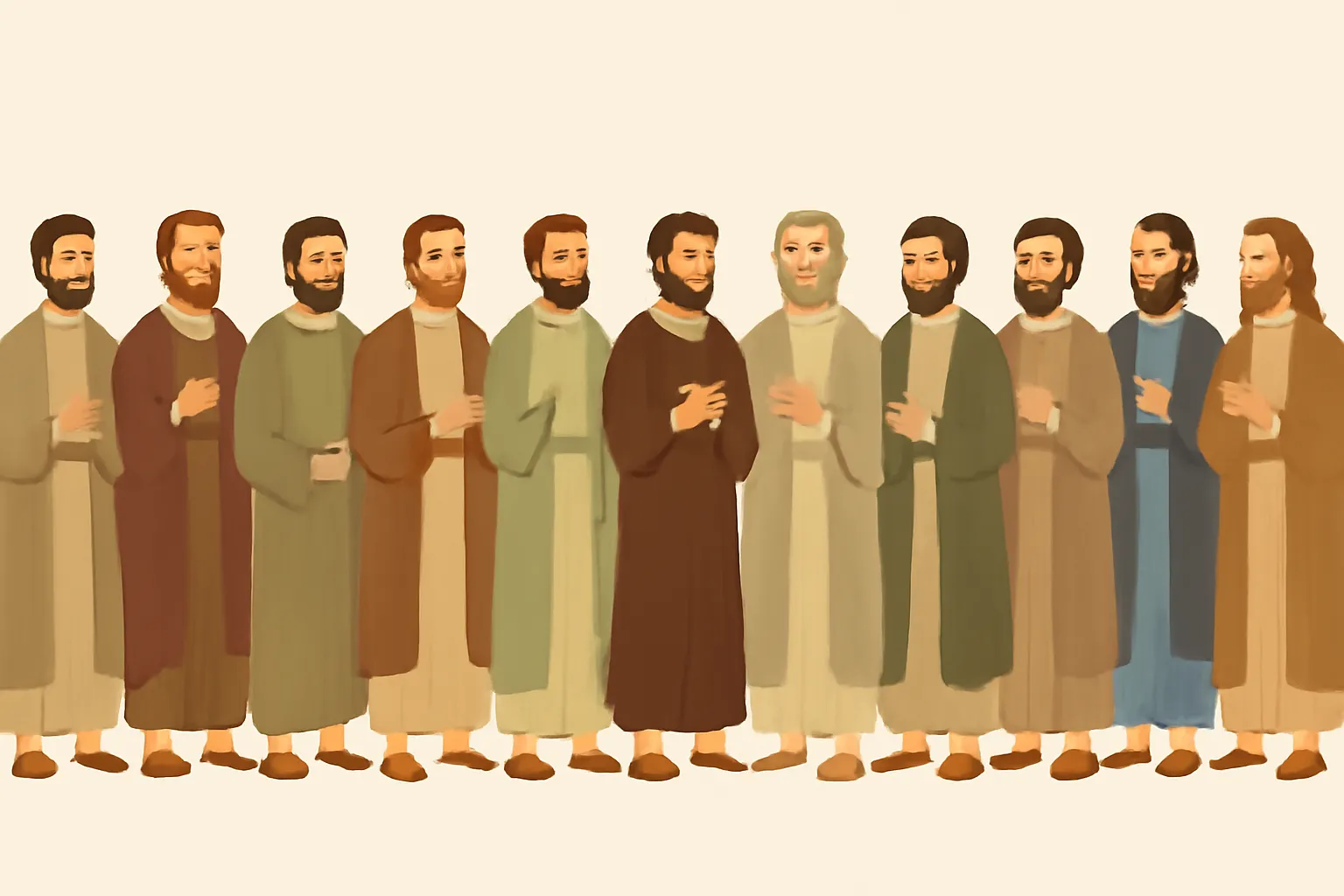
The twelve apostles occupy a central place in Christian tradition. They are the original followers of Jesus who were commissioned to witness, teach, and carry the message of the Kingdom of God to the world. Although the exact lists and sequences vary slightly among the Gospel writers, a widely cited order reflects how the early Christian communities remembered their roles and relationships. This article presents the traditional in-order roster, followed by notes on name variants, the Judas Iscariot replacement, and the broader significance of these foundational figures.
The Traditional Order of the Twelve Apostles
To present a coherent, in-order list, many scholars and medieval and modern Christian traditions use the order found in several New Testament passages and liturgical uses. In this arrangement, the apostles are listed as follows, with brief context for each member. This ordering is commonly found in catechesis, liturgy, and historical summaries, and it provides a coherent sequence for study and reflection.
Peter (often called Simon Peter) — The most prominent figure among the Twelve, Peter is described as a fisherman from Bethsaida who becomes the primary leader of the early Christian community. Jesus renames him to signify his leadership role, and Peter is widely remembered for his bold faith, his role in the founding of the church in Jerusalem, and his predicted, then fulfilled, denial followed by restoration. In the New Testament, Peter figures prominently in the Gospels and Acts, acting as a spokesperson and entrusted with key responsibilities in the spread of the gospel. His life story offers a lens into the dynamics of faith, repentance, and mission in the apostolic era.
Andrew — Andrew is traditionally identified as the brother of Peter, also a fisherman from the same region. In the Gospels, Andrew is depicted as one who brings others to Jesus, including his initial encounter with Jesus and his role in introducing his brother to the Messiah. Across early Christian tradition, Andrew is celebrated as a seeker who models hospitality, evangelism, and the willingness to follow wherever Jesus leads. His acts and traditions emphasize the theme of invitation—drawing others into the circle of discipleship.
James (son of Zebedee) — One of the two Sons of Thunder with his brother John, James is presented in the Gospels as part of Jesus’s inner circle. The call narrative places him alongside his brother as a zealous follower who witnesses Jesus’ ministry at key moments. In Acts, James’s prominence signals the early church’s leadership structure developing in Jerusalem. Traditions about his martyrdom and influence reflect the intense, sometimes perilous path of apostolic witness in the first-century world.
John (also a son of Zebedee) — Brother to James, John is commonly described as the beloved disciple and as the author of the Gospel of John, three Epistles, and the Book of Revelation in later tradition. The Gospel narratives of John emphasize themes of life, light, love, and the intimate relationship between Jesus and his followers. John’s role as a teacher, theologian, and witness to Christ’s life contributes to the shaping of Christian doctrine and devotional life for centuries. His unique voice in the New Testament contrasts with the other synoptic accounts while remaining integral to the apostolic witness.
Philip — A thoughtful and practical thinker, Philip appears in several Gospel scenes as one who seeks clarification and then guides others toward Jesus. Tradition often portrays Philip as an evangelist who helps others encounter the Messiah, sometimes initiating conversations that reveal Jesus’ identity and mission. Philip’s example highlights the importance of questions, discernment, and clarity in presenting the faith to both Jews and Gentiles in the early church.
Bartholomew (often identified with Nathanael) — The figure known as Bartholomew is frequently linked with Nathanael in the Gospel lists, and Nathanael is depicted as a man of integrity who recognizes Jesus as the Son of God and King of Israel. The pairing of Bartholomew and Nathanael in early traditions underscores how the apostolic witness bridged knowledge, encounter, and faith. Bartholomew’s enduring association with missionary work and doctrinal clarity makes him a symbol of honest search for truth in the Christian story.
Thomas (often called Didymus) — Best known in popular memory as “Doubting Thomas,” this apostle embodies the tension between faith and doubt that many believers experience. The Gospel account in which Thomas seeks firsthand evidence before believing Jesus’ resurrection has become a paradigmatic moment for the virtue of seeking truth, while also highlighting the necessity of trust in the risen Christ. Beyond doubt, Thomas is remembered in tradition for missionary activity and travels associating with the broader apostolic mission.
Matthew (also called Levi) — A tax collector by occupation before following Jesus, Matthew represents the inclusion of outsiders and the transformation of one’s life through discipleship. The Gospel attributed to Matthew emphasizes Jesus’s teachings about the kingdom, mercy, and righteousness, and it reflects a perspective that engages with real-world concerns of law, society, and repentance. Matthew’s dual identity as a publican and evangelist offers a powerful narrative about crossing cultural and social boundaries in the early church.
James (son of Alphaeus) — Known in tradition as James the Less to distinguish him from the elder James, this apostle’s role in the New Testament is less prominently detailed in the Gospels. Nevertheless, James the son of Alphaeus is counted among the twelve, and his inclusion demonstrates the diversity of gifts and backgrounds within the apostolic circle. In later Christian memory, he stands as a symbol of humility and steadfast fidelity in the face of challenge and persecution.
Thaddaeus (also called JudasThaddaeus or Lebbaeus) — Thaddaeus is identified in some lists as Judas, son of James, with the epithet Lebbaeus reflecting Aramaic or Hebrew roots. In early Christian art and writing, Thaddaeus is depicted as an eager missionary who asks Jesus about the Father’s name and mission, and he plays a role in the broader apostolic proclamation. The name variations reflect linguistic and cultural differences within the early church and highlight a shared commitment to witness across diverse communities.
Simon the Zealot — Simon is commonly labeled as the Zealot, a designation pointing to his possible background as a member of a Jewish political or religious movement before following Jesus. In the gospel narratives, Simon’s zeal is recast into wholehearted devotion to Christ and to the mission of the kingdom. He is remembered as part of the multifaceted expression of faith among the Twelve, illustrating the unity that can exist among diverse human backgrounds when united by a shared call to discipleship.
Judas Iscariot — The apostle who would ultimately betray Jesus, Judas Iscariot has a complex and instructive place in Christian memory. His fate underscores themes of free will, treachery, and moral testing within the gospel narrative. The cautionary tale of Judas’s betrayal has shaped centuries of reflection on judgment, grace, repentance, and the consequences of choices in the life of faith. Although his name is linked with betrayal, the traditional listing of the Twelve remains a testament to the larger apostolic witness and mission that continued after his fall.
In the biblical narrative, the story of the twelve apostles takes a decisive turn after the Resurrection and Ascension of Jesus. When the community gathers in Jerusalem, they recognize that Judas Iscariot has fallen away from the apostolic fellowship. The book of Acts records the selection of a replacement to restore the number of apostles to twelve. This replacement is known as Matthias.
The selection of Matthias
The process for choosing Matthias is described as a guided, communal discernment. The early believers propose two candidates who had traveled with Jesus from the baptism of John until the day Jesus was taken up to heaven. The community prays for divine guidance and casts lots, ultimately landing on Matthias, who is then added to the eleven, restoring the traditional number of the Twelve. This event clarifies that the apostolic commission is not simply a human appointment but a divine, Spirit-led act that sustains the continuity and integrity of the apostolic witness in the wake of betrayal and loss.
It is important to note that some traditions maintain Judas Iscariot’s place in lists of the Twelve before Acts 1, while others emphasize Matthias as the canonical replacement after the Resurrection. In many devotional and scholarly contexts, the term «Matthias» is invoked precisely to reflect this transition and the enduring idea that the Twelve remained a foundational, mission-bearing group even after the fall of one of their number. For readers and students of Christian history, this replacement demonstrates a broader pattern in which the early church sought to preserve continuity with Jesus’s original circle while adapting to the realities of leadership and witness in a changing world.
Names, Variants, and Identity in the Apostolic List
The names of the apostles carry a wealth of linguistic and cultural nuance. In the New Testament and in later Christian literature, several apostles are known by more than one name, reflecting Aramaic, Hebrew, Greek, and Latin expressions. Understanding these variants helps readers recognize references across different texts and traditions. Below is a concise guide to the most common variants and what they indicate about identity and tradition.
Peter vs. Simon Peter — The most common pairing in modern Bible study, highlighting both his given name and the nickname Jesus gave him, which signified leadership among the Twelve.
Bartholomew vs. Nathanael — In some lists, Bartholomew is identified with Nathanael, suggesting a single individual known by two different names in different traditions or languages.
Thomas vs. Didymus — The Greek name Didymus literally means “twin,” explaining why many English translations render him as Thomas the Twin.
Matthew vs. Levi — Matthew’s earlier identity as a tax collector is often paired with Levi as an alternate name, underscoring his occupation before following Jesus.
James (son of Zebedee) vs. James the Greater — To distinguish him from the other James (the son of Alphaeus) in tradition, he is sometimes called James the Greater; this helps readers keep them straight when studying the Acts and Epistles.
James (son of Alphaeus) vs. James the Less — The second James is occasionally labeled as James the Less to differentiate him from James the Greater, highlighting how the early church used evaluative descriptors for clarity.
Judas Thaddaeus vs. Judas, son of James vs. Lebbaeus — The appearance of multiple epithets shows the range of names used in different manuscripts and traditions to identify this apostle.
Simon the Zealot vs. Canaanite — The designation can reflect political or geographic descriptors in various languages; both point to a distinctive background within the broader apostolic circle.
Names and Identities in Scripture, Tradition, and Art
Across centuries, the apostles have been depicted not only in sacred texts but also in art, liturgy, and writing tradition. The way their names are rendered, their roles emphasized, and their stories retold reflect a dynamic dialogue between early Christian communities and later generations. In art, for example, the apostles are frequently portrayed in groups that illustrate their shared commission and distinct personalities. In liturgy, particular saints’ feast days highlight the diversity of gifts: leadership, preaching, teaching, evangelism, and martyrdom. In theological reflection, the apostles symbolize the foundational witness to Jesus’s life, death, and resurrection, a witness that guided the church through times of growth, crisis, persecution, and renewal. The multiple names and identities associated with these twelve figures reveal how different languages and cultures encountered the same core story and sought to make it meaningful for their own communities.
Why the Twelve Matter: Theological and Historical Significance
The twelve apostles serve as a bridge between Jesus’s earthly ministry and the church’s mission to the world. They embody several enduring themes in Christian thought:
Call and Commission — Each apostle receives a personal invitation to follow Jesus and a collective mandate to preach, heal, and baptize. The sequence of their call stories illustrates how Jesus invites people from diverse backgrounds into a shared mission.
Witness and Testimony — The apostles become the primary witnesses of Jesus’s life, death, and resurrection. Their testimony becomes the heartbeat of early Christian preaching and evangelism, shaping the church’s early doctrinal and liturgical life.
Leadership and Community — The Twelve model a leadership structure rooted in service, unity, and mutual accountability. Their interactions—ranging from conflict and correction to collaboration and sacrificial service—offer a model for how communities navigate differences while pursuing common goals.
Diversity within Unity — The group includes fishermen, tax collectors, and possibly individuals with varying social and political backgrounds. This diversity demonstrates how the gospel transcends class, vocation, and background, uniting people through a common calling.
Legacy and Continuity — The choosing of Matthias to replace Judas underscores the continuity of the apostolic witness even after loss and betrayal. It also points to a larger theological truth: the mission is carried forward not by flawless individuals alone, but by a Spirit-guided community entrusted with a shared mission.
In Scripture, Tradition, and Everyday Study
For students, scholars, and lay readers, the Twelve offer a rich field for study across biblical texts, patristic writings, and contemporary theology. When approaching the apostles, readers can engage with several kinds of inquiry:
Textual analysis — Compare how each Gospel presents a given apostle, paying attention to naming conventions, sequence, and the roles attributed to each individual.
Historical context — Consider the socio-political and religious climate of first-century Judea, Galilee, and the wider Roman world to understand how the apostles navigated the challenges of early Christian proclamation.
Theological reflection — Reflect on how the apostles’ experiences—calling, doubt, faith, and witness—inform Christian understandings of discipleship, vocation, and grace.
Liturgical usage — Explore how different Christian traditions commemorate the apostles, assign feast days, and draw lessons for spiritual formation from their stories.
The twelve apostles stand at the outset of the Christian narrative as witnesses, travelers, and teachers who carried a transformative message into a changing world. Their list, their names, and the stories attached to them continue to shape how Christians read the Gospels, approach mission, and understand the nature of community under a shared calling. While some lists differ in minor details, the central truth remains constant: the Apostolic witness—rooted in companionship with Jesus, articulated through diverse personalities, and empowered by the Spirit—remains a foundational cornerstone of Christian faith and practice. As readers study the names in order, they are invited to see not just a roster of individuals, but a living testimony to the ways God calls people from varied walks of life to participate in something far larger than themselves—the ongoing story of the gospel going forth to all nations.
For further exploration, compare the in-order listing with variant orders in other ancient manuscripts and modern commentaries. Notice how the same group can be described with different emphases—names, occupations, backgrounds, and roles—yet still convey a unified mission: to bear witness to the life, death, and resurrection of Jesus Christ, and to participate in the spread of the Christian faith through proclamation, service, and steadfast devotion.
Bible Chapter Summary: Clear Overviews for Each Chapter A bible chapter summary is a compact, structured report on the events, themes, and literary features found in a single chapter. It is not meant to replace reading the full text, but to offer a concise map that helps readers locate key ideas, identify turning points, and…
Introduction to the 12 Tribes of Israel: Meaning, Verse, and Reference The phrase “twelve tribes of Israel” appears across the Hebrew Bible and the New Testament, signaling a foundational structure of the people of God. In Scripture, these tribes originate from the twelve sons of Jacob (also named Israel), and they together form a complex…
10 Commandments in King James Version: Complete List, History, and Meanings The Ten Commandments, known in Jewish tradition as the Decalogue, occupy a central place in the moral imagination of civilizations shaped by the King James Version of the Bible. In the King James Version (KJV), these sacred laws are rendered in the distinctive Early…
Acts Chapter Summary: A Comprehensive Verse-by-Verse Guide to the Book of Acts This guide offers a chapter-by-chapter walkthrough of the Book of Acts, presenting a verse-by-verse oriented overview that highlights key events, major characters, and enduring themes. While not a substitute for reading the text, this article provides a thorough roadmap to understanding how the…
Bible Good Samaritan Story: Meaning, Lessons, and Context The bible good samaritan story is one of the best-known teachings in the Christian tradition, often cited in discussions of ethics, mercy, and neighbor-love. In many classrooms, sermons, and conversation circles, this tale is treated not merely as a narrative about a kind stranger, but as a…
1 Corinthians Summary by Chapter: A Chapter-by-Chapter Guide This chapter-by-chapter guide offers an accessible overview of 1 Corinthians by walking through each letter segment, outlining the main issues, concerns, and pastoral guidance Paul offers to the church in Corinth. While the book addresses a specific historical context, its themes—unity, moral integrity, spiritual gifts, and the…